Rozafa Fish City Hotel
Labinot-Fushë - E852 Rozafa Fish City , Labinot-Fushe , Elbasan
Book now
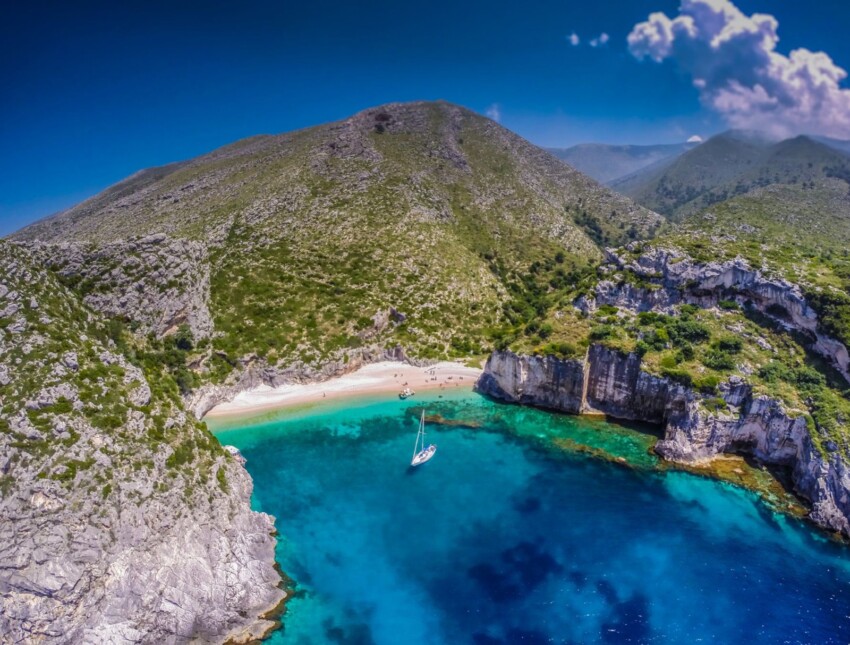
Close to Greece both geographically and culturally (although neither the Greeks nor the Albanians will ever admit it),Albania is a real discovery. A land completely isolated from the world until the late 1990s, it has managed to revive from the darkest period of its history and is slowly winning the hearts of tourists from all over Europe.
A trip to Albania, either as a stand-alone destination or as part of an itinerary in Greece, is ideal for coming into contact with a warm and friendly people, with an often unknown history, and with first-class natural beauty. One also – and above all – goes to Albania for the sea: its coast, especially the one from Vlora to the Greek border, has beautiful beaches, a turquoise sea and surprisingly developed hotel accommodation.
Finally, and this never hurts, there is very little money to be spent in Albania. It is therefore worth discovering this piece of the Adriatic, to get to know a centuries-old history and culture that goes beyond stereotypes.
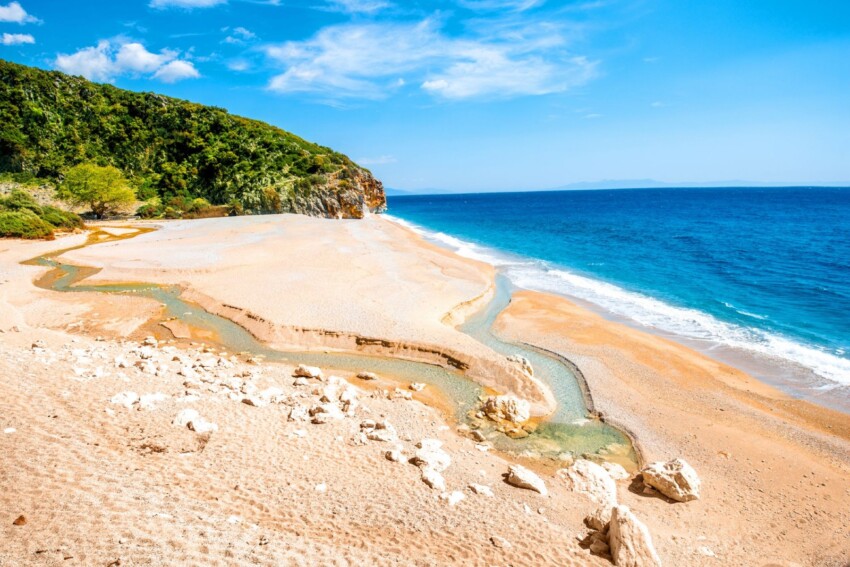
Contrary to popular belief, Albania is not just a seaside destination. Sure, its beautiful beaches are what attract most tourists, so it is natural and obvious to think that summer is the best time to visit.
But even out of season, Albania actually has a lot to offer. Tirana is a city of almost a million inhabitants, and is therefore alive 365 days a year, even in winter, when it is decked out with Christmas lights and a characteristic market is held. Even a cultural itinerary that touches, for example, Kruja, Berat and Gjirokastra, is easily accessible in all seasons.
Thanks to its Mediterranean climate, Albania is never too cold: after all, it is practically at the same altitude as Puglia, on the other side of the Adriatic. Therefore, it is a destination that can be visited any day of the year, although late spring is the best season, as you can enjoy ideal temperatures and long days.
The easiest and quickest way to get to Albania is undoubtedly by plane. There are many flights to and from Tirana, operated by both national and low-cost airlines. One hardly ever finds sensational offers, but the price is all in all good if booked well in advance. It should be noted that Tirana International Airport was for decades the only airport in the country, until the opening of Kukes Airport in June 2021, which is however located at the northern end of the country and therefore not ideal for an on-the-road tour.
Those who prefer to travel by car will be able to do so without any problems, passing through Slovenia, Croatia (with a very quick stop in Bosnia) and Montenegro. Beware that normal EU car insurance often does not cover Montenegro and Albania, so enquire before setting off. The journey is long but well worth it, especially if you break it into several stages: you cross the entire beautiful Adriatic coast of Croatia from north to south, with sensational views. The trespassing in Montenegro takes place in Herceg Novi, and we continue along the coast of the small Balkan country, passing through its main tourist resorts: Kotor, Sveti Stefan, Budva and Ulcinj, to finally arrive in Albania from the north, trespassing in the province of Shkodra.
Albania is a small country; to give a measure of its proportions, it is little bigger than Tuscany. However, there is no shortage of things to see, including historic Ottoman cities, a rich and turbulent history, unspoilt nature and also a beautiful coastline where beaches follow one another.
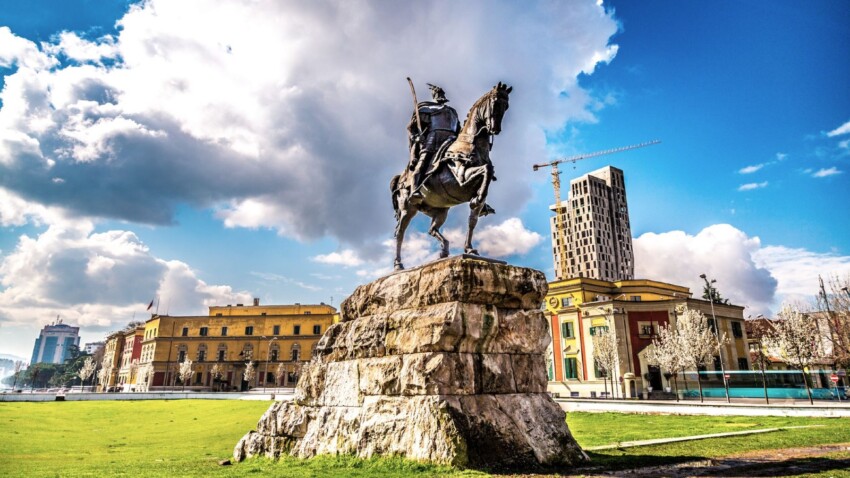
For those arriving by plane, Tirana is the first point of contact with Albania, so it would be a shame not to pay it a visit before setting off to discover the rest of the country.
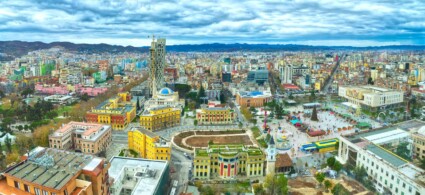
Tirana is a rather large city, but the tourist attractions are spread out within easy walking distance. The beating heart of the city is Skanderbeg Square (sheshi Skenderbeu in the local language), home to the Opera House and the National History Museum, the largest in the country, with its symbolic mosaic built in front of the main entrance. The square is also overlooked by the beautiful Ethem Bey mosque, the Bank of Albania building, the city hall and the clock tower, dating back to 1821.
The city centre area opens up from Skanderbeg Square: visit the curious Bunk’Art museum, built inside a bunker, and explore the Rinia park – which is actually a square – immediately to the south, where the curious Tajvani complex has been built, comprising cinemas, clubs and restaurants.
Then don’t miss a ride on the cable car from the city to the summit of Mount Dajti, from which, on a clear day, you can get a splendid view of Tirana and its surroundings.
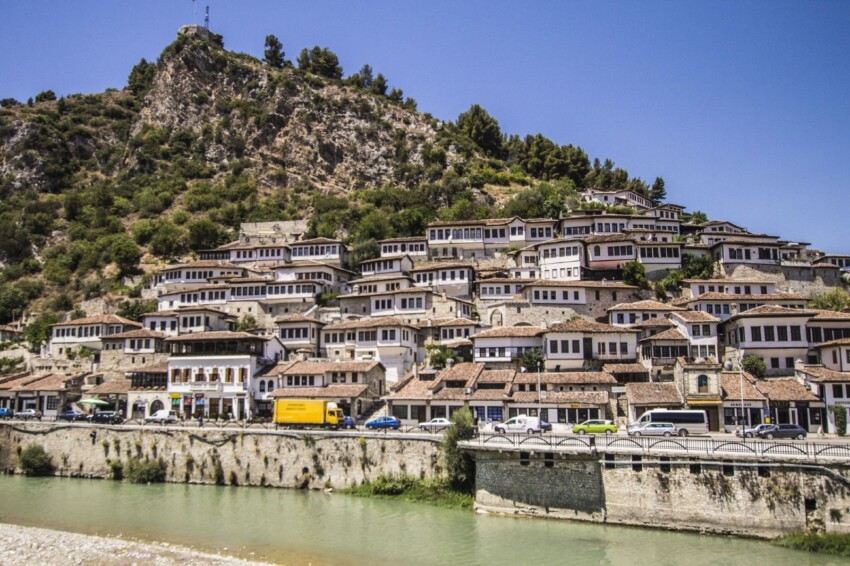
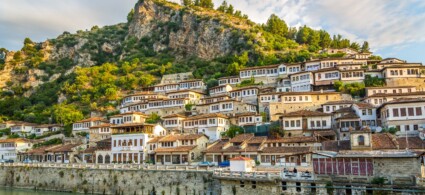
Berat and Gyrokastra (also known as Gjirokaster in Albanian) are two Ottoman towns about three hours’ drive apart, but listed byUNESCO as a single World Heritage Site.
Indeed, they share many similarities, both in terms of architecture and culture. Both are built on a hillside, and both are topped by a castle, which dominates them from above, and whose ruins can be visited.
It goes without saying that if you are in the centre of Albania or in Tirana, you should visit Berat, while if you are in the Saranda area or in the south, head towards Gyrokastra without hesitation.
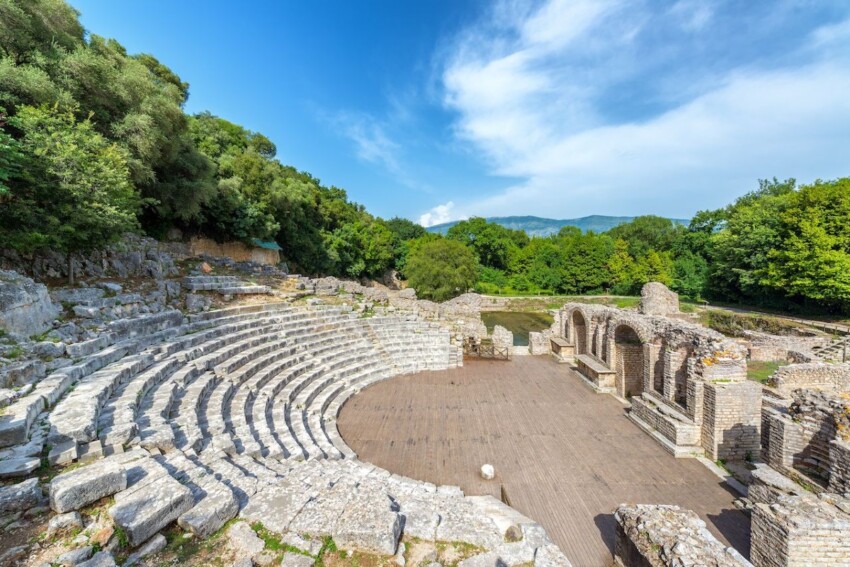
Albania’s other UNESCO heritage site is Butrint, an archaeological park located in the far south of the country, not far from the Greek border. An ideal destination for a day trip from Corfu, for example, but worth a visit even if you are already in Albania.
One of the few surviving examples of a city belonging to the ancient Illyrian civilisation, according to some historians Butrint dates back to the 12th century B.C. and experienced its heyday thanks to its privileged position between Epirus and Corfu.
Within the archaeological remains, one can admire a series of historical periods and dominations that succeeded one another over the centuries: the city was a Roman, Ostrogothic, Bulgarian, Byzantine and Venetian protectorate throughout its history, until it was ceded to Napoleon and immediately afterwards conquered by the Ottomans.
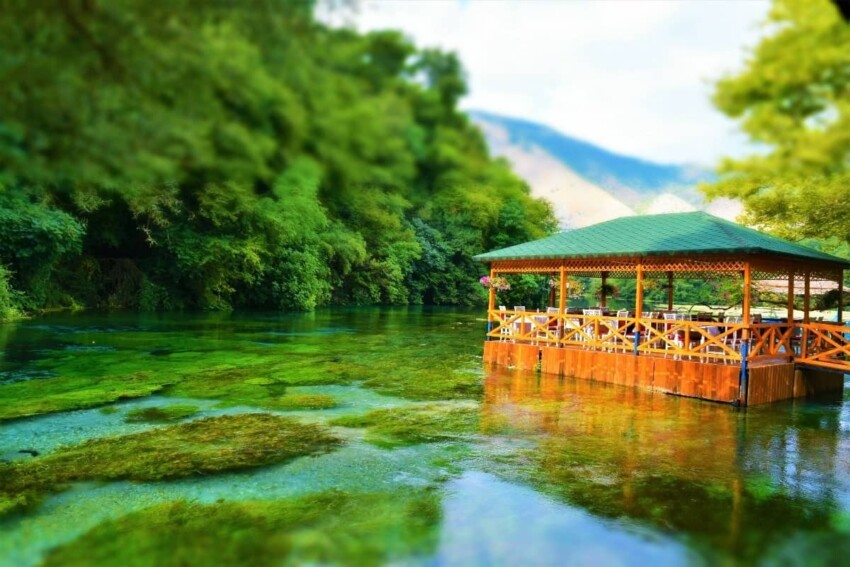
Of all Albania’s natural beauties, the Syri i Kalter, which translates as ‘the blue eye’, deserves special mention. It is a karstic spring that looks like something out of a fantasy film, circular in shape, very deep, with water that gives incredible shades of blue. Some even manage to bathe in it, but with a water temperature of around 10 degrees, it is a privilege reserved only for the very brave.
Surrounding the source of Syri i Kalter is a small tourist area, where an easy path leads past rivers that offer unbelievable shades of blue, a quaint waterside bar and a series of open spaces and meadows where you can relax.
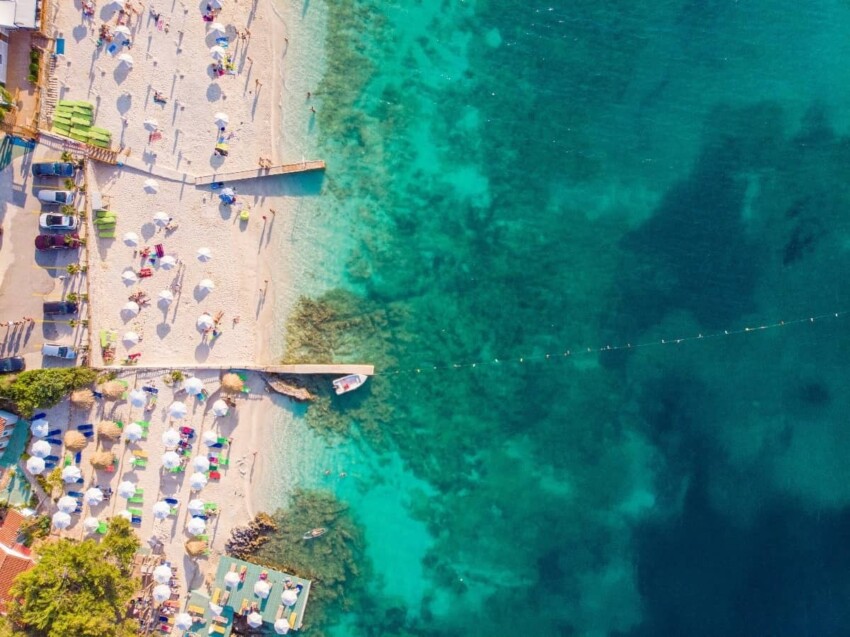
Many tourists are attracted to Albania mainly for its beaches. Generally speaking, we can divide the Albanian coast into two sectors: the Adriatic, which represents the northern coastline and runs from the border with Montenegro to Fier, and the Ionian, which reaches as far as the border with Greece.
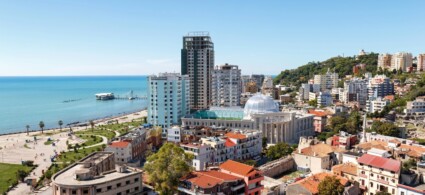
The northern part of the Albanian coast is mainly characterised by long, sandy beaches, among which the beaches of Velipoje and Shengjin stand out, which are very popular with locals during the summer. The sea here is not sensational, but the beaches are very comfortable and suitable for family tourism. A visit to the bay of Lalzi (gjiri i Lalzit in Albanian), where houses, flats, resorts and hotels have recently been built, is also interesting. Among the beaches on the north coast, it is impossible not to mention that of Durrës, which is very long, sandy and fully equipped with sunbeds and umbrellas, with seafront hotels one after the other.
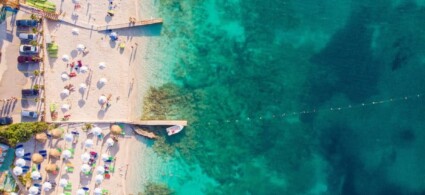
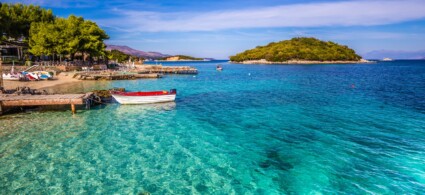
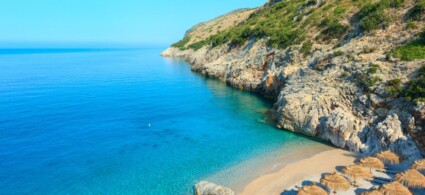
On the contrary, the south coast of Albania is completely transformed, the long beaches give way to small pebble beaches or straight to the rocks, and the sea takes on shades of blue and azure that have nothing to envy from the most famous resorts in Greece. We recommend the small beaches that can be found along the coast from Vlora to Orikum, the beautiful beach of Dhermiu, which can be reached by crossing the Llogora pass, and the area around Saranda, where the real star is the beach of Ksamil, with its picture-postcard sea and islets. Unfortunately, it is definitely overcrowded in August: visit it at another time of year.
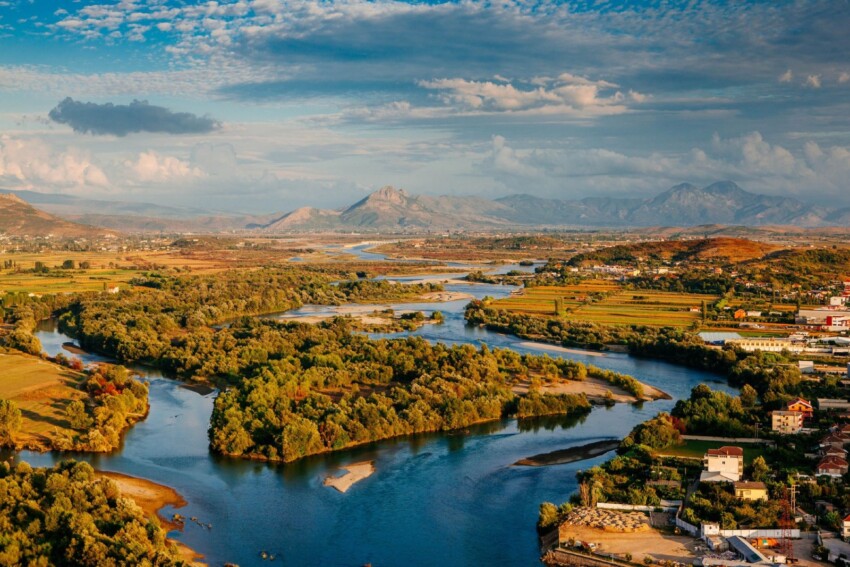
The Albanian Alps are among the most unspoilt mountains in Europe. Until only a few years ago, this area was virtually unknown to tourists, and its inhabitants lived almost completely isolated in simple, remote villages. But the charm of this part of the country has quickly crossed its borders, and it is slowly becoming better known, especially among travellers from northern Europe. The two most famous villages are Theth and Valbona, which, as the crow flies, are no more than 5 km apart, but to get from one to the other using a car takes more than 6 hours!
Theth and Valbona are also connected by an exciting mountaineering trail, which can be walked even by inexperienced hikers in about 5 hours. The two villages, separated by Mount Maja and Jezercës, are sufficiently developed in terms of tourism: many houses have been converted into guest houses and a few hotels have also sprung up. There are restaurants where you can have lunch and dinner, but forget the nightlife!
One of the most exciting ways to visit the Albanian Alps is to start from the beautiful city of Shkodra, then drive to Theth in the off-road vehicles of the local tourist agencies. From there, you walk to Valbona, then to Fierze by public transport, and return to Shkodra by boat along Lake Koman, with ferries running between Fierze and Koman piers. From there, return to Shkodra by completing a circular route using public transport, organising a private transfer or simply asking for a lift.
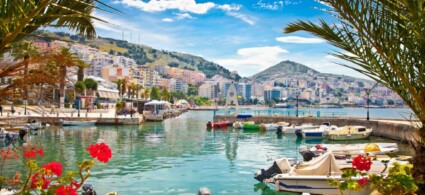
Albania offers you a wide variety of accommodation options for your trip to the country. In Tirana, you will find a wide choice of luxury hotels, modern flats and budget guesthouses to suit all budgets. Saranda, the popular seaside destination, boasts a wide range of hotels and beach resorts, offering comprehensive services and breathtaking sea views. Berat offers accommodation in renovated traditional houses with comfortable rooms and an authentic Albanian atmosphere. In Vlora, you can also find hotels and flats with sea views, perfect for relaxing and enjoying the Mediterranean climate. By choosing accommodation in these cities you are sure to find comfort and hospitality during your stay in Albania.
Albania’s international dialling code is +355, so to call an Albanian number from abroad you need to dial 00355 followed by the number of the person you intend to call.
To call home from Albania , you need to use your country’s international dialling code instead. When calling a landline, you will not need to dial the 0 area code.
The flag of Albania depicts the double-headed eagle in black, on a red background. Red and black are also the country’s national colours, as the inhabitants are very attached to their flag. The double-headed eagle is a symbol of the Eastern Roman and later Byzantine empires, with one head looking west, towards Rome, and the other east, towards Constantinople.
The eagle in the Albanian flag also gives the country its name, as in Albanian Albania is called Shqiperia (literally: land of eagles).
The Albanian currency is the Lek, with the code ALL, which is exchanged at an exchange rate of around 100 for one euro. Exchange offices are practically everywhere, and strangely enough, it is also advantageous to exchange at Tirana airport.
Mind you, in the 1960s, the ‘new lek’ was introduced, equivalent to 10 of the previously used ‘old lek’. Incredible but true, even today Albanians are used to calculating prices using the ‘old lek’, so don’t be surprised if you are told that a coffee costs 1000 lek (8 euros), in reality you only have to pay 100, or 80 cents! It has to be said, however, that in the capital Tirana this custom is now a thing of the past, but in the rest of the country it has remained in abundance. Ultimately, if you are told outside Tirana that something costs 1000 lek, you will have to pull out a 100 coin, not a 1000 banknote.
The Republic of Albania lies on the Adriatic and Ionian Seas, and shares its entire south-eastern border with Greece .
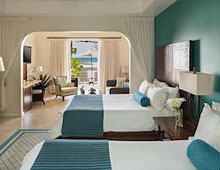 Hotel
Hotel 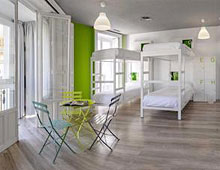 Budget accommodations
 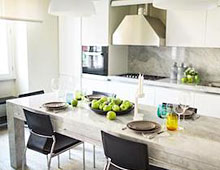 Apartments
 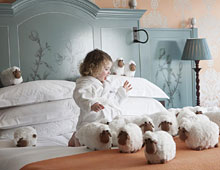 Family Hotel
 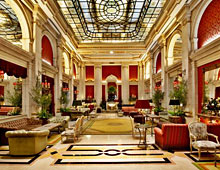 Luxury Hotel
 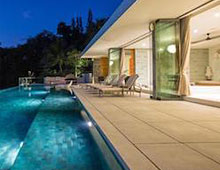 Resorts