Hotel Magic
Gjirokastër - Rruga Xhorxh Sorros
Book now
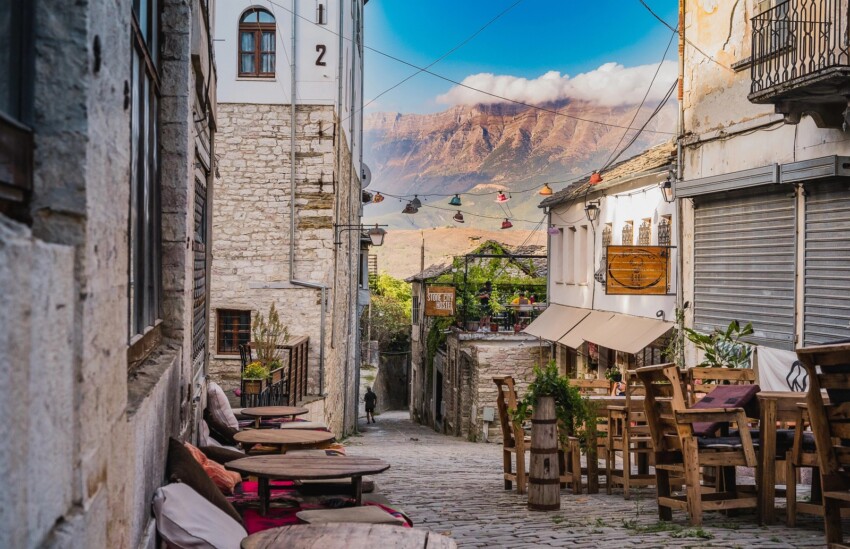
Gjirokastër (literally meaning “Silver Fortress”) is one of the most captivating and best-preserved towns in all of Albania. Perched on the eastern slope of Mount Mali i Gjerë, it commands the lush valley of the Drino River with its distinctive grey slate roofs and its Ottoman tower houses — the kulle — dating primarily from the period between 1800 and 1830. Since 2005, it has been a UNESCO World Heritage Site, a recognition awarded for the exceptional integrity of its Ottoman urban fabric, in which Greek, Roman, Byzantine and Turkish influences are layered in an urban landscape that has remained virtually unchanged over time.
A town of stone par excellence — silvery-grey limestone is the dominant material in every building, wall and alleyway — Gjirokastër carries the weight of a complex history. It was here that the communist dictator Enver Hoxha was born in 1908, who ruled Albania with an iron fist from 1944 until his death in 1985, isolating the country from the rest of the world. That same obsession with control and security has left physical traces throughout the town, including political prisons and underground tunnels now open to visitors. Yet Gjirokastër is also home to the National Festival of Folklore Music, hosted in its castle, and birthplace of Ismail Kadare, Albania’s most celebrated writer.
The town is divided into two distinct areas: the new town on the plain, modern and of little tourist interest, and the old town that climbs up the hillside to the castle. The latter is so compact that you can explore every corner in half a day, yet each alleyway reveals an unexpected vista, an intricately carved Ottoman doorway, or a sloping roof that descends towards the valley. The best time to visit is April–June and September–October, with pleasant temperatures and excellent light on the slate roofs.
The value of Gjirokastër lies not in individual attractions but in the overall experience of wandering through the old town. The most useful advice is to abandon any checklist of monuments and instead climb slowly towards the castle, allowing the descending alleyways to guide you, pausing in courtyards and bazaars. The main attractions are all within a few minutes’ walk of each other.
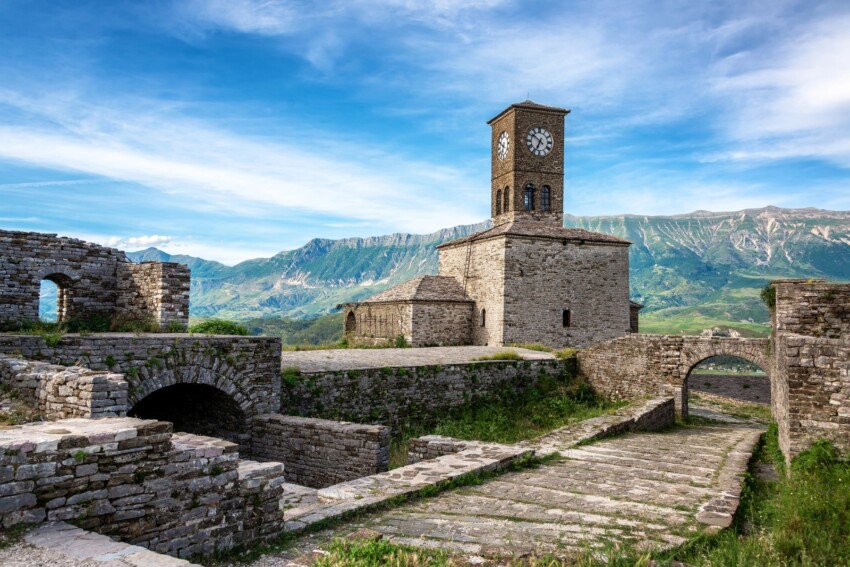
The Gjirokastër Castle is the largest in all of Albania and dominates the town from atop a limestone cliff that resembles the bow of a warship. Its origins likely date back to the 4th or 5th century AD, but the structures visible today belong primarily to the Venetian and Ottoman periods. Over three layers of history — Illyrian, Roman, Byzantine, Venetian and Ottoman — the walls have withstood numerous sieges, including a lengthy resistance against the Ottoman Empire in the 15th century.
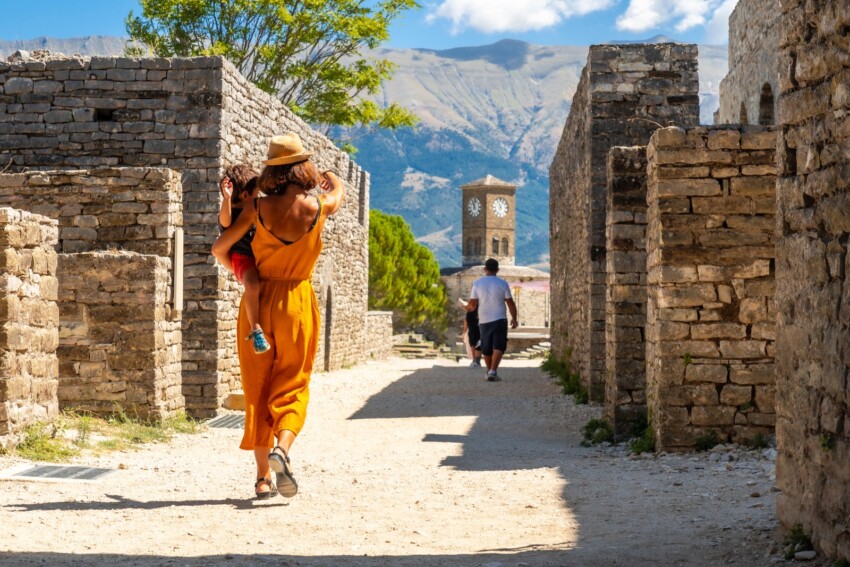
Within the castle are two separate museums. The Gjirokastër Museum — on the ground floor, well laid out with panels in Albanian and English — tells the town’s history from prehistoric times to the present day with an engaging narrative that merits at least an hour’s visit. On the upper floor is the National Weapons Museum, opened in 1971, with a collection spanning from prehistoric times to the Second World War. In the castle courtyard stands a purported American spy plane shot down during the Cold War, one of the most photographed elements of any visit. The climb to the castle is steep but short; once at the top, the panorama of the old town, the Drino valley and the surrounding mountains is well worth the effort.
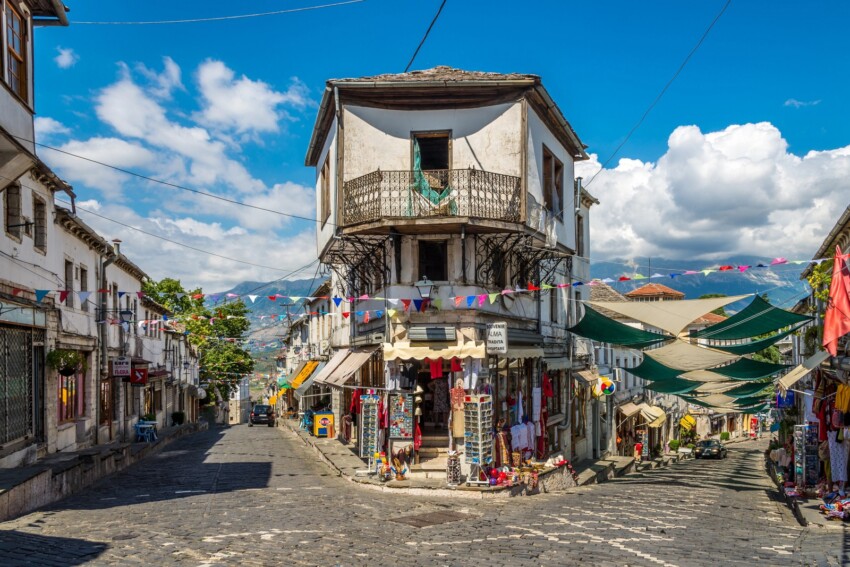
The bazaar of Gjirokastër is the beating heart of the old town and the natural meeting point of the main streets of the historic centre. It develops around a junction of five roads in the Qafa and Pazarit district, with craft shops, small restaurants and cafés housed in irregularly-shaped Ottoman buildings. From Piazza Topulli — the main access point for cars — the Gjin Zenebisi street leads directly into the heart of the bazaar.
Early in the morning the bazaar is quiet and ideal for photographing facades without crowds; in the late afternoon, when low sunlight bathes the slate roofs in warm hues and the cafés light up, the atmosphere becomes particularly evocative. Also found in the bazaar is the Bazaar Mosque, built in 1557, whose white minaret is visible from almost every corner of the old town: it was spared from the fire that devastated the Ottoman bazaar and later survived Hoxha’s atheist policies thanks to recognition as a building of cultural interest.
The Ethnographic Museum occupies a singular place in Gjirokastër’s history: it stands in the Palorto district on the exact site of Enver Hoxha’s childhood home, which burnt down in 1966. The present building, reconstructed between 1964 and 1966 according to the model of traditional 19th-century Ottoman houses, spans four floors and houses a rich collection of traditional clothing, utensils, costumes and furnishings that recreates the domestic life of an aristocratic Scutari family during the Ottoman period.
Admission costs 200 lek (approximately €2) and is one of the most accessible and comprehensive visits for understanding the interior architecture of the kulle, the characteristic tower houses of Gjirokastër, with their imposing entrance doors, protected windows and wooden balconies overlooking interior courtyards. It’s worth dedicating at least 45–60 minutes to it.
Among the visitable kulle, the Casa Zekate is the most impressive: built in 1812, it is one of the best-preserved Ottoman houses in Albania, featuring two symmetrical towers, an enormous reception hall on the first floor decorated with wooden carvings, and a terrace with panoramic views of the old town and castle. Located in the Palorto district, just steps from the Ethnographic Museum, it is open to visitors for a small fee. Its commanding position over the valley, combined with the imposing defensive architecture, gives a clear sense of the power and wealth of the Ottoman families who inhabited these buildings.
The Casa Skenduli, in the immediate vicinity, is another splendid example of Ottoman residential architecture with decorative features typical of the local school. This too is open to visitors (admission 200 lek) and allows you to appreciate up close the building techniques and interiors furnished with period furniture and objects.
One of the most unsettling and fascinating aspects of Gjirokastër is the underground bunker constructed by Enver Hoxha during the Cold War, part of an obsessive network of over 170,000 bunkers scattered throughout the country. The Gjirokastër tunnel is largely preserved in its original state, with corridors, rooms and infrastructure that physically testify to the paranoia of a regime that feared invasion from every corner of the world. The visit is available by guided tour only, with guides accompanying visitors through the structure whilst explaining the historical and political context. It is probably the visit that more than any other helps you understand the nature of the Albanian regime and its impact on citizens’ daily life.
Gjirokastër is one of the few towns in the world where a simple stroll through the alleyways is itself the main attraction. The grey slate roofs that cascade down towards the valley, illuminated by the low light of sunset, offer a spectacle of rare architectural harmony. The best viewpoints are found on the castle terraces, along the old town walls and from the upper ramparts of the bazaar. Those who stay at least one night in Gjirokastër have the privilege of enjoying this view after the day-trippers have departed, when the town returns to its quiet rhythm and the alleyways empty out.
Staying in Gjirokastër means having the choice of some of Albania’s most characterful accommodation: several hotels and guesthouses are set within beautifully restored Ottoman houses in the heart of the old town, with intricately carved wooden interiors, frescoed halls and terraces overlooking the Drino valley. Sleeping in the historic centre allows you to experience the town in its finest light — early morning and late evening — when day visitors are not yet there or have already departed. Prices are generally very reasonable compared to European capitals, and the quality of hospitality in the centre’s establishments is often surprisingly high.
For those arriving by car, it’s important to know that the alleyways of the upper town are often restricted or pedestrian-only: parking is found at the edges of the historic centre, either paid or free, and from there you climb on foot or by short taxi ride. Those preferring the convenience of the lower town can find more modern, easily accessible facilities near the main national road, just a few minutes by taxi from the old town.
Gjirokastër is located in southern Albania, along the SH4 route that connects Tirana to Saranda. From Tirana it is approximately 230 km away, reachable in 3.5–4 hours by car following the SH4 southwards through Fier and Tepelenë. By bus, several daily services depart from Tirana’s bus station between 07:00 and 12:00, with afternoon services and sometimes an overnight service: the journey takes approximately 4–5 hours. From Saranda it is about 60 km away and the route takes 1–1.5 hours by car on mountain roads; daily buses (approximately 300 lek) stop on the main road at the foot of the hill, from where a taxi will take you to the historic centre.
Those arriving from Greece can use the Kakavijë border crossing, just 20 km from Gjirokastër: it is the busiest Greece–Albania land border and a shuttle connects the crossing to the town multiple times daily, making it the natural first stop for those entering Albania from the south. The nearest airport is Tirana International Airport Nënë Tereza (TIA), approximately 230 km away. For those planning a road trip, Gjirokastër pairs perfectly with Berat (approximately 120 km to the north) and Saranda with its beaches and the UNESCO site of Butrint (approximately 60 km to the south-west). By car, care should be taken on mountain roads, especially at night, due to sharp curves, poor signage and roaming animals.
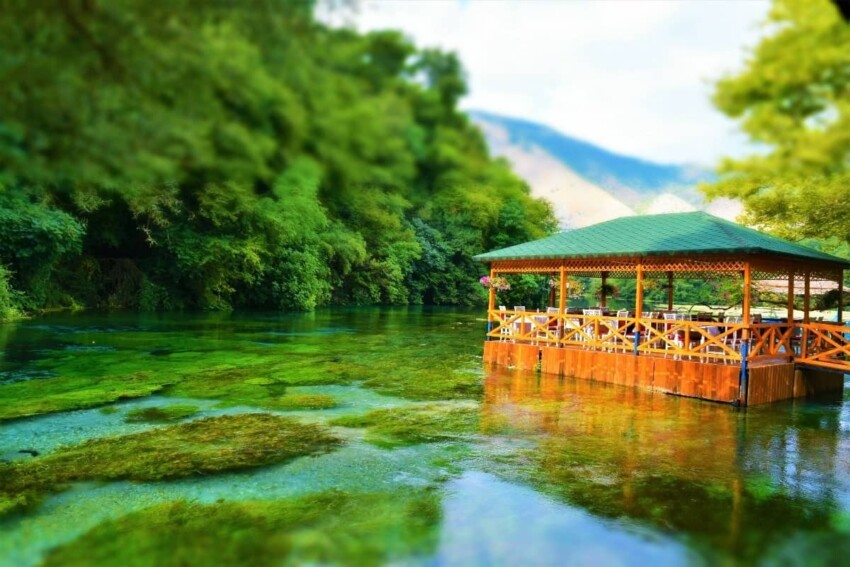
Gjirokastër’s location makes it an excellent base for some of southern Albania’s finest excursions. Approximately 25 km towards Saranda you’ll find the Blue Eye Spring (Syri i Kaltër), a karstic spring with crystalline water of extraordinary colour intensity — an almost unreal turquoise blue — surrounded by lush vegetation. The depth of the spring has not yet been precisely determined, and the water temperature is freezing in any season. Near the spring are open-air bars and restaurants that make it a pleasant stop even for those who don’t swim. It can be reached by car in about 30 minutes from town, or by descending from the Gjirokastër–Saranda bus at the point indicated by the driver.
Continuing towards Saranda (approximately 60 km in total) you reach the Butrint Archaeological Park, a UNESCO site preserving historical layers from the Bronze Age to the Venetian period in a landscape of extraordinary natural beauty. To the north, approximately 120 km away, lies Berat, the other UNESCO town in southern Albania; the two sites can comfortably be visited in a two or three-day itinerary with a rental car.
What's the weather at Gjirokastër? Below are the temperatures and the weather forecast at Gjirokastër for the next few days.
Gjirokastër is located in south-eastern Albania, approximately 230 km from Tirana, 60 km from Saranda and 20 km from the Greek border (Kakavijë crossing). It sits around 120 km from Berat and approximately 280 km from Shkodër, positioned along the main north-south axis that runs through the country.
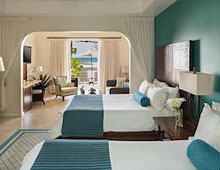 Hotel
Hotel 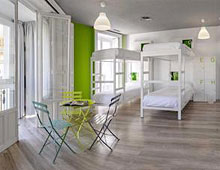 Budget accommodations
 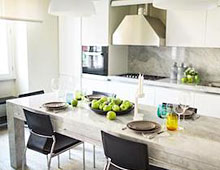 Apartments
 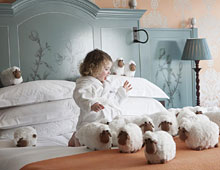 Family Hotel
  Luxury Hotel
  Resorts