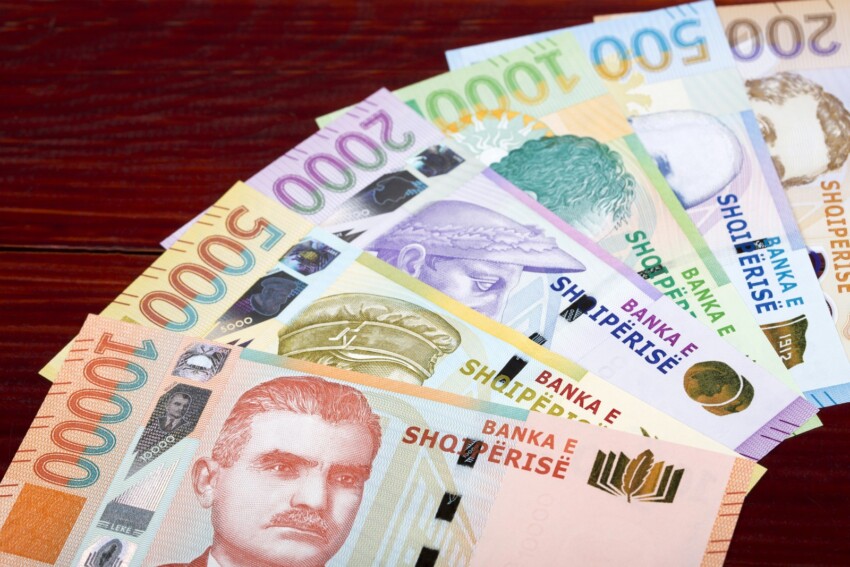
The Lek (plural lekë, ISO 4217 code: ALL, symbol: L) is the official currency of Albania. Anyone planning a trip to the Land of Eagles must come to grips with this currency: Albania is not part of the European Union and does not use the euro, so the Lek is the reference currency for all payments, from transport to restaurants, markets to tourist attractions.
The exchange rate hovers around 95–100 Lek per 1 euro (reference value updated June 2026, subject to change). A handy way to get your bearings is to remember that 1,000 Lek equals roughly 10 euros, which makes it easier to estimate prices on the fly during your trip. Prices in Albania are generally very modest compared to the European average: dinner at a local taverna costs between 800 and 1,500 Lek, a coffee between 80 and 150 Lek, and an urban bus ticket around 40 Lek.
Although the euro is widely recognised and often accepted in major cities and tourist destinations, paying in Lek is always the more economical choice. Traders who accept euros apply their own exchange rates, almost always unfavourable to the customer, and change given back in Lek at an unfavourable rate is standard practice. Having cash in Lek at all times is essential, especially outside major urban centres.
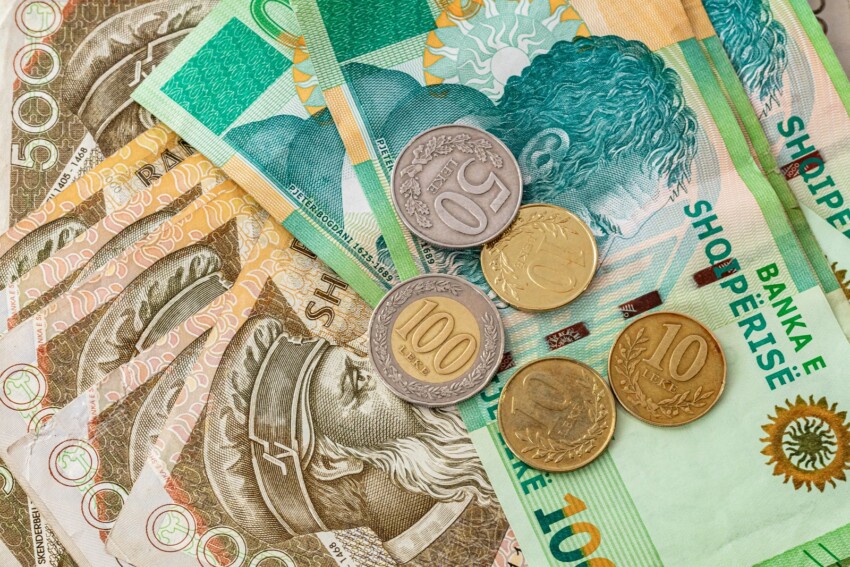
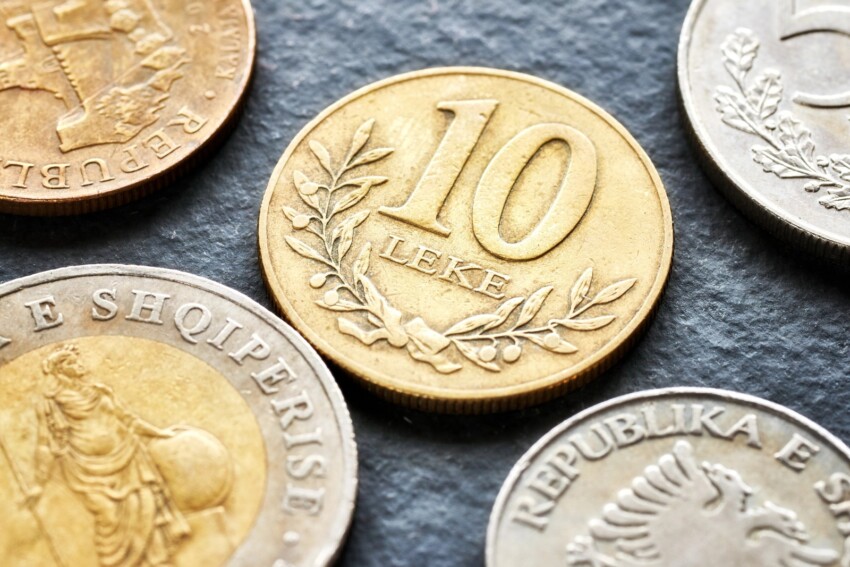
Coins in circulation come in denominations of 1, 5, 10, 20, 50 and 100 Lek. The obverse shows the monetary value between stylised branches; the reverse features various images relating to Albanian history and culture, with the inscription “Republika e Shqipërisë” (Republic of Albania) and the year of minting.
Banknotes are available in denominations of 200, 500, 1,000, 2,000 and 5,000 Lek. Each banknote features on the obverse a notable figure from Albanian history and culture — such as poet Naim Frashëri on the 200 Lek note — and on the reverse a significant institution or monument. Small-denomination notes (200 and 500 Lek) are most useful for daily payments, whilst 5,000 Lek notes (around 50 euros) can be difficult to break at smaller shops or markets.
It’s worth noting that the qindarkë — the centesimal subdivision of the Lek, equivalent to 1/100 of a Lek — is theoretically still the smallest monetary unit, but in practice it has not been used or minted for decades. You will never receive change in qindarkë.
The most convenient way to obtain Lek is to visit the exchange offices (exchange) plentiful in major Albanian cities — Tirana, Durrës, Shkodër, Vlorë, Sarandë — often open in the evenings as well. In Albania, exchange offices generally do not charge fixed commissions, but each applies its own exchange rate: always check the electronic display at the entrance showing the rate being offered and compare a couple of nearby counters, as differences, though minimal, do exist.
Exchange offices at the airport — both at Tirana Airport and at the ports of Durrës, Vlorë and Sarandë — are notoriously unfavourable: it’s the classic trap at every international hub. If you can, exchange only the bare minimum on arrival (for a taxi or bus) and move the transaction to the city centre as soon as possible.
A practical alternative, especially for those arriving from the UK, is to purchase Lek before departure from specialist exchange agencies like Forexchange, found at major UK airports and railway stations. The advantage is having the currency ready on arrival without worrying about exchange rates, though the rate will be slightly less favourable than what you’d get locally.
ATM machines are widespread in all major cities and principal tourist centres, and accept cards from Visa, Mastercard and American Express networks. Cards with only the V-Pay network do not work in Albania; Maestro cards work if they have a 4-digit PIN. In rural areas, mountain valleys and remote villages, ATM availability is extremely limited or non-existent: it is essential to stockpile cash before heading to Theth, Valbona or more isolated inland routes.
When the ATM asks whether to proceed in your home currency (euros) or in Albanian Lek, always choose Albanian Lek. Accepting the euro conversion offered by the machine activates so-called Dynamic Currency Conversion (DCC), a mechanism that applies a disadvantageous exchange rate to the benefit of the local bank. Always refuse this option and allow the conversion to happen through your card’s network, which guarantees better terms.
Bear in mind that Albania is not part of the SEPA area (Single Euro Payments Area), so your UK bank will charge commissions on foreign cash withdrawals, typically between 1 and 4% of the amount, plus a fixed fee that may vary between £2 and £10 depending on your institution. Before departing, check with your bank the exact fees for foreign currency withdrawals, or consider using fintech cards such as Wise, Revolut or N26, which offer much more competitive exchange rates and reduced or zero commissions on foreign withdrawals.
Credit and debit card payments are spreading rapidly in Albania, but the situation varies considerably depending on the area and type of establishment. Hotels, mid-range and upmarket restaurants, major supermarkets, shopping centres and car rental agencies in major cities generally accept Visa and Mastercard without issue. In rural areas, small bars, traditional markets, public transport and remote petrol stations, payments are still predominantly cash.
Even in cities, many traditional restaurants and small shops prefer cash. A two-week trip to Albania can easily be conducted using your card only for hotels and car rental, paying for everything else in Lek. The practical tip is to always carry small-denomination banknotes (200 and 500 Lek) for daily purchases, since getting change for a 2,000 or 5,000 Lek note can be difficult at smaller shops.
The euro is widely recognised in Albania and accepted at many hotels, tourist restaurants, car rental agencies and shops in major destinations. That said, it is almost always uneconomical to pay in euros for specific reasons. The exchange rate applied by the trader is invariably lower than the market rate, and the difference — although seemingly small — accumulates over the course of a trip.
The problem is even more pronounced with metal coins: paying with 1 or 2 euro coins, or loose change, is strongly inadvisable. Many traders struggle to convert coins and tend to accept them at the rate of 1 coin = 1 Lek, an enormous loss. If you have euro banknotes and no Lek available, you can use them in an emergency, but expect to receive change in Lek at a rate set by the trader. The golden rule remains: exchange your euros for Lek as soon as possible and use the local currency for all daily payments.
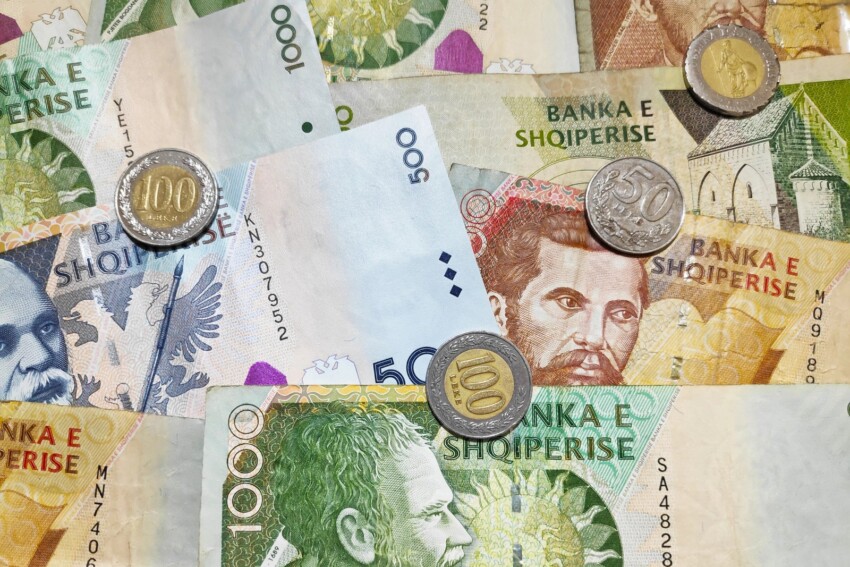
The Lek was introduced in 1926 during the reign of Ahmet Zogu, the first — and only — king of modern Albania. The name is no coincidence: it derives from Alexander the Great, called in Albanian Leka i Madh (the Great Leka), considered a national hero. The earliest Albanian coins bore the effigy of Alexander the Great, claiming a historical and cultural link with the Macedonian-Illyrian tradition.
Throughout history the currency has experienced periods of severe instability. During Enver Hoxha‘s communist regime, in 1965, the government introduced the “new lek” in replacement of the “old lek” at a rate of 10:1, attempting to combat inflation and modernise the economy. This reform leaves traces even today: many older Albanians — and some traders in local markets — still quote prices in lek i vjetër (old lek), citing apparently very high figures that must be divided by 10 to obtain the real value. A market price of “50,000 lek” actually means 5,000 current Lek, or roughly 50 euros. It’s a detail worth bearing in mind to avoid confusion.
After the end of communism in the 1990s, the Lek went through a severe crisis during the collapse of Ponzi schemes in 1997, which led to near civil war and drastic devaluation. Since then the currency has progressively stabilised, and in recent years has shown an overall stable trend against the euro, with contained fluctuations.
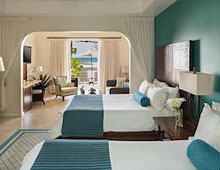 Hotel
Hotel 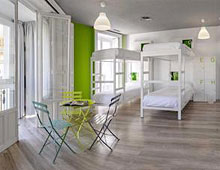 Budget accommodations
 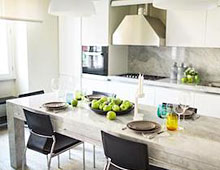 Apartments
  Family Hotel
 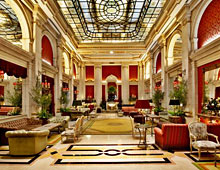 Luxury Hotel
  Resorts