Çoçja Boutique Hotel
Shkodër - Wilson
Book now
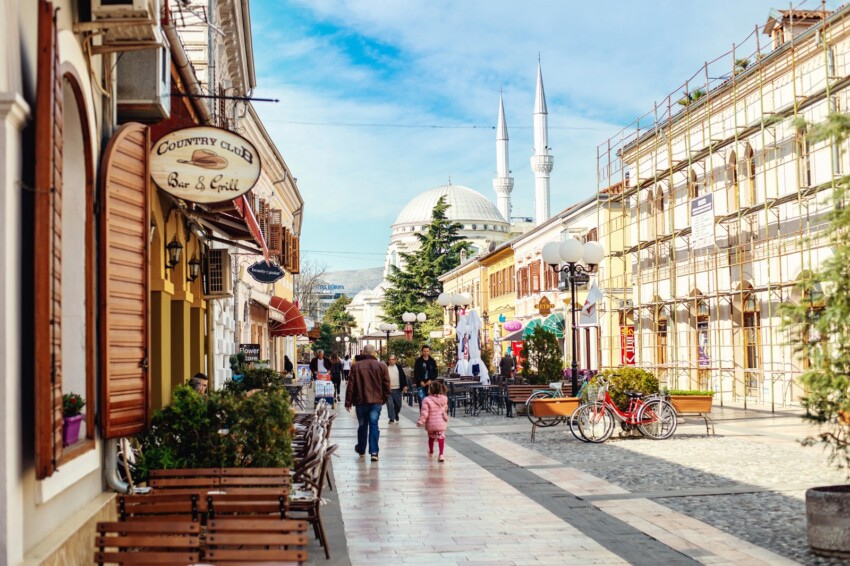
Shkodër (Shkodër in Albanian) is the largest city in northern Albania and one of the country’s most significant historical and cultural centres. Overlooking Lake Shkodër — the Balkans’ most extensive body of water — and surrounded by the foothills of the Albanian Alps, the city occupies an extraordinary geographical position, just over 100 km from Tirana and only 20 km from the Montenegrin border. It’s no wonder the city is often described as the “cradle of Albanian culture” and, perhaps more poetically, the “Florence of the Balkans”.
Its history spans millennia: capital of the Illyrian state in the 2nd century BC, conquered by Romans, Byzantines, Slavs and Venetians, Shkodër has absorbed diverse influences still visible today in the architecture of its historic quarters, in the coexistence of Catholic, Orthodox and Muslim communities, and in the richness of its museums. It is one of the few cities in the world where, within a hundred-metre radius, a mosque, a Catholic church and an Orthodox church stand side by side.
Shkodër is also the gateway to the Albanian Alps: from here you can access routes to Theth, Valbona and Lake Koman, making it a strategic base for exploring the north of the country. The historic centre is compact and pleasant to explore on foot, the local cuisine is authentic and prices remain reasonable compared to more touristy destinations. April, May, June, September and October are the best months to visit, with bright days, pleasant temperatures and excellent light over the lake.
Despite its size, Shkodër manages to surprise with a variety of attractions ranging from archaeology to photography, Ottoman architecture to natural landscapes. The centre can be explored comfortably on foot within a day, but those wanting to explore the lake and surrounding areas will need at least two or three days.
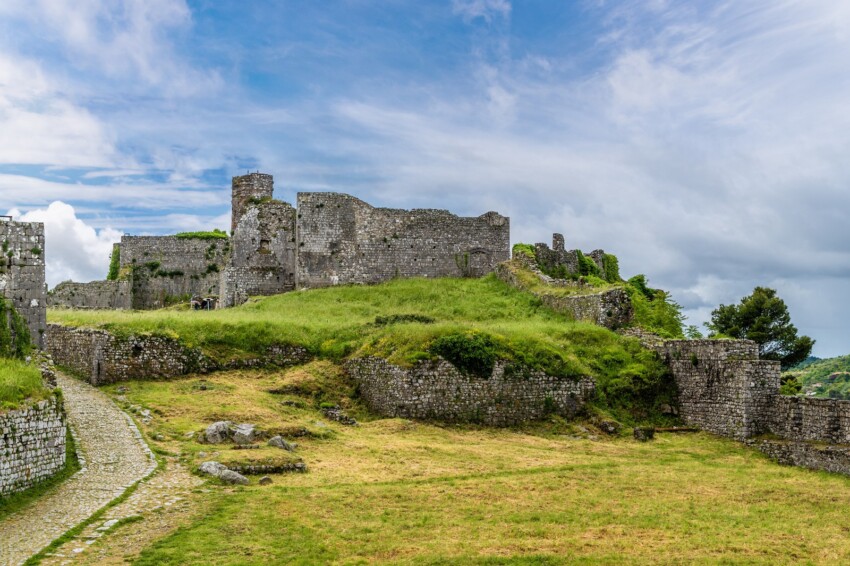
Rozafa Castle (Kalaja e Shkodrës) is the undisputed symbol of the city and the ideal starting point for any visit. Perched on a rocky hill at the confluence of the Drin, Kir and Boiana rivers, it has dominated the surrounding landscape for over two thousand years: the earliest structures date from the 4th century BC, but the walls visible today belong mainly to the Venetian period (1396-1478). The castle is divided into three sectors, of which the most important is the Venetian one, site of the former governor’s residence.
From the castle you enjoy panoramic views of exceptional quality: to the east lies the modern city with its buildings, to the north Lake Shkodër stretches towards Montenegro, and in the distance the peaks of the Albanian Alps. Within the walls is a small museum with documents and artefacts tracing the Illyrian, Roman, Venetian and Ottoman periods. The fortress’s name is linked to the touching legend of Rozafa, a young bride walled alive in the foundations so the construction would stand, to whom it was granted to leave two openings in the stone so she could still nurse her child. A sculpture dedicated to her welcomes visitors near the museum entrance. If arriving by car, the free car park near the Lead Mosque is the most convenient starting point for the walk up to the castle.
The Marubi National Photography Museum (Muzeu Kombëtar i Fotografisë Marubi) is considered one of the most important photography museums not only in Albania but across the entire Balkan peninsula. It houses an archive of over 150,000 negatives and photographs documenting Albanian life from the mid-19th century to the 20th century, created by Pietro Marubi — an Italian photographer who settled in Shkodër — and his Albanian successors. The archive is recognised by UNESCO as documentary heritage of worldwide significance.
The museum is located on the pedestrian Kol Idromeno street, in the heart of the historic centre. The permanent exhibitions tell not only the photographic techniques of the era but above all the faces, costumes, ceremonies and daily life of an Albania that has since disappeared. Entry costs 700 lek (approximately £6) with indicative opening hours of 9:00-14:00 and 16:00-19:00, though it’s advisable to check before visiting.
The beating heart of the historic centre is Kol Idromeno pedestrian street (the so-called Pedonalja), a splendid stone-paved thoroughfare flanked by Venetian-style buildings designed by Shkodër artist and architect Kolë Idromeno. In the evening it comes alive with outdoor tables, families strolling and young people, becoming the city’s social heart. Here you’ll find the Marubi Museum, historic cafés and restaurants where you can sample local cuisine.
Walking through the adjacent alleys you’ll encounter Saint Stephen’s Cathedral — visited by Pope John Paul II in 1993 — and the Nativity Cathedral. The physical proximity of places of worship of different faiths is a unique characteristic of Shkodër and testifies to a tradition of religious coexistence with deep historical roots in the city.
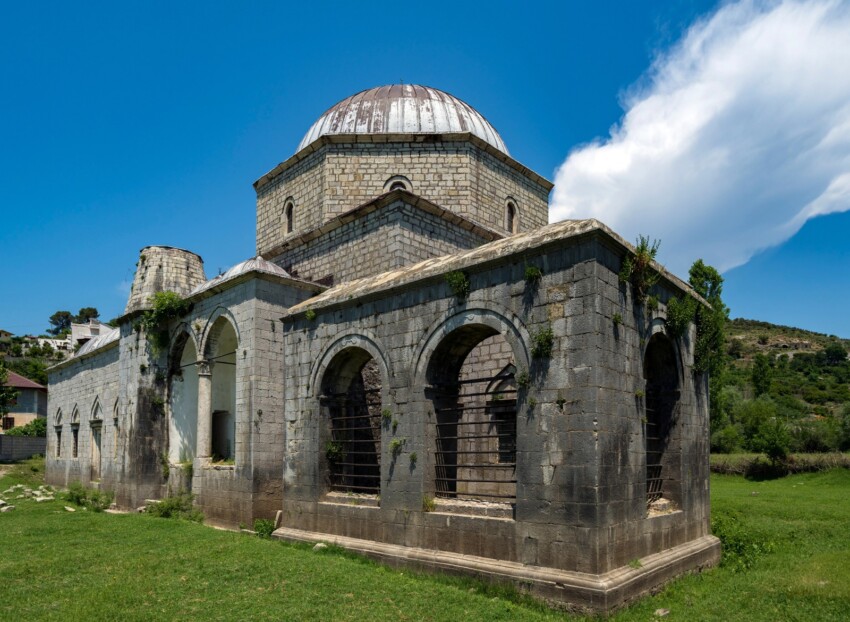
The Lead Mosque (Xhamia e Plumbit) is the only mosque to survive the atheist policies of Enver Hoxha’s regime, which in 1967 declared Albania the world’s first atheist state, destroying or converting all places of worship. Built in 1773-74 by order of Mehmet Pasha Bushati, it takes its name from the lead-covered dome. On 16 November 1990, it was here that the first public religious gathering in Albania was held after 23 years of state atheism, an event of historical significance for the entire country.
It’s located in the Bahçallek quarter, at the foot of the rocky outcrop of Rozafa Castle, and is also a practical reference point for those arriving by car, thanks to free parking nearby. The interior, modest and well-preserved, merits a brief visit outside prayer times.
With its tall minarets prominent on the urban skyline, the Ebu Bekr Mosque is the main visual landmark of Shkodër. The current building, rebuilt in the early 1990s following the end of communism on the site of the ancient Ottoman Fushë Çela mosque, was financed by Saudi businessman Sheikh Zamil Abdullah Al-Zamil and today houses an important Islamic studies centre. The interior is adorned with a large chandelier and careful decorations, whilst the surrounding garden is beautifully maintained. It’s open to visitors during non-prayer hours.
Lake Shkodër (Liqeni i Shkodrës, known in Montenegro as Skadarsko Jezero) is the largest lake in the Balkans, covering approximately 370 km² and extending two-thirds into Montenegrin territory. It’s a nature reserve of extraordinary richness, with hundreds of species of waterbirds, pelican colonies and waters that reach 28°C in summer, making swimming possible. From the Albanian shore, the village of Shiroka — recently renovated with an attractive lakeside promenade — is the most popular stop for views over the lake and the Rumija Mountains reflected in the water.
To reach it from Shkodër’s centre, simply follow the Shëtitorja e Molos pedestrian path towards Rozafa Castle, then turn right across the river bridge: the lake appears on the horizon and the coastal road leads easily to Shiroka. Those with a bicycle — Shkodër is rightly known as the “city of bicycles”, with a well-developed cycle path network — can enjoy this stretch at a leisurely pace.
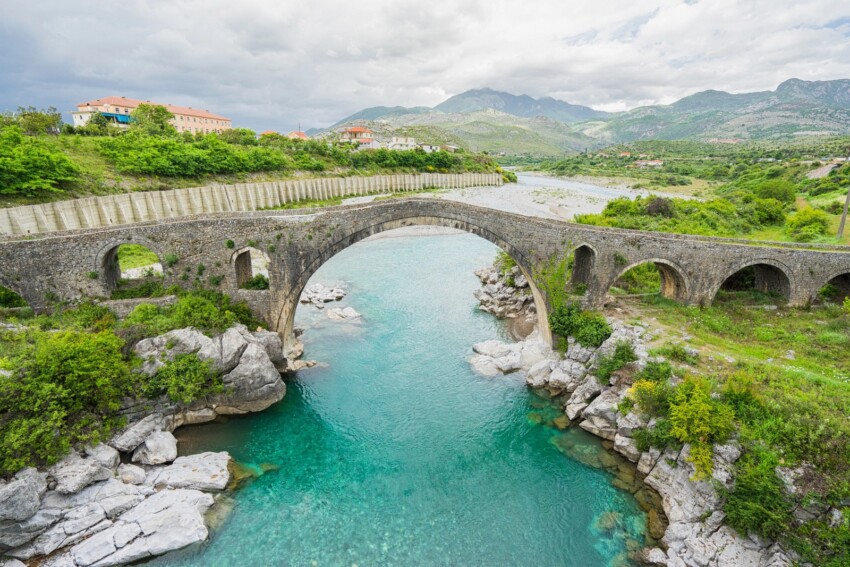
About 5 km from the centre, nestled in countryside along the Kir river, stands Mes Bridge (Ura e Mesit), one of the best-preserved Ottoman monuments in the Balkans. Built in the 18th century, it features 13 stone arches spanning over 100 metres and sits in scenery of rare beauty, with the Albanian Alps in the background. It’s easily accessible by car — parking in the adjacent village and walking there in minutes — or by bicycle as a day trip from the city.
The bridge was originally part of an important trade route connecting Shkodër to interior regions, and its structural solidity remains impressive today. In the morning light, with the sun illuminating the arches reflected in the waters of the Kir, it’s one of the most photogenic spots in all of northern Albania.
Shkodër offers a growing range of accommodation suitable for both budget travellers and those seeking greater comfort. The historic centre, near Kol Idromeno pedestrian street and the Marubi Museum, is the most convenient area for exploring the city on foot: boutique hotels, carefully run B&Bs and guesthouses line the streets alongside restaurants and cafés. Prices are significantly lower than in Tirana, and the quality of hospitality is generally high.
For those preferring a more natural atmosphere, some accommodation is located directly on the shores of Lake Shkodër, in the Shiroka area, with views over the water and Montenegrin mountains. This is ideal for those travelling by car who want to combine visiting the city with cycling excursions or kayaking on the lake. Those planning to depart early for Theth, Valbona or Lake Koman will find central accommodation convenient, well-positioned relative to minibus and morning transfer departure points.
Shkodër is approximately 100 km north-west of Tirana, reachable in just under 2 hours by car via the A1 motorway, completed in 2025. The connection is also convenient by bus: minibuses depart from Tirana’s bus station every 30 minutes or so from 6:30 to 17:00, with tickets costing around £4 per trip. For those arriving from Italy by ferry, Durrës is approximately 1 hour 30 minutes’ drive from Shkodër, following the coastal route northwards.
From Montenegro, the border crossings at Hani i Hotit (38 km away) and Muriqan (16 km away) are the most frequently used. Those using a car or car rental can easily incorporate Shkodër into an itinerary spanning both countries. The nearest airport is Tirana International Airport Nënë Tereza (TIA), approximately 100 km away, from which Shkodër is reachable by car in just under 2 hours.
Shkodër is the natural starting point for some of northern Albania’s most spectacular destinations. Those with a car can explore the surrounding area with complete freedom, but even without your own vehicle it’s possible to organise excursions thanks to minibuses and transfers departing every morning from the city.
Lake Koman is about an hour and a half’s drive away: cruising the lake — with its vertical rocky walls descending into emerald-green waters evoking Norwegian fjords — is one of the most unforgettable experiences in northern Albania. From Fierza, the opposite shore, transfers take around 45 minutes to Valbona, the starting point of the famous trail reaching Theth via the Valbona Pass (6-8 hours for experienced hikers). Theth, an alpine village at 770 m altitude in its namesake National Park, is also reachable by car from Shkodër, but the road requires an SUV or vehicle with good ground clearance.
Just kilometres from the centre you’ll find Drisht Castle, a 15th-century medieval fortress with Venetian remains, and the striking gorge of the Drin river, ideal for those who enjoy trekking and nature. Towards the sea, Velipoje beach is approximately 20 km away and is the nearest beach resort to Shkodër, with a long sandy shoreline overlooking the Adriatic.
What's the weather at Shkodër? Below are the temperatures and the weather forecast at Shkodër for the next few days.
Shkodër is located in north-western Albania, approximately 100 km from Tirana, 16 km from the Montenegrin border and 20 km from the Adriatic coast. It is roughly 38 km from Durrës and approximately 230 km from Gjirokastër, making it an ideal hub for those exploring the country from north to south.
 Hotel
Hotel  Budget accommodations
  Apartments
  Family Hotel
  Luxury Hotel
  Resorts