Arber Hotel
Albania is one of those countries that surprises those who arrive with modest expectations and captivates those who come with curiosity. Within just a few hours’ drive, you can travel from the snow-capped peaks of the Albanian Alps to the turquoise waters of the Ionian Sea, from Ottoman historical centres recognised as UNESCO World Heritage sites to ancient Greek and Roman archaeological sites still surrounded by vegetation. Despite its modest size — the entire country can be crossed from north to south in less than six hours — the variety of landscapes and experiences it offers is remarkable.
Tourism in Albania has grown explosively in recent years: in 2024, Tirana airport surpassed 10 million passengers for the first time, marking a 48% increase compared to the previous year. Yet many of its most beautiful destinations remain far from mass tourism, retaining an authenticity that is hard to find elsewhere in Europe. Prices are among the lowest on the continent, the cuisine is genuine and abundant, and Albanian hospitality is legendary.
Whether you’re drawn to history, nature, the sea or adventure, Albania has something to offer in every season. Spring and autumn are the best times to explore historic cities and mountains, whilst summer is ideal for the Ionian Riviera. To make the most of exploring the more distant destinations, hiring a car at Tirana Airport is the most convenient and flexible option, given that many of the finest places lie away from major public transport routes. Here are the ten locations that best represent Albania and which no traveller should miss.
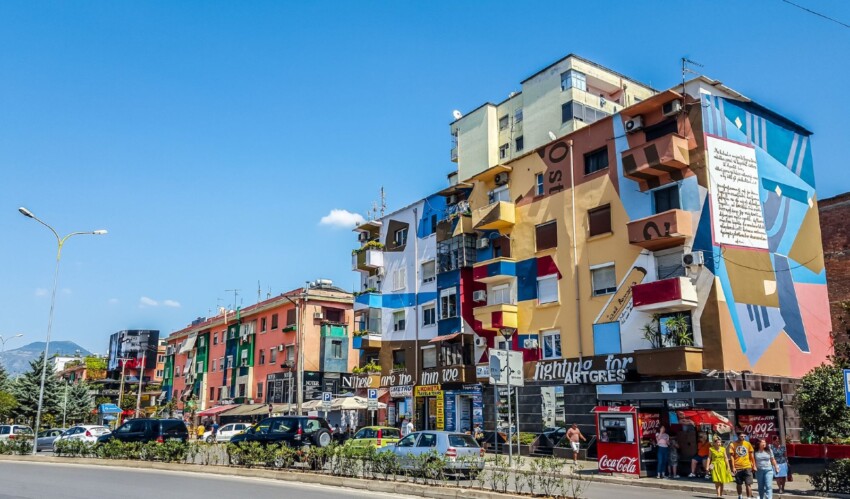
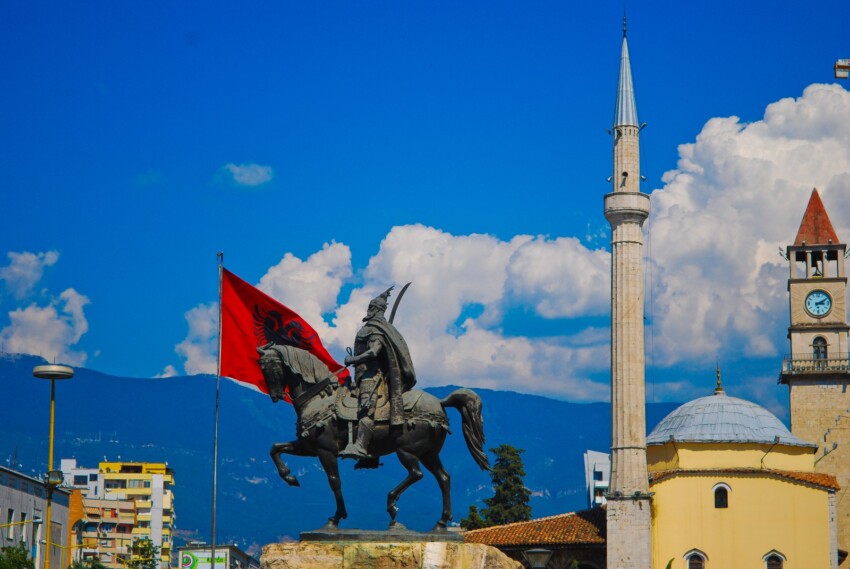
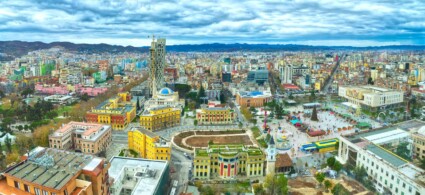
Tirana is Albania’s natural gateway and a capital that surprises almost all visitors. You might expect a grey, post-communist city, but instead you’ll find a vibrant, colourful centre in rapid transformation, with a sophisticated food scene, modern museums and urban energy that is anything but provincial. The city’s heart is Skanderbeg Square, the large pedestrian plaza named after the national hero, around which overlook the Et’hem Bey Mosque from 1789, the Opera House, the National History Museum and the Clock Tower. The Blloku district — once an exclusive zone reserved for Communist Party élites and therefore inaccessible to ordinary citizens — is today the heart of Tirana’s nightlife, with restaurants, cafés and shops open late into the night. Just outside the centre, the Mount Dajti cable car takes you in just a few minutes to over 1,600 m altitude, with panoramic views across the capital and the coastal plain stretching to the Adriatic.
Tirana deserves at least a full day, but first-time visitors will discover it’s easy to stay longer. The museums dedicated to the communist period — such as Bunkart 1 and Bunkart 2, set up inside underground nuclear bunkers — offer a unique and moving perspective on recent Albanian history. The city is also the ideal starting point for reaching Krujë, just 32 km away, where Skanderbeg’s castle and the Ottoman bazaar represent one of the easiest and most rewarding day trips in the country.
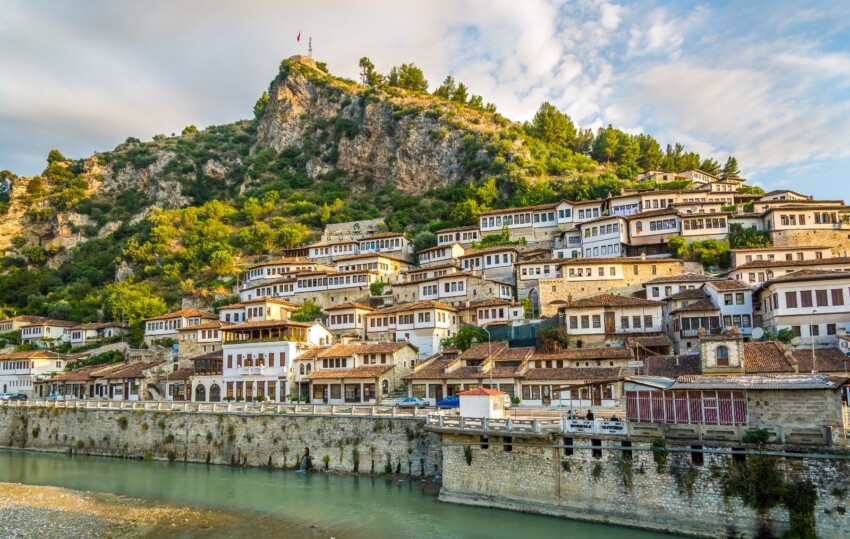
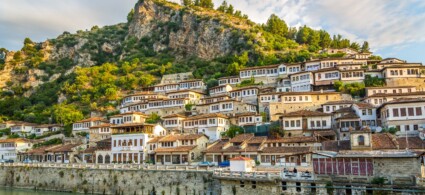
Berat, about 120 km south of Tirana, is nicknamed the “City of a Thousand Windows” for its white Ottoman houses with large windows arranged in rows, cascading up the hillside towards the castle and reflected in the Osum River. It is one of two Albanian sites inscribed on the UNESCO World Heritage List (alongside Gjirokastër), recognised for the exceptional integrity of its Ottoman urban layout and for the historic coexistence of Christian and Muslim communities. The old town is divided into two quarters by the river: Mangalem, the Muslim quarter, with the Sultan’s Mosque and the Lead Mosque; and Gorica, the Christian quarter, with its stone houses and wooden bridges. At the top of the hill stands the Citadel of Berat, an entire inhabited neighbourhood within medieval walls, featuring Byzantine churches, the Onufri Icon Museum and exceptional panoramic views across the entire city and valley.
Berat can be comfortably visited in a day but is absolutely worth staying overnight to enjoy the atmosphere early in the morning before organised groups arrive. It’s two hours’ drive from Tirana and approximately two hours from Gjirokastër, making it a natural stop on any road trip through central-south Albania.
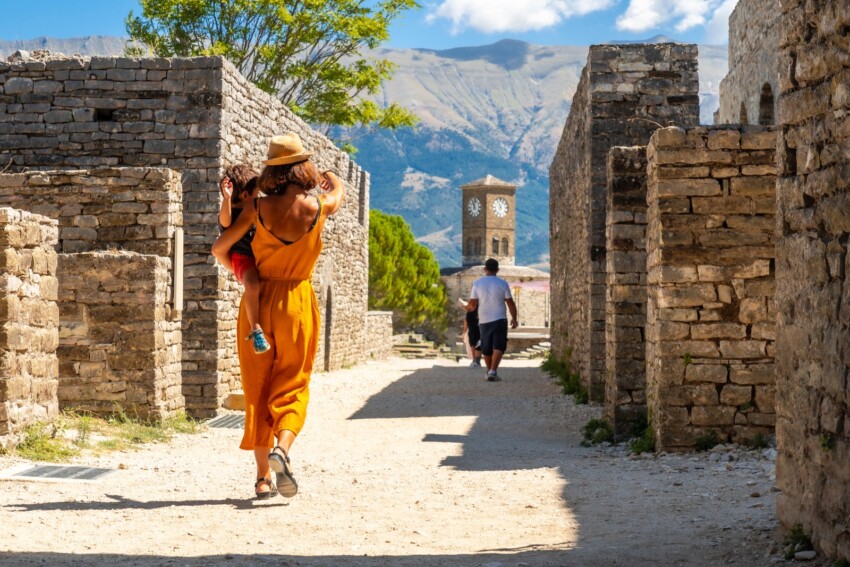
Gjirokastër (meaning “Silver Fortress” in Albanian) is Albania’s other UNESCO World Heritage city and arguably the most evocative of all. Perched on the hillside of Mali i Gjerë, with grey slate roof tiles cascading down towards the Drino River valley and the castle dominating everything from above, it’s a city that seems suspended in Ottoman time. Its castle — the largest in Albania — houses the Weapons Museum and the underground bunker built by dictator Enver Hoxha, which can be visited with a guide.
The Ottoman tower houses (kulle), some of which can be visited such as the Zekate House from 1812, show up close the defensive residential architecture that made the city famous. The Ethnographic Museum, built on the site of Hoxha’s birthplace, and the bazaar with the Mosque from 1557 complete a historic centre that can be explored on foot in a few hours but leaves a lasting impression. Gjirokastër is about 60 km from Saranda and 20 km from the Greek border.
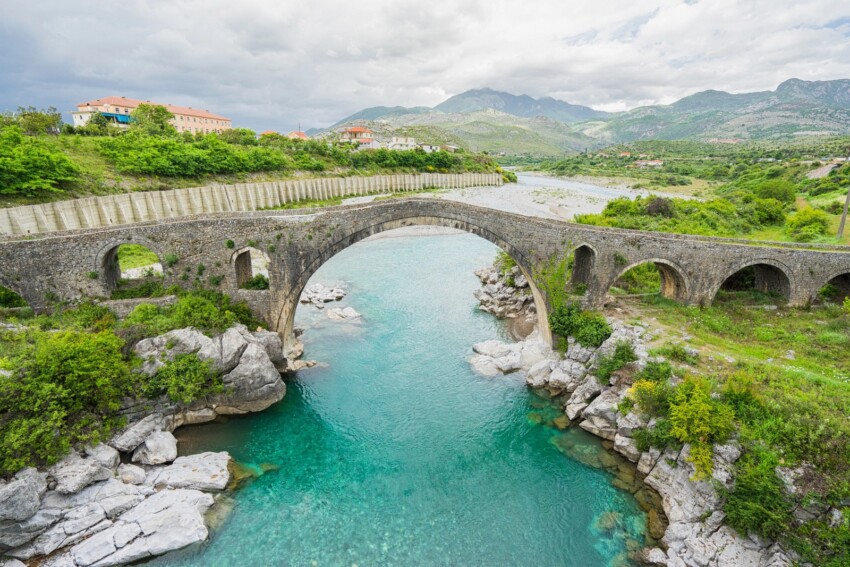
Shkodër is northern Albania’s largest city and the main gateway to the Albanian Alps. Overlooking Lake Shkodër — the largest in the Balkans — with the peaks of the Albanian Alps as a backdrop and a thousand-year history spanning Illyrians, Romans, Venetians and Ottomans, it’s a city that wins you over with its authenticity and variety. Rozafa Castle, initially built in the 4th century BC and remodelled during the Venetian period, dominates the confluence of three rivers and offers some of the country’s finest panoramic views. The Marubi National Photography Museum, with its archive of over 150,000 images of 19th-century Albania, is one of the most fascinating museums throughout Albania. The pedestrian street Kol Idromeno, with its outdoor cafés and the coexistence of mosques, Catholic and Orthodox churches just steps apart, tells the story of this city’s extraordinary religious tolerance. Shkodër is also the ideal logistical base for reaching Lake Koman, the valleys of Theth and Valbona and the Albanian Alps.
The Theth National Park, in the Albanian Alps, is northern Albania’s most spectacular destination and one of the most exciting outdoor destinations on the entire Balkan peninsula. Theth is an alpine village at 770 m altitude surrounded by peaks exceeding 2,000 m, reached from Shkodër in about two hours — partly on unpaved road, necessarily with an SUV.
The landscape is of rare grandeur: deep valleys, beech and pine forests, waterfalls, medieval towers (kulla) and an atmosphere of authentic mountain life far removed from beach tourism. The trail connecting Theth to Valbona via the Valbona Pass (approximately 6-8 hours for experienced hikers) is considered one of the most beautiful in the Balkans. A boat trip on Lake Koman — an artificial reservoir hemmed in between sheer rock walls rising from emerald-green water, often compared to Norwegian fjords — is an experience that perfectly complements any visit to northern Albania.
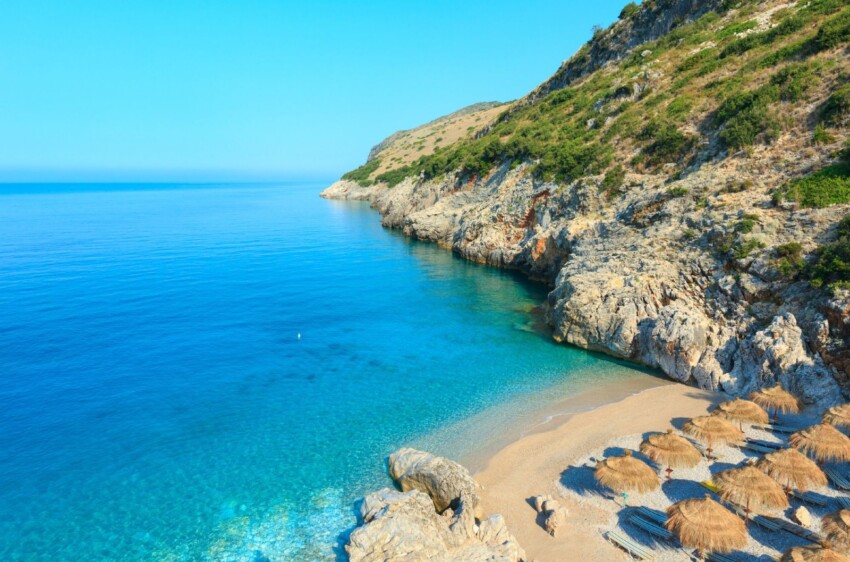
The Albanian Riviera stretches for about 170 km from Vlorë southwards to Saranda, along the Ionian coast, and is home to some of the most beautiful beaches in the eastern Mediterranean. Unlike the nearby Greek coasts, many Albanian beaches are still uncrowded, accessible only on foot or by boat, with waters of extraordinary turquoise clarity. Himarë is the main town on the Riviera: beyond its equipped seafront, it offers a medieval castle dominating the historic village and a series of pristine little bays accessible by boat excursions.
Nearby Dhermi — with its beach stretching over 2 km, the ancient village perched on the mountain and waterfront bars — is the trendiest destination on the Albanian Ionian coast, frequented by a young international clientele. South from Vlorë, the coastal road crosses the Llogara Pass (1,027 m), offering one of the country’s finest panoramic views: on one side the sapphire-blue Ionian Sea, on the other the pine forests of the Albanian Alps.
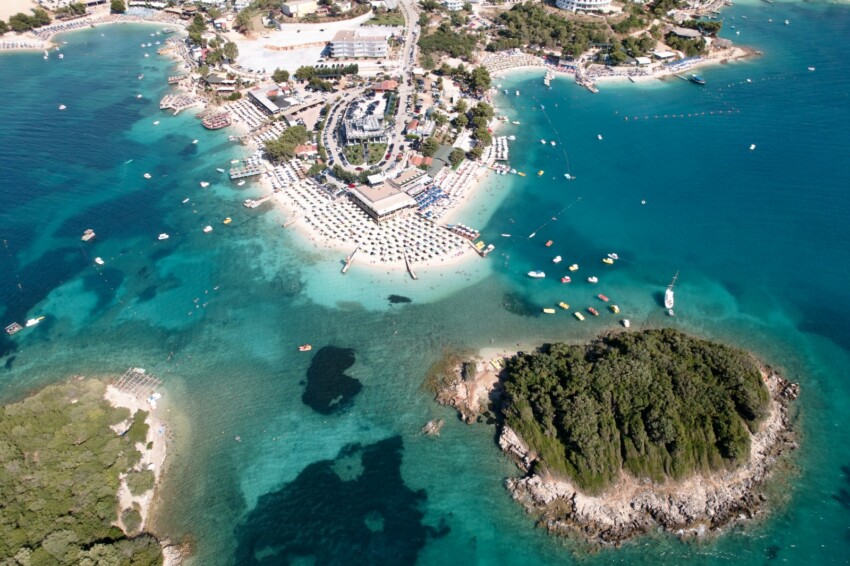
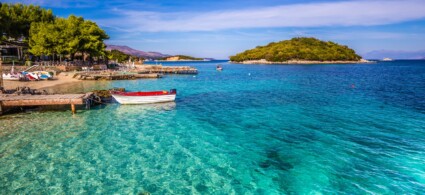
Ksamil is the jewel in Albanian beach tourism’s crown, often described as “Albania’s Maldives” or “the Pearl of the Ionian Sea” for its turquoise waters of almost surreal clarity and three small islands reachable by swimming or boat just metres from shore. Ksamil’s beaches — with their pale sand and gradual sandy slope — are the most photographed in the entire country and the most crowded in July and August.
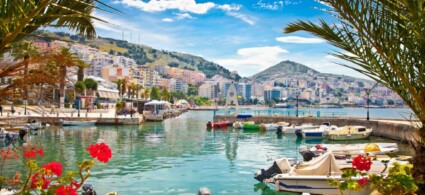
A few kilometres to the north, Saranda is the south’s main coastal city, with a long animated waterfront lined with restaurants, bars and shops. From Saranda it’s easy to reach the Greek island of Corfu by ferry (45-90 minutes), making it a perfect base for those wanting to explore both sides of the strait. The ideal period for Ksamil and Saranda is May-June and September, when the beaches are beautiful but not yet overcrowded.
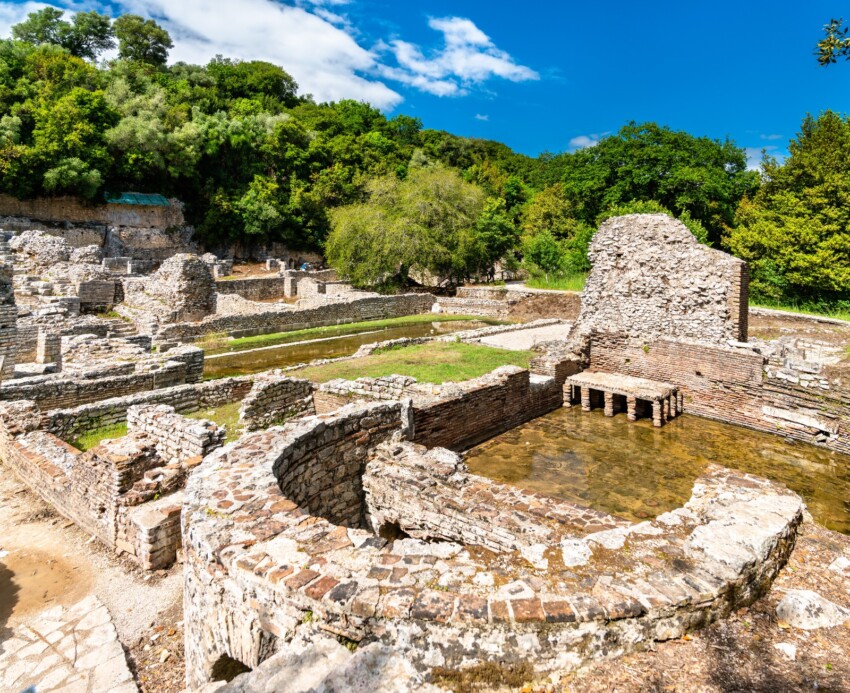
The Butrint Archaeological Park is Albania’s oldest and most stratified UNESCO site: an ancient Greek city, then Roman, then Byzantine and finally Venetian, nestled within a nature reserve of lagoons, forests and coastal waters just kilometres from Ksamil.
Continuously inhabited from prehistory through the Middle Ages, Butrint preserves the remains of a Greek theatre from the 3rd century BC, Roman baths, an early Christian basilica with mosaic floors, a Venetian fortress and watchtowers, all set in an exceptionally beautiful landscape. The visit takes approximately 2-3 hours and is entirely on foot along paths that wind through lush vegetation. Butrint is easily reached from Saranda in about thirty minutes by car, or via the many organised tours departing from the city.
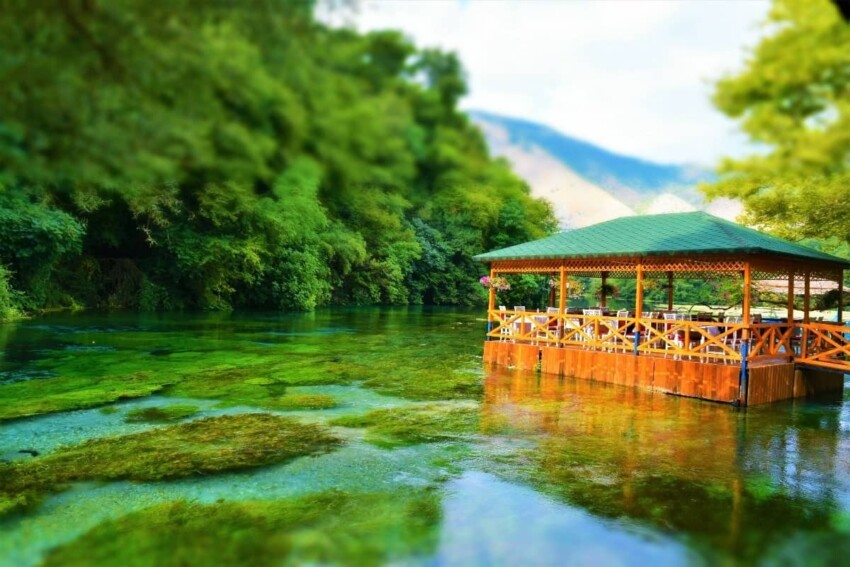
The Blue Eye Spring (Syri i Kaltër in Albanian) is one of southern Albania’s most enchanting natural wonders. It’s a karstic spring of crystalline water — whose depth has not yet been precisely determined — that wells up from underground with an almost supernatural turquoise-blue colour, surrounded by lush vegetation of moss and ferns.
The water temperature remains constant at around 11°C in any season, making it refreshing even in summer heat. The area is protected as a nature reserve and bars and outdoor restaurants are found around the spring. It’s located on the road between Gjirokastër and Saranda, about 30 minutes from Gjirokastër and just over an hour from Saranda, making it a natural stop for those travelling this stretch of the SH4.
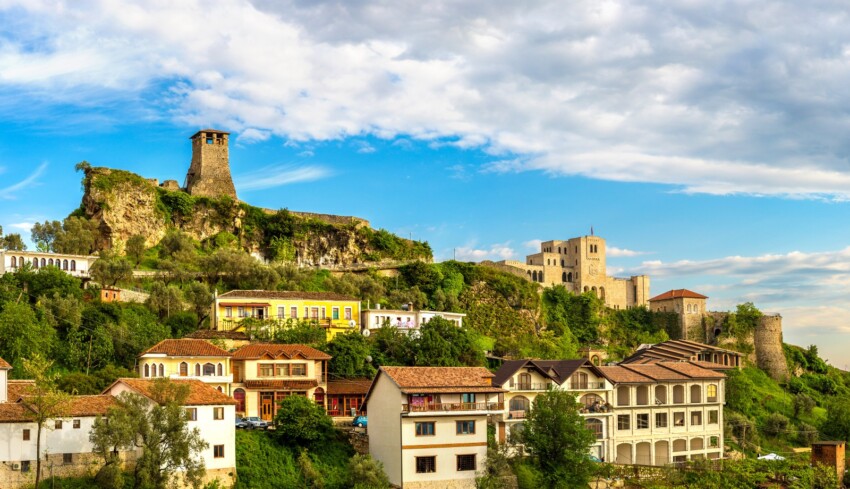
Krujë is the symbolic heart of Albanian national identity, just 32 km from Tirana and easily visited as a half-day excursion from the capital. It was here that on 28 November 1443 Gjergj Kastrioti Skanderbeg raised his flag above the castle and declared the uprising against the Ottoman Empire, launching 25 years of resistance that would make his name legendary throughout Europe.
The Krujë Castle, restored during the twentieth century, houses the Skanderbeg Museum, designed by architect Pranvera Hoxha (daughter of the dictator), with a collection of weapons, documents and furnishings that tell the story of the military commander and Albanian resistance. Beneath the castle winds the Ottoman bazaar, one of Albania’s best-preserved, featuring artisan shops selling filigree jewellery, textiles and copperware that offer an authentic shopping experience. The view from the castle across the Tirana plains and the Adriatic Sea beyond is among the finest in central Albania.
In the following map you can see the location of the main places of interest mentioned in this article.
 Hotel
Hotel  Budget accommodations
  Apartments
  Family Hotel
  Luxury Hotel
  Resorts