The port of Piraeus is located in the municipality of the same name, which is part of the Attica region. It is just over 10 km from the centre of Athens in a south-westerly direction.
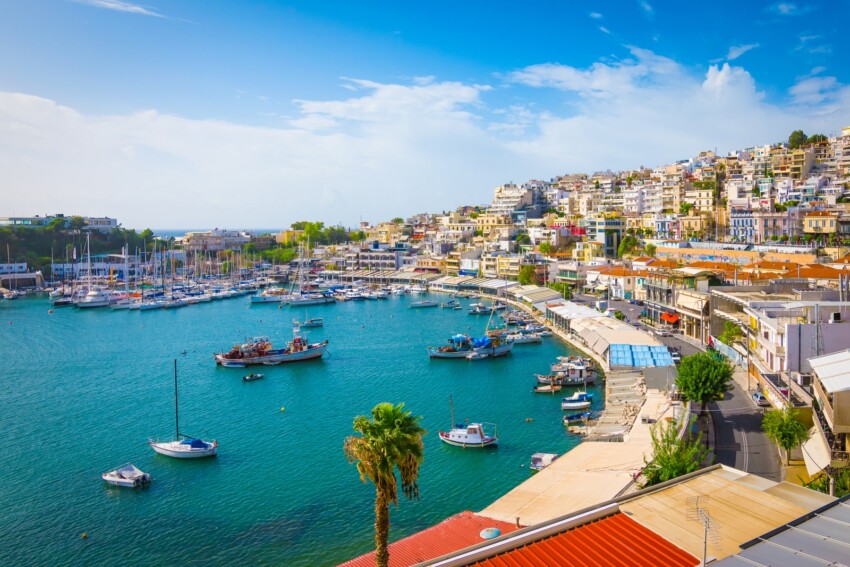
The Port of Piraeus is the heart of the Greek maritime system and the main gateway to the Greek islands from Athens. With over 20 million passengers passing through each year, it is the largest passenger port in Europe and the third largest in the world, connecting the Greek capital with all destinations in the Aegean archipelago.
Located 12 kilometres south-west of the centre of Athens, Piraeus handles over 25,000 ships a year through its 12 specialised terminals. Hundreds of ferries depart daily from the port to the Cyclades, the Dodecanese, Crete, the Saronic Islands and all major Aegean destinations.
The modern structure of the port is divided into three main sections: the central port for passenger ferries, Marina Zeas for private yachts and Mikrolimano for pleasure boats. In addition to the passenger terminals, the complex includes a 900,000-square-metre container terminal, cargo terminal and vehicle areas.
The strategic location and efficient connections to Athens make Piraeus the ideal starting point for exploring the Greek islands, combining a visit to the capital with maritime adventures in the Mediterranean’s most beautiful archipelago.
The metro Line 1 (green line) is the most convenient and fastest way to reach Piraeus Port from anywhere in the capital. Piraeus station is located directly opposite the main terminals, eliminating the need for additional transfers.
The journey from Monastiraki station takes approximately 20 minutes, while from Syntagma it takes 25-30 minutes. Trains operate from 5.30 am until midnight (until 2 am on Friday and Saturday), with a frequency of 3-5 minutes during peak hours and 10-15 minutes at other times.
Alternatively, public buses connect the port with the city centre: line 040 departs from Syntagma Square and line 049 from Omonia Square. Both services operate 24 hours a day with a frequency of 15-20 minutes and a stop within a 10-minute walk from the port.
From Eleftherios Venizelos Airport, the most direct connection is theX96 bus, operating 24 hours a day with departures every 20-30 minutes. The journey takes about 90 minutes depending on traffic and costs 6 euro.
If you prefer the metro, you can use Line 3 (blue) to Monastiraki station and then change to the green Line 1 to Piraeus. The total journey takes about 90 minutes and the combined ticket costs 10 euro.
Taxis from the airport charge a fixed fare: the journey takes 45-70 minutes depending on traffic.
The Port of Piraeus can be reached via the Attiki Odos (A6) and Piraeus Avenue. However, parking inside the port is not permitted. Private parking spaces are available nearby with rates of approximately 8-15 euro per day. It is advisable to book in advance during the high season.
The Port of Piraeus is organised into 12 terminals (E1-E12) specialised for specific destinations. Multilingual electronic display boards provide up-to-date real-time information on departures, delays and gate changes. A free shuttle service connects the more distant terminals during the peak season.
Cyclades (Terminals E6, E7, E8):
Crete (Terminals E2, E3):
Dodecanese (Terminal E1, E2):
Saronic Islands (Terminals E8, E9):
The main companies operating from Piraeus include Blue Star Ferries, Minoan Lines, Anek Lines, Aegean Speed Lines and Seajets. During the summer, many companies intensify their services and operate seasonal connections to smaller destinations.
In addition to the Greek islands, international connections to Italy, Cyprus and other eastern Mediterranean countries depart from the Port of Piraeus. During the summer, some companies operate special routes to less frequented destinations in the Greek archipelago.
To explore all travel options, check out our comprehensive guide on ferries to and from Athens, which also includes connections from the alternative ports of Rafina and Lavrio.
The Port of Piraeus boasts a history dating back thousands of years to ancient Greece, when the great strategist Themistocles made it the base of the powerful Athenian fleet in the 5th century BC. The famous Long Walls connected Athens to its harbour, providing a safe corridor for supplies.
During the Classical period, Piraeus was the most important trading centre in the eastern Mediterranean, with merchants coming from all over the ancient world. With the decline of the Athenian Empire and the Roman occupation, the port retained its strategic importance.
The 19th century marked the modern renaissance of Piraeus, when independent Greece initiated major modernisation works. Investments in the 20th century transformed the port into today’s Mediterranean hub, capable of handling commercial and passenger traffic on a European scale.
Today, Piraeus is a key economic asset for Greece, employing thousands of people and providing the main link to the country’s island economy.
The port of Piraeus is located in the municipality of the same name, which is part of the Attica region. It is just over 10 km from the centre of Athens in a south-westerly direction.

 Hotel
Hotel  Budget accommodations
  Apartments
  Family Hotel
 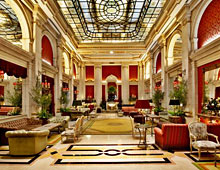 Luxury Hotel
  Resorts