Bestseller
Athens: Acropolis Ticket with Audio Guide
From 39,00 €
Buy the ticket
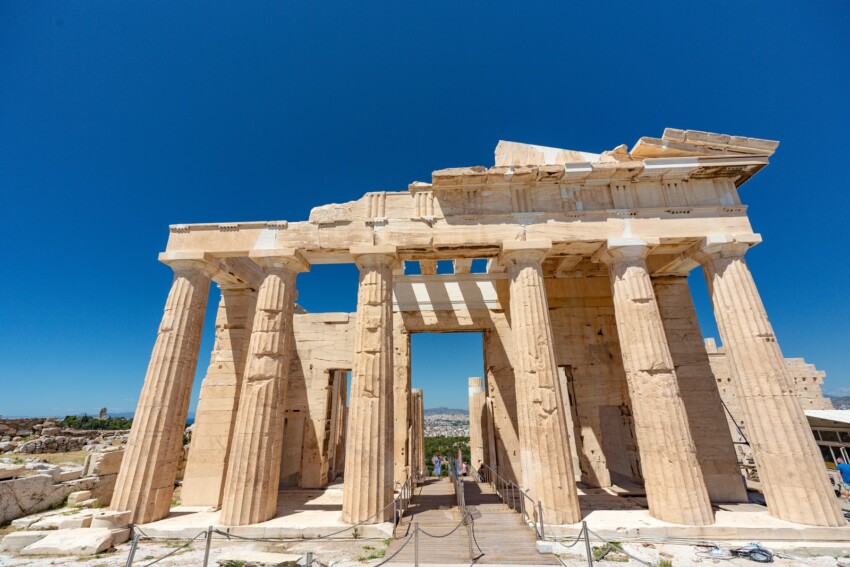
Don’t judge a book by its cover? Well, this saying does not apply if the ‘book’ in question is the Acropolis of Athens and the ‘cover’ its Propylaea. Greece’s top attraction, the emblem of classical beauty and perfection, is entered through a monumental entrance whose majesty does full justice to the splendour of what one will admire inside.
In antiquity, the Propylaea of the Acropolis were a boundary zone that clearly separated the sacred and the profane. By crossing the Propylaea, the worshipper prepared himself spiritually to enter a place entirely dedicated to the worship of deities.
Although this function has disappeared, the Propylaea still retain a grandeur imbued with mysticism that invites religious silence. Or perhaps one is simply left speechless with wonder at such beauty.
For centuries, the structure of the Propylaea has enchanted anyone passing through Athens. In the 19th century, driven by neoclassical taste, this structure imposed itself as an alternative to the Roman model of the triumphal arch; the Propylaea also inspired the Brandenburg Gate, Berlin’s landmark monument inaugurated at the end of the 18th century. It is guaranteed to enchant you too.
And this is just the beginning. Once you have admired the Propylaea, the enchantment continues inside the Acropolis: the Parthenon, the Erechtheion and other monuments of equal importance and beauty await you.
Propylaeum is a generic term used in architecture to indicate an arcade in front of a temple or palace: the name derives from the Propylaea of the Acropolis in Athens, which are therefore not the only ones existing in the world, but simply the most famous. Some guidebooks use the term Propylaeum in the singular to refer to the Propylaea of Athens.
Calling them porticoes is actually reductive because they are a more complex construction with an outer colonnade of Doric order, a central body with an access staircase and three Ionic columns on either side, five gates leading into the Acropolis and an inner colonnade similar to the outer one. The project also included several rooms with different functions, but only one of these was built: it is called a picture gallery, but it served the function of a banquet hall.
Unlike other buildings on the Acropolis, the Propylaea were not a temple and therefore had no religious function, they simply marked the entrance to the sacred area: this explains the lack of decoration in the pediments and metopes.
Construction of the Propylaea began in 437 BC and went on for five years. The spot where they were built coincides with that of the previous fortifications ordered by Pisistratus, which in turn stood on the site of earlier fortifications from the Mycenaean period.
One does not enter the Propylaea: one passes through, like a giant gate or triumphal arch. In order to enter the Propylaea you must buy a ticket to the Acropolis of Athens. It is not possible to see them without entering the paid area because they are some distance from the ticket offices.
You can choose to buy the standard ticket for the Acropolis alone, a combined ticket or tourist pass with access to several attractions or even a guided tour: in all cases it is a good idea to buy online, if possible before departure.
The reason why we recommend buying tickets online is that the Acropolis is the most visited monument in all of Greece and one of the most visited in Europe, so it is taken by throngs of tourists every day. Skip-the-line tickets purchased online allow you to avoid long and stressful waits.
For more information on tickets and guided tours available visit the Acropolis page.
If you are short on time and would like to take part in a complete tour of the Acropolis, we recommend that you choose one of the guided tours below.
The Propylaea can be reached on foot by walking along the paths from the ticket offices of the Acropolis and up a steep flight of steps. Be careful because there are several ticket offices, located at different points, but in all cases from the ticket offices onwards you have to walk because there are no shuttles or other means of transport leading to the Propylaea.
The quickest and most convenient way to reach the ticket offices at the Acropolis is to take the metro. The recommended stops are Akropolis and Monastiraki, located about 400 metres from the ticket offices.
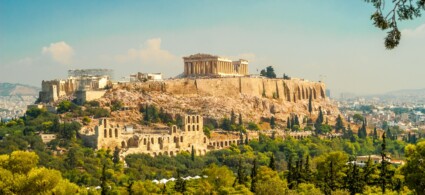
The Propylaea occupy the western edge of the rocky elevation on which the buildings of the Acropolis were erected. They represent the only entrance to the archaeological area of the Acropolis, although you can get to the Propylaea from different points depending on which ticket office you enter from.
The Acropolis of Athens is located in the city centre.

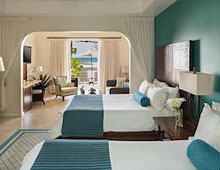 Hotel
Hotel 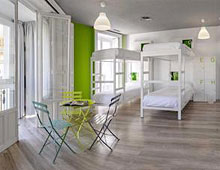 Budget accommodations
  Apartments
  Family Hotel
 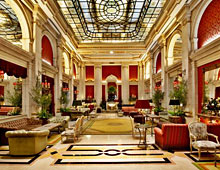 Luxury Hotel
 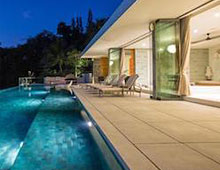 Resorts