Athens: National Archaeological Museum Ticket & Audio Guide
1.334 reviews
Visit the National Archaeological Museum with a convenient e-ticket and self-guided audio tour on your phone.
Buy now
From 29,00€ per person
Athens, the cradle of Western civilisation, is a city that breathes history into every corner. With over 2,500 years of cultural and artistic evolution, the Greek capital offers an incredible concentration of top-class museums. Strolling through the streets of this dynamic metropolis, you will have the opportunity to admire unique archaeological finds, masterpieces of Byzantine art, contemporary art collections and evidence of daily life in ancient Greece.
The museums of Athens are not simply containers of objects, but real time bridges that will allow you to understand the evolution of one of the most influential civilisations in human history. From classical sculptures to ornate ceramics, from Mycenaean jewellery to the treasures of modern Greece, each exhibition tells a fundamental chapter of Mediterranean history.
This guide will take you through the 10 best museums in Athens, selected not only for the relevance of their collections, but also for the visitor experience they offer. Whether you are an archaeology enthusiast, art lover or simply a curious traveller, you are sure to find something that will capture your imagination in these extraordinary cultural spaces.
The National Archaeological Museum in Athens is the largest museum in Greece and one of the most important in the world for the art of classical antiquity. Founded at the end of the 19th century, it houses the richest collection of Greek antiquities in the world, with over 11,000 exhibits spanning 7,000 years.
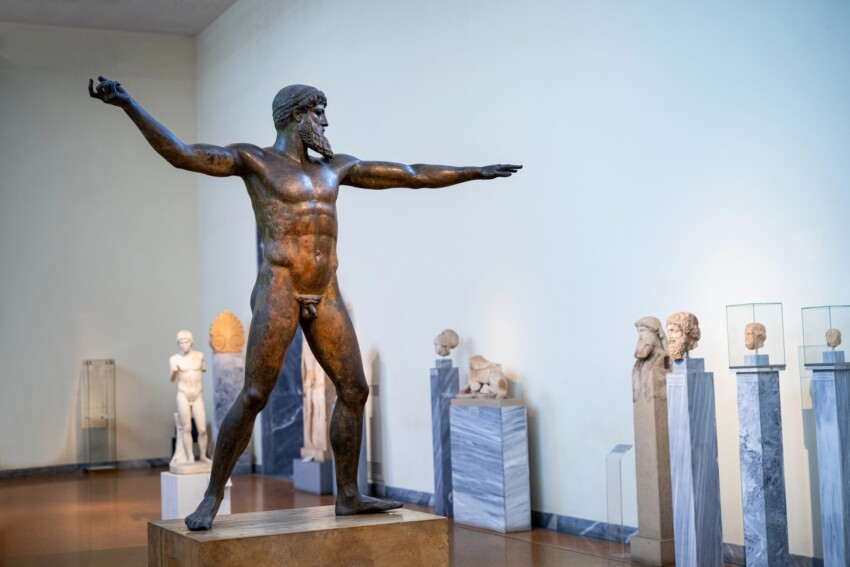
Among the must-see masterpieces are the Mask of Agamemnon, a 16th century BC gold artefact, the majestic Poseidon of Capo Artemisio, a 2.09 metre high bronze statue, and the monumental Kouros of Sounion. The Vase Collection displays extraordinary decorated ceramics, while the Egyptian and Cypriot Rooms offer a perspective on the cultures that influenced Greek civilisation.
The museum is located in the centre of Athens and can be reached by metro (Omonia or Victoria station). Dedicate at least three hours to appreciate the vast collections of this museum that are fundamental to understanding ancient Greek culture.
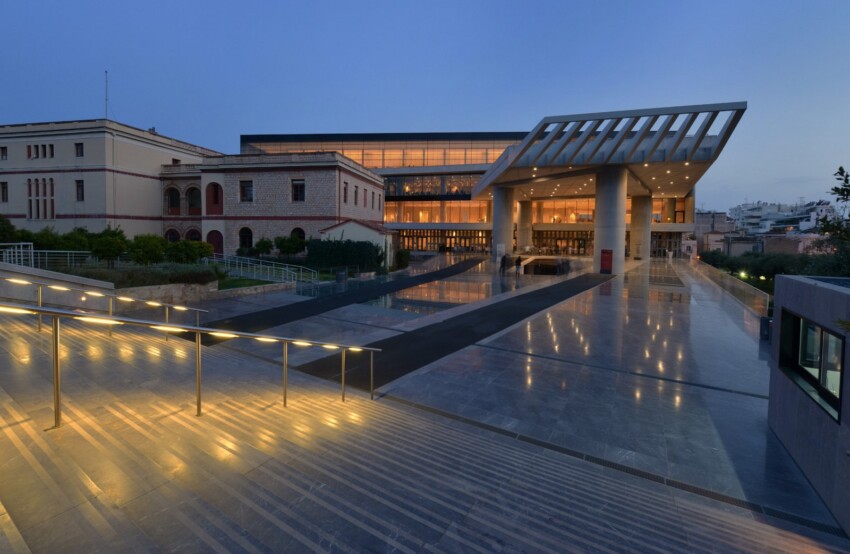
The Acropolis Museum, opened in 2009, is an architectural masterpiece designed to house artefacts from the Acropolis of Athens. Located only 300 metres from the Parthenon, the glass and concrete building allows natural light to illuminate the exhibits and offers spectacular views of the archaeological site.
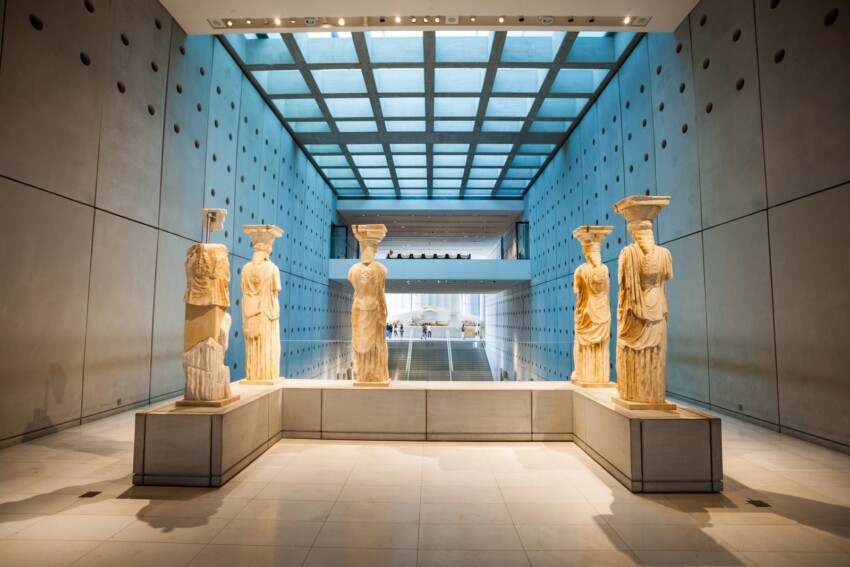
The ground floor features a glass floor that reveals the excavations below and houses artefacts from the slopes of the Acropolis. The first floor is dedicated to archaic sculptures, including the elegant Korai with their enigmatic smiles. The second floor displays the Parthenon frieze and metopes, arranged according to their original location, while the last room houses the five original Caryatids of the Erechtheion.
The rooftop terrace with cafeteria offers a breathtaking view of the Acropolis. Visit the museum in the late afternoon to admire the Parthenon illuminated by the sunset.
The Benaki Museum, founded in 1930, is housed in the neoclassical residence of the Benakis family in central Athens. This unique museum spans the entire evolution of Greek culture, from prehistory to modern times.
The collection, organised chronologically on four floors, includes treasures such as Mycenaean gold jewellery, one of the richest collections of Byzantine icons in the world, traditional costumes from different Greek regions and a significant collection of modern Greek art. Particularly valuable are the Byzantine gold and silver liturgical objects and embroidered textiles.
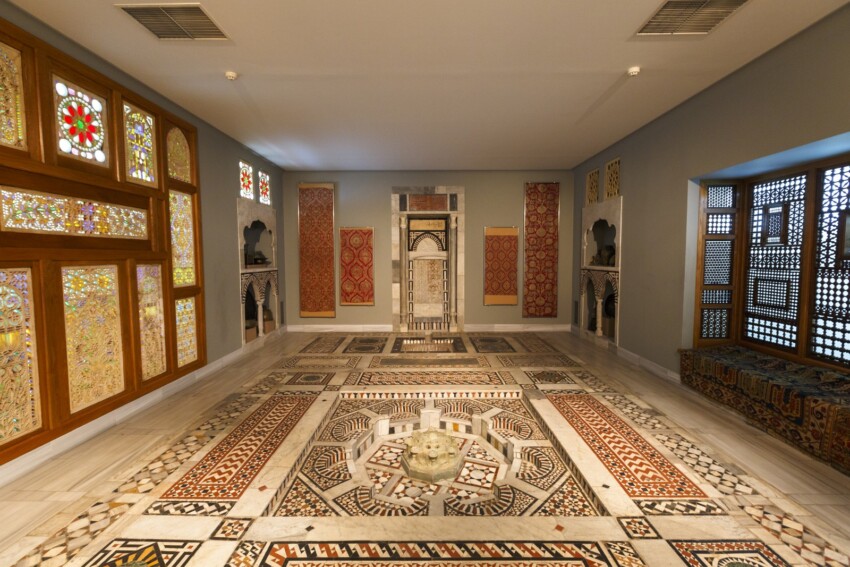
In addition to the main building, the Benaki Museum includes satellite buildings devoted to Islamic art, neoclassical Athenian architecture and contemporary photography. The café-terrace on the top floor offers a panoramic view of the National Gardens and the Parliament.
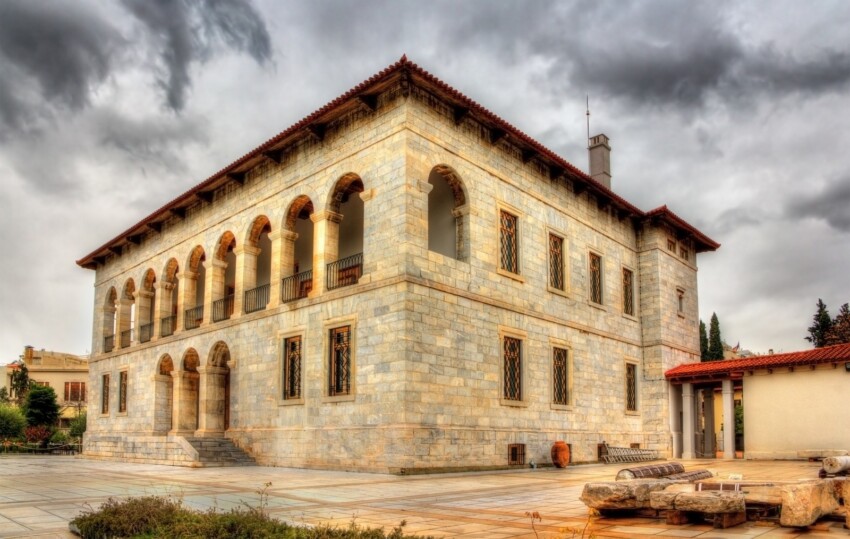
The Byzantine and Christian Museum is housed in the historic Villa Ilissia, a neoclassical building designed as a residence for the Duchess of Piacenza. With a collection of over 25,000 objects dating from the 3rd to the 20th century, this museum documents the evolution of Christian art from the early Christian to the post-Byzantine period.
The exhibition, organised chronologically, includes rare icons that survived iconoclasm, splendid early Christian mosaics, precious illuminated manuscripts and a rich collection of liturgical textiles. The Madonna of the Passion, a 14th century icon, is one of the masterpieces of Byzantine art.
The museum garden houses a collection of Byzantine architectural sculptures arranged in a setting that recreates the atmosphere of a monastic cloister. Temporary exhibitions and educational workshops are regularly organised.
Located close to the centre of Athens, the museum is an invaluable resource for understanding the historical and artistic importance of Byzantium, a bridge between the ancient and medieval worlds.
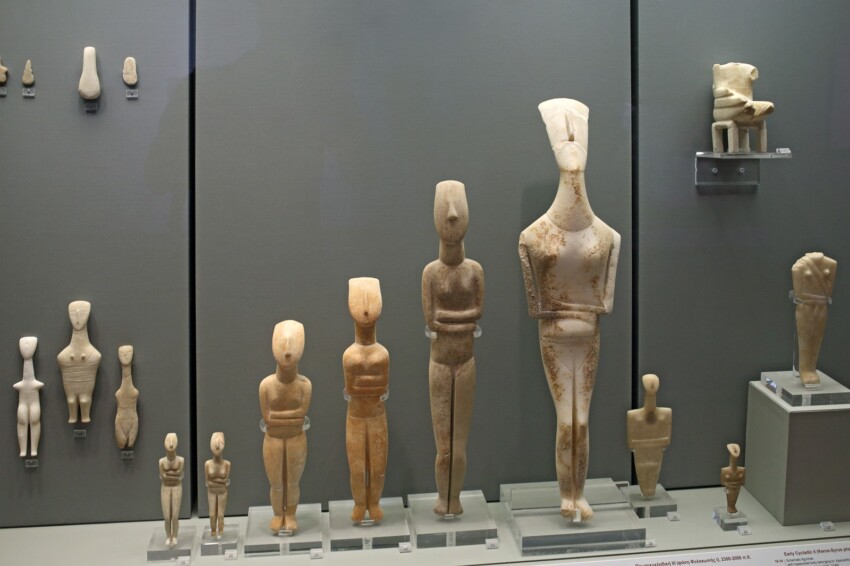
The Museum of Cycladic Art holds one of the world’s most comprehensive collections of Cycladic art, the civilisation that flourished in the Aegean between 3200 and 2000 BC. Founded in 1986 by collectors Nicholas and Dolly Goulandris, the museum occupies an elegant neoclassical building in the Kolonaki district.
At the heart of the collection are the famous Cycladic marble statuettes in stylised and abstract forms, which have influenced modern artists such as Picasso and Modigliani. Female figures with their arms crossed over their stomachs, harp players and representations of hunters testify to a strikingly modern aesthetic.
In addition to Cycladic art, the museum exhibits collections of Greek antiquities and Cypriot art illustrating the cultural evolution of the Aegean world. The Ancient Greek section includes ceramics, terracotta figurines and jewellery from the Bronze Age to the Hellenistic period.
The museum regularly organises temporary exhibitions of modern and contemporary art, establishing a dialogue between past and present. The inner garden with a cafeteria offers a pleasant space to relax.
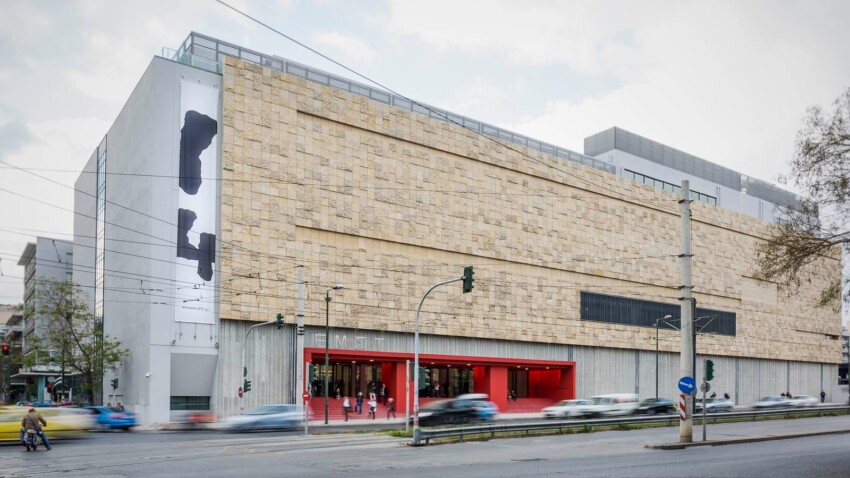
EMST has finally found its permanent home in the former Fix Brewery, a 1950s industrial building renovated by architect Vassilis Sgoutas. Located along Syngrou Avenue, the museum represents a bridge between the old town and the Athenian Riviera.
The permanent collection comprises over 1,000 works documenting the evolution of Greek and international art from the 1960s to the present day. Installations, video art, photography, painting and sculpture explore themes such as identity, memory, globalisation and the economic crisis.
Leading Greek artists such as Yannis Kounellis, Vlassis Caniaris and Chryssa are represented alongside international figures such as Joseph Beuys and Shirin Neshat. Temporary exhibitions, often realised in collaboration with international institutions, present the most innovative trends in contemporary art.
The building, with its flexible and bright spaces, retains elements of its original industrial function, creating a dialogue between historical memory and contemporaneity. The museum also houses a documentation centre, a specialised library and educational workshops.
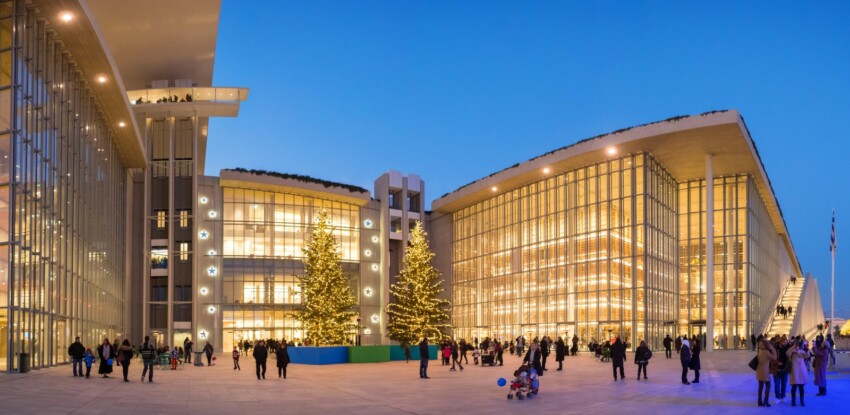
The Stavros Niarchos Foundation is not just a museum but a state-of-the-art cultural complex designed by architect Renzo Piano, opened in 2016. Located in the Faliro Bay, the sustainable building is surrounded by a 210,000 m² park and has quickly become a new symbol of Athens.
The complex houses the National Library of Greece and the Greek National Opera, but also includes exhibition spaces that host temporary exhibitions of contemporary art, photography and design. The Agora, inspired by the ancient Athenian public space, serves as a cultural meeting point with permanent art installations.
The building’s most striking feature is its energy roof, a 10,000 m² structure covered with photovoltaic panels that meet a large part of the complex’s energy needs. The roof offers a 360° panoramic view of Athens, the sea and the Acropolis.
The Stavros Niarchos Park is a model of Mediterranean landscape architecture, with thematic gardens, jogging paths, an artificial canal and a ‘Sound Labyrinth’ that serves as an interactive art installation. Regular concerts, outdoor film screenings and family activities are organised.
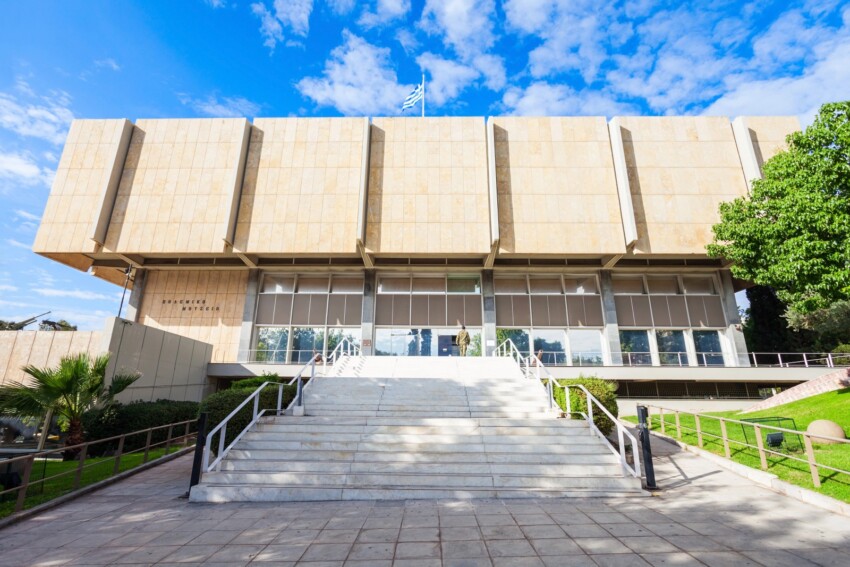
The Athens War Museum, founded in 1975, documents the military history of Greece from antiquity to the present day. Located in a modernist building in the city centre, the museum presents a collection illustrating the struggles of the Greek people for independence and freedom throughout the centuries.
On the ground floor, you can admire ancient Greek weapons, including bronze swords, Corinthian helmets and replicas of war machines. Particularly interesting is the section dedicated to the Greek War of Independence (1821-1829) with weapons, uniforms and personal items of the combatants who fought against the Ottoman Empire.
The upper floors are devoted to more recent wars: the Greek-Turkish War of 1897, the Balkan Wars, the First and Second World Wars and the Greek Civil War. Period photographs, films, uniforms and historical documents illustrate these crucial periods.
The outdoor garden displays military vehicles, aircraft and heavy artillery, including a World War II Spitfire MK IX. The museum regularly organises temporary exhibitions on specific themes of military history and offers educational programmes for schools.
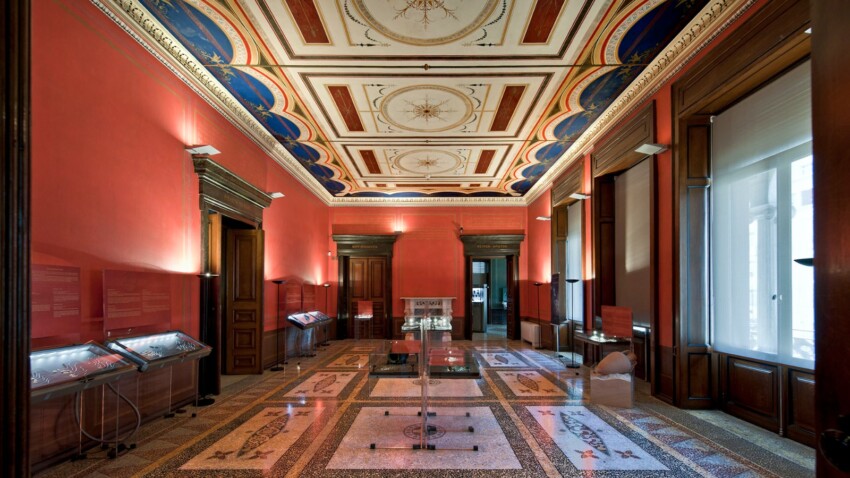
The Numismatic Museum of Athens, one of the most important of its kind in the world, houses over 600,000 coins, medals, gems, weights and documents related to monetary production. Housed in the neoclassical building that was once the residence of Heinrich Schliemann, the archaeologist who discovered Troy and Mycenae, the museum offers a fascinating journey through 2,600 years of economic and artistic history.
The collection, organised chronologically, begins with the first coins minted in electro (a natural alloy of gold and silver) in the 7th century BC in the city of Lydia. It follows the evolution of Greek coins, such as the famous Athenian tetradrachms with the owl of Athena, considered the first international currency of the ancient world.
Particularly impressive is the collection of coins from the Hellenistic period, with detailed portraits of Alexander the Great and his successors. The Roman section includes rare gold coins and denarii with imperial portraits, while the Byzantine section shows the evolution of the gold solidus, the most stable coin in history.
An interactive room allows visitors to explore the technology of ancient coinage and to take a closer look at the details of the coins. The museum also houses a specialised library with rare numismatic volumes.
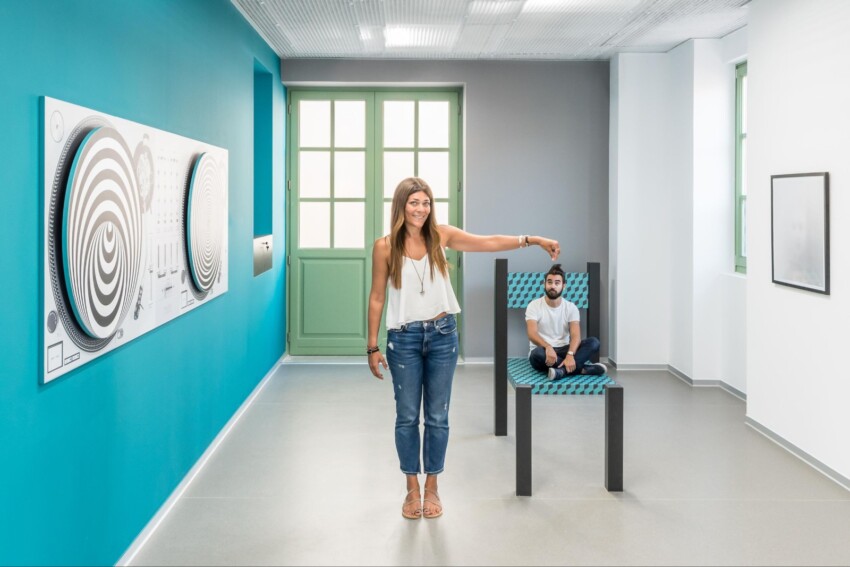
The Athens Museum of Illusions is one of the Greek capital’s most surprising and interactive attractions, where science meets entertainment in an experience that challenges sensory perceptions. Located in the lively Monastiraki neighbourhood, this unique museum offers a fascinating collection of optical illusions, holograms, wonder rooms and interactive installations that challenge your sense of reality.
Visitors can experience the Ames Room, where people appear to shrink or enlarge as they change position, the vortex that tests your balance, and the upside-down room that allows you to take surreal photographs. Unlike traditional museums, here touching, interacting and photographing the exhibits is encouraged, making the visit particularly suitable for families with children and those looking for a fun alternative to the city’s archaeological sites.
The museum is a perfect opportunity to understand the mechanisms of visual perception and to reflect on how our brains interpret – and sometimes misinterpret – the reality around us.
In the following map you can see the location of the main places of interest mentioned in this article.
 Hotel
Hotel 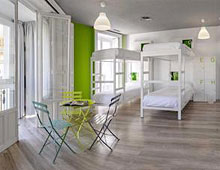 Budget accommodations
 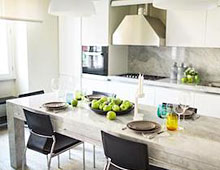 Apartments
  Family Hotel
 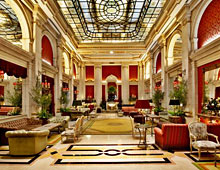 Luxury Hotel
 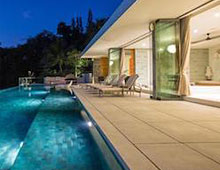 Resorts