Elafonissi Beach
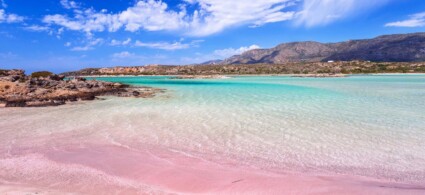
Elafonissi is located on the south-west coast of the island of Crete and is also known for its white beach with pink hues and the turquoise of its waters.
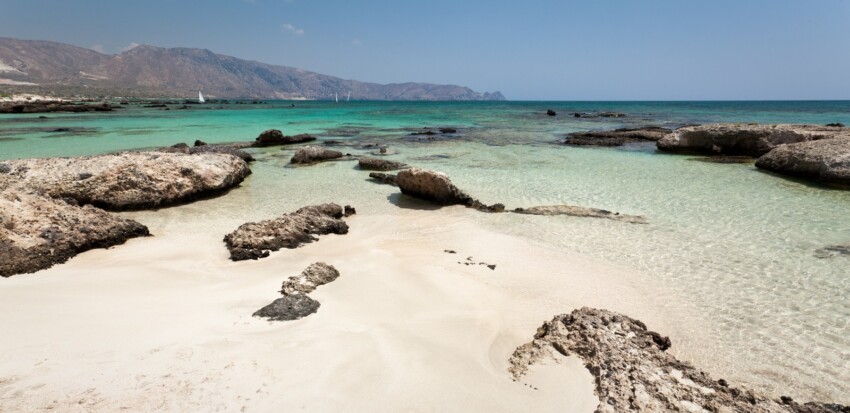
Crete, the largest Greek island and the fifth largest in the Mediterranean, has around a thousand kilometres of coastline characterised by small bays, pink beaches and crystal-clear waters.
Between archaeological sites, memorable cities and a unique historical heritage, the island of Crete also has bathing areas suited to different needs: from equipped to free beaches, from family-friendly areas to those where you can party until late at night.
The western part of the island is home to beaches that are world-famous for their beauty, such as Elafonissi and Balos, while the eastern part is less well known and still strongly linked to the traditions of yesteryear. Here one can find beaches where peace and tranquillity reign, such as Xerakampos.
While the beaches on the north coast are more accessible, more crowded and developed touristically with sandy shores equipped with bars, restaurants and bathing establishments, the beaches on the south coast, on the other hand, are decidedly less frequented and hold true almost deserted paradises with warm crystal-clear waters.
Lapped to the north by the Mediterranean Sea and to the south by the warm waters of the Libyan Sea, it takes at least two weeks to visit the island of Crete and the best way to explore it is to rent a car to get around independently. Here, then, from Chania to Lassithi is a list of beaches that you absolutely cannot miss during a stay on this island.
The province of Chania is the westernmost of the island and it is here that you will find two of the island’s most famous and iconic beaches: Balos and Elafonissi.
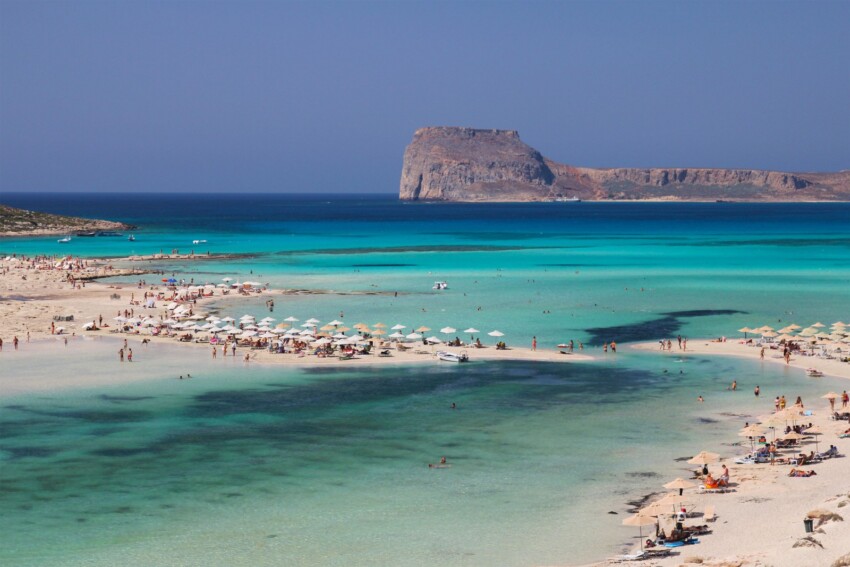
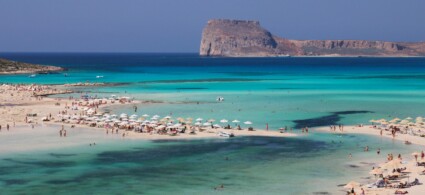
One of Crete’s most famous beaches is undoubtedly the Balos Lagoon where the water is clear and the sand is white and pink, so much so that it looks like a tropical paradise. Balos is part of a protected natural area where one can find even rare species of flora and fauna such as the cormorant, the loggerhead turtle and the monk seal.
The Lagoon can be reached by boat from Kissamos or by following a route first by car and then on foot. If you decide to use the car, be aware that the road to get there offers breathtaking views of the Gulf of Kissamos.
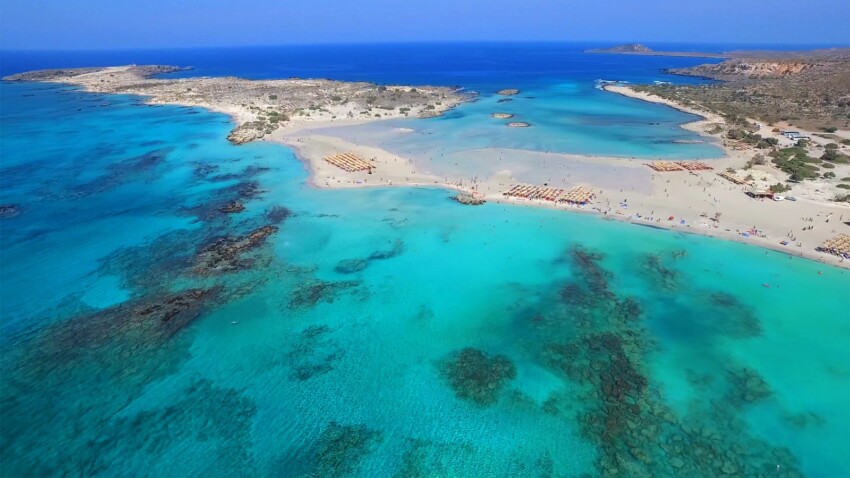
Together with the Balos Lagoon, Elafonissi is a beach not to be missed during a trip to Crete, as it is known as the Caribbean of the Mediterranean for its white beach with pink hues and warm, clear water.
The beach is connected by a narrow tongue of sand to the small island of Elafonissi. This area hides small beaches where one can sunbathe in relaxation and at its end is a lighthouse and the church of Agia Irini.
Set within a protected nature reserve, several rare plants grow in Elafonissi, including white sea daffodils that bloom in summer. Not to be missed here is the magnificent moment of sunset when the sun sets below the horizon line and offers a panorama of breathtaking colours.
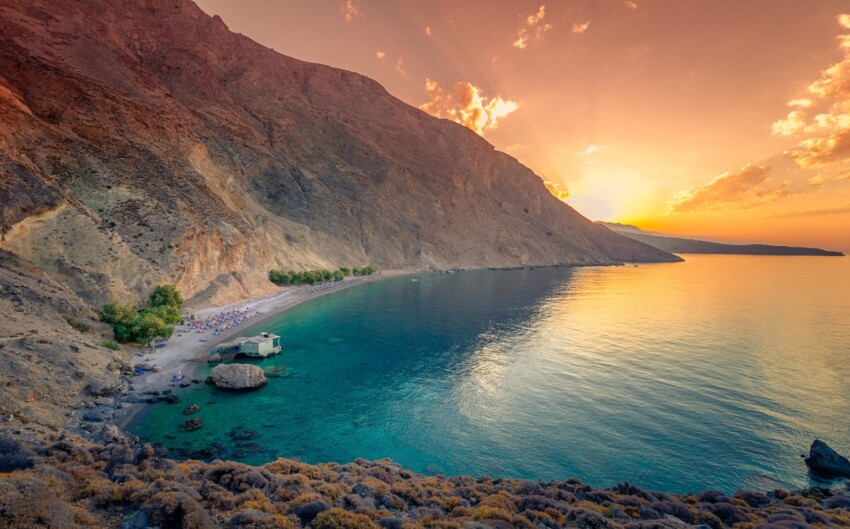
Glyka Nera is a beach located on the south coast of the island of Crete and faces the Libyan Sea. This beach is not very popular with tourists because it can only be reached by small boats that leave from Loutro or Chora Sfakion or by a wild walking route that also starts from the town of Chora Sfakion.
Glyka Nera means ‘fresh water’ in Greek and the name derives from the presence of fresh, drinkable water that comes from an underground spring and emerges among the pebbles on the beach. Surrounded by mountains and characterised by a Sirocco wind, this place is truly a hidden treasure thanks to its pebble beach and deep blue sea.
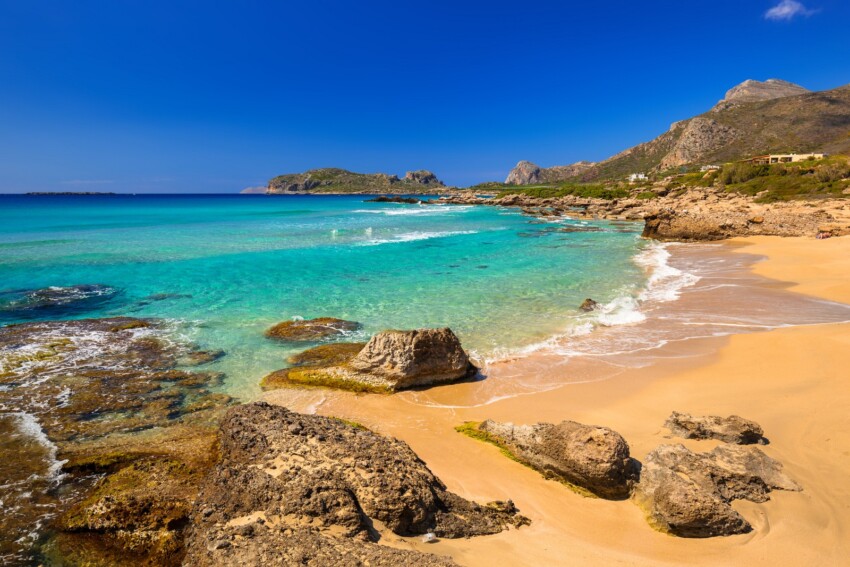
On the podium of the most beautiful beaches of Crete along with Balos and Elafonissi is Falassarna, located just over fifty kilometres from the town of Chania. This beach is often chosen as a destination by surfers due to the presence of winds that create waves suitable for this sport.
There are well-organised facilities that rent umbrellas and sunbeds, as well as small free beaches, and the sunset here in Falassarna is said to be one of the most beautiful and romantic on the island.
The beach Seitan Limania (i.e. ‘the devil’s port’) is located in the hamlet of Akropoli 22 km northeast of the town Chania. It is a natural inlet protected by high rocky cliffs that make it a very special place with a pebble beach mixed with sand and clear waters that can be very rough at times.
Bear in mind that the beach is not equipped and can be reached by car as far as its car park and then it is necessary to walk along a steep rocky path for about ten minutes.
Just to the east is the province of Rethymno. The coastline is rather indented, especially in the southern part. The beaches of Preveli and Triopetra are not to be missed.
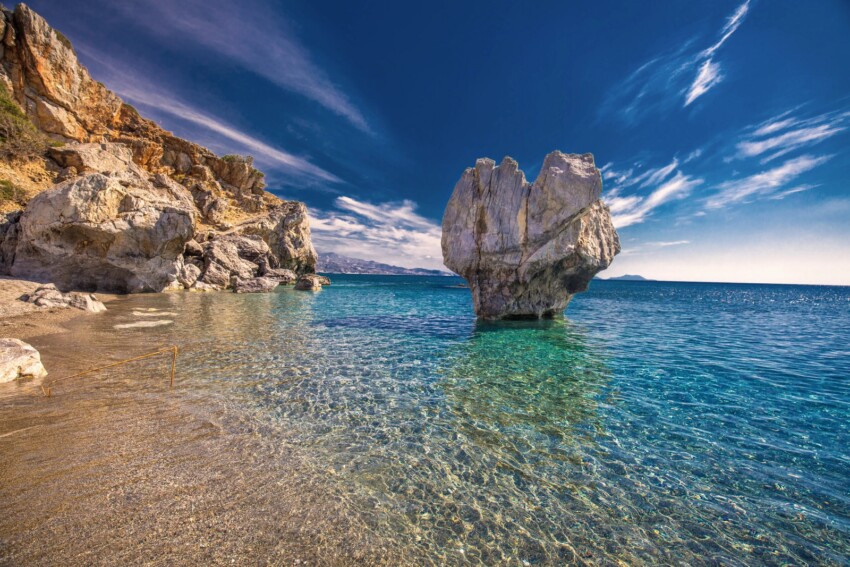
Preveli Beach is 38 km south of Rethymno and is one of the most popular beaches in the area thanks to its lagoon surrounded by palm trees, sand mixed with pebbles and emerald green waters. A true oasis characterised by the presence of the Kourtaliotis river that flows down from the gorge behind the beach into the sea, creating a truly unique landscape. This area is named after the ancient Monastery of Preveli, which dominates the entire bay from the top of a promontory.
You can reach Preveli by boat from Plakias or Agia Galini or by car. If you decide to use yourcar once you have parked it, be aware that to reach the beach you will have to walk down a flight of 500 steps.
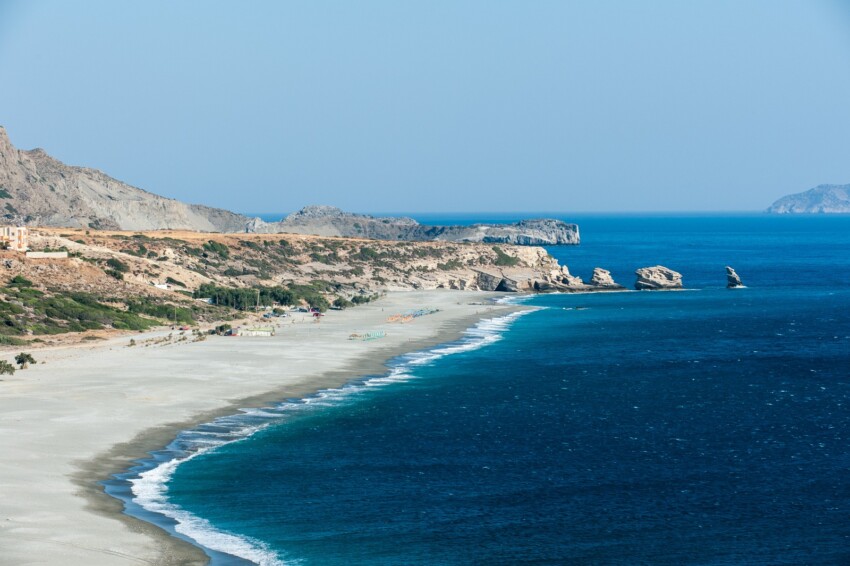
Triopetra means ‘beach of the three stones’ and its name comes from the presence of three imposing stones that emerge from the sea and divide the beach in two. One part of the beach, the larger area, is commonly called Triopetra, while the other part known as Little Triopetra is more contained and quiet.
After a day at Triopetra, don’t leave this beach without admiring the beautiful sunset that occurs here every late afternoon and that can provide truly stunning views.
Along the New Road, the main road connecting eastern and western Crete, we find the picturesque village of Bali, home to Livadi beach. Reachable in less than an hour from either Heraklion or Rethymno, the beach lies within a bay that is well protected from the wind.
The sea waters are clean, warm and shallow while the beach area is large, well equipped and perfectly organised, all details that make it an ideal destination for families with children. Behind the beach there is also an area with several tavernas, restaurants and a few small shops.
Heraklion is the capital of Crete and the place with the most intense nightlife. The beaches in the surroundings, such as Matala and Malia, are therefore most suitable for young people.
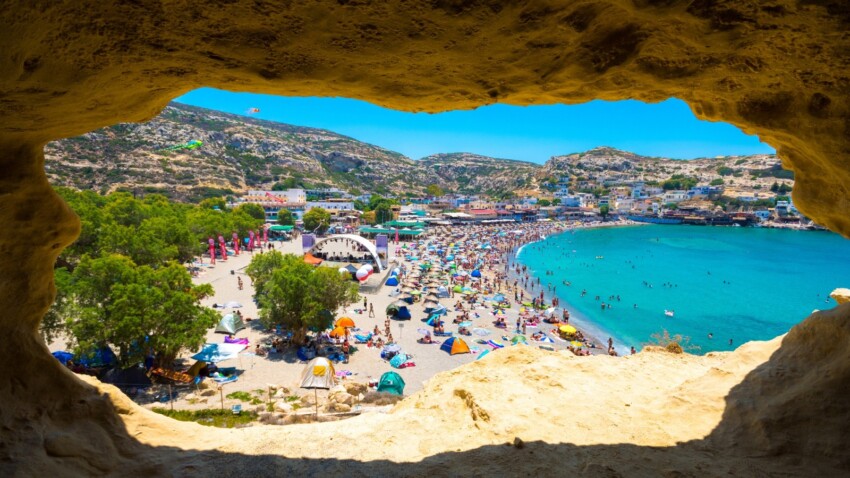
In the 1960s and 1970s, Matala became a refuge for several hippie communities due to the presence of natural caves overlooking a pristine beach. This truly picturesque corner of the island also attracted celebrities such as Bob Dylan and Joni Mitchell, who sang about this beach in her song Carey.
Matala Beach is a wide beach characterised by sand with pebbles and a sea with clean, clear water. The natural caves that were home to hippies in the last century can now be visited, although it is forbidden to sleep here at night. The beach is well equipped with umbrellas and sunbeds, but also with several clubs that organise parties with live music in the evenings.
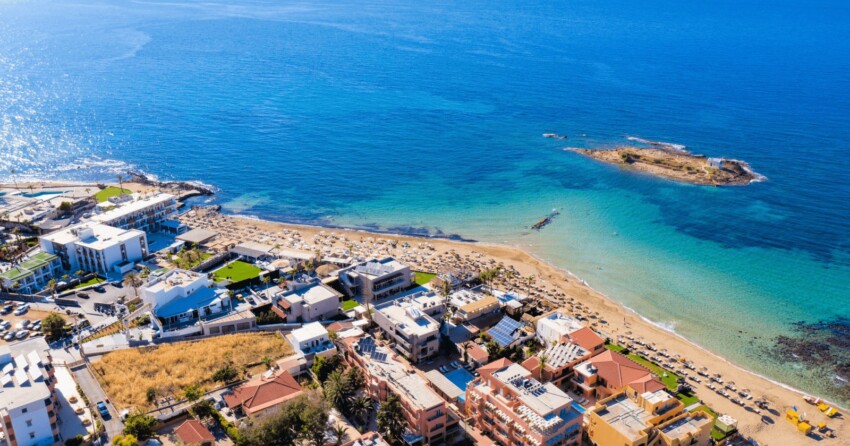
Malia is a small village of agricultural origin thirty kilometres from Heraklion, where some ancient local traditions can still be observed and where you can find the archaeological site of the same name. The beach, not far from the centre, is well equipped and is often a favourite destination for those who enjoy entertainment and late-night parties. It is impossible to get bored on these beaches thanks to the music venues and numerous beach parties where famous DJs often play.
Agiofarago is one of the most famous beaches on the island of Crete due to its special location right at the exit of the Agiofarago Gorge. Situated in the southern part of the island and bathed by the waters of the Libyan Sea, to reach this beach one must take a boat from nearby places such as Matala and Agia Galini or, alternatively, cross the gorge by following a route through its high vertical walls.
Surrounded by high cliffs, Agiofarago is a quiet bay with a beach of small pebbles and crystal-clear water. Excursionists can climb the cliffs to the east and admire the beautiful salt lake of Vourvoulitis from above
The easternmost province is that of Lassithi and boasts one of the most touristy resorts on the island, often used as a base for exploring the area: Agios Nikolaos.
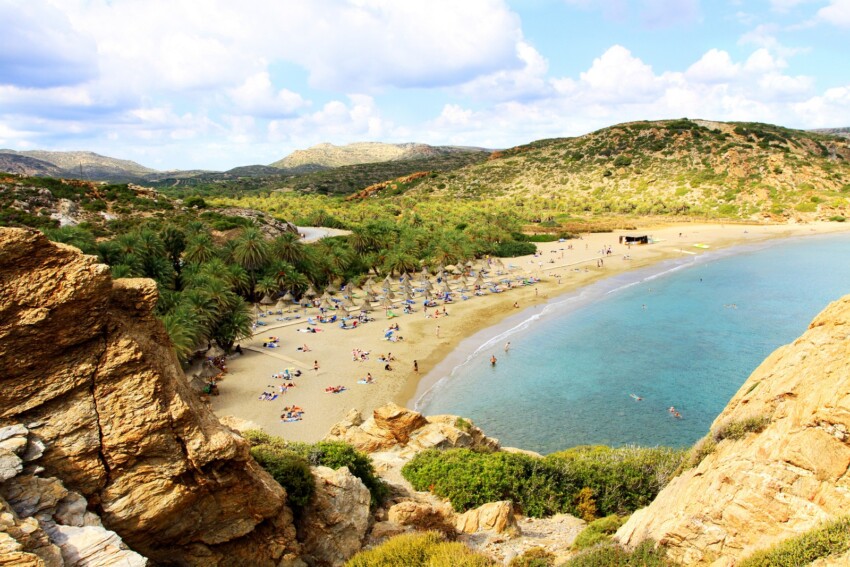
On the east coast of the island of Crete, surrounded by palm trees, is the beach of Vai, which is one of the most beautiful on the island due to its natural setting. Also known as Palm Beach due to the presence of one of the largest palm forests in Europe, Vai is distinguished by its white sandy beach and turquoise waters.
The beach is equipped with umbrellas, sunbeds and the possibility of water sports and, unlike other beaches on the island, the sea here has a rocky seabed that becomes deep within a few metres. From Vai you can walk to the beautiful, unspoilt beach of Psili Ammos, which is still little known and unequipped.
Still little known, Xerakampos is an oasis of peace and tranquillity less than forty kilometres from Sitia. Although it is not easy to get there due to the somewhat winding road, this corner of paradise is characterised by blue sea waters and fine sand that are well worth a visit.
Surrounded by lush and sometimes wild Mediterranean vegetation, Xerokampos beach is ideal for those seeking a relaxing holiday. Here, there are still small villages that carry on old local traditions and you can also find small taverns and restaurants that will offer you excellent fresh fish dishes.
Chrissi, also known as Gaiduronissi, or ‘donkey island’ is a paradise island in the Libyan Sea that can be reached by a boat trip from the town of Ierapetra. Chrissi in Greek means golden, a name derived from the colour of its beach, which is golden with pink hues and surrounded by warm crystal-clear waters where one can snorkel.
The main beach of the island is equipped and here one can rent sunshades and sunbeds. Moving towards the western part, however, one will find small bays with free beaches where sand alternates with pebbles.
Known to be a favourite destination for VIPs and prominent figures in the fields of politics and business, Elounda is the perfect resort for those looking for a luxurious and relaxing stay. This village is located on the beautiful Gulf of Mirabello on the north-east coast of Crete, about 10 km from Agios Nikolaos, andoffers visitors some of the most beautiful views on the island.
The town beach is close to the little one and is well equipped, consisting of soft sand and clear, shallow sea waters. Elounda’s location near the beautiful Spinalonga peninsula also hides small private beaches and coves that are, however, for the exclusive use of a few resorts or villas.
In the following map you can see the location of the main places of interest mentioned in this article.
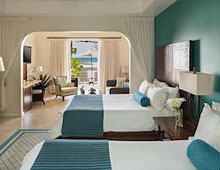 Hotel
Hotel 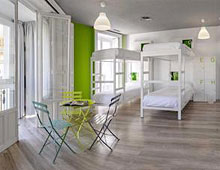 Budget accommodations
 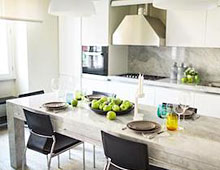 Apartments
  Family Hotel
 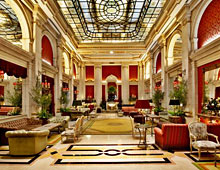 Luxury Hotel
  Resorts