The island of Crete is home not only to archaeological sites, crystal-clear beaches and pristine bays, but also to hiking routes through valleys, canyons and forests.
A millennial history combined with a natural beauty that is at times wild: this is the island of Crete, the largest and most populous of the Greek islands. Cradle first of the Mycenaean civilisation and then of the Minoan civilisation, the island of Crete was the place of occupation of many peoples who left their architectural and cultural heritage.
Some of Greece’s most significant attractions can be found on Crete, such as important archaeological centres, historical religious buildings, magnificent cities and interesting museums. All this is combined with a unique natural environment, not only for its crystal-clear beaches and unspoilt bays, but also for its hiking routes through valleys, canyons, mountains and forests. The island also knows how to please the young and party-loving as several locations prove to be the ideal destination for those who enjoy nightlife, beach parties and late-night dancing.
Crete is also home to a large number of religious buildings including churches, mosques and monasteries. The latter often turn out to be very special places because they are located in isolated environments, far from the city centres and in unique settings. Monasteries have played a very important role in the history of the island because they have often been a place of refuge and a last bastion of resistance during the invasions of the Ottoman Empire.
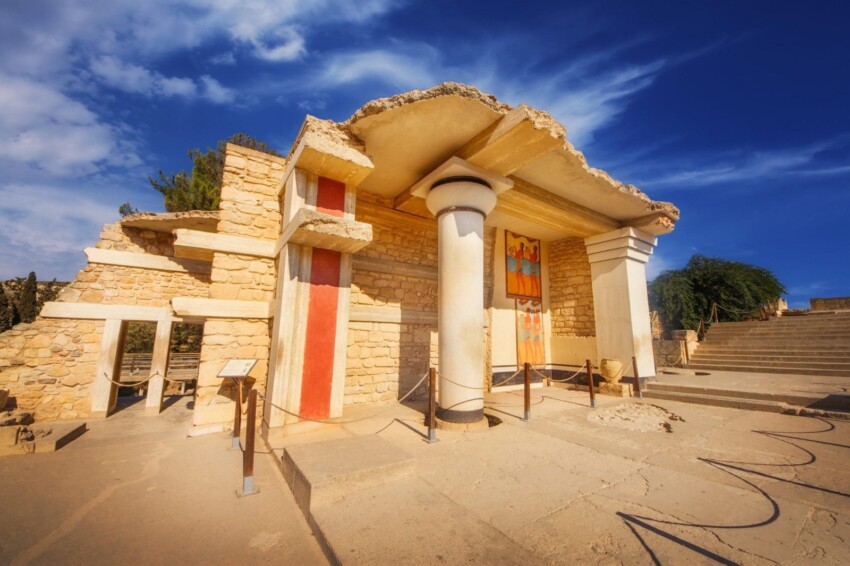
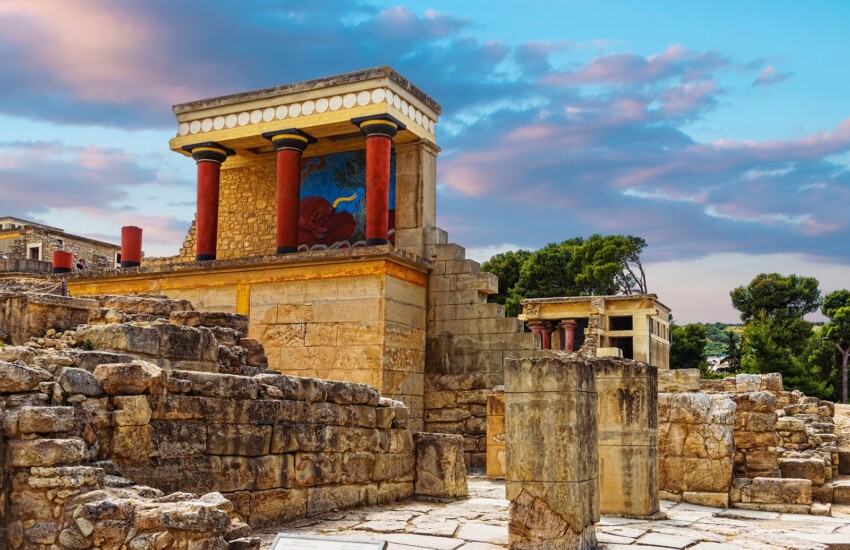
One of the most famous sites in classical mythology, the magnificent Palace of Knossos is located just six kilometres from the city of Heraklion. Knossos was the capital city of the ancient Minoan civilisation where a palace was built in 1900 B.C. not only to house the royal family, but also as a financial, religious and commercial centre. The remains of this important civilisation can be found within the archaeological site reconstructed by British archaeologist Sir Arthur Evans.
Although, according to many experts, the reconstruction made does not reflect the original and is completely arbitrary, the palace site with its many rooms, large courtyards and marvellous frescoes is still a must-see. The Throne Room of Minos and the royal flats, where, especially the queen’s baths, prove to be a truly unique piece of work, should definitely be visited.
In addition to being an important archaeological site, Knossos is special because it is linked to the legend of the Minotaur, a creature half man and half bull. According to Greek mythology, King Minos had a labyrinth built to enclose the Minotaur, a monstrous creature that killed local young men. The story goes that it was Theseus who entered the intricate labyrinth and killed the Minotaur with the help of Ariadne, daughter of King Minos.
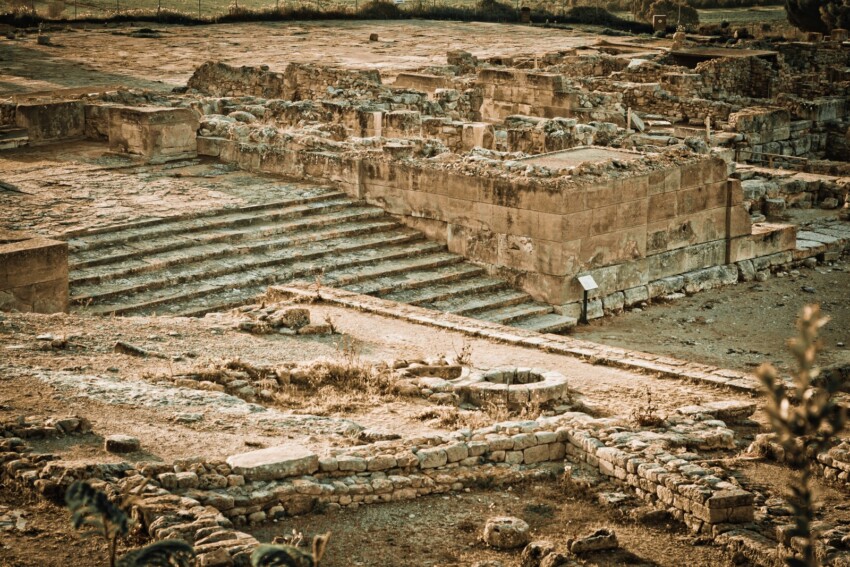
The second most famous archaeological centre on the island after Knossos, Phaistos stands on the Messara plain in the prefecture of Heraklion. Radamantes, son of Zeus and younger brother of King Minos, had the Palace of Phaistos built as his palace around 1900 BC. The complex was unfortunately destroyed by an earthquake in 1700 BC, but was later rebuilt according to a structure very similar to that of Knossos.
It was the Italian School of Archaeology that brought to light the archaeological site of Phaistos, which, unlike Knossos, did not undergo any reconstruction. The complex consisted of a monumental entrance leading to the rectangular courtyard, enclosed by a colonnade, the store rooms and service rooms. The central courtyard, the royal flats and the open-air theatre are among the stops not to be missed during a visit to this site.
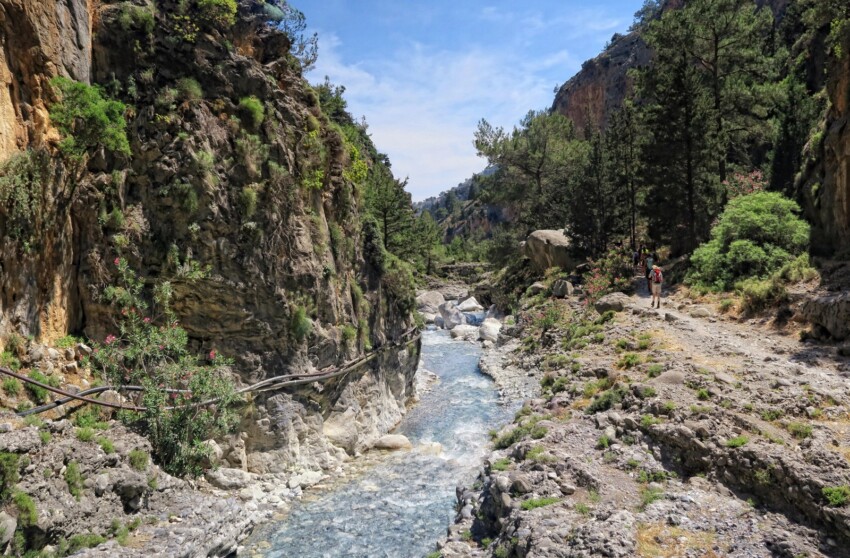
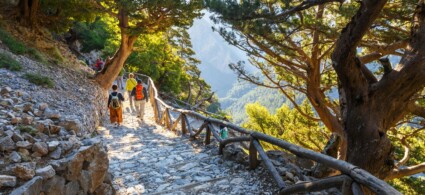
The island of Crete is characterised by the presence of numerous gorges carved into the rock by rivers and streams. The most famous of all is undoubtedly the Samaria Gorge (or rather Samariá), which lies within the National Park and runs from Omalos to the beach of Agia Roumeli on the Libyan Sea.
The route is about 16 km long and runs at first along a downhill path through a verdant forest, then continues on a flatter path inside the gorge proper. Here you walk between high rock walls that in places narrow down to what are known as the ‘Iron Gates‘, i.e. a part of the path that is ‘just’ 3 metres wide.
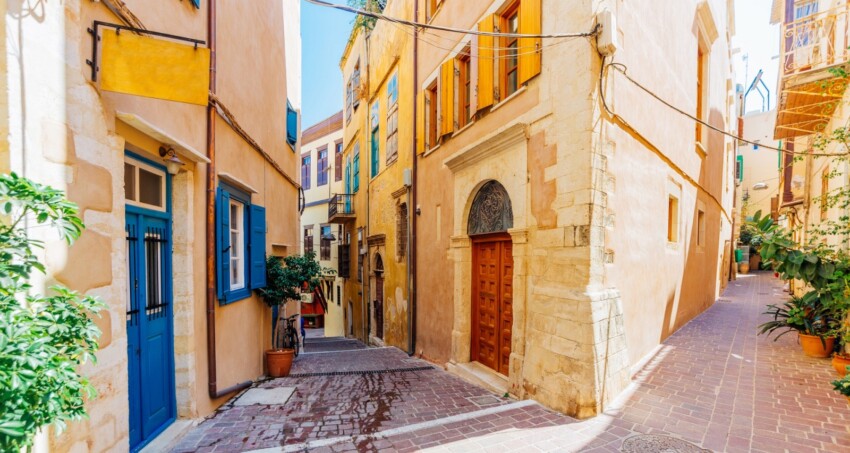
Nicknamed the Venice of the Orient, Chania is a real gem on the north-western coast of the island of Crete. The town has a unique historical and architectural heritage, in which mosques, churches and Venetian-style buildings coexist in harmony.
The oldest part of the town ‘Old Chania’ winds around the harbour and is composed of a labyrinth of alleys in which one can lose oneself among small shops and taverns. Also not to be missed is the area of Tabakaria, the district of the island that once housed the town’s tanneries and now houses small shops selling leather handicrafts.
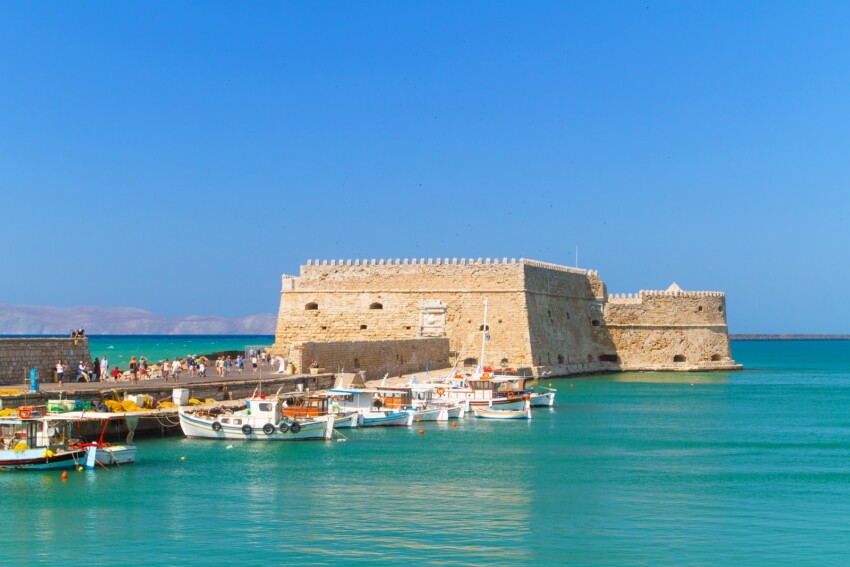
Heraklion is the capital of the island of Crete and the largest city. Its airport is the busiest on the island and in summer the port has daily connections with Piraeus and the main islands of the Cyclades. It is one of the island’s entertainment centres as well as one of the most popular tourist resorts, thanks to unique attractions such as the Palace of Knossos.
Not to be missed is the Archaeological Museum of Heraklion, which houses exhibits that tell more than five thousand years of Cretan history with a section devoted entirely to the Minoan civilisation. Most of the artefacts found in the archaeological sites of Phaistos, Knossos, Malia and other places are now housed in this museum. The famous Phaestos Disk, a terracotta disc dating back to 1700 B.C. found at the Palace of Phaestos, and the beautiful frescoes that decorated the walls of the Palace of Knossos are also preserved here.
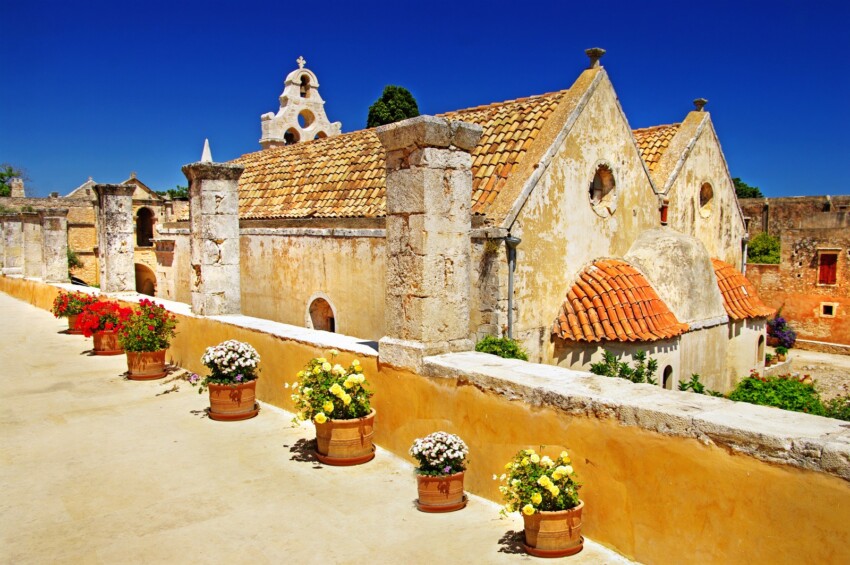
It is the most important monastery on the island, both for its charm and for the history that made it the protagonist of one of Crete’s most tragic pages. It was the year 1866 when, during the Turkish occupation, the Arkadi Monastery had become a place of refuge for several revolutionaries and for part of the population rebelling against Turkish rule. For this reason, the monastery was attacked by the Turks, who, however, had more men, more weapons and more ammunition than the local population. Faced with defeat, the local people decided to blow themselves up in the gunpowder storehouse, rather than surrender to the enemy.
The original structure of the monastery has been rebuilt and can now be visited by tourists who can retrace its history. Don’t miss a visit to the church with its original façade dating back to the 16th century and to the museum that houses evidence and weapons from the Ottoman siege. The monastery is easily accessible from the town of Rethymno as it is only 20 km away.
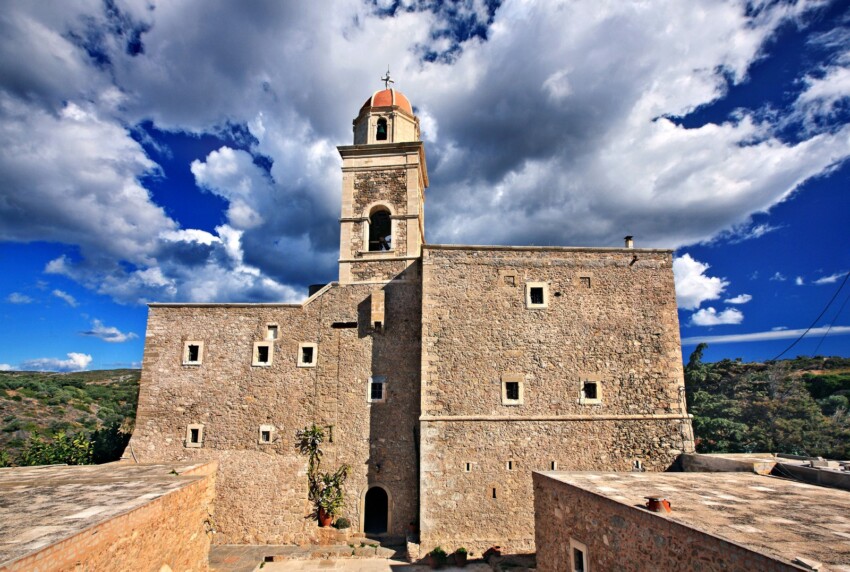
One of the most famous monasteries in Crete for its religious but also historical role, the Toplou Monastery is located in the easternmost part of the island not far from the town of Sitia. The monastery appears to date back to the 15th century although its current name, Toplou Monastir, is of Turkish origin and means ‘Monastery of the Cannons’ this is because it was one of the best protected Venetian fortifications.
During the Turkish occupation, this monastery housed Cretan citizens who were wanted, while during the German occupation, during World War II, the monastery was used as a base by the national resistance movement.
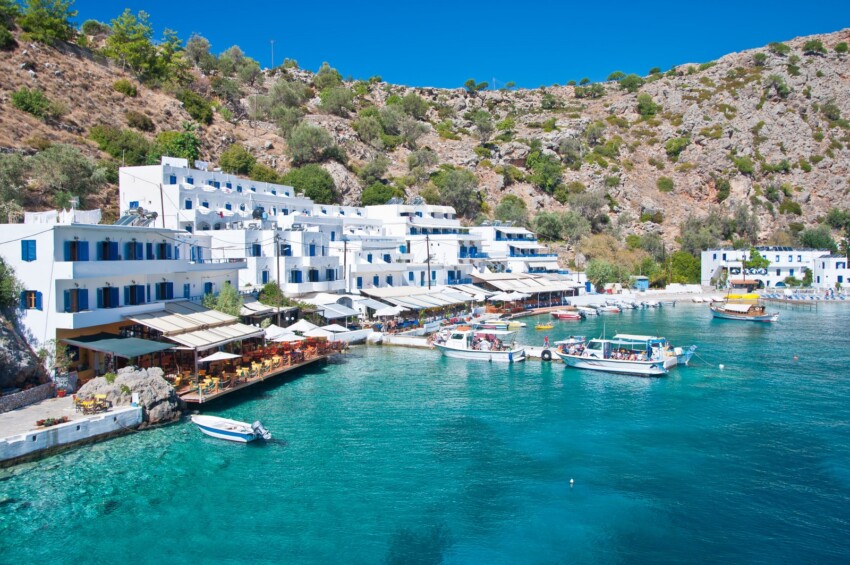
Loutro is a small village nestled in the rocks along the southern coast of the island, in the prefecture of Chania. This village is a magical place that can only be reached in two ways: on foot or by sea. Whether you want to make the journey on foot or reach Loutro by boat, the best starting point is the town of Chora Sfakion.
In Loutro, time really seems to stand still: white houses with blue roofs alternate with small taverns and bed breakfasts overlooking a crystal-clear sea. This is the ideal place for all those who love peace and quiet and for those who prefer to stay in small establishments with a family atmosphere.
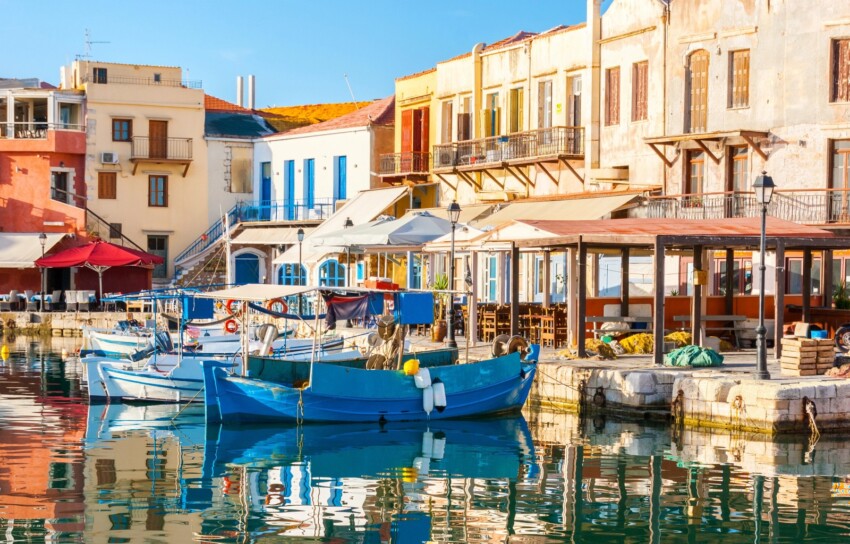
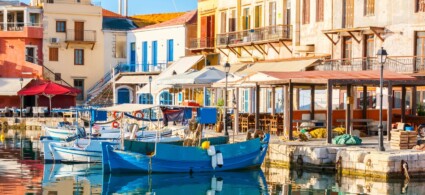
Another Cretan town that is an interesting blend of history and culture is Rethymno, where Venetian architecture coexists with Turkish architecture, historic churches coexist with splendid mosques. The city’s harbour dominated by the imposing Venetian fortress is certainly one of the best places to sit and enjoy a fish lunch while gazing at the sea.
The narrow, cobbled alleyways of its centre are surrounded by Italian-style buildings with blue gates and traditional taverns where you can try Cretan cuisine. Don’t miss a visit to the beautiful Neratze Mosque, which, at the time of Venetian rule, was a church dedicated to the Virgin Mary but was converted into a mosque during Ottoman rule.
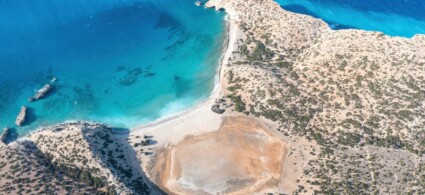
In the Libyan Sea off the south coast of Crete is the island of Chrissi, famous for its tropical waters and its ‘golden beach’. This island is known for its golden-coloured beach that is the result of the natural crushing of countless shells that have mixed with the sand.
Chrissi, also called Gaiduronìsi, is a protected area where it is not possible to stay overnight but where you can spend a truly unforgettable day at sea. There are four main beaches on the island and they are easily reached by a boat ride from the town of Ierapetra.
Map
In the following map you can see the location of the main places of interest mentioned in this article.
 Hotel
Hotel  Budget accommodations
 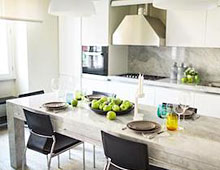 Apartments
  Family Hotel
 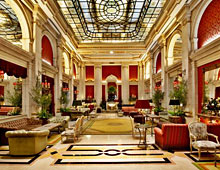 Luxury Hotel
 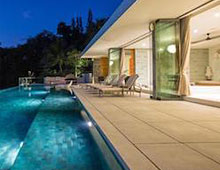 Resorts