Bestseller
From Chania: Samaria Gorge with Professional Hiking Guide
From 30,40 €
Buy the ticket
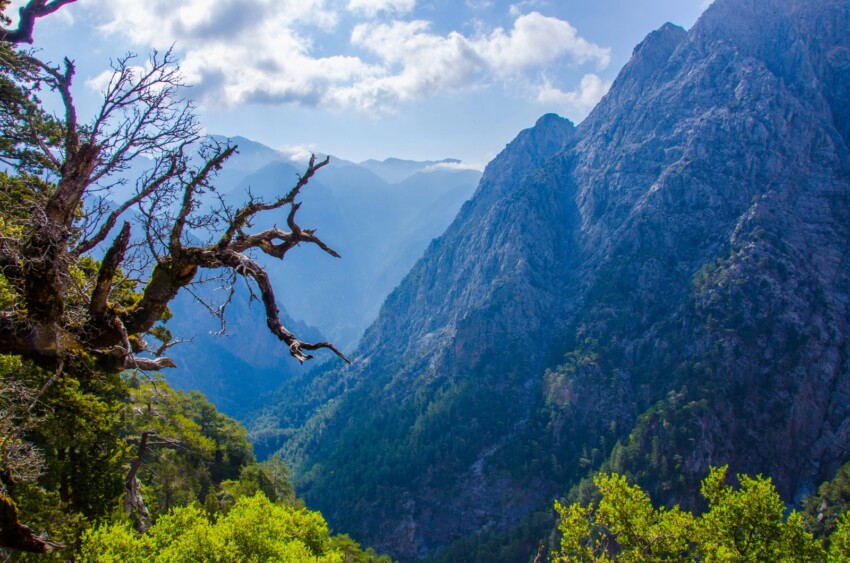
The Samaria Gorges are one of the most spectacular natural treasures on Crete and in the whole of Greece. This impressive canyon, at 16 km long, is the longest in Europe and runs through the White Mountains National Park (Lefka Ori) in the west of the island. Carved out over thousands of years by the waters of the Tarraios River, the canyon reaches a depth of 600 metres in places and narrows to a width of only 3 metres in the famous passage called ‘Portes’ (The Gates) or ‘Iron Gates’.
The traverse of the Samaria Gorge is a unique experience that combines unspoilt nature, thousands of years of history and adventure. Along the way, you will encounter endemic flora and fauna, remains of ancient settlements and admire rock formations moulded by water into striking shapes. The area was declared a Biosphere Reserve by UNESCO in 1981 to protect its incredible biodiversity and the park’s symbol: the kri-kri, the wild goat of Crete, which lives exclusively in this region.
Hiking the Samaria Gorge is a challenging but extremely rewarding undertaking that requires good physical preparation and a full day at your disposal. Every year, thousands of hikers from all over the world embark on this adventure, considered one of the most exciting trekking experiences in the Mediterranean. Before embarking on this excursion, it is advisable to consult the Greek weather forecast, as the gorges may be closed for safety in the event of heavy rain.
The simplest solution is to join an organised tour that takes care of all the logistics. Numerous agencies in Chania, Heraklion and major tourist resorts offer day tours to the Samaria Gorge, including bus transport (mainly from Chania or Rethymno) to the entrance, park entrance ticket, guide (in some options) and return by ferry and bus. These tours depart very early in the morning (around 6am) and return in the evening (around 6-7pm).
The following is the best-selling and best-reviewed guided tour to the Samaria Gorge, your best choice if you have no special requirements!
Alternatively, or if you are departing from other locations, choose one of the following.
The Samaria Gorge is located in western Crete, within the White Mountains National Park. The hike is one-way, starting at the Omalos plateau (entrance to Xyloskalo) in the north and ending at the coastal village of Agia Roumeli in the south.
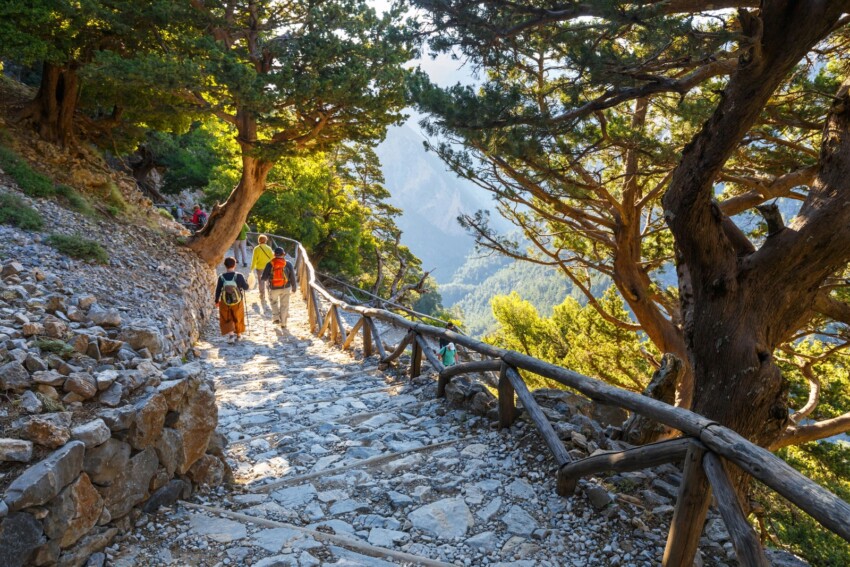
The adventure begins at Xyloskalo, the northern entrance to the gorges located on the Omalos plateau at 1,230 metres above sea level. The name literally means ‘wooden staircase’ and refers to the ancient wooden staircase that once made it possible to descend the steep initial slope. Today you will find a well-constructed stone staircase that snakes its way down the first 2 km of the route with a difference in altitude of about 600 metres.
From this vantage point you can enjoy a breathtaking view of the surrounding mountains and the mouth of the canyon. Here you will also find the National Park Visitor Centre, where you can obtain information about the route, buy an entrance ticket and prepare for the hike. The centre also displays information material on the flora, fauna and geology of the protected area.
Once you begin your descent down the Xyloskalo steps, you will find yourself immersed in a forest of Crete black pine (Pinus nigra) and cypress trees, with increasingly impressive views as you descend towards the bottom of the gorge. The natural beauty here is comparable to other natural wonders of Greece, but with a completely different character.
After about 4 km from the start of the route, you will reach the abandoned village of Samaria, which gives its name to the entire gorge. This small settlement, inhabited until 1962 when the area was declared a national park, offers a window into traditional Cretan life in the past.
The village retains several stone houses, an old school and the picturesque 14th century Byzantine church of Osia Maria (Saint Mary), from which the name Samaria (Saint Mary) derives. The church was recently restored and, during the gorge season, it is possible to visit its interior with its Byzantine frescoes.
The village area is now used as a guard station for the park and a resting place for visitors, with drinking water fountains, picnic tables in the shade of hundred-year-old plane trees and toilets. It is the ideal place for a refreshing stop before continuing the walk.
One of the most spectacular and photographed spots on the entire route are Le Portes (The Gates), also known as the Iron Gates. This is a very narrow passage about 13 km from the start, where the rock walls rise vertically for over 300 metres, narrowing the canyon to a width of only 3-4 metres.
Walking through this spectacular natural corridor is a thrilling experience: light filters in from above creating shadows on the rocks, while the sound of water flowing at your feet is amplified by the walls. This is certainly one of the most memorable moments of the hike and an unmissable photo point.
The village of Agia Roumeli marks the end of the hike through the gorges. This small coastal settlement, accessible only by sea or through the gorges themselves, will welcome you with its traditional taverns, cafes and pebble beaches where you can finally relax and swim in the crystal-clear waters of the Libyan Sea. As in many other Greek tavernas, here you can taste traditional dishes made with local ingredients.
The village has the remains of a Venetian fortress and a Byzantine church that you can visit if you still have energy. Most hikers, after completing their trek, prefer to enjoy a restorative meal in one of the local tavernas, specialising in traditional Cretan dishes, and then relax on the beach while waiting for the ferry to return.
The Samaria Gorge is home to a unique ecosystem with over 450 plant species, many of which are endemic to Crete. Along the way, you can admire a wide variety of wild flowers (particularly abundant in spring), herbs, oriental plane trees, pines and cypresses.
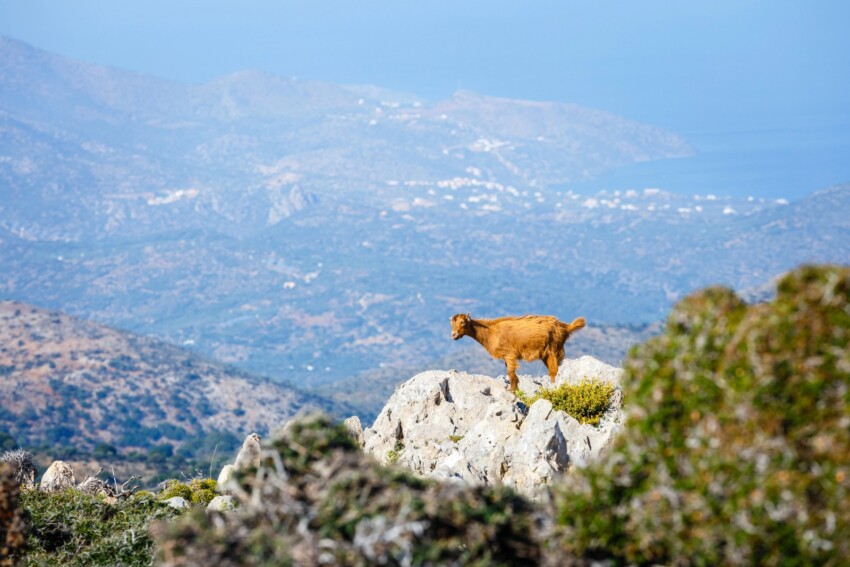
The fauna is just as interesting, with the kri-kri (Capra aegagrus cretica) as an iconic species. This rare wild goat, endemic to Crete, finds one of its last natural habitats in the gorges. Although shy, kri-kri can sometimes be spotted on the rocky heights, especially in the early morning hours or at sunset. The park is also home to golden eagles, bearded vultures, martens and numerous species of reptiles and amphibians.
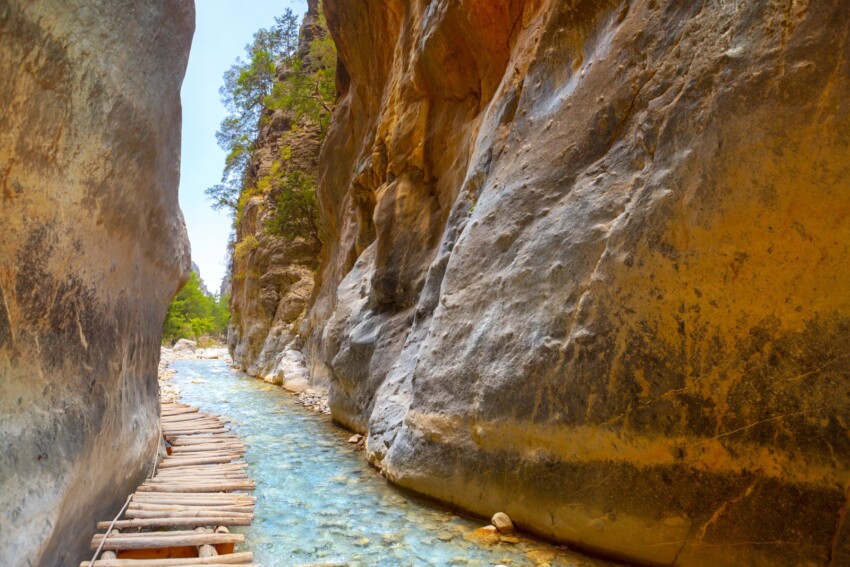
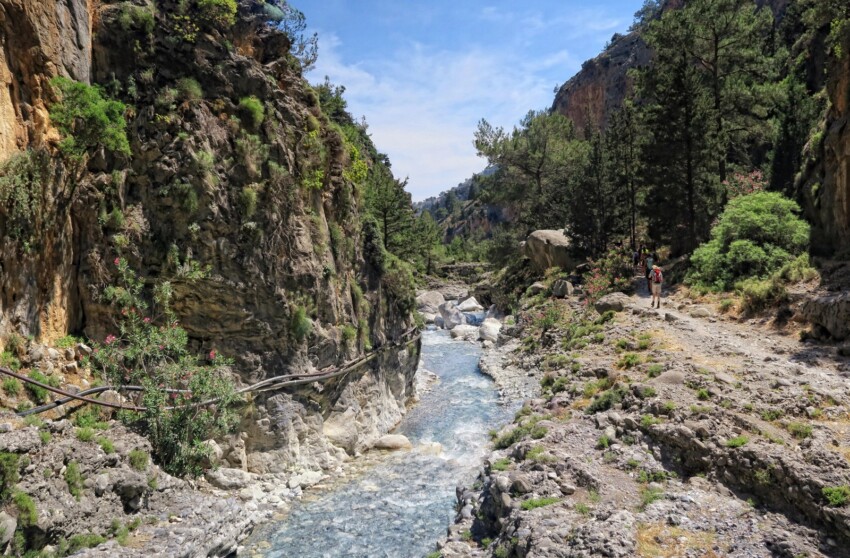
The Tarraios (or Omalos) River is the silent protagonist that has shaped this unique landscape over the millennia. During most of the walk you will walk alongside or several times through its course, which varies greatly depending on the season: rushing in spring with the melting snows of the White Mountains, more restrained in summer, but never completely dry.
The river creates numerous small waterfalls, crystal-clear pools and rock formations shaped by erosion along its course. The water is drinkable and refreshing, a real relief during the warmer months. You cross the river on several small wooden bridges, adding an extra element of adventure to the excursion.
 Hotel
Hotel  Budget accommodations
  Apartments
  Family Hotel
  Luxury Hotel
  Resorts