Pelagos
Aegiali - Aegiali
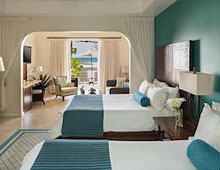
Just 150 metres from the sandy beach of Aegiali in Amorgos, the Cycladic-style Pelagos offers air-conditioned rooms with free Wi-Fi and balcony overlooking the Aegean Sea.
Book now
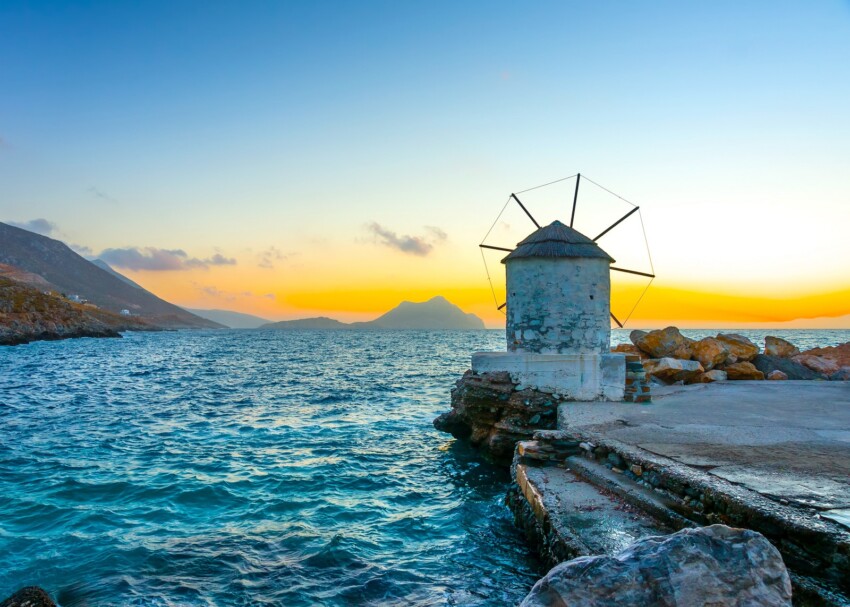
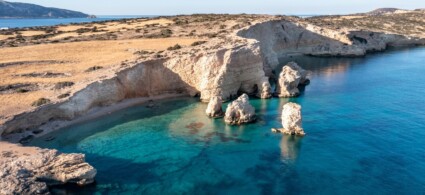
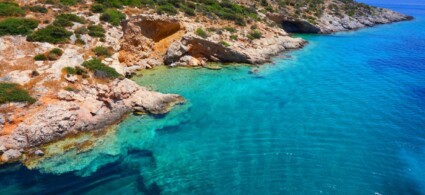
Amorgos is the island of blue: the intense blue of the sea, so beautiful that it captivated even director Luc Besson when he was scouting locations for Le Grand Blue, and the blue of the night sky, rich in stars thanks to the absence of light pollution.
It is a beautiful island, but not gentle and accommodating: the rocks are steep, the wind is incessant, the roads often steep and rough. A single paved road crosses it from north to south, touching all the towns.
To those who are not frightened by these minor inconveniences, Amorgos offers unforgettable memories of beautiful natural landscapes, quaint villages, friendly and kind locals, nature walks and dinners in delicious tavernas.
The climate of Amorgos is Mediterranean, perfect for those who love warmth and sunshine: winter is mild, while summer is hot and sunny.
The best time to go to Amorgos is summer, but if you can, avoid July and August and prefer June or September: you will find fewer people and cheaper hotel prices.
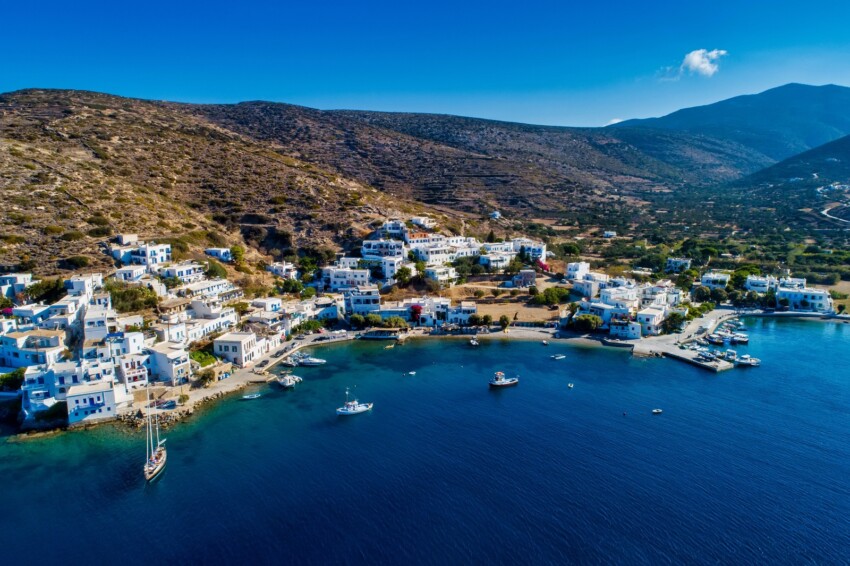
The accommodation offer in Amorgos is good: you can choose from lovely hotels, small flats with sea views, and rooms for rent from private individuals. If you are travelling in July and August, the busiest months, it is advisable to book well in advance.
There are three main towns on the island, each with its own atmosphere: Chora, Katapola and Aegiali.
Katapola1 is the most touristy town, where most of the hotels and flats are concentrated. Here you will find an abundance of shops, bars and services and for this reason it is recommended for those travelling with children.
Aegiali is the second port on the island, a pretty little village with many small cafes overlooking the bay. It is recommended for young travellers and couples looking for a bit of beach fun. You won’t find the nightlife of Mykonos, but a couple of nice lounge bars, perfect for cocktails and music.
Chora is the capital of the island and is perhaps the most characteristic town, but the choice of accommodation is inferior.
We offer a selection of hotels at Amorgos to suit all categories of travellers. The most booked by tourists are the sea-facing hotels, often right on the beach. If you want to play it safe, choose one of the following: they are among the most booked hotels in Amorgos, sorted by number of reviews.
If you prefer space, privacy and the ability to prepare your own meals to a hotel holiday, book a holiday home at Amorgos. We recommend a few below, but in this case we advise you to book early because houses and apartments for rent at Amorgos are in high demand.
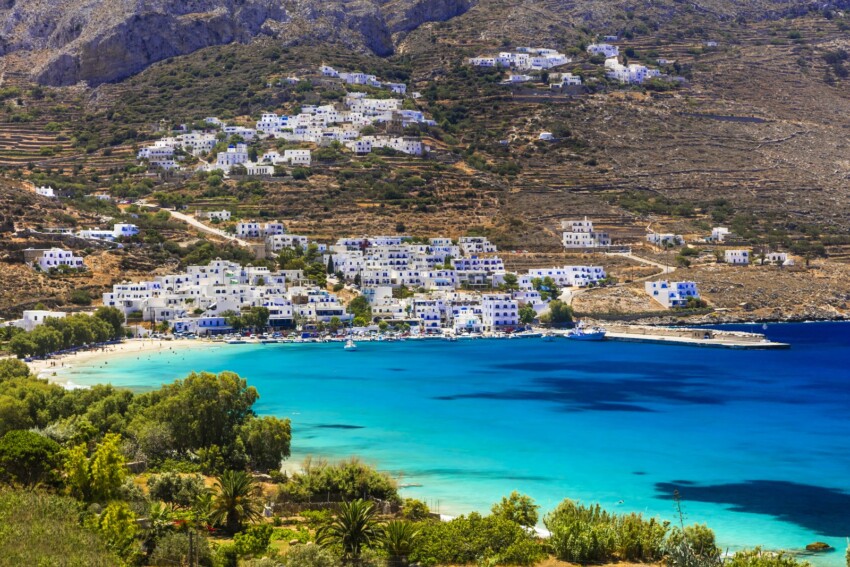
With more than 100 km of coastline, the island of Amorgos offers a variety of beaches and coves to please all beach lovers.
The most famous beach on the island is Agia Anna2, not far from Chora, a pebble beach at the point of the island where the sea is at its most beautiful: Luc Besson noticed this, who shot some key scenes of the film Le Grand Blue here, giving the place international fame.
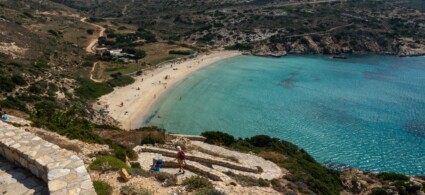
Near Aegiali are Paralia Egiali3, a sandy beach recommended for families with small children, and Agios Pavlos4, a pebble beach washed by an incredibly clear sea.
Other beaches not to be missed in Amorgos are:
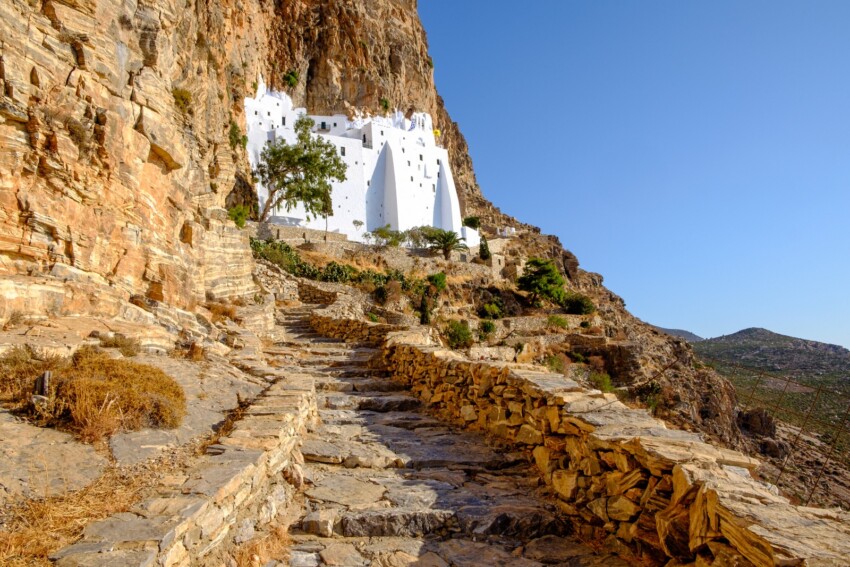
The most famous attraction of Amorgos is Monastery of Hozoviotissa7, with white walls like typical Greek churches but with a rather unusual shape, long and narrow. Squeezed against the cliff, from a distance it may look like a patch of colour in the rock.
Seen from afar, it is breathtakingly beautiful – the contrast between the white and the rust colour of the rocks is truly spectacular – but not a few tourists choose to visit it from the inside as well, tackling a not-so-simple walk involving more than 350 steps.
A small chapel worth visiting in the most scenic spot on the island is Oros Profitis Ilias8, at a height of no less than 700 metres above sea level; it can be reached by a walk of about an hour from the main town.
It is worth visiting Chora9, a charming town with a Byzantine and Venetian past, built on a rocky promontory. Climb up to the castle for the best panoramic view, stroll through the narrow streets of the centre or through the Voreina quarter, full of wells and olive trees, and photograph the abandoned windmills of Troulos. When you feel the need for a break, have a coffee at the Kalogerikos Milos square, from where you can enjoy a splendid view of the sea.
Spend some time also in the inland villages, such as Tholaria10 and Aegiali11. There is not much to do, but they should be visited without haste to get into the spirit of the locals.
In the following map you can see the location of the main places of interest mentioned in this article.
Amorgos is an ideal place for a relaxing holiday, lazing on the beach and tasting typical island specialities in traditional tavernas. Don’t forget to try the island’s typical liqueur, rakomelo, a kind of home-made brandy with honey.
A boat trip is always a good idea when holidaying on an island, while those who can’t sit still can take advantage of the island’s network of dirt roads, paths and mule tracks to go trekking along the sea or discover traditional villages.
There are no direct flights to Amorgos, so the only option is to fly to Athens and take a ferry or hydrofoil from the port of Piraeus. Amorgos can also be reached by boat from Mykonos, Santorini, other islands of the Cyclades and some islands of the Dodecanese.
The island has two ports, one in Aegiali and one in Katapola (all fast ships arrive here), 25 km apart. Some hotels offer free transfers from the nearest port, while if you arrive at the other port they will charge you a small fee.
What's the weather at Amorgos? Below are the temperatures and the weather forecast at Amorgos for the next few days.
The island of Amorgos is the easternmost island of the Cyclades archipelago, and is located about 30 km south-east of Naxos and 33 km east of Ios.
 Hotel
Hotel  Budget accommodations
  Apartments
  Family Hotel
  Luxury Hotel
  Resorts