MIKRES CYCLADES DONOUSSA
Donoussa - Δονούσα Δονούσα
Boasting a garden, terrace and views of sea, MIKRES CYCLADES DONOUSSA is situated in Donoussa, less than 1 km from Kedros Beach.
Book now
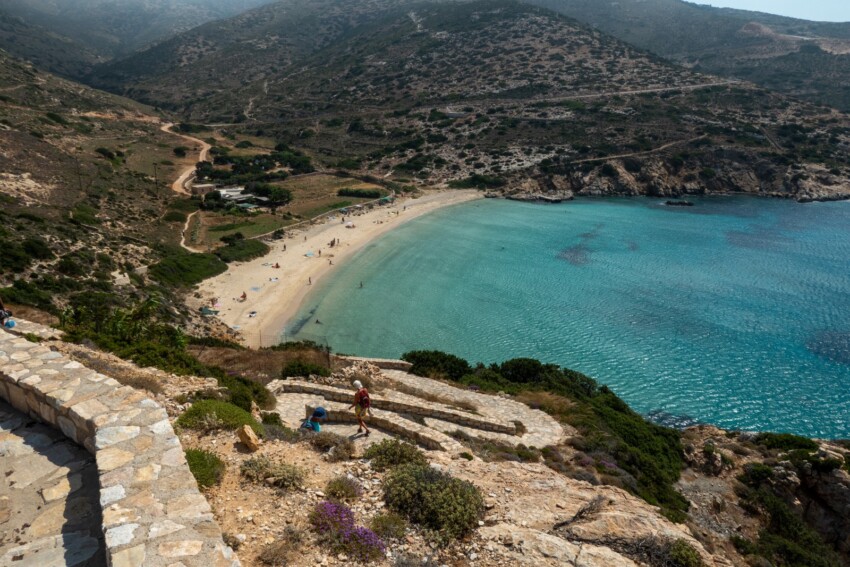
Donoussa, Donussa, Dennusa, Stenosa, Spinosa, Viridem: this Greek island has almost more names than square kilometres. It is the recommended destination for those who do not need a lot to be happy.
Despite being hilly, Donoussa can be covered entirely on foot without too much effort. Less than two hours of walking and you have circled the island; the highest point does not reach 400 metres above sea level. The fingers of two hands are enough to count all the shops on the island. What cannot be found here the islanders go and buy on neighbouring islands.
It is clear: one comes to Donoussa to bathe in the clear waters, to walk along paths and dirt roads with the sea always in sight, to smile at chickens or donkeys crossing the road, to mingle with the locals and adapt to their slow pace. You don’t need a car, evening dress or a bucket list to enjoy Donoussa. Flip-flops are fine, hiking shoes at most.
For a long time, only backpackers, campers and motorcyclists ventured here. They have been joined in recent years by couples looking for quiet romance, devoid of glamorous frills, and families with children who want to stay in a quiet resort. Tourism is well established, but has remained unobtrusive. If you are looking for simplicity, this is the island for you.
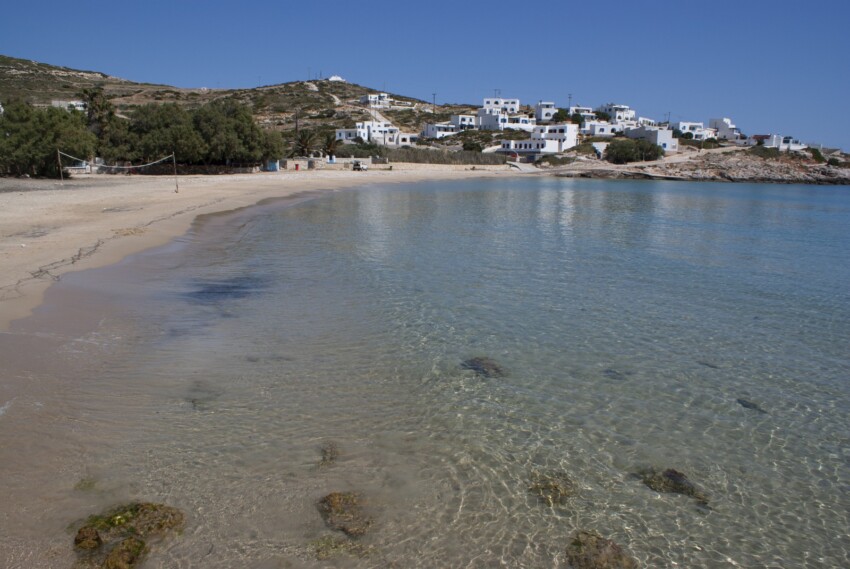
There are not many beaches on Donoussa, but they are enough to make for an unforgettable beach holiday. The waters bathing the island are blue and clean; the seabed is spectacular. Another good thing is that practically all the beaches can be reached on foot and there is no need to travel far from the towns to find beautiful beaches.
The north coast is rugged, so the beaches are concentrated in the central-southern part of the island.
The town beach of Stavros, a stone’s throw from the harbour, is a good start. Larger and more famous is Kendros, a beach of fine golden sand that can be reached in just 15 minutes on foot from Stavros; alternatively, one can take a boat from the harbour.
Kendros is a sandy beach set in a bay bordered by two low headlands. Its secret attraction, actually known to anyone visiting the island, is the wreck of a German ship sunk during World War II.
Moving to the area of Mersini, the beach not to be missed is Livadi, a long white sandy shore.
More solitary and wilder is Kalotaritissa, a pebble and rocky beach in the northern part of the island. The area is completely devoid of amenities, with the exception of a tavern that is only open in the high season, and the landscape is rather barren: a destination recommended for those who love absolute peace. Two smaller coves can be reached on foot from the main beach.
No museums or monuments, no towns, no Instagram-worthy viewpoints: the attractions of Donoussa are testimony to a simple life that is content with the sea, dirt roads that cross rural landscapes, Mediterranean vegetation that steals some space from the land.
Located along the west coast of Donoussa, Stavros or Kambos is the most important village on the island and you will see it as soon as you disembark the ferry because it is the only port of arrival for ships to the other islands and to Athens.
A first glance at Stavros will give you an idea of the size and lifestyle of Donoussa. The most important locality has very few houses, mostly arranged amphitheatrically around the harbour. They are the typical blue and white Cycladic houses.
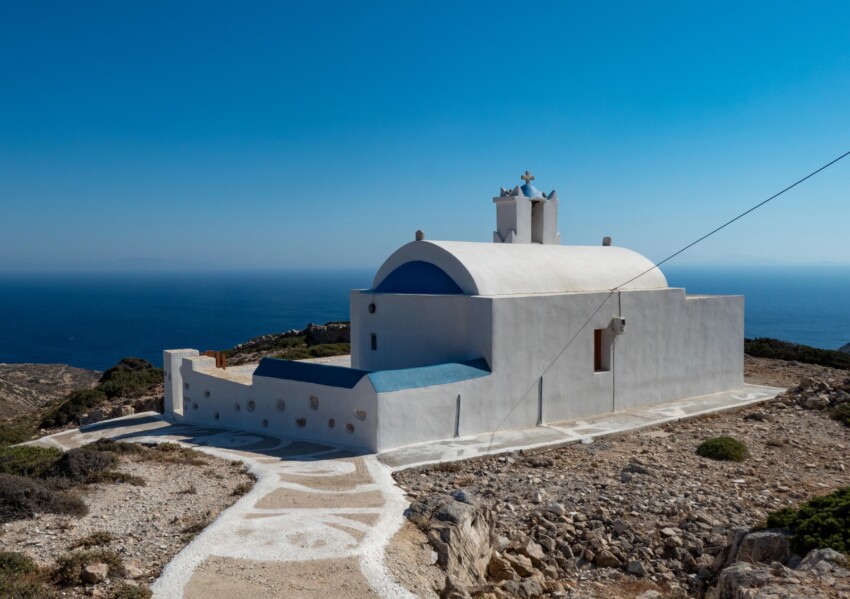
The only building in Stavros mentioned in all the guidebooks is the Church of the Holy Cross, the classic blue and white church with a small bell tower. The present church dates back to the early 20th century and was built to replace an older church.
Mersini is just a handful of stone houses clinging to the slopes of a hill in the south-eastern part of the island. Here, too, there is a beautiful little church to photograph, Agia Sofia.
What makes Mersini special, which is rather unusual among the villages of the Lesser Cyclades, is its lush vegetation that offers a welcome respite from the summer heat. Such greenery is very rare to find in these parts and can only be explained by the presence of a drinking water source. For the islanders, it is a real godsend because it means they do not need to import water from Athens, as is the case in the other Cyclades; for visitors, it is a place with a special atmosphere, well worth seeing.
At the north-eastern tip of the island is Kalotarissa, perhaps the prettiest and most traditional of the Donoussa villages. Its attractions are the beach, a typical tavern and a grandmother who has become famous because she stoically refuses to leave her home village. In the winter months, she is the only inhabitant of the village.
Even smaller are the villages of Messaria and Troulos.
Some fascinating sea caves are hidden along the coast of Donoussa. Two of these caves can be visited on a boat trip from the harbour of Stavros. The first is Fokospilia (Seal Cave), so called because seals used to come here to breed. It is located on the east side of the island near Cape Moshonas.
The other cave, Tihos, is located on the north-western part of the island in the bay of Ksilobati. It is included in every tour of the island because the stalactites inside are spectacular.
The island of Donoussa is recommended for walkers because due to its size and lack of major roads, it is easier to get around on foot than by car. There are several paths that can be walked, but do not expect an extensive, organised and well-marked path network.
Only the main paths in Donoussa are marked with arrows, but the signs are in Greek and the signage is lacking in many places. Having said that, finding the trails is generally not difficult and the itineraries take place over uneven terrain with no major differences in altitude, so they are within everyone’s reach.
An easy walk from Stavros leads to the Church of the Holy Cross, a beautiful vantage point from which to view the blue expanse of the Aegean. From here you can continue to the villages of Messaria and Mersini; at Messaria you can turn off for an archaeological site near Livadi beach.
The most beautiful walk on Donoussa is the one from Stavros to Kalotaritissa along a path that leads into the northern hinterland of the island, crossing it from west to east.
During the walk you will encounter vineyards, olive groves, old mines and rocks covered with Mediterranean vegetation; the sea never disappears from view and will keep you company along the way.
Calculate about one and a half hours one way; to return you can either take the same path again or take a bus. It is recommended to wear closed shoes, suitable for trekking, because the ground is stony in places.
For even more beautiful views climb to the top of Papas, the highest point on the island. If you are prepared for an early morning rise, arrive before dawn to enjoy the spectacle of the sun emerging from the sea. At other times you can console yourself with the outlines of the nearby islets of Kinaros and Levitha.
The choice of accommodation in Donoussa is very limited, so if you are travelling in July or August, it is imperative to book as early as possible so as not to risk a sell-out.
Few but good: they are very nice studios and flats, all with a sea view and well maintained; prices are average. You will not find in Donoussa either ultra-cheap accommodation such as hostels and campsites or luxury residences such as spa hotels or designer villas.
Almost all tourists choose to sleep in Stavros because it is the only place that offers some facilities; the majority of the studios are concentrated in the area around the harbour. A couple of holiday accommodations can also be found in Kalotarissa. They are only recommended for those seeking absolute peace and willing to travel to find shops and services.
We offer a selection of hotels at Donoussa to suit all categories of travellers. The most booked by tourists are the sea-facing hotels, often right on the beach. If you want to play it safe, choose one of the following: they are among the most booked hotels in Donoussa, sorted by number of reviews.
If you prefer space, privacy and the ability to prepare your own meals to a hotel holiday, book a holiday home at Donoussa. We recommend a few below, but in this case we advise you to book early because houses and apartments for rent at Donoussa are in high demand.
It is not possible to get to Donoussa by plane because the island has no airport. The easiest way to get there is to take a flight to Athens and once in Greece reach your final destination by ferry. Connections in high season are daily and the crossing takes about 7 hours.
Donoussa can also be reached by ferry from the famous islands of Naxos and Paros, but this solution is usually more expensive and lengthens the journey time because it requires an extra change. It is recommended for those who want to combine a famous and very touristy island with a quieter one in one holiday. On the other hand, there are no direct connections with the two stars of Greek tourism, the islands of Mykonos and Santorini.
Connections between the Lesser Cyclades are provided by a local ship that usually makes one trip per day, but the frequency of trips and timetables may vary from year to year.
Donoussa is part of the Lesser Cyclades, an archipelago of six islands in the South Aegean situated between the more famous islands of Naxos, Ios and Amorgos. Donoussa is the northernmost of the archipelago and lies at a distance of about 16 km from the island of Naxos and 25 km from Amorgos.
 Hotel
Hotel  Budget accommodations
  Apartments
  Family Hotel
  Luxury Hotel
  Resorts