Polikandia Hotel
Chora Folegandros - Chora Folegandros
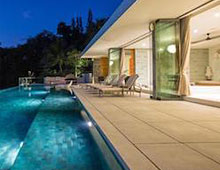
Centrally located in Folegandros Town, the Cycladic-style Polikandia Hotel features a 21-metre heatedpool with separate children’s section and hot tub.
Book now
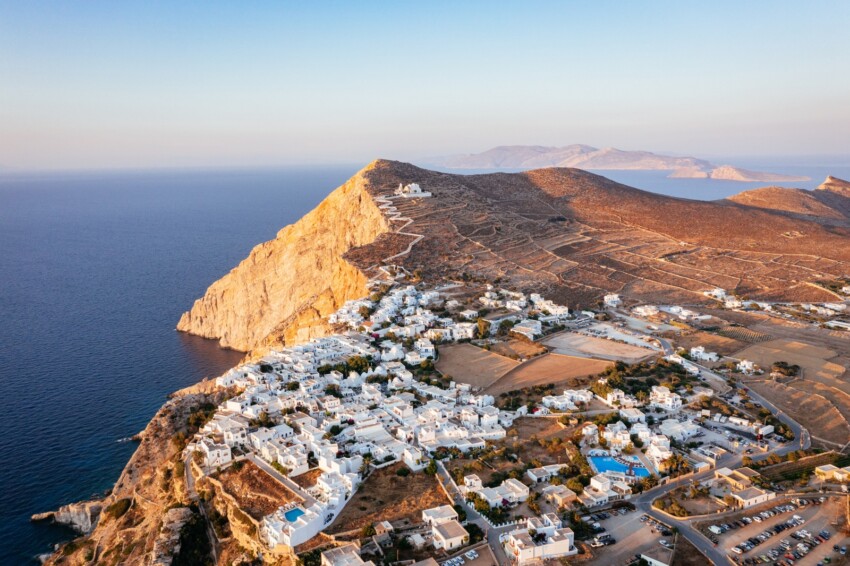
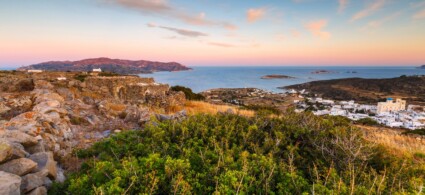
Folegandros is one of the smallest and most authentic islands in the Cyclades: 32 km² of limestone rock, sheer sea cliffs, around 700 inhabitants and no airport. It sits between Milos and Santorini, sharing their dramatic coastlines of high, jagged cliffs, but not the crowds. Cruise ships are not permitted to dock, there are no nightclubs or animation resorts, and the island’s main road connects only three settlements: the port of Karavostasi, Chora and the village of Ano Meria. For those arriving from Santorini or Mykonos, Folegandros represents a stark change of pace.
The majority of visitors are Italian, having discovered it through word-of-mouth long before it appeared in international guides. This explains why the bars in Chora buzz with as much Italian as Greek conversation, and why accommodation and restaurant standards have improved over recent years whilst retaining a family-run character. In 2024, Gundari opened—the island’s first five-star resort—signalling that Folegandros is gradually shifting its profile, though without yet losing its identity. Those seeking a Cycladic island with wild beaches, clifftop sunsets and quiet evenings in the main square will find exactly what they’re after here.
Allow at least 4–5 days for Folegandros: three nights barely suffice to see Chora and one beach, but not to feel the island’s rhythm or explore the southern trails and coves.
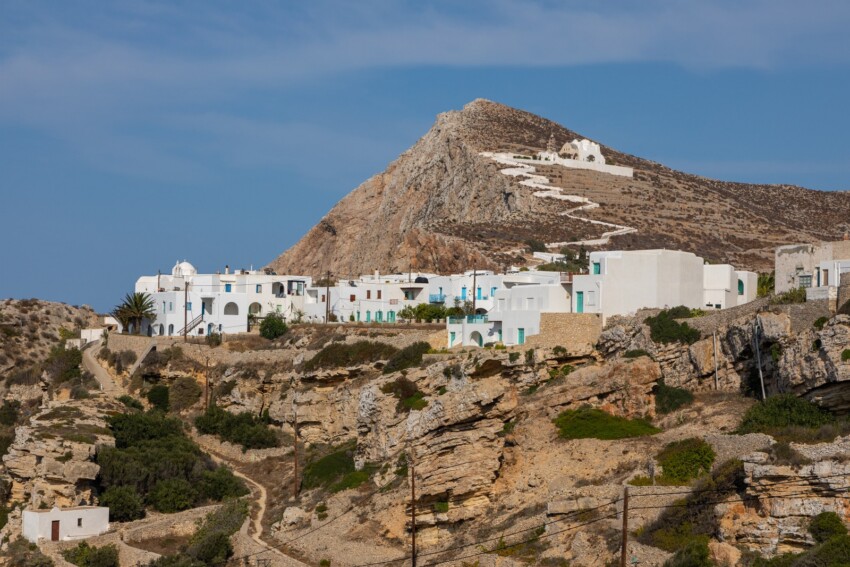
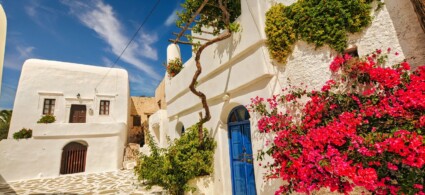
Folegandros has no public archaeological sites or internationally significant museums. Its heritage is landscape and architecture: Chora, the capital, is considered one of the best-preserved medieval settlements in the Cyclades and is itself the main reason to visit the island. Built 200 metres above sea level on the edge of a sheer cliff overlooking the Aegean, it divides into two distinct areas: the Kastro, the 13th-century medieval nucleus where tightly packed houses formed the outer defensive wall against pirates, and the newer section beyond the walls, with typical white houses and blue doors. Chora’s centre is closed to traffic and accessible only on foot, threading through narrow alleys, four small squares that feel like open-air living rooms, cascading bougainvillea and tavernas with tables outside. By day it’s silent and elegant; come evening, it gradually springs to life without ever becoming rowdy.
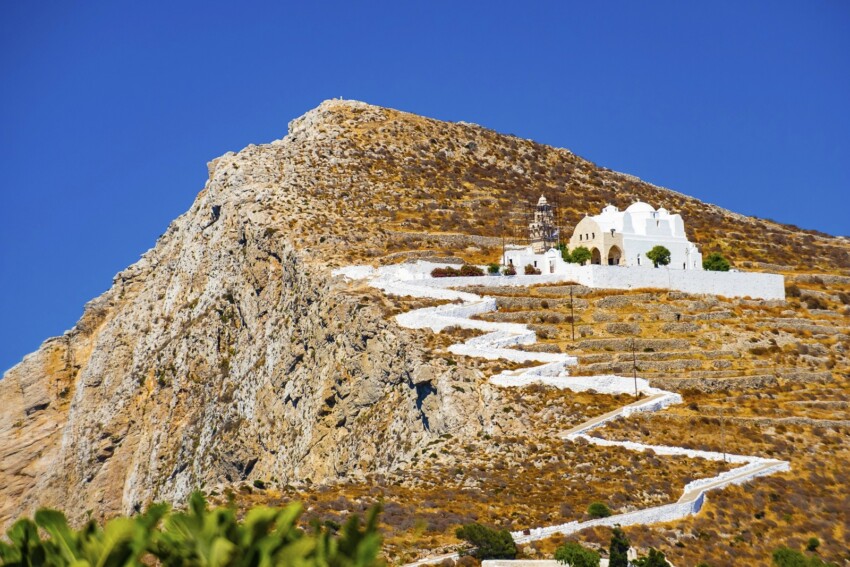
From Chora, a paved path rises in about 15 minutes on foot to the church of Panagia, the island’s largest and most beloved, white with a blue dome, perched at the promontory’s highest point. The climb is best tackled unhurriedly during the heat of the day, but at sunset the light on the sea and Chora below is among the Cyclades’ most stunning sights.
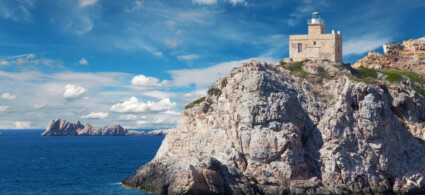
About 6 km north-west of Chora, Ano Meria shows the island’s agricultural and authentic face: not a compact village but scattered houses among dry-stone walls, vegetable plots and goats, where time seems suspended. It’s worth spending a few hours visiting the Ano Meria Ecomuseum, which chronicles the island’s traditional rural life, and lunching at a local taverna serving matsata, fresh handmade pasta with rabbit sauce, the island’s signature dish. The Aspropounta lighthouse, standing 36 metres tall, gleams white against the barren coast of the southernmost promontory: it’s a 20-minute walk from Livadaki and the island’s finest sunset spot.
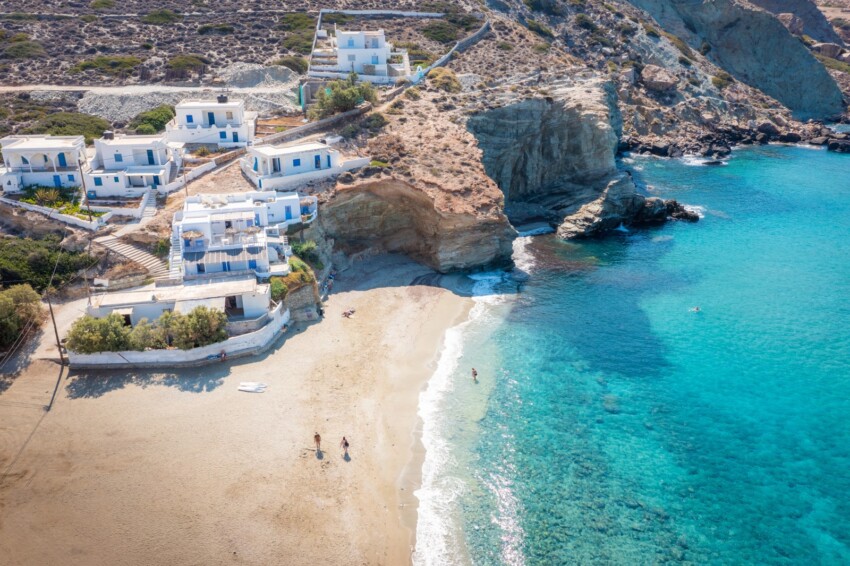
Folegandros’ beaches are wild, nearly all lacking facilities and often reachable only on foot or by sea taxi from Karavostasi port or Agali. It’s precisely this that makes them appealing for those seeking something different from the resort beaches of more touristy Cycladic islands. The comprehensive guide to Folegandros beaches describes them all with practical details on how to reach them.
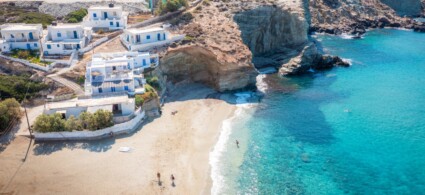
Katergo is considered the island’s finest beach: a tongue of white pebbles and dark rocks in a bay enclosed by cliffs, with rich marine life and intensely turquoise water. Reach it either by sea taxi from Karavostasi port, or on foot via a steep, demanding trail (roughly 30–40 minutes down, considerably longer climbing back up): the effort is more than repaid by the seclusion. Agali is the most convenient, accessible by car or bus, with a small cluster of white houses along the seafront, a few tavernas and a jetty where sea taxis depart for nearby beaches.
Around Agali lie the beaches of Agios Nikolaos, spacious and sandy, and Livadaki, more intimate and sheltered. Galifos, reachable on foot via the trail to Agios Nikolaos, is the island’s naturist beach, frequented for years by a loyal community. Beaches near Karavostasi port, such as Hohlidia, are the most accessible and busiest with day-trippers waiting for onward ferry connections.
Folegandros has a network of marked trails crossing it north to south, offering one of the best ways to understand the island. The classic route starts from Chora, descends towards Agali and continues towards Agios Nikolaos: roughly two hours’ walking in total, with ever-changing views of the southern coast and cliffs at every turn. Another popular route connects Chora to Ano Meria along the island’s ridge, with panoramas across both sides and of nearby islands including Sikinos and Ios. Several practical rules apply to trekking here: start early, ideally before 9am, carry at least 1.5 litres of water per person, wear sturdy hiking boots as trails are rocky, and check wind direction before heading towards cliff-exposed northern routes. The meltemi wind can make certain stretches quite challenging on some August days.
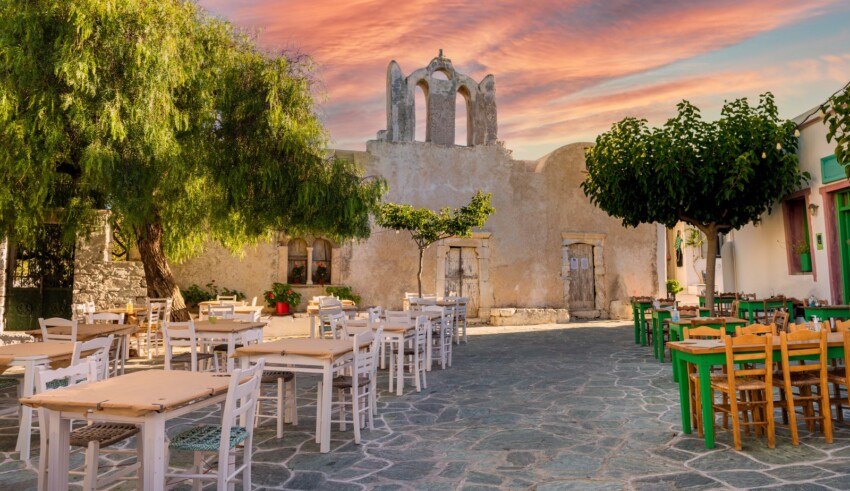
Most accommodation clusters in Chora, the best choice for experiencing the island’s authentic side: studios and small hotels are found almost entirely in the old town’s alleys or around the village’s edges. Staying in Chora means waking to silence, having breakfast in the main square and tavernas within easy reach come evening, though you’ll need your own transport (or the bus) to reach beaches. Agali is the most convenient alternative for those wanting the sea nearby: a handful of hotels and studios sit close to the beach, with sea taxis to coves just steps away. Karavostasi, the port, is most practical for ferry arrivals and departures, but lacks Chora’s appeal.
Worth noting is Gundari Resort, operational since 2024—the island’s first five-star property, positioned on a cliff with panoramic views, spa and pool: it has shifted Folegandros’ tourism profile, attracting travellers the island previously didn’t reach. In any case, book accommodation and ferries months ahead for July and August: the island has very few beds relative to demand, and the best places fill quickly.
We offer a selection of hotels at Folegandros to suit all categories of travellers. The most booked by tourists are the sea-facing hotels, often right on the beach. If you want to play it safe, choose one of the following: they are among the most booked hotels in Folegandros, sorted by number of reviews.
If you prefer space, privacy and the ability to prepare your own meals to a hotel holiday, book a holiday home at Folegandros. We recommend a few below, but in this case we advise you to book early because houses and apartments for rent at Folegandros are in high demand.
Folegandros has no airport. The only way to reach it is by sea, docking at Karavostasi port. The most practical options for those arriving from the UK are two: fly to Santorini and take a fast ferry (55 minutes on Seajets hydrofoils, roughly 2–3 hours on conventional ferries), or fly to Athens and board at Piraeus port.
From Athens, fast ferries take about 4 hours 30 minutes, conventional ones 7–9 hours depending on intermediate stops; prices start from around €48 for a deck ticket. Santorini is the nearest airport to the island, and on calm days the hydrofoil crossing is among the archipelago’s quickest, but beware: if the meltemi wind blows strongly, fast connections are cancelled and alternatives dwindle. Never plan your departure from Folegandros at the last minute if you have a return flight from Santorini: always leave at least one night’s buffer on the island.
Folegandros sits well within the western Cyclades’ island-hopping circuits: it’s easily reached from Milos (1–3 hours depending on the vessel), from Ios, Sikinos and Amorgos. Those planning an itinerary across multiple islands can slot Folegandros between Milos and Santorini without major detours, covering three completely different Cycladic characters within days.
The island is small and the road network minimal: a single main road connects Karavostasi, Chora and Ano Meria. The bus service covers this route with regular runs during high season and is the most convenient way to travel between port, Chora and Agali’s beaches; tickets cost just a few euros per journey. For beaches further from the main route—Katergo particularly—you’ll need sea taxis from Karavostasi or Agali port, with frequent summer sailings.
Scooter rental is the most flexible alternative for full independence: agencies operate at the port and in Chora, with rates around €20–30 daily. Hiring a car makes limited sense on the island: whilst main roads are well surfaced, the small size and vehicle restrictions in Chora make it far less practical than a scooter. Taxis exist but are scarce: book ahead in high season.
June and September are the finest months: the sea is warm, tavernas are open and beaches are accessible without coves already claimed at dawn. September especially suits the island’s regulars: water temperatures reach 25–26°C, Chora remains lively yet the climate is less oppressive than peak summer. May and October excel for trekking and solitude-seekers, with much lower prices and a quiet that August makes impossible, though some facilities may close and ferries run less frequently.
July and August are peak months: accommodation fills weeks in advance, prices spike and popular coves like Katergo draw bigger crowds than usual. Travelling in high season, book lodging and ferries at least two months ahead, especially around the mid-August holiday period.
What's the weather at Folegandros? Below are the temperatures and the weather forecast at Folegandros for the next few days.
Folegandros is located in the southern Aegean, in the Cyclades Islands, between Milos to the north-west and Santorini to the east, approximately 30 nautical miles away. On clear evenings, the lights of Santorini are visible from Chora. To the west lies Sikinos, the island most similar to Folegandros in character and size. It is approximately 93 nautical miles from Piraeus port in Athens.
 Hotel
Hotel  Budget accommodations
  Apartments
  Family Hotel
  Luxury Hotel
  Resorts