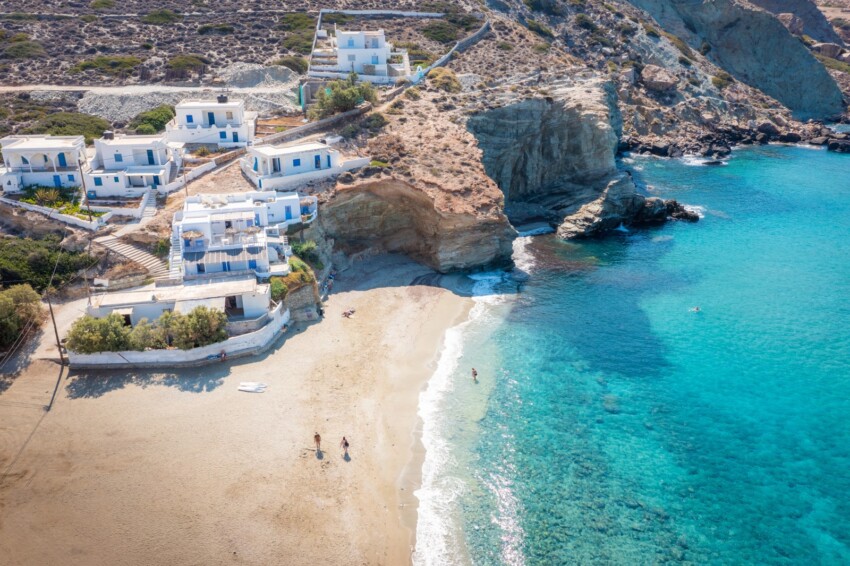
The beaches of Folegandros are wonderful, provided they are what you are looking for: their beauty is not for everyone. Why?
They are undeveloped beaches, so if you want a comfortable beach holiday with umbrella, deckchair and maybe a sunset aperitif in a beach bar, go elsewhere. The same goes for young people looking for an island with nightlife and daytime entertainment such as banana boats, beach volleyball courts and jet skis.
The beaches of Folegandros, almost all sandy mixed pebble beaches, are wild and with no or very few facilities. It is best to bring water and food from home, especially considering that to reach some of the most picturesque beaches you have to walk for an hour or more along sunny paths.
However, if you get into the simple spirit of the island, it won’t take you long to love these beaches, which are not easy, often windswept, but extraordinarily beautiful. You will never be able to forget them.
To make it easier for you to find the beach that suits you best, we have divided our guide to the most beautiful beaches on Folegandros into three zones: north and south coast (fewer beaches but among the most beautiful on the island), east coast (the most easily accessible), and west coast (the best compromise between beauty and ease of access).
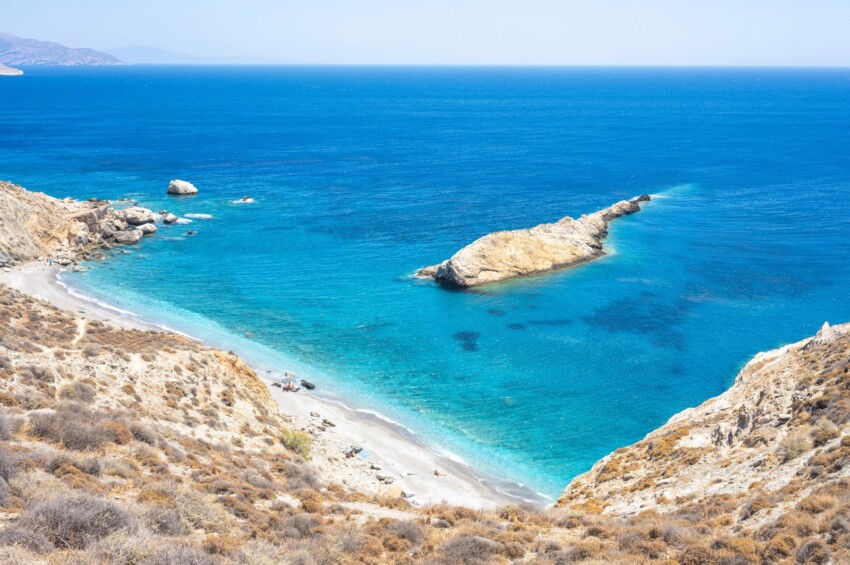
Due to the particular shape of the island of Folegandros, the north and south coasts are rather shorter than the east and west coasts. There are therefore few beaches on these two coasts, but the two that are worth mentioning are among the most beautiful and famous on the island.
At the southern tip of the island is the remote and enchanting Katergo. Considered by many to be the most beautiful beach on Folegandros, it is a must-see on any holiday on this island. The beach is pebbly, while the seabed is of coarse pebbles and becomes deep not far from the shore, so be careful!
Katergò beach can be reached on foot with a walk of about 30-40 minutes from the village of Livadi: the path is signposted and the slopes are not very steep, so it is within everyone’s reach. However, sneakers or hiking shoes are recommended, not sandals.
Another way to get there – chosen by most tourists – is to take one of the frequent boats departing from the port of Karavostasi. The boats make a stop near some picturesque sea caves.
Katergò is one of the busiest beaches on Folegandros and is very crowded during the high season. If you don’t like chaos, try to arrive early in the morning.
At the opposite end of the island is the quieter Agios Georgios, a wide crescent-shaped beach on which characteristic fishermen’s cottages, now abandoned, have been built. There is also a typical little church that adds a touch of charm to this enchanting beach.
Unfortunately, in many places it is not easy to get into the water due to some slippery slabs of rock, but the seabed slopes down quickly so you don’t need to go far from the shore to dive in and enjoy the calm blue waters.
Another good reason to go as far as the beach of Agios Georgios: when the sun gets hot, you can take shelter in the shade of a tree for some relief.
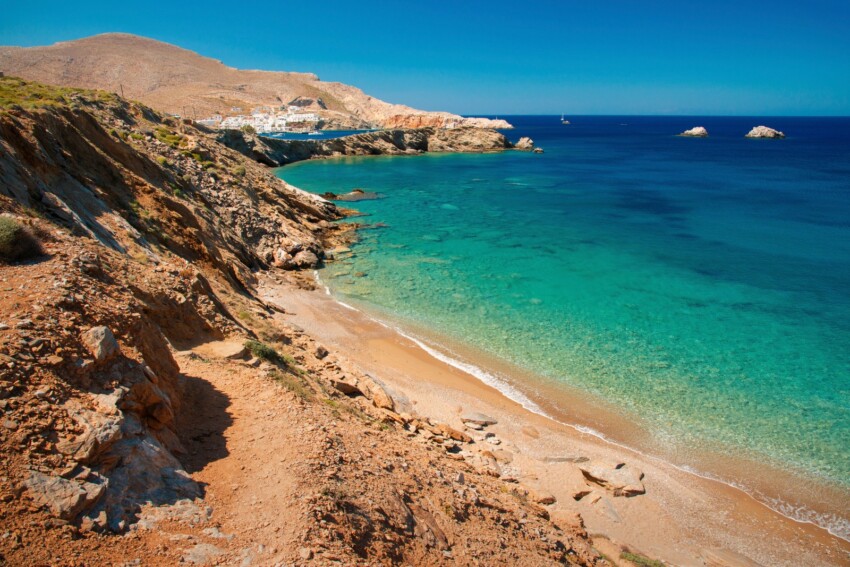
Most of the beaches of Folegandros are concentrated along the east coast: the most easily accessible are in the Karavostasi area.
The beaches of Puntaki, Chochlidia3, Latinaki4 and Livadi5 follow one after the other. They are easily reached and are all mixed sand and pebble beaches, with some areas only sandy; the seabed is shallow. Because of these characteristics, the beaches of Folegandros are recommended for those travelling with small children or for inexperienced swimmers.
Do not disdain the beach near the harbour of Karavostasi6 because, although it is not the most beautiful on the island, it is nevertheless pretty, with white pebbles that seem to sparkle in the sun.
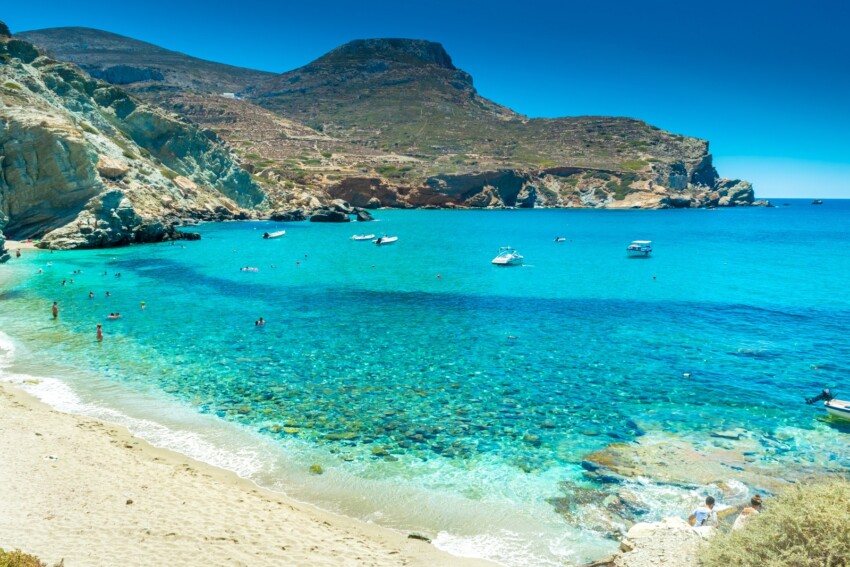
Angali8, the most popular beach on the west coast, lies almost halfway between the north and south points of Folegandros, set in a long inlet that protects it from winds and currents.
It is a wide sandy beach, easily accessible by bus, and recommended for those who want comfort (but remember: no umbrella hire here either). From Angali you can admire the hillock above which Hora, the island’s main town, stands.
From the small harbour of Angali, taxi-boats leave for Agios Nikolaos9 or Livadaki10, two of the most picturesque beaches on Folegandros. The second looks like a natural swimming pool and is considered by many to be the more beautiful of the two: it is a beach of medium-large pebbles set in a cleft between the rocks and washed by a sea of extraordinary colours. Spectacular!
Heading north, you reach the island’s most remote beaches including the enchanting Ampeli11, perfect for snorkelling. Staying in the area you will find several secluded coves where you can spend a relaxing day without being disturbed.
In the following map you can see the location of the main places of interest mentioned in this article.
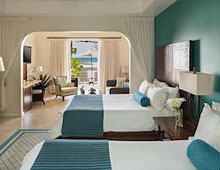 Hotel
Hotel 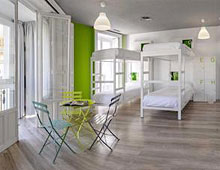 Budget accommodations
 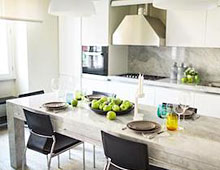 Apartments
  Family Hotel
 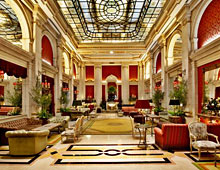 Luxury Hotel
  Resorts