Inntel Hotels Amsterdam Centre
Amsterdam - Nieuwezijdskolk 19
Inntel Hotels Amsterdam Centre offers rooms with free Wi-Fi and satellite TV, just a 5-minute walk from Amsterdam Central Station.
Book now
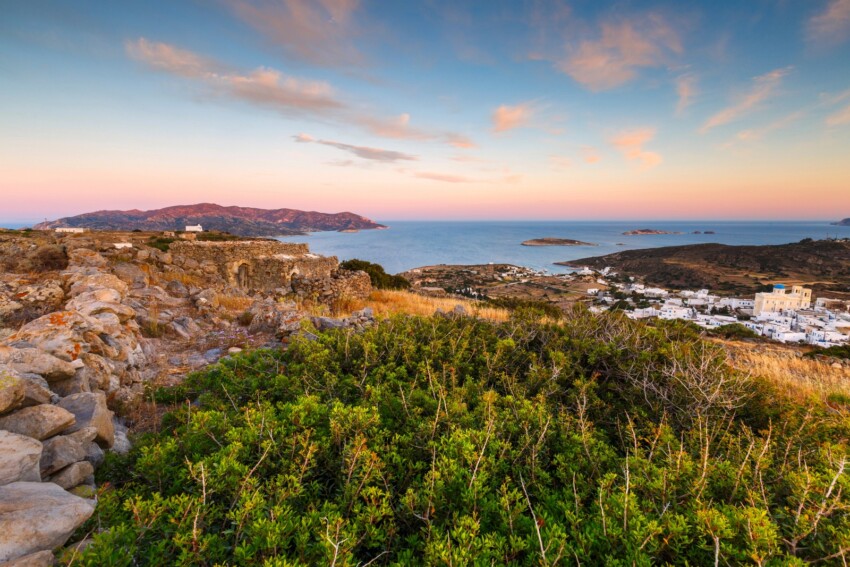
Kimolos is one of the lesser-known gems of the Cyclades archipelago, an island of just 36 square kilometres that has managed to preserve its authenticity far from the routes of mass tourism. Located only 800 metres from the more famous Milos, Kimolos captivates visitors with its Caribbean beaches, crystal-clear waters that are home to monk seals and sea turtles, and its genuinely Greek charm.
The island takes its name from the Greek word ‘kimolia’ meaning chalk, and this is no coincidence: its houses are indeed whiter than white, its landscapes dominated by snow-white rocks that contrast beautifully with the deep blue of the Aegean.
With its 800 inhabitants living mainly from fishing, farming and mining, Kimolos represents that authentic Greece where the rhythms are still marked by local traditions and where every visitor becomes a welcome guest rather than a mere tourist.
Kimolos offers a perfect balance of seaside relaxation and cultural discovery, with attractions ranging from natural wonders to historical treasures from the Venetian era.
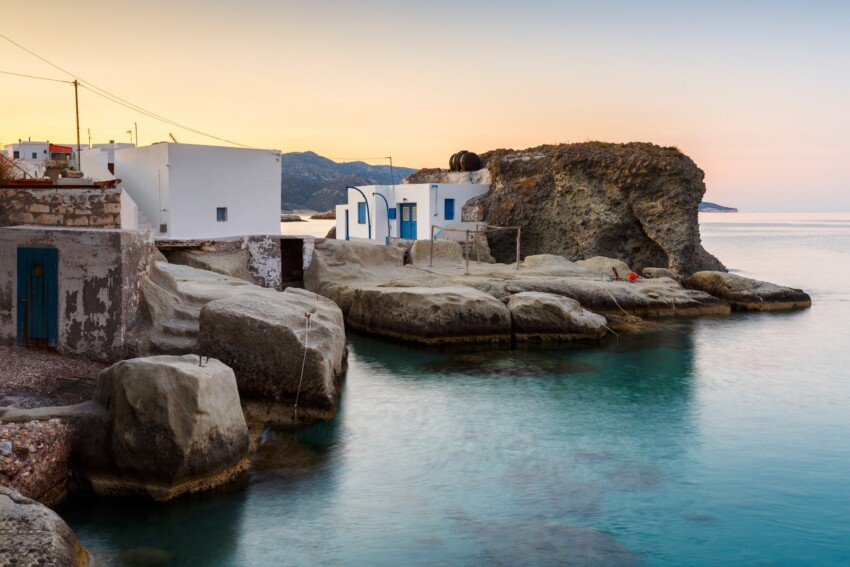
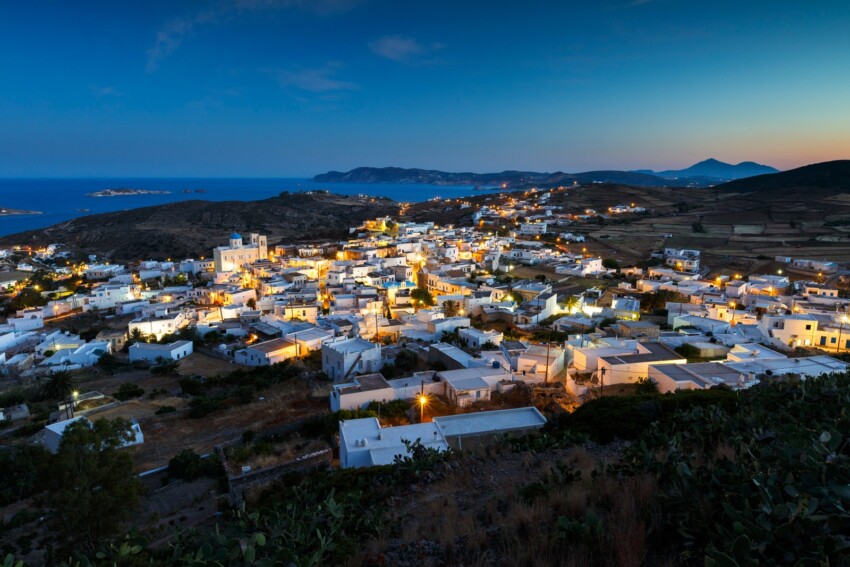
Chorio (or Chora) is the only village on the island and is one of the best-preserved examples of traditional Cycladic architecture. Built at the foot of Mount Xaplovouni in the south-eastern part of the island, the village is built around the medieval Venetian castle and is considered by many experts to be the last truly traditional chora in the Cyclades.
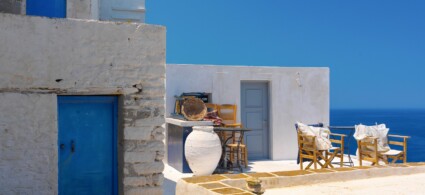
Whitewashed cubic houses with blue doors and windows wind their way through labyrinthine alleys where you can still see narrow windows like loopholes, the legacy of ancient defences against pirates. The town is divided into two historical parts: Messa Kastro (Inner Castle) and Exo Kastro (Outer Castle), connected by passages called ‘portares’.
The ruins of the Venetian castle dominate the highest point of Chorio and represent one of the most fascinating vestiges of Venetian rule in the Cyclades. This fortified castle was built by Marco Sanudo in the 13th century, when the Venetian Duke conquered the entire Cycladic archipelago and founded the Duchy of the Aegean.
The pentagonal walls and watchtowers tell centuries of history, when the island was a refuge for pirates and a strategic base for controlling trade routes in the Mediterranean. Today, the ruins offer a spectacular panoramic view of the entire archipelago and form the heart of the medieval village.
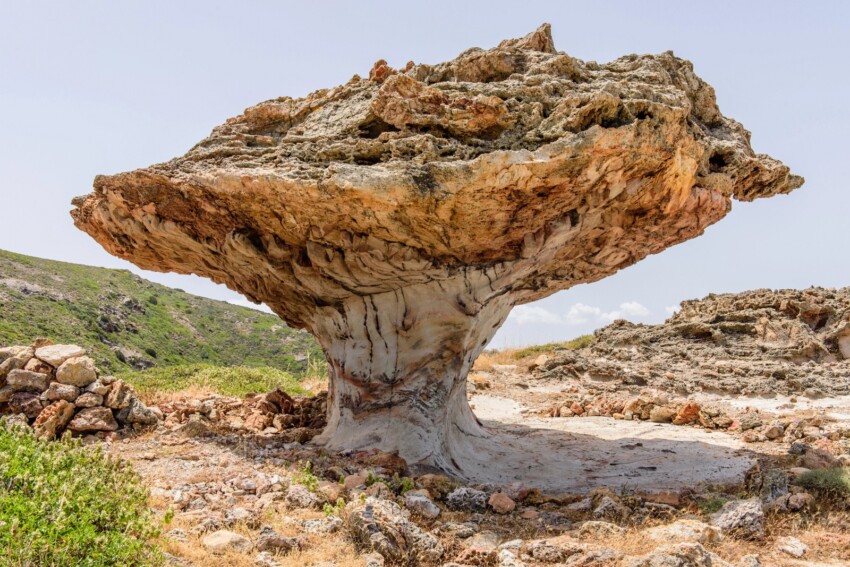
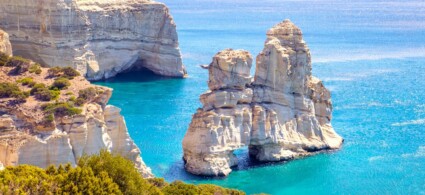
Skiadi is undoubtedly Kimolos’ most spectacular natural attraction: an enormous four-metre high mushroom-shaped boulder, shaped over millennia by wind erosion through a process called ablation. The name literally means ‘parasol’ and its peculiar shape is due to the presence of rocks of different consistencies: the softer rock at the base has been eroded by the wind, while the upper part of hard volcanic rock has remained intact.
This geological monument is located in the north-western part of the island and offers a breathtaking view of the south-western coastline and much of Milos. The Skiadi can be reached via a scenic, signposted footpath of about 30-40 minutes starting from Chorio, passing through barren, wild landscapes of rare beauty.
During the winter months, according to the locals, Skiadi is occasionally cloaked in snow, creating an even more impressive spectacle that occurs on average one out of every three winters.
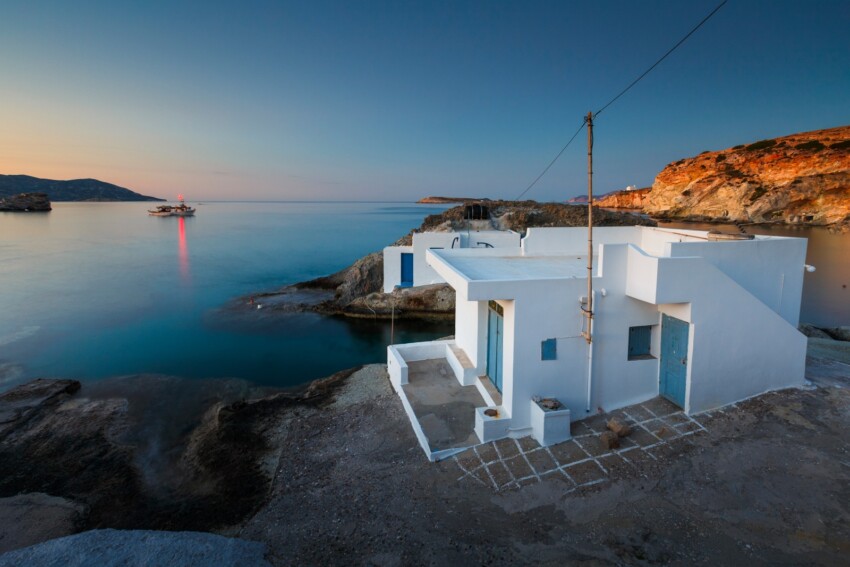
Goupa is a small, picturesque coastal village that embodies the essence of marine life on Kimolos. Here one can admire the characteristic syrmata, ancient constructions carved into the rock with colourful doors that fishermen used as shelter for their boats during the winter and protection from the Aegean storms.
These structures, similar to those also found in Milos, represent a unique example of functional maritime architecture and are considered among the most beautiful syrmata in the Cyclades. Goupa also features a rock formation nicknamed ‘the elephant’ for its characteristic shape.
The coast of Kimolos conceals numerous sea caves accessible only by sea, some of which have natural thermal springs. The cave of Gerakia and the thermal springs of Agioklima and Therma offer unique experiences of contact with the volcanic nature of the island.
The underwater caves of Vromolini near Prassa are particularly popular with divers for their beauty and the possibility of spotting protected marine species.
The Archaeological Museum of Kimolos is located in the centre of Chorio, housed in one of the oldest houses outside the Venetian castle dating back to 1846. Established in 2006, the museum exhibits artefacts from the sunken city of Ellinika and offers an insight into the island’s history from the post-neolithic period to the present day.
The Folk and Maritime Museum, on the other hand, is housed in a restored palace within the walls of the Venetian castle. It exhibits the collection of local physician Manolis Christoulakis and preserves everyday objects from the 18th and 19th centuries, textiles made by local women, agricultural tools and numerous nautical items that testify to the island’s maritime life.
The island boasts more than 80 churches and chapels scattered throughout the territory, evidence of the deep Orthodox religious tradition. The most important is the Metropolitan Church of Panagia Odigitria (1592), located in the centre of Chorio and dedicated to the Virgin Mary ‘who shows the way’.
Other noteworthy churches are Agios Nikolaos from the 17th century, particularly rich in its interior, and the Church of Evangelistria from 1608. Many of these small chapels can be reached via scenic paths and offer striking views of the archipelago.
The beaches of Kimolos are mainly concentrated in the southern part of the island, protected from the northern winds of the summer Meltemi, and offer an extraordinary variety of landscapes and colours.
Prassa (also known as Agios Georgios) is universally regarded as the most beautiful beach on Kimolos and one of the most spectacular of all the Cyclades. Located in the north-eastern part of the island, this white sandy beach with crystal-clear turquoise waters truly resembles a Caribbean beach.
The white sand comes from the surrounding limestone rocks and the nearby perlite mines. The beach is protected by the small island of Prassonisi and also offers natural thermal springs with therapeutic properties that emerge directly from the sand.
In winter, Prassa becomes a refuge for monk seals, while the surrounding sea caves are home to specimens of the protected species ‘monachus-monachus’. During the summer season, there is a small bar for drinks and snacks, but the beach retains its wild and unspoilt character.
Aliki is one of the quietest and most attractive beaches on Kimolos, located in the southern part of the island near the port of Psathi. Characterised by a mix of golden sand and pebbles with shallow crystal-clear waters, it is ideal for families with children.
What really makes Aliki special are the remains of an ancient underwater city visible just a few metres from the shore. Snorkelling enthusiasts can explore the underwater ruins that, according to archaeologists, belonged to an 8th century B.C. settlement. There is also a natural salt marsh nearby that attracts several species of migratory birds in spring and autumn.
Bonatsa is located next to Aliki and is particularly popular with families for its shallow, sandy seabed and calm, crystal-clear waters. The beach has beautiful golden sand and is partially equipped with umbrellas and sunbeds.
The presence of tamarisk trees that provide natural shade and changing cabins make Bonatsa very convenient for spending whole days at the beach. There are several taverns in the vicinity where one can enjoy local specialities based on fresh fish.
Psathi is the main port of Kimolos but also a beautiful beach where one can relax while waiting for the ferries. The picturesque ambience of the harbour, with its white houses reflected in the crystal-clear water, creates a unique atmosphere.
The harbour taverns serve fresh fish literally on the beach, offering an authentic dining experience with a view of the sea. It is the ideal place to start or end the day in Kimolos.
Ellinika is a narrow beach with sand and rocks located in the western part of the island, famous for housing the remains of the ancient sunken city of Ellinika. It is home to one of the few diving schools on the island, which organises diving excursions among the underwater ruins.
The archaeological finds in this area, dating back to the Mycenaean period, are preserved in the Archaeological Museum of Chorio. The small island of Agios Andreas, visible from the sea, is considered part of the ancient city, adding historical charm to this location.
Mavrospilia is one of the most secluded and wildest beaches on Kimolos, accessible only by a dirt road through cultivated fields. This fine sandy beach with waters so transparent that they resemble a natural swimming pool is one of the island’s hidden treasures.
The beach is completely free and unequipped, perfect for those seeking authentic contact with the unspoilt nature of Kimolos. It is advisable to bring water and an umbrella to comfortably spend the day.
The accommodation offer on Kimolos is deliberately limited to preserve the authentic character of the island, but has quality solutions for every need, from traditional studios to charming boutique hotels.
Chorio is the ideal place to stay, being the only inhabited centre on the island and offering most tourist services. The best restaurants, traditional cafes and small local shops are concentrated here, while all the main beaches are within easy reach.
Many accommodations are housed in restored historic buildings that retain traditional Cycladic architecture, with rooms featuring white walls, vaulted ceilings and panoramic terraces. Some particularly charming options include old windmills converted into boutique hotels and syrmata (boat shelters) converted into romantic beach houses.
It is essential to book well in advance, especially for the months of July and August, when the availability of beds becomes very limited. The island mainly attracts quality tourism interested in nature, tranquillity and authenticity rather than nightlife.
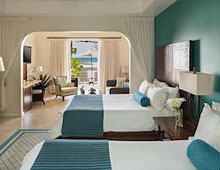
We offer a selection of hotels at Kimolos to suit all categories of travellers. The most booked by tourists are the sea-facing hotels, often right on the beach. If you want to play it safe, choose one of the following: they are among the most booked hotels in Kimolos, sorted by number of reviews.
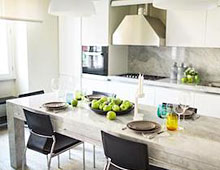
If you prefer space, privacy and the ability to prepare your own meals to a hotel holiday, book a holiday home at Kimolos. We recommend a few below, but in this case we advise you to book early because houses and apartments for rent at Kimolos are in high demand.
Kimolos can only be reached by sea, with regular connections making it easily accessible despite its small size.
The most frequent and convenient connection is by ferry from Pollonia, the northern port of Milos. The service operates eight times a day during the summer with a crossing of only 20 minutes, making day trips possible. During the winter the trips are reduced to 3-4 per day.
To reach Kimolos one can fly to Milos airport with a stopover in Athens (a 45-minute flight from Piraeus), or take the direct ferry from Piraeus.
Direct ferries from Piraeus operate five times a week during the summer, with a 6-8 hour crossing depending on the type of ship and intermediate stops. The main companies are Zante Ferries, Blue Star Ferries and Hellenic Seaways.
During the summer there are connections with several islands of the Cyclades: Folegandros, Sifnos, Serifos, Santorini, Paros and Syros. Journey times vary from 1 to 5 hours depending on the destination.
Kimolos has a bus service from Psathi to Chorio coinciding with the arrival of the ferries. During the summer, the bus extends the service to the main beaches (Aliki, Bonatsa, Mavrospilia) with 3 daily runs.
To get around independently, scooters, quads or cars can be hired directly at the port or in Chorio. Distances are very short: Psathi-Chorio 2 km, Psathi-Aliki 3 km, Psathi-Prassa 6.5 km.
The crystal-clear waters around Kimolos hide natural treasures of extraordinary beauty, which can be reached by boat excursions that are often the most memorable part of the visit.
Polyaigos is the largest uninhabited island in the Mediterranean and is one of the most spectacular excursions from Kimolos. Located a few nautical miles away, it is inhabited only by a shepherd who looks after the only small church and wild goats that have given the island its name.
The beaches of Polyaigos are considered among the most beautiful in Greece, with white sands and impossibly coloured waters ranging from turquoise to cobalt blue. The island is part of the Natura 2000 protected areas and is home to important colonies of monk seals.
Daily excursions depart every morning from the small harbour of Psathi and include stops for swimming and snorkelling in the most beautiful bays, with the possibility of spotting dolphins and sea turtles while sailing.
The small uninhabited islands surrounding Kimolos offer scenery of rare wild beauty. Agios Georgios is home to a historic lighthouse and a small natural harbour in an emerald bay perfect for a swim.
Agios Efstathios, together with the islets of Agios Andreas, Klimatonisa and Rematonisa, creates a small archipelago of crystal-clear waters ideal for kayaking or small boat excursions.
What's the weather at Kimolos? Below are the temperatures and the weather forecast at Kimolos for the next few days.
 Hotel
Hotel  Budget accommodations
  Apartments
  Family Hotel
  Luxury Hotel
  Resorts