Adamas: Milos & Polyaigos Full-Day Sailboat Tour with Lunch
1.646 reviews
Buy now
From 125,00€ per person
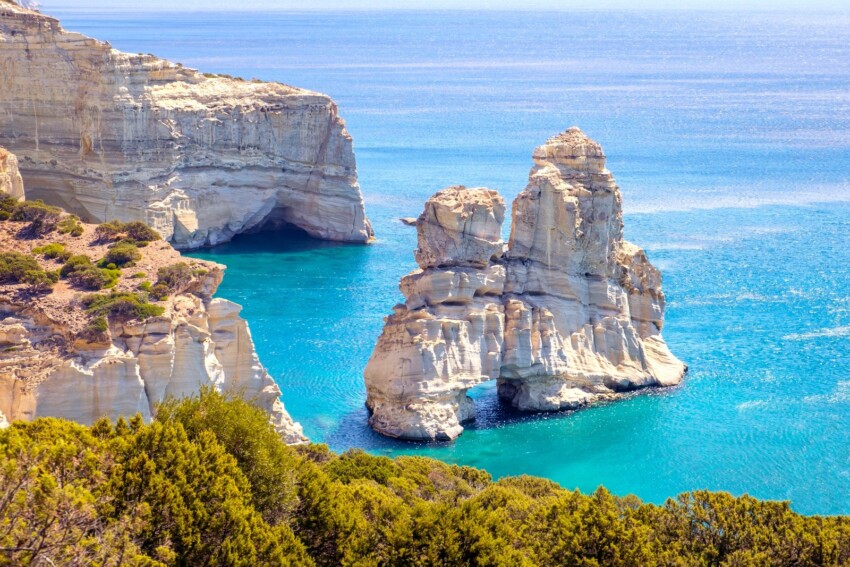
Beauty is the hallmark of the island of Milos, whose name immediately brings to mind the famous Greek sculpture of the Venus de Milo, the symbol of classical female beauty, which was found here in the 19th century.
During a holiday on the island, you won’t be able to see the Venus de Milo, which is jealously guarded in the Louvre in Paris, but you will find beauty in abundance, including picturesque villages, enchanting beaches washed by a deep blue sea, remnants of ancient civilisations and if you are lucky, even one of the monk seals swimming in the island’s waters.
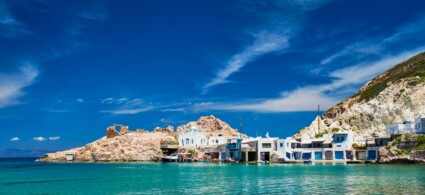
This volcanic island with its curious horseshoe shape is also called the Island of Colours because of its rock formations in surreal colours and shapes, but the hues of the sea – blue, azure or emerald green – and the island’s characteristic white stone are also splendid.
If you are still not convinced to leave, we would like to remind you that Milos is the island of the Cyclades with the greatest number and variety of beaches, all of a beauty worthy of Venus!
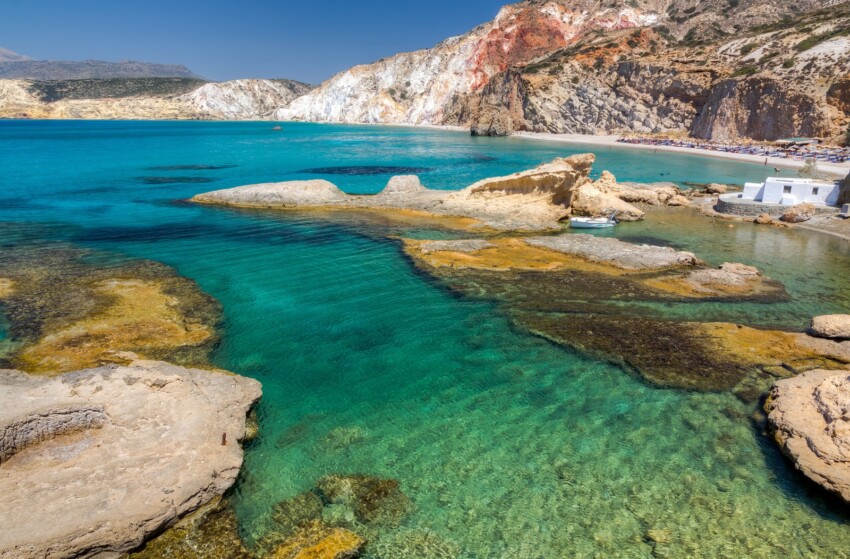
There are more than 70 beaches on the island of Milos, which if we do the maths right means that to see them all you would have to stay here at least a month and visit more than two beaches a day! We’re sure you wouldn’t mind, but maybe your employer would…
Besides being many, the beaches of Milos are also extremely varied: you can choose from picturesque city beaches, crescents of soft sand, bays bordered by impressive rocky backdrops of the most varied colours, white rocks on which incredible plays of light are created… all washed by a beautiful sea, with crystal-clear waters that invite you to take a refreshing dip.
Since the time of a holiday imposes a choice, we have selected the most beautiful beaches on Milos for you:
Find out more about the most beautiful beaches on Milos
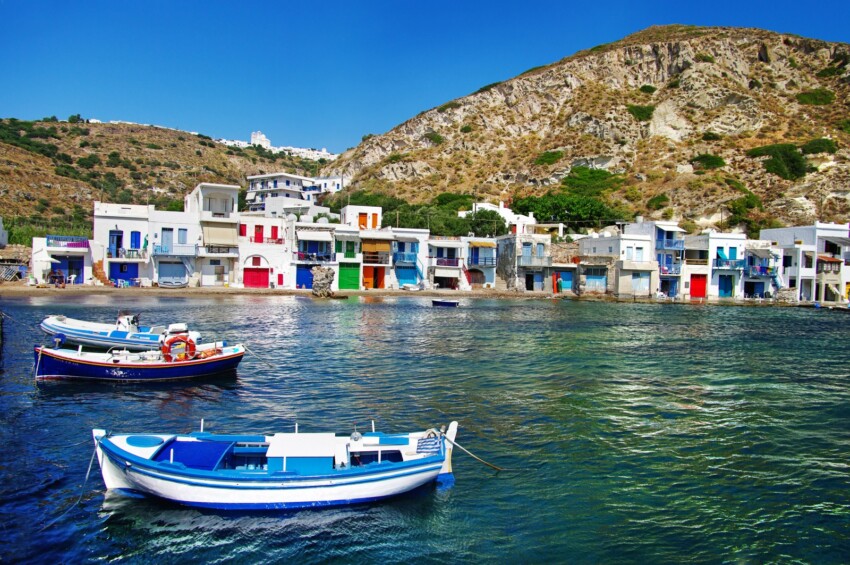
Adamas (or Adamantas) is a lively port town offering numerous tourist services. There is a wide choice of accommodation, including hotels, B&Bs and holiday homes, as well as numerous shops, bars and restaurants.
On summer evenings, the pretty seafront promenade comes alive with tourists strolling after dinner. If you want to get an idea of what life was like on the island before tourism became the main activity, wake up early and go see the fishermen returning from sea selling fresh fish at the harbour of Adamas.
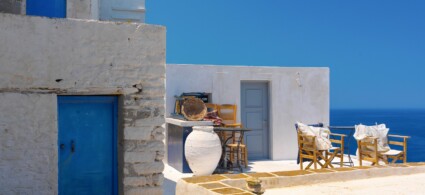
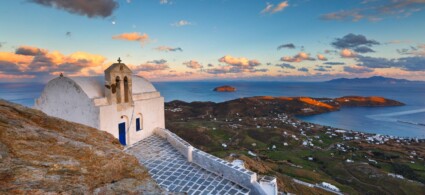
The enchanting Plaka is a picture-postcard village that perfectly embodies the image we have of villages on the Greek islands.
This maze of narrow streets and white houses perched on the slopes of a hill, with a blue sea in the background, occupies the area where the ancient city of Milos once stood, destroyed by the Athenians and rebuilt by the Romans.
If you want more tranquillity, choose Pollonia, a fishing village on the northern coast that transforms into an elegant resort in summer.
The island of Milos has a long mining tradition that endures to this day, with Europe leading the way in the extraction of bentonite (a special type of clay) and perlite.
Dedicated to this very important activity for the island’s economy is the small but well-kept Mineralogy Museum, where you will find a wealth of information on the geological conformation of Milos and its volcanic origin, and where you can trace the history of the mining industry on the island.
Can there be a Greek town without a Museum of Archaeology? Probably not! At the Archaeological Museum of Milos, you can admire a faithful reproduction of the Venus de Milos, one of the most famous ancient Greek artefacts in the world, as well as a collection of figurines dating from between 1400 and 1100 BC.
If you have some time left, you can also browse around the Museum of Folklore and History in Plaka, where a traditional house has been reconstructed with period furniture, objects and clothing, or the Museum of Sacred Art in Adamas.
The only Christian catacombs in Greece are located on the island of Milos and can be visited with a guided tour. They are perfect for those who want to learn about the history of early Christianity, but also to find some shelter from the summer heat!
In the surroundings of Pollonia are the remains of the ancient Minoan city of Phylakopi10. There is not much left to see, but the ruins are set in beautiful natural scenery, so this historical site is well worth a visit.
For an extraordinary panoramic view of the island, climb to the top of Fortezza di Kastro11, built on the ancient acropolis of Plaka, where there is also a small church from the 13th century.
If the Mineralogy Museum has got you hooked or if you are an inveterate walker, you can deepen your knowledge of the natural environment and history of Milos with the fascinating half-day geo-walks offered by the Miloterranean Geo Project.
Following the detailed maps created as part of the project, you can experience extraordinary treks through villages, breathtaking natural landscapes, mines and historical sites.
In the following map you can see the location of the main places of interest mentioned in this article.
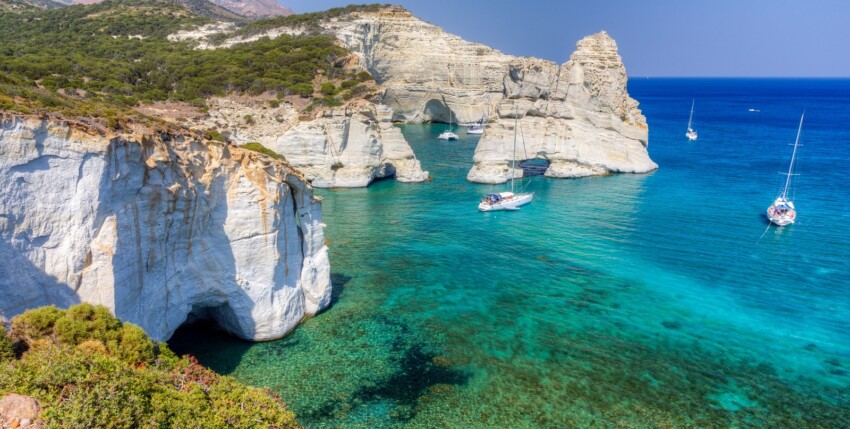
An excursion by boat is always the best way to visit an island because it allows you to admire the coastline with its many coves; consider also that some of the most beautiful beaches can only be reached by boat.
All boat trips departing from the harbour of Adamas include a visit to the Sykia Cave and the famous Kleftiko stacks, impressive arched rocks that proudly emerge from the sea. Boats will take you through the arches and in many cases a stop for a swim is provided.
Milos can also be visited on a day trip from other nearby Cycladic islands, such as Santorini. This is not ideal for appreciating the slow pace of life, but it allows you to see this little corner of paradise on earth.
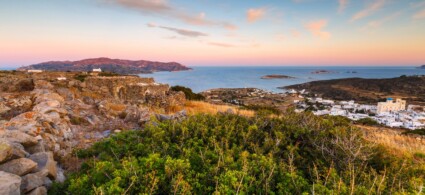
The main urban settlements on the island of Milos, where hotels and holiday homes are concentrated, are Adamas (also called Adamantas), Plaka and Pollonia (or Apollonia). Smaller are the villages of Klima, Mandrakia and Fourkovounni, which are, however, very characteristic and worth a visit.
Although the offer of accommodation has increased in recent years, don’t expect to find tourist super-complexes and megaresorts: better to book your hotel or b&b in advance.
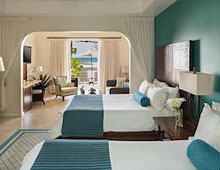
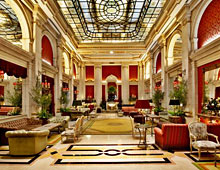
We offer a selection of hotels at Milos to suit all categories of travellers. The most booked by tourists are the sea-facing hotels, often right on the beach. If you want to play it safe, choose one of the following: they are among the most booked hotels in Milos, sorted by number of reviews.
If you prefer space, privacy and the ability to prepare your own meals to a hotel holiday, book a holiday home at Milos. We recommend a few below, but in this case we advise you to book early because houses and apartments for rent at Milos are in high demand.
There is an airport on the island of Milos, where daily flights from Athens land.
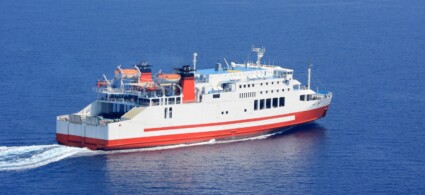
To reach Milos by sea, you can take a ferry or hydrofoil from the port of Piraeus in Athens. The crossing takes between 3 and 7 hours, depending on the means of transport chosen and the number of stops made.
You can also take a ferry to Milos from Ios, Sikinos, Folegandros, Santorini, Crete and other islands in the eastern Cyclades. They do not operate a daily service, so it is advisable to book both the outward and the return journey in advance, checking the departure days and times carefully.
Find out more about getting to Milos
The Venus de Milo (also called Aphrodite of Milos), a marble statue dating back to 130 BC, is unanimously considered one of the most beautiful sculptures of antiquity, embodying the ideal of female perfection in classicism.
Its fame has made the name of the island of Milos known all over the world: it was found in 1820 by a farmer from the town of Plaka while he was digging one of his fields, seized by the Turkish authorities and later bought by the French ambassador, who took it to Paris where it remains today.
Lacking a plinth and arms, the statue is 202 cm high. It is attributed to the Hellenistic sculptor Alexander of Antioch.
What's the weather at Milos? Below are the temperatures and the weather forecast at Milos for the next few days.




 Hotel
Hotel 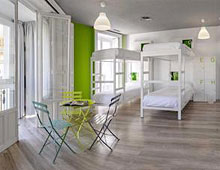 Budget accommodations
  Apartments
  Family Hotel
  Luxury Hotel
  Resorts