Poseidon Hotel Suites
Mýkonos City - Vida
Overlooking the iconic Mykonos Windmills, the Poseidon Hotel Suites is only 50 metres from Megali Ammos Beach.
Book now
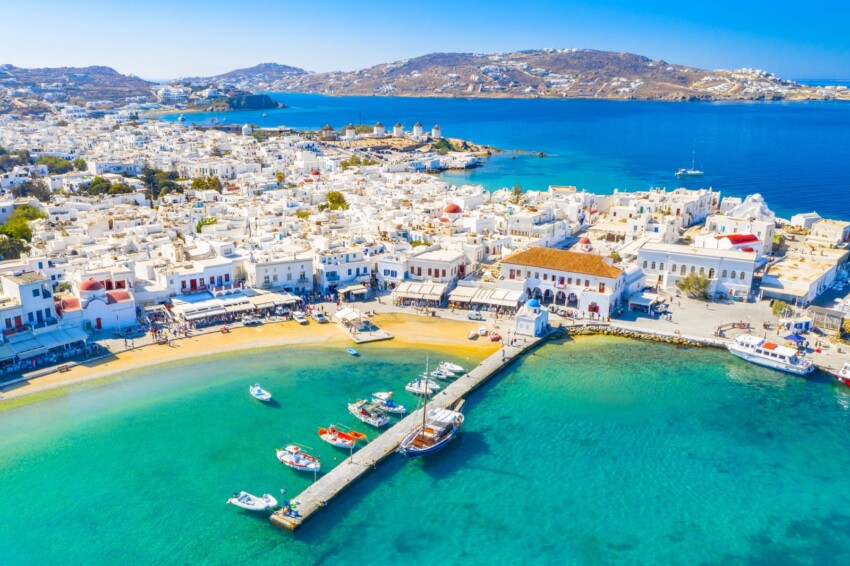
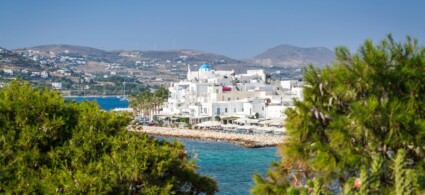
Mykonos Town, known to the Greeks simply as Chora or Hora, is the cultural and beating heart of the most glamorous island of the Cyclades. This extraordinary port town is a perfect balance of Cycladic tradition and international high society, where typical whitewashed houses blend harmoniously with luxury boutiques, starred restaurants and legendary nightlife.
Built like a natural amphitheatre gently climbing the slopes of a hill, Mykonos Town protects its historic harbour with a maze of narrow alleys originally designed to confuse pirates. Today, these same cobbled streets offer a unique experience, where every corner hides surprises: from Byzantine chapels to contemporary art galleries, from traditional cafés to Europe’s most exclusive cocktail bars.
Chora’s strategic location makes it the ideal starting point for exploring the island’s famous beaches, while its architectural and cultural richness makes it a must-see destination for visitors to the Cyclades. The port welcomes daily ferries from Athens and private yachts from all over the Mediterranean, confirming its role as a gateway to the more exclusive Aegean.
Besides its worldly reputation, Mykonos Town harbours a rich cultural heritage that often eludes hurried visitors. The Chora is home to several interesting museums that tell the thousand-year history of the island and the Cyclades.
Mykonos Town is also home to numerous small churches and chapels scattered in the alleyways, each with its own history and architectural peculiarities. Many date back to the Byzantine period and preserve valuable artistic elements.
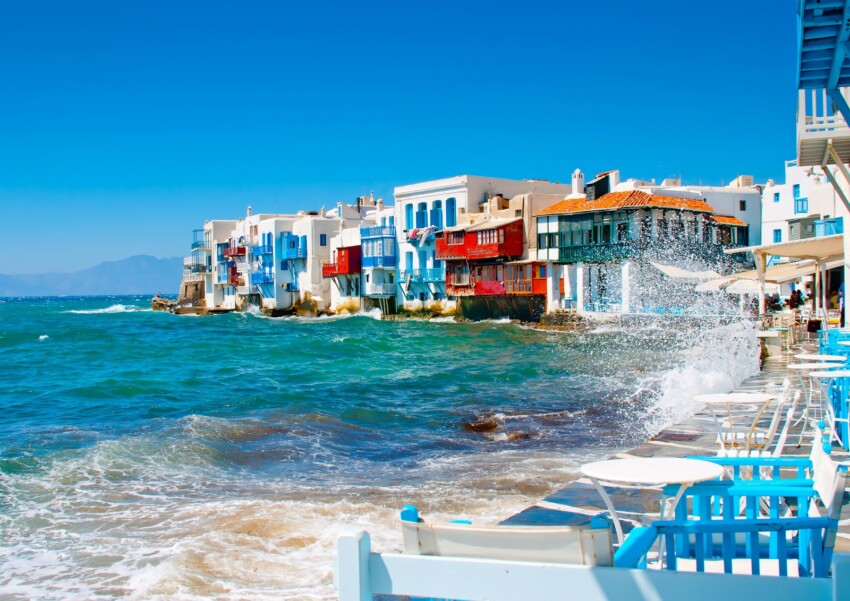
Little Venice is undoubtedly the most photographed and romantic corner of Mykonos Town. This unique quarter, whose original Greek name Alefkandra is now almost forgotten, owes its international fame to the colourful houses built directly on the sea, their foundations lapped by the waves of the Aegean.
The elegant mansions that characterise Little Venice were built in the 18th century by wealthy merchants and shipowners who wanted to challenge the architectural conventions of the time, creating residences with balconies overlooking the sea. These colourful mansions, with their blue shutters and salt-discoloured wooden balconies, seem to literally ‘float’ on the water, creating a dramatic effect reminiscent of the famous houses of Venice.
The magical atmosphere of Little Venice reaches its peak during sunset, when the sun tints the waves gold and the facades of the houses light up in shades from yellow to deep red. It is precisely at these times that the numerous cafés and cocktail bars occupying the ground floors of the historic buildings fill up with visitors in search of the perfect aperitif with a sea view.
The narrow streets that form the characteristic labyrinth of Little Venice hide art galleries, temporary exhibitions and exclusive boutiques. During summer evenings, the neighbourhood is transformed into an open-air stage where Cycladic elegance meets international cosmopolitanism, creating an atmosphere that has made this corner of Mykonos world famous.
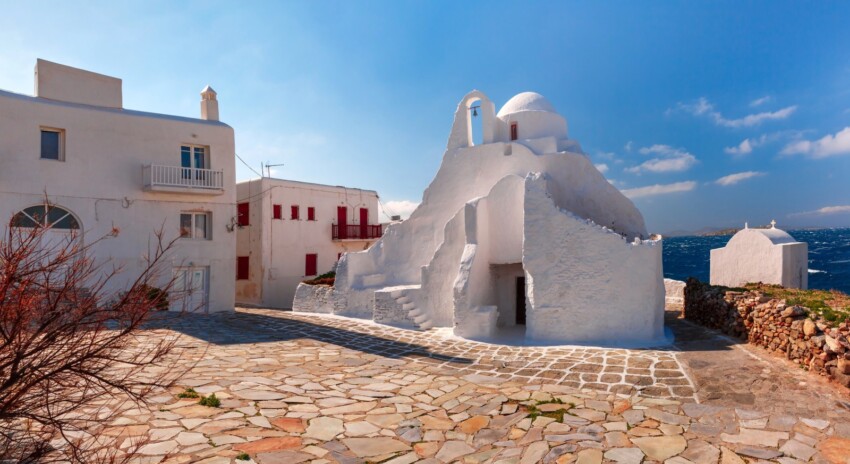
The Church of Panagia Paraportiani is considered one of the most extraordinary and photographed monuments in Greece. Located in the Kastro district, right by the sea next to Little Venice, this church is a unique example of religious architecture that defies all traditional stylistic conventions.
The name ‘Paraportiani’ literally means ‘Our Lady of the Inner Gate’, referring to its original location next to one of the ancient gates to the medieval fortress that protected the city. The church was built where the castle’s secondary entrance, now completely disappeared, once stood.
The most outstanding feature of Panagia Paraportiani is its complex structure: it is not a single church, but an agglomeration of five churches built at different periods between 1425 and the 17th century. The first four churches – Agios Efstathios, Agios Anargyros, Agios Sozon and Agia Anastasia – were gradually connected and merged to become the basis of a fifth, higher church dedicated to the Virgin Mary, which dominates the entire complex with its distinctive dome.
The exterior architecture of the church, completely clad in white lime, features sinuous and irregular shapes that change appearance depending on the vantage point. This architectural plasticity has inspired poetic comparisons: some describe it as a ‘mountain of snow in the sun’, others as ‘a mad confectioner’s dream’ due to its soft, undulating shapes.
The interior of the church, when open to the public, preserves valuable artistic elements, including Byzantine icons and traditional sacred furnishings. However, many visitors are content to admire the exterior of this national monument, which represents one of the best examples of post-Byzantine architecture in the Cyclades.
Its position overlooking the sea makes Panagia Paraportiani particularly impressive during sea storms, when waves crash at the base of the church creating a natural spectacle of rare beauty.
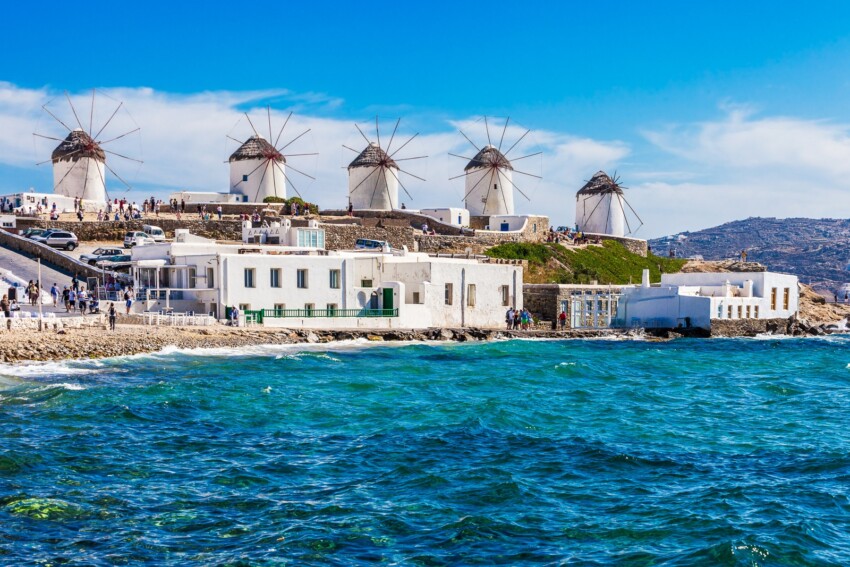
The windmills of Mykonos are probably the most iconic and recognisable image of the entire island. Situated on a small promontory overlooking both Chora and Little Venice, these ancient windmills offer one of the most spectacular views in the Aegean, especially during the hours of sunset.
Built in the 16th century during the period of Venetian rule, the mills were the heart of the island’s agricultural economy. Their strategic position, exposed to the strong Meltemi winds, allowed local wheat to be ground not only for domestic needs, but especially for export to the eastern Mediterranean. For more than four centuries, these mills represented a source of prosperity for the island, remaining active until the world wars.
Of the 16 mills originally present on the island, seven are located on the panoramic hill above the town, easily reached by a five-minute walk from the centre. Other mills are scattered around the island, including a particularly scenic one on the road leading to Ano Mera and the airport.
The current condition of the mills shows signs of time and salt spray, but this natural deterioration is part of their authentic charm. Five of the seven main mills have been completely renovated and converted into luxury tourist accommodation, while the first one retains its original appearance and houses a small museum with period photographs and the possibility of climbing to the top to admire the old wooden millstone.
The view from the mills encompasses the whole of Chora, the historic harbour and extends to the neighbouring islands, making this one of the most sought-after photographic spots on all the Greek islands.
Matoyianni Street represents the commercial and social soul of Mykonos Town, a cobbled pedestrian street that concentrates the best of the island’s luxury shopping, international dining and nightlife. Named after Matoyannis Anastassiou, hero of the Greek War of Independence, this street winds through the heart of Chora, linking the Old Port with Little Venice.
The architecture of Matoyianni Street perfectly reflects the Cycladic style with its whitewashed houses, blue shutters and bougainvillea-flowered balconies. However, unlike other quieter corners of the city, this street pulses with cosmopolitan energy with its international boutiques, trendy cafés and gourmet restaurants.
Shopping on Matoyianni Street ranges from big international names to local designers. Soho-Soho is the most popular boutique, frequented by celebrities such as Tom Hanks and Sarah Jessica Parker, while shops such as Prince Oliver, Carla G, First and Carouzos offer high-end fashion. For accessories, Manebi offers fashionable bags and hats, while at Kostas Rabias you can find the famous coloured leather sandals, a symbol of Mykonian craftsmanship.
During the summer months, most shops stay open until midnight, turning shopping into a unique night-time experience. The street is also home to numerous bars and restaurants offering everything from traditional Greek cuisine to international fusion gastronomy.
For those seeking authenticity, it is worth visiting Skaropoulos for its almond cakes (once praised by Winston Churchill) and Pantopoleion, a 300-year-old shop selling organic Greek products, natural cosmetics and local handicrafts.
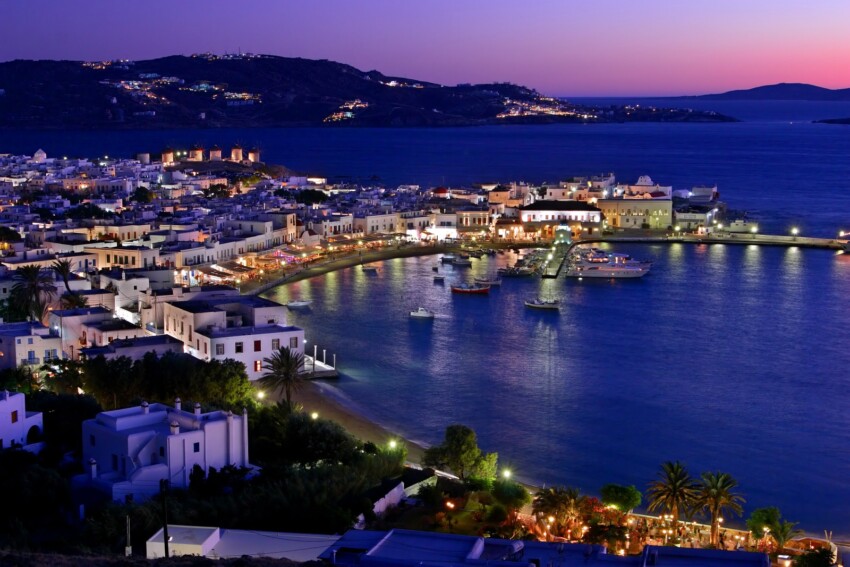
The harbour of Mykonos is the beating heart of the island, a fascinating place where Greek seafaring tradition and international high society merge perfectly. Divided between the picturesque Old Port and the functional New Port, it constitutes the main access point by sea for visitors to the island.
The Old Harbour, located in the heart of Chora, retains all the charm of an old fishing village with its colourful boats, waterfront cafés and spectacular views of windmills in the distance. Traditional caiques, local fishing boats and a few private yachts dock here, creating a picturesque mosaic of vessels that tells the island’s seafaring history.
Along the waterfront of the old harbour are traditional taverns, historic cafés and bars offering the chance to enjoy an ouzo at sunset while admiring the movement of the boats. It is the ideal place for an evening stroll when the lights reflect on the water and the atmosphere becomes magical.
On the other hand, the New Port of Tourlos, located about 2.5 kilometres from the town, is the most modern and functional part. Ferries from Athens and other islands, international cruise ships and the maxi yachts that have made Mykonos famous among the world jet set dock here.
Both ports are connected to the town by regular services and are ideal starting points for excursions to Delos, the sacred island of antiquity, and for tours of the Cyclades islands.
The Folklore Museum offers a fascinating perspective on traditional Cycladic life, showing a perfectly preserved 100-year-old house of a sea captain. The collection includes period clothing, everyday objects and evidence of the island’s rich seafaring tradition. Located near the Panagia Paraportiani, the museum is worth a visit of a couple of hours.
The underground floor is dedicated to Mykonos and the sea: cannons, old photographs, model ships, numerous relics, model boats and a life-size ship used during the War of Independence in 1821.
Between Little Venice and the famous mills of Mykonos, there are at least 10 churches, including the cathedral, which gives its name to Odos Mitropoleos, and the Panagia Rodariou, the only Catholic church on the island, which houses an important icon. The name Alefkandra derives from the Greek word ‘alefki’, meaning windmill, as in the past there were many windmills in this area. It is located near the famous Matogiannia quarter, where many high-fashion boutiques, souvenir shops and luxury restaurants can be found.
The Aegean Maritime Museum documents the glorious naval tradition of the Cyclades with ship models, navigational instruments and historical documents. The building that houses it was the home of a captain who fought on the side of the Cretans against the Turkish occupation, adding special historical value to the venue.
It is located in Odos Enopion Dinameon and is open from 1 April to 1 November. It houses a collection of models inspired by the frescoes of Akrotiri, Santorini (1500 BC). You can admire the entire epos of navigation in the Aegean Sea: from Assyrian dinghies and Egyptian sailing ships to holkades, the impressive Greek war triremes from the 4th century BC. Also on display are amphorae, nautical instruments and portraits. The museum also houses a small thematic library.
Lena’s House is a perfect example of a traditional Mykonian bourgeois dwelling, testifying to the ancient social stratification of the island before tourism completely transformed the local economy. This authentic dwelling offers a glimpse into the daily life of the past.
It is next to the naval museum and is open from 1 April to 31 October with free admission. The 19th-century dwelling belonged to the daughter of a wealthy merchant. In an elegant and cosy atmosphere, one can admire beautiful furnishings and personal items.
The Archaeological Museum, located on the road leading to the ferry embarkation point, houses important finds mainly from the Delos site and neighbouring Rhinia. Among the most notable pieces is an enormous pithos decorated with mythological scenes, considered the oldest surviving evidence of the Trojan War. The museum is open Tuesday to Sunday, with free admission on Sundays.
In the following map you can see the location of the main places of interest mentioned in this article.
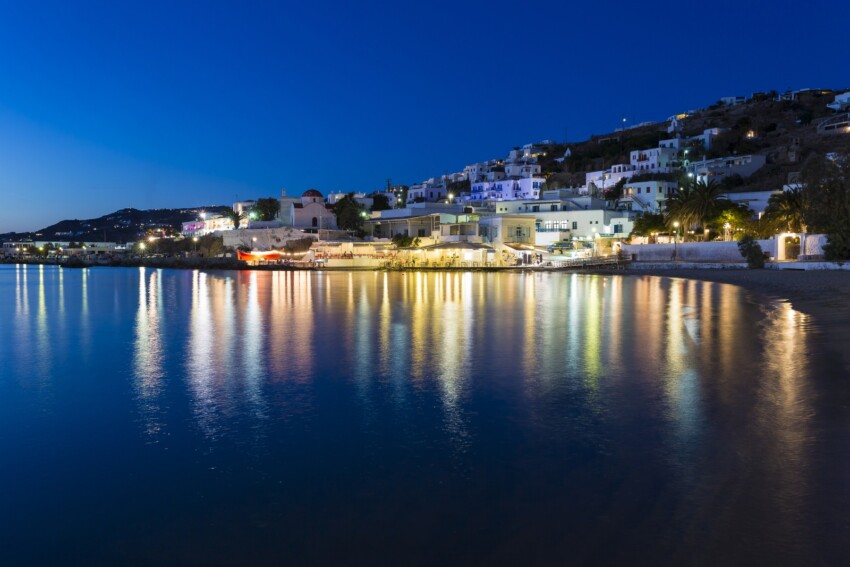
Mykonos Town’s nightlife is legendary throughout the Mediterranean, transforming the quiet Cycladic Chora into one of Europe’s most exclusive entertainment centres every night. The offer ranges from sophisticated cocktail bars to seaside discos, from gourmet restaurants to traditional taverns serving authentic Greek specialities.
The liveliest nightlife areas are concentrated around Matoyianni Street, Little Venice and the narrow streets of the old town, where each alley hides unique venues. During the summer, the party often continues until dawn, with music bars offering international DJ sets and more intimate venues where you can enjoy a drink while admiring the sea.
The cosmopolitan atmosphere of Mykonos attracts visitors from all over the world, creating a cultural melting pot that is reflected in the variety of gastronomic offerings and the quality of nightlife entertainment.
Choosing accommodation in Mykonos Town has several advantages for visitors to Mykonos Island. First of all, the location: Mykonos Town is situated in the centre of the island, so it is an excellent base for exploring the island and visiting its beaches and attractions. In addition, the town has numerous tourist facilities, including hotels, flats and bed and breakfasts, which can cater to the different needs of travellers, as well as a wide choice of restaurants, bars and shops, which will make your stay very comfortable and pleasant.
The city is famous for its lively nightlife, with numerous clubs, discos and bars that stay open until the early hours of the morning.
Let’s not forget the town’s atmosphere: with its white houses, narrow alleys and traditional Greek taverns, you will have the opportunity to experience the authentic atmosphere of the island and immerse yourself in Greek culture.
Moreover, Mykonos Town is easily accessible from both the airport and the island’s port, with a short taxi or bus ride.
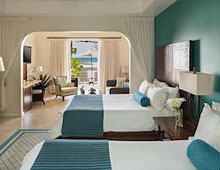
We offer a selection of hotels at Mykonos Town to suit all categories of travellers. The most booked by tourists are the sea-facing hotels, often right on the beach. If you want to play it safe, choose one of the following: they are among the most booked hotels in Mykonos Town, sorted by number of reviews.
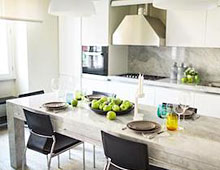
If you prefer space, privacy and the ability to prepare your own meals to a hotel holiday, book a holiday home at Mykonos Town. We recommend a few below, but in this case we advise you to book early because houses and apartments for rent at Mykonos Town are in high demand.
The airport is about 4 km from the town, connected by public buses and taxis. During the summer, taxis can be scarce, so it is advisable to book private transfers in advance.
Hiring a car directly at Mykonos Airport offers the double advantage of getting to town quickly in 10 minutes and having the freedom to explore the island’s beaches and attractions at your own pace. For parking, there are several paid parking areas near the centre, but during the high season finding a space can be difficult. Many hotels offer shuttle services or recommend less congested parking areas.
To reach the city from the New Port of Tourlos, a taxi is the most convenient option (10-minute ride), while there are less frequent shuttle bus services. From the Old Port, it is a pleasant 5-minute walk to the centre.
What's the weather at Mykonos Town? Below are the temperatures and the weather forecast at Mykonos Town for the next few days.
 Hotel
Hotel 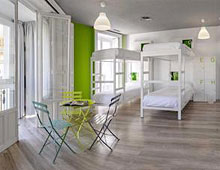 Budget accommodations
  Apartments
  Family Hotel
 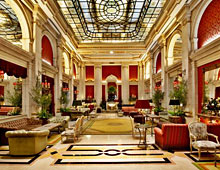 Luxury Hotel
 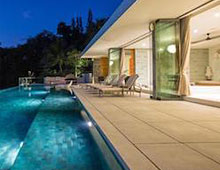 Resorts