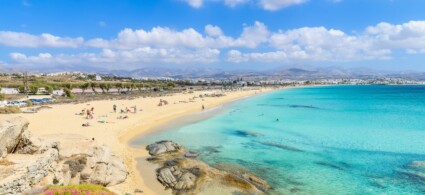
Agios Prokopios
Agios Prokopios is the most famous beach on Naxos, with golden sand, crystal-clear waters and protection from the winds. Easily accessible from the harbour in 15 minutes.
Read more
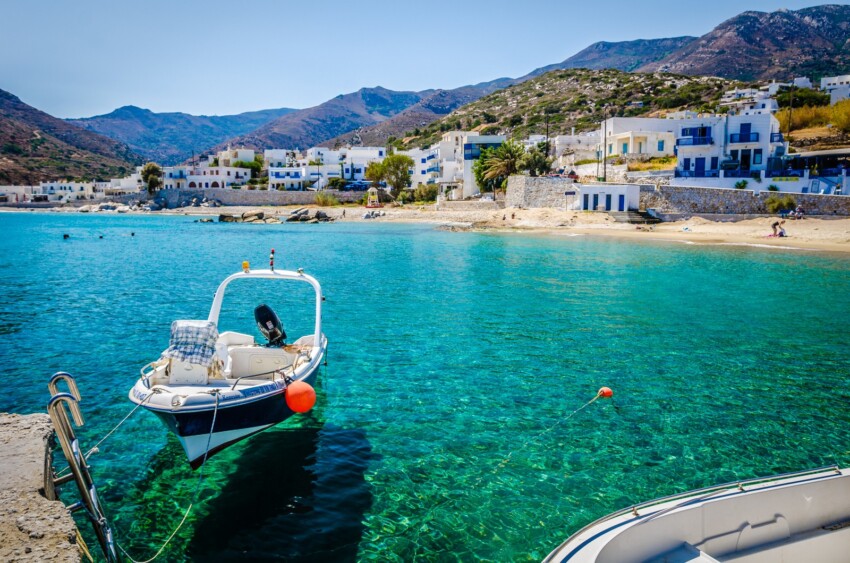
Best beaches of Naxos represent the best the Cyclades have to offer for those seeking crystal-clear sea and fine sand. The largest island of the Cycladic archipelago boasts over 90 kilometres of coastline bathed by emerald waters, with sandy beaches stretching for kilometres along the west coast and hidden coves along the east and south.
The geological conformation of Naxos, characterised by granitic rocks and marine sedimentary deposits, has over time created a varied coastline ranging from the wide sandy expanses of Plaka to the rocky formations of Lionas. The meltemi, the summer wind blowing from the north-east, greatly influences the bathing experience: while the western beaches often remain sheltered, the eastern and northern beaches can be windier, creating ideal conditions for water sports.
The west coast concentrates the most popular and best equipped beaches, easily accessible from the port of Chora and equipped with all amenities. Here you will find the perfect balance of comfort and natural beauty, with shallow waters ideal for families and sand so fine it looks like talcum powder. The south coast, on the other hand, offers wilder and more unspoilt scenery, where small sheltered bays guarantee tranquillity even in the high season.
The Mediterranean climate of Naxos ensures pleasant water temperatures from May to October, while the natural protection offered by the rocky promontories creates microclimates that make many beaches swimmable even during the windiest of days. The golden sand that characterises most beaches comes from the erosion of inland granite rocks, creating sandy shores of extraordinary fineness.
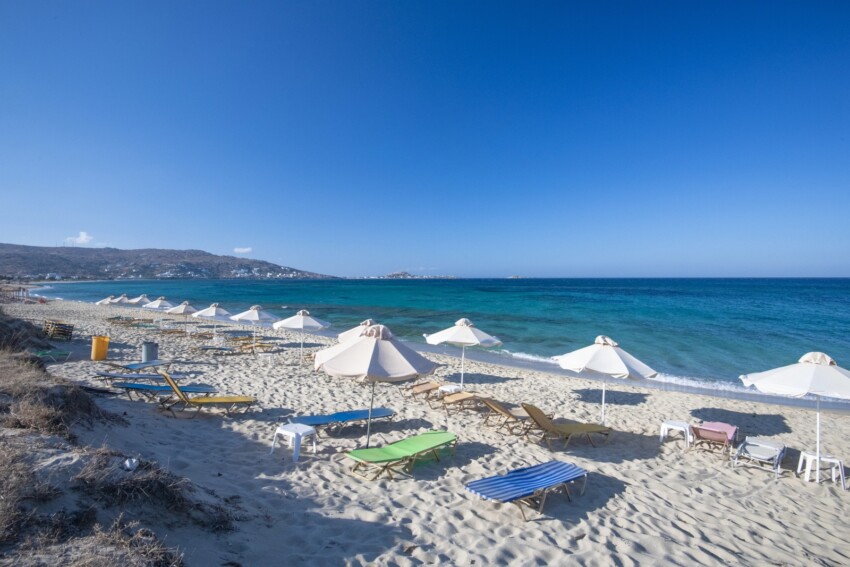
Plaka beach stretches for almost 4 kilometres along the west coast, representing one of the most spectacular sandy shores in the Cyclades. This very long stretch of fine white sand is bathed by crystal-clear waters that slope from turquoise to deep blue, creating a visual effect reminiscent of the Caribbean.
The beach is naturally divided into different zones: the northern part, closer to Agia Anna, offers organised facilities with sunbeds, umbrellas and beach bars, while proceeding southwards one finds wilder and more unspoilt stretches. The natural dunes that run parallel to the shore are dotted with sea cedars that provide natural shade during the hottest hours.
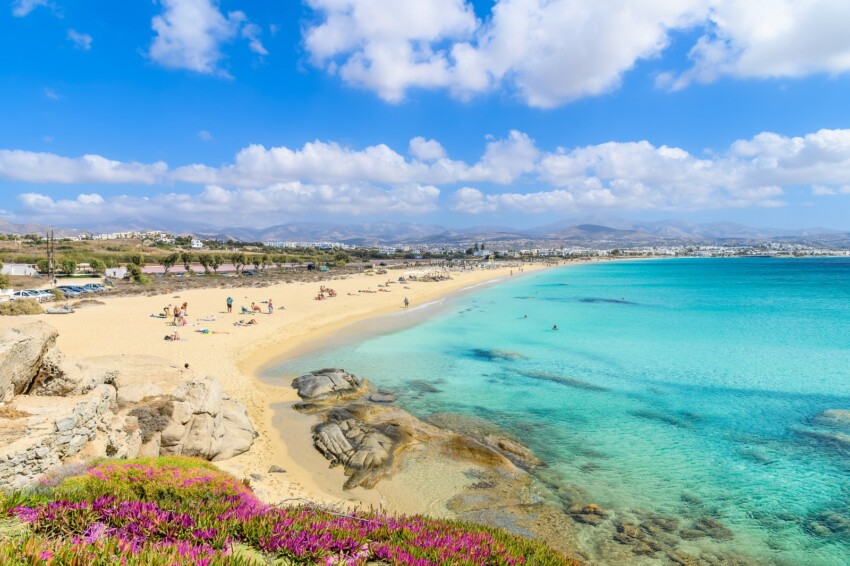
Considered one of the most beautiful beaches in Greece, Agios Prokopios is located just 5 kilometres from Chora and is easily accessible by public transport. This fine sandy beach stretches for about 1.5 kilometres and is naturally protected by the promontory of Stelida, which shelters it from the north winds.
The waters are exceptionally clear blue, so much so that this beach has been ranked among the top 10 in Greece for sea clarity. The European Blue Flag that it regularly obtains testifies to the excellent quality of the waters and services offered. The shallow, sandy seabed makes it ideal for families with small children.
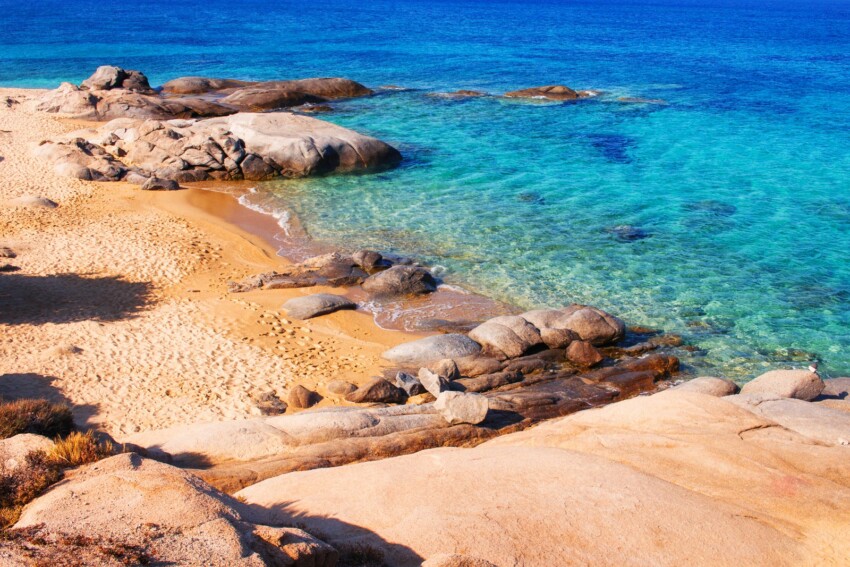
Nestled between Agios Prokopios and Plaka, Agia Anna represents the perfect compromise between comfort and natural beauty. The beach is characterised by fine sand and a quaint little harbour from which excursions to the neighbouring islands depart.
The promontory that hosts the small white church of Agia Anna is surrounded by cedar groves that create a picturesque setting and provide natural shelter. The waters are particularly shallow and calm, ideal for small children, while the numerous facilities along the coast satisfy every need for comfort.
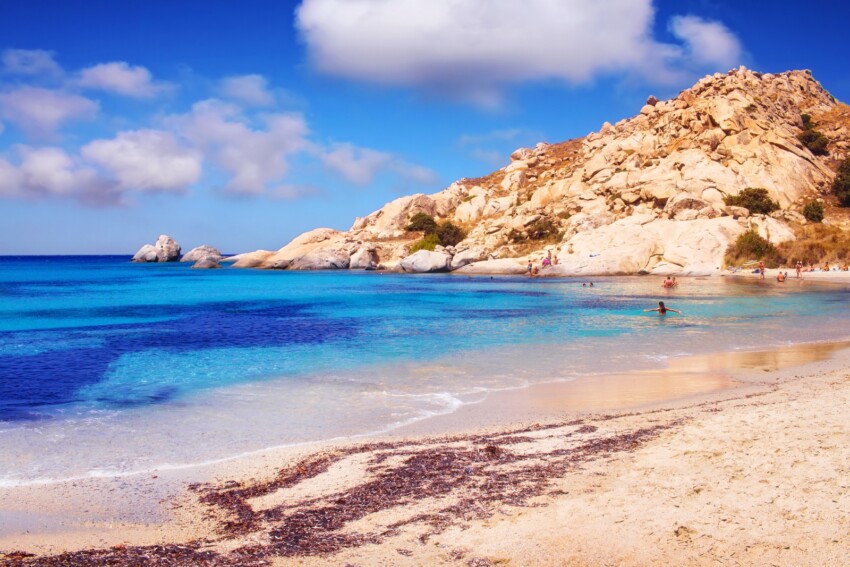
Mikri Vigla is divided into two distinct bays separated by a rocky promontory: Parthena to the north, exposed to the winds and the realm of windsurfing and kitesurfing, and Sahara to the south, more sheltered and ideal for relaxation. The unique conformation of the land creates two completely different microclimates just a few metres apart.
The southern part, protected from currents, is reminiscent of the landscapes of northern Sardinia with large granite rocks emerging from crystal-clear waters. The white sand and gently sloping seabed make this area perfect for swimming, while the view towards Paros completes a picture-postcard scenario.
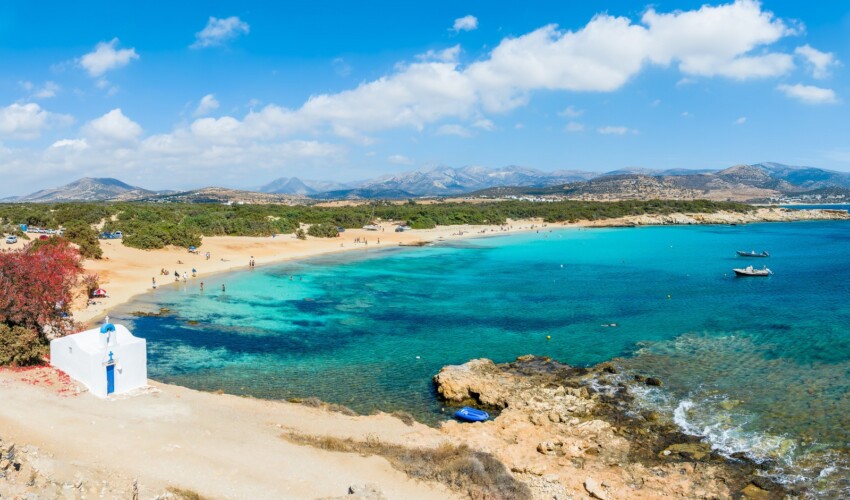
Located in the Alyko Nature Reserve, this beach is a paradise for nature lovers. The area is characterised by cedar forests, sand dunes and small coves separated by rock formations that create corners of absolute privacy.
The waters of Alyko always remain exceptionally calm, remaining crystal-clear even when the meltemi blows hard over the rest of the island. The combination of golden sand, lush vegetation and turquoise sea creates an almost tropical ambience, while the absence of commercial structures preserves the wild atmosphere of the place.
Between Plaka and Mikri Vigla lies Orkos, a lesser-known but often quieter beach. The landscape here has unique characteristics: coarser golden sand than the neighbouring ones, small rocky promontories that create sheltered coves and a succession of natural inlets.
The beach is completely free and unequipped, maintaining a wild atmosphere that attracts those seeking authenticity. Ideal conditions for windsurfing and kitesurfing have made this location popular with water sports enthusiasts from all over Europe, while the more sheltered areas offer excellent snorkelling opportunities.
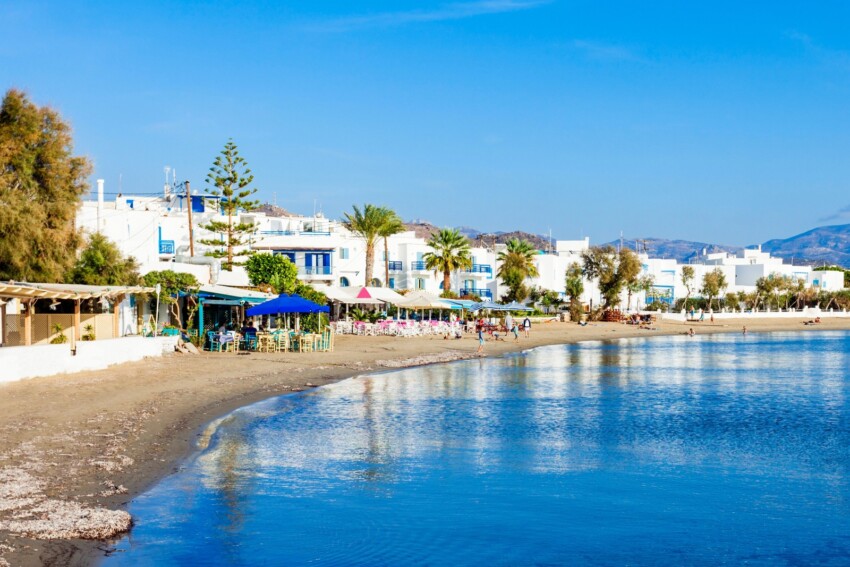
The urban beach of Chora is an unexpected oasis within walking distance of the main harbour. Located in the island’s most protected bay, Agios Georgios enjoys consistently calm and crystal-clear waters, naturally sheltered from the prevailing winds.
Its fine sand and shallow waters make it particularly popular with local families, who frequent it assiduously. The proximity to the old town allows one to alternate moments of marine relaxation with cultural walks, while the numerous beach bars offer comfort and quality services.
On the east coast of the island, Lionas Beach stands out for its wild and authentic beauty. Characterised by coloured pebbles polished by the sea and deep crystal blue waters, it is the opposite of the large sandy beaches in the west.
Its distance from mass tourism and remote location make it ideal for those seeking absolute tranquillity. The small fishing village that surrounds it retains an authentic atmosphere, while the consistently clear waters offer excellent conditions for snorkelling and observing marine life.
Located in the Alyko area, Hawaii Beach is a charming little bay nestled between high dunes and white rock cliffs that contrast dramatically with the deep blue sea. The name, though exotic, does justice to a setting that seems truly tropical.
The beach is completely free and wild, accessible via a short dirt path through the Mediterranean vegetation. The crystal-clear waters quickly become deep, while the total absence of commercial structures preserves the authenticity of this corner of paradise.
At the south-eastern tip of Naxos, the bay of Panormos offers a completely different bathing experience. This remote beach is characterised by natural palm trees that provide shade, sand mixed with pebbles and a Robinson Crusoe atmosphere.
The bay is naturally sheltered from the winds, ensuring that the water is always calm and clear. The presence of a few colourful fishing boats and a traditional taverna complete the picture of an authentic corner of Greece, far from the beaten tourist routes.
At the southern end of the west coast, Agiassos is the southernmost beach that can be reached by paved road. Characterised by fine golden sand and a completely unspoilt environment, it offers plenty of space even during the busiest periods.
Its remoteness from the main tourist areas makes it a paradise for those who love silence and tranquillity. The turquoise and crystal-clear waters slope gently downwards, while the presence of small coves on the sides allows one to find corners of absolute privacy.
On the south-eastern coast, Psili Ammos is one of the most remote and wildest beaches on Naxos. The name, meaning ‘fine sand’, perfectly describes the main feature of this isolated bay bathed by deep blue waters.
Access requires a dirt road through spectacular mountain scenery, but the unspoilt beauty of the place amply repays the effort. The beach remains virtually deserted even at the height of summer, offering a wild and authentic seaside experience.
In the following map you can see the location of the main places of interest mentioned in this article.
Naxos offers an extraordinary variety of beaches that satisfy every type of traveller. The geological conformation of the island and its exposure to the winds create different microclimates that allow one to choose the bathing experience that best suits one’s needs.
Geographical location also determines wind protection: the western and southern beaches generally remain calmer, while the eastern beaches offer excellent conditions for those who enjoy rough seas and sailing sports.
Beaches for families with children
For water sports enthusiasts:
Wild, unspoilt beaches:
Beaches with facilities
For absolute tranquillity
 Hotel
Hotel  Budget accommodations
  Apartments
  Family Hotel
  Luxury Hotel
  Resorts