Anatoli Hotel
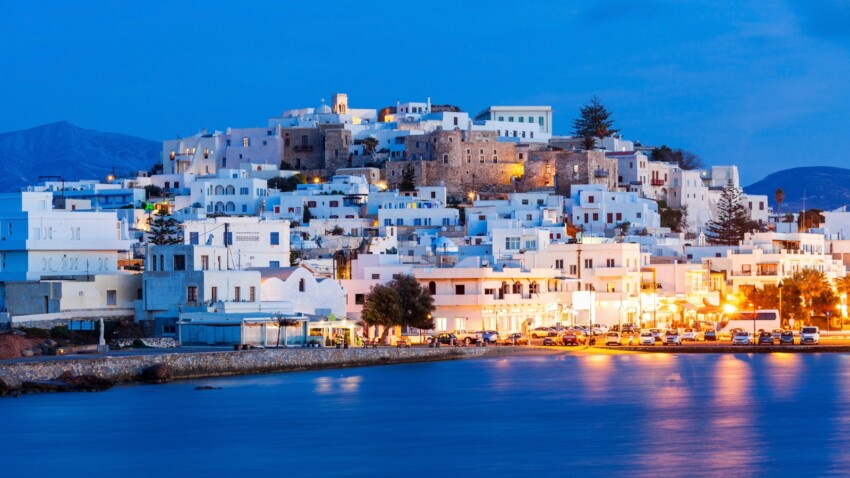
Naxos, the largest island of the Cyclades, represents a perfect balance of authentic Greek tradition and breathtaking natural beauty. Covering an area of 428 square kilometres, the island offers an incredible variety of attractions ranging from millenary archaeological sites to paradisiacal beaches, from unspoilt mountain villages to panoramas encompassing the entire Aegean Sea.
The island is distinguished from its Cycladic sisters by its fertility and lush vegetation, fed by rainfall that is concentrated on the mountainous relief. This unique characteristic has allowed Naxos to keep alive a millenary agricultural tradition, with olive groves, vineyards and crops that paint the hinterland in shades of green unusual for the Cyclades.
The historical wealth of Naxos is evidenced by the presence of important archaeological sites, from the colossal statues of the Kouros to the temples dedicated to the Olympian gods. Each stone tells thousands of years of history, from the archaic Greek period to Venetian rule, creating a cultural heritage of inestimable value.
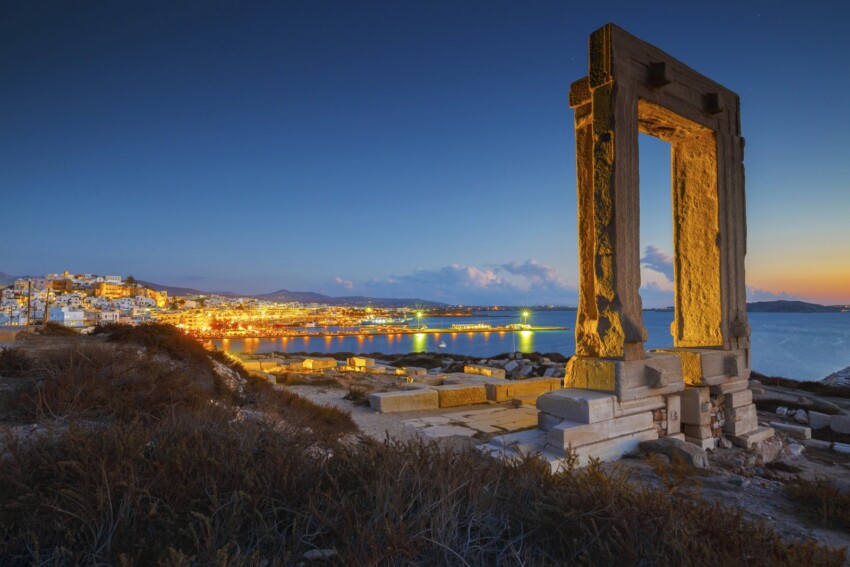
The Portara, located on the islet of Palatia connected to the main harbour by a narrow strip of land, is the undisputed icon of Naxos and one of the most photographed images of Greece. This majestic white marble portal is the last vestige of the Temple of Apollo, begun in the 6th century B.C. but never completed.
The 6-metre-high structure is built entirely of local marble and was intended to be the gateway to a colossal temple that, if completed, would have been one of the largest in the ancient world. Its perfect orientation towards Delos, an island sacred to Apollo, is not accidental but testifies to the religious importance of the site.
The most magical time to visit the Portara is during sunset, when the sun perfectly frames the marble arch, creating an unforgettable colour spectacle. The Portara of Naxos is also linked to the myth of Ariadne, who, according to tradition, was abandoned here by Theseus after helping him defeat the Minotaur.
Access is free and possible at any time of day. During the summer, the site can be crowded, so it is advisable to visit early in the morning or during sunset for a more intimate experience.
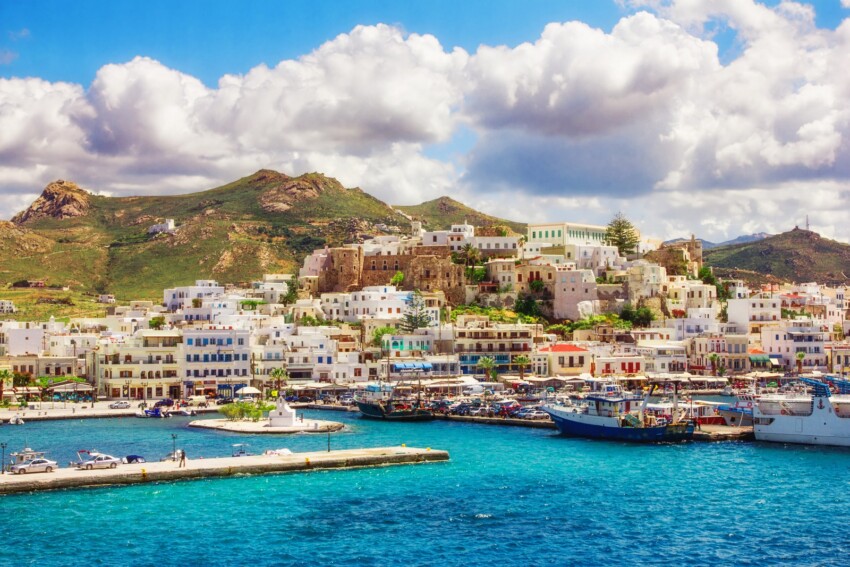
Chora, the capital of Naxos, is a true architectural jewel that encapsulates centuries of history in a few square kilometres. The historic centre is built around the Kastro, the Venetian fortress built in 1207 by Marco Sanudo, which is one of the best-preserved examples of Venetian architecture in Greece.
Strolling through the cobbled streets of the Kastro, one can admire noble palaces with heraldic coats of arms, Gothic arches and Renaissance portals testifying to the long Venetian rule. The Archaeological Museum, housed in the former French Jesuit College, contains important exhibits from prehistoric to Byzantine times, including artefacts from Cycladic civilisations.
The lower part of Chora, with its characteristic Venetian harbour, offers a lively concentration of taverns, cafes and local craft shops. The waterfront is perfect for an evening stroll, when the lights of the white houses are reflected in the waters of the harbour creating a magical atmosphere.
Don’t miss a visit to the Catholic Cathedral and the Orthodox Church of Pantanassa, examples of the religious coexistence that has characterised the island. The historic centre of Naxos is a living heritage that perfectly combines conservation and contemporary life.
Mount Zas (1,004 metres), the highest peak in the Cyclades archipelago, offers a unique trekking experience combining mythology, nature and breathtaking views. According to Greek legend, it was on this mountain that Zeus spent his childhood, hidden by his father Kronos in the Cave of Zeus.
The hike to Mount Zas starts from the village of Philoti and takes about 3-4 hours. The well-marked path passes through landscapes that vary from Mediterranean scrub to alpine rock formations, offering glimpses of the fertile Tragea Valley with its centuries-old olive groves.
About 630 metres above sea level is the Cave of Zeus, a natural cave system with well-preserved stalactites and stalagmites. Inside, artefacts ranging from the Neolithic period to Roman times have been found, which are now preserved in the Naxos Archaeological Museum. The cave was used as a refuge during Ottoman raids.
From the summit, marked by a geodesic pillar, there is a 360-degree view encompassing the entire Cycladic archipelago: Paros, Ios, the Lesser Cyclades, Amorgos and, on a clear day, even Crete. Mount Zas is an unmissable experience for lovers of trekking and Greek mythology.
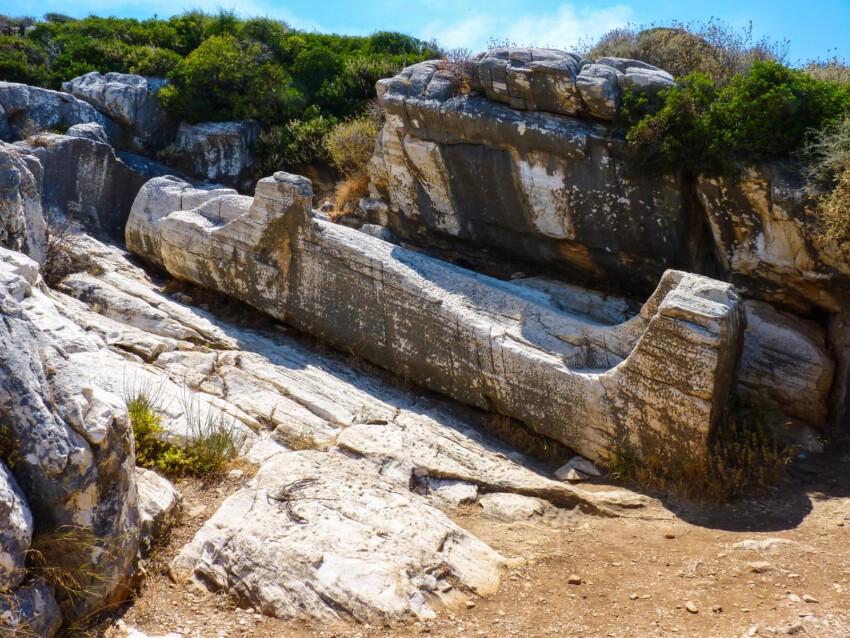
The Kouros of Apollonas, a colossal archaic statue 10.7 metres long and weighing over 80 tonnes, is one of the most extraordinary archaeological mysteries in Greece. Carved directly in the marble quarry around the 7th-6th century BC, this titanic work was never completed or transported from its original location.
The statue, which depicts a young man according to the canons of Greek archaic art, testifies to the importance of Naxos in antiquity as a centre of sculptural production. Naxian marble, particularly prized for its purity and compactness, was in demand throughout the ancient world for the production of works of art and monuments.
The village of Apollonas, named after its proximity to this work dedicated to Apollo, is a picturesque fishing village on the north coast of the island. Its waterside taverns offer fresh fish specialities while admiring the panorama that stretches as far as the island of Donoussa.
In addition to the main Kouros, two other smaller but equally fascinating unfinished statues can be seen at Flerio. Access to all sites is free of charge and is a unique experience to understand the sculptural techniques of antiquity. The Kouros of Apollonas can be reached via a scenic coastal road that offers unforgettable views of the Aegean Sea.
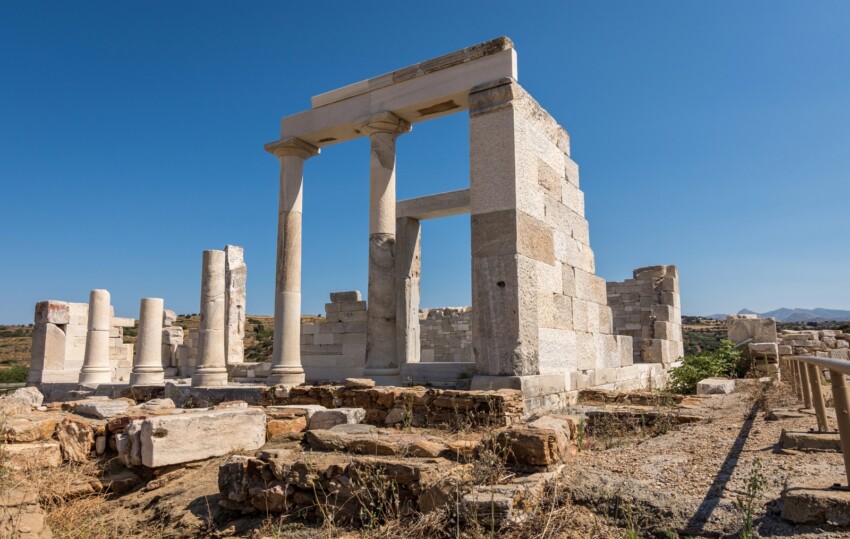
The Temple of Demeter, dating from 530 B.C., represents one of the most significant monuments of archaic Greek architecture and the only temple built entirely of white Naxian marble from that period. Located on the fertile plain of Sagri, the temple was dedicated to the goddess of the harvest and agriculture, who was particularly worshipped on an island with an agricultural vocation.
The structure, of Ionic order, has unique architectural features that make it an experimental laboratory of Greek architecture. The temple measures 20 x 6.5 metres and still preserves part of the original roof, making it possible to study the construction techniques of the time. The inscriptions found testify to the importance of the cult of Demeter in the island’s agricultural economy.
In the 1990s, a careful restoration recomposed much of the structure using philological techniques, allowing visitors to admire the temple in a form very close to the original. The site also offers a small information centre explaining the history of the monument and the importance of the cult of Demeter.
The location of the temple, surrounded by cultivated fields and olive groves, still evokes the sacred atmosphere linked to the agricultural cycles and the seasons. A visit to the Temple of Demeter combines perfectly with an exploration of the Naxian countryside, rich in small Byzantine churches and Venetian towers.
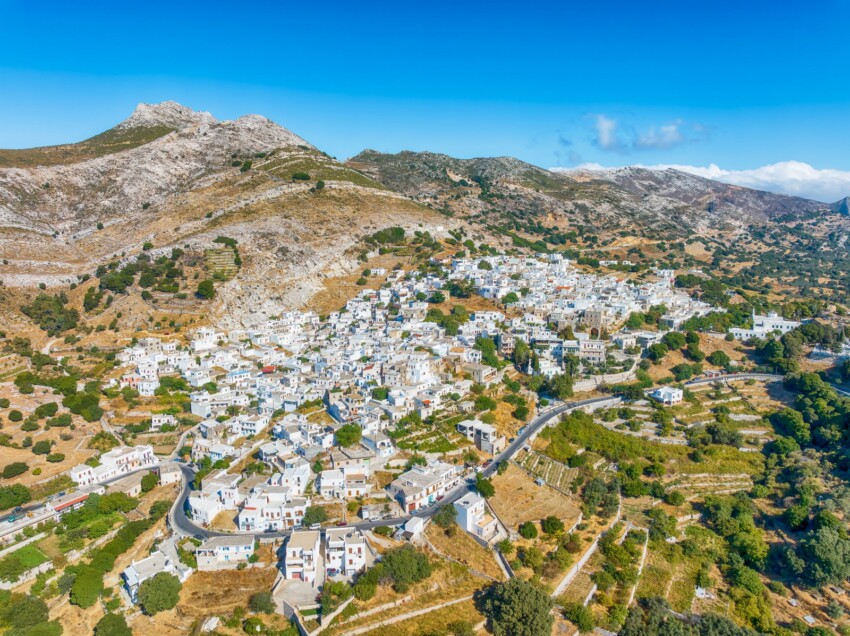
Apiranthos, considered the most beautiful of Naxos’ mountain villages, is an authentic open-air museum where time seems to stand still. Situated at an altitude of 650 metres on the slopes of Mount Koronos, the village is characterised by narrow streets paved in local marble that create suggestive plays of light and shadow.
The traditional houses, built of local stone and decorated with colourful wooden balconies, are arranged in tiers following the natural curves of the mountain. Apiranthos has kept its traditional architectural character intact thanks to strict protection regulations that have preserved its authenticity.
The village hosts four museums of considerable interest: the Archaeological Museum, the Natural History Museum, the Folklore Museum and the Geological Museum. The latter is particularly interesting for understanding the geological formation of the island and the quality of its marbles. The 10th century Church of Panagia Apiranthou preserves important Byzantine frescoes.
The local taverns of Apiranthos offer mountain specialities of Naxian cuisine, prepared with products from the hinterland. The view from the village embraces the fertile Tragea Valley and, on a clear day, extends as far as the sea. Apiranthos is easily reached by car from Chora and is an essential stop for those who want to discover the most authentic soul of Naxos.
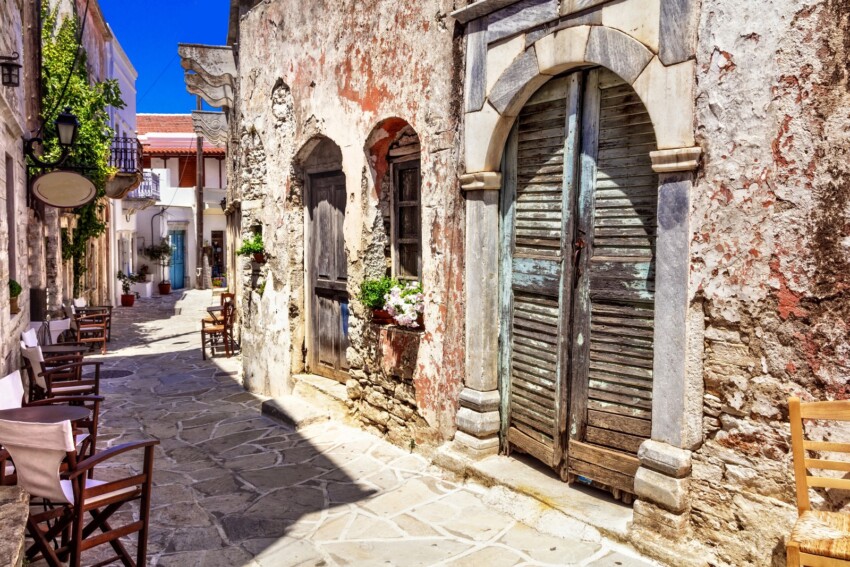
Halki, the former capital of Naxos until 1870, is today the nerve centre of traditional inland life. Situated in the heart of the fertile Tragea Valley, the village is famous for being home to the Vallindras Distillery, the only place in the world where Kitron, Naxos’ iconic liqueur, is produced.
The Kitron, made by distilling cedar leaves that only grow on Naxos, is produced according to a secret recipe handed down since 1896. The distillery offers guided tours and free tastings of the three variants of the liqueur: green (the mildest), white (medium strength) and yellow (the strongest).
The main square of Halki, dominated by a majestic century-old plane tree, is surrounded by 19th century neoclassical buildings that testify to the village’s former wealth. The 11th century Church of Panagia Protothroni contains one of the most important cycles of Byzantine frescoes in the Cyclades.
Halki is also famous for its handicraft workshops where ceramics, textiles and wooden objects are produced using traditional techniques. The village shops offer high-quality local products: extra virgin olive oil, goat’s cheese, thyme honey and preserves. Halki represents the essence of the most authentic and traditional Naxos.
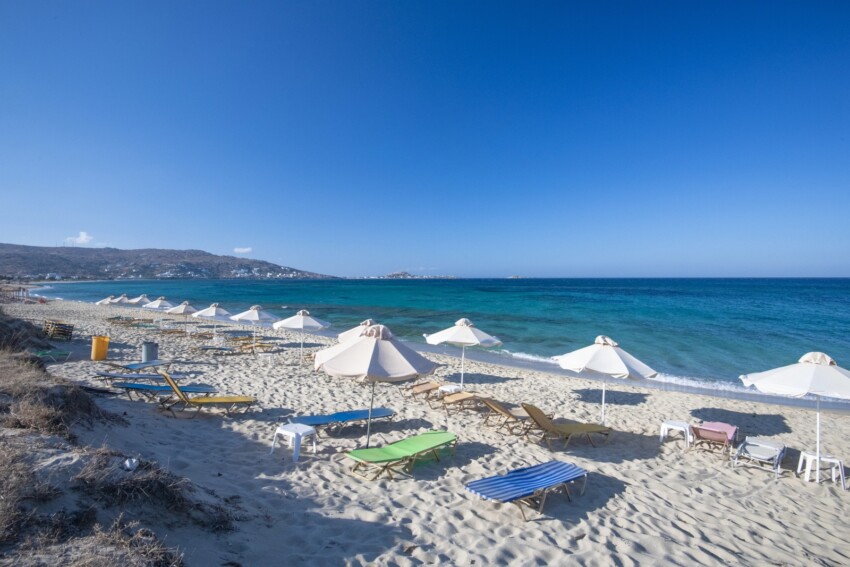
Plaka Beach, a 4-kilometre stretch of fine golden sand, is universally recognised as one of the most beautiful beaches in Greece. Located on the west coast of the island, just 8 km from Chora, Plaka offers a perfect balance of tourist facilities and unspoilt natural beauty.
The beach is characterised by natural dunes covered with juniper and tamarisk trees that create areas of natural shade. The crystal-clear blue waters slope gently, allowing even children to bathe safely. The sandy seabed extends for hundreds of metres offshore, maintaining moderate depths.
The northern part of Plaka is equipped with umbrellas, sunbeds and beach bars serving cocktails and light snacks. The southern area, on the other hand, remains wild and free, perfect for those seeking tranquillity and direct contact with nature. During the summer months, Plaka is buffeted by the meltemi, the northern wind that cools the atmosphere and attracts windsurfers.
The western orientation of the beach makes it the ideal place to admire spectacular sunsets, when the sun plunges into the Aegean tinging the sky with shades of gold and red. Plaka’s tavernas serve fresh fish and local specialities with sea views. Plaka Beach is easily accessible by car and has ample shaded parking.
Filoti, perched on the southern slopes of Mount Zas at an altitude of 360 metres, is the largest village in inland Naxos and the preferred starting point for the hike to the highest peak in the Cyclades. The village has maintained a perfect balance between traditional authenticity and modern amenities.
The central square, shaded by centuries-old eucalyptus trees, is the social heart of the village where traditional kafeneion and family tavernas are concentrated. The 19th century Church of Panagia Filotitissa is famous for its patronal festival on 15 August, when the entire village comes alive with religious and popular celebrations.
Filoti is strategically located in the heart of the Tragea Valley, surrounded by terraces planted with olive trees, vines and fruit trees. The surrounding landscape is dotted with small Byzantine churches and Venetian towers that testify to the area’s rich history. The scenic road from Filoti to Apiranthos offers some of the most spectacular views of the island.
The village is famous for producing excellent quality olive oil from olive groves that grow on the terraced slopes of the surrounding mountains. Local taverns serve traditional dishes prepared with local produce, accompanied by local wine produced in nearby family wine cellars. Filoti is the ideal starting point for exploring the island’s mountainous hinterland.
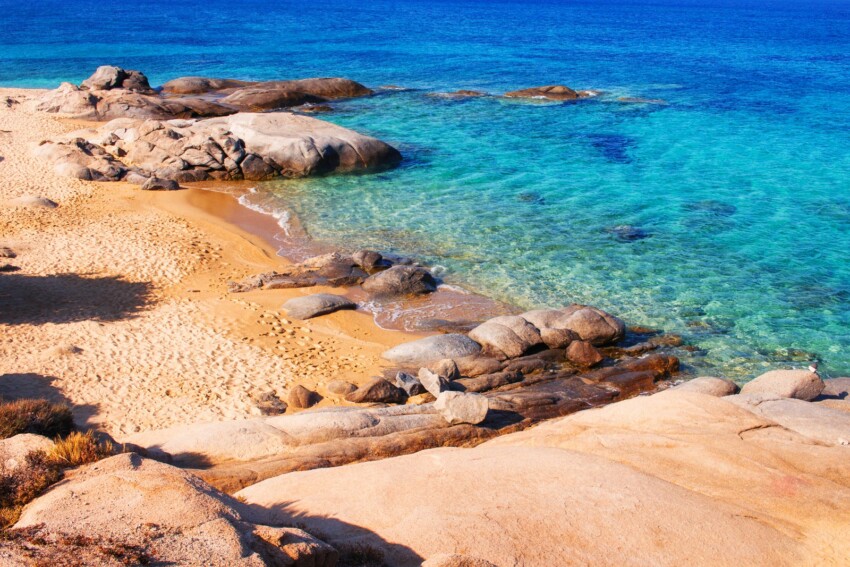
Agia Anna, located just 6 km from Chora on the west coast, represents the perfect combination of natural beauty and tourist vibrancy. This beautiful bay is characterised by a fine, golden sandy beach stretching for over a kilometre, washed by turquoise waters of rare beauty.
The beach is partially organised with bathing establishments offering umbrellas, sunbeds and water sports, while large stretches remain free for those who prefer a more natural approach. The sandy seabed slopes gently, making Agia Anna ideal for families with children and less experienced swimmers.
The village of Agia Anna has developed as an elegant seaside resort while maintaining a human scale and a relaxed atmosphere. Its seafront tavernas serve fresh fish specialities and traditional Greek dishes, while beach bars offer sunset cocktails overlooking the open sea.
During the summer season, Agia Anna comes alive with a discrete nightlife concentrated in the beach bars and waterfront tavernas. The sheltered position of the bay protects it from northern winds, ensuring calm sea conditions even when other beaches on the island are rough. Agia Anna is connected to Chora by frequent buses and offers ample parking for those travelling by car.
In the following map you can see the location of the main places of interest mentioned in this article.
 Hotel
Hotel  Budget accommodations
  Apartments
  Family Hotel
 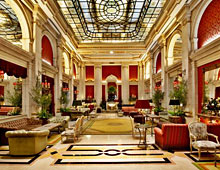 Luxury Hotel
 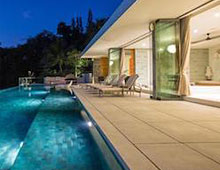 Resorts