The quintessential Greek island is Santorini: whilst touristy, crowded and expensive, it remains in the hearts of all visitors for its unparalleled beauty.
Halfway between Athens and Crete sits Santorini, the quintessential Greek island: it is Greece as we imagine and dream of it, postcard-perfect Greece, the country’s tourist jewel.
Its distinctive shape, with the caldera at the island’s centre, is the result of a volcanic eruption that occurred 10,000 years ago with immediately catastrophic consequences, causing much of the island to sink. Yet this very feature has become the driving force behind Santorini’s tourism success.
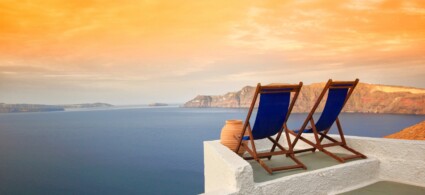
The breathtaking views of the caldera, the extraordinary colours of the rock formations and the spectacular sunsets—considered the most romantic across all Greek islands—attract 1.5 million visitors annually to this southernmost of the Cycladic islands.
Despite the crowds and premium prices of its upmarket hotels, Santorini remains an ideal destination for a dream holiday.
Whilst it’s true that Santorini’s singular volcanic landscape is the island’s main draw, there are plenty of worthwhile historical and cultural attractions to discover.
Fira
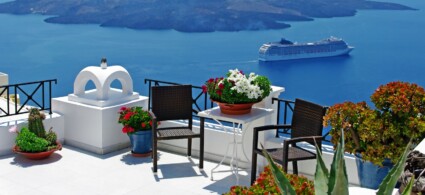
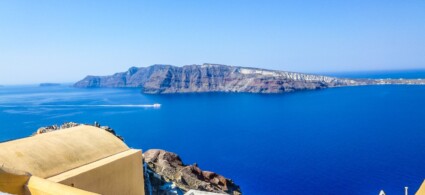
Caldera view from Fira
Fira, Santorini’s capital, is the island’s tourism hub: a bustling mix of designer shops and kitschy souvenir stalls, traditional tavernas and lively beer bars, alongside an impressive array of cafés, restaurants and tour operators offering trips and excursions.
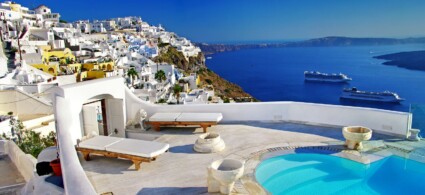
Why does Fira continue to draw hordes of visitors despite the chaos? Simply because it’s stunning: the cascade of whitewashed houses clinging to the caldera’s edge and the spectacular rock formations at sunset are breathtaking vistas that leave visitors awestruck.
Fira’s beauty comes at a price: don’t expect to find budget accommodation in this area.
Oia
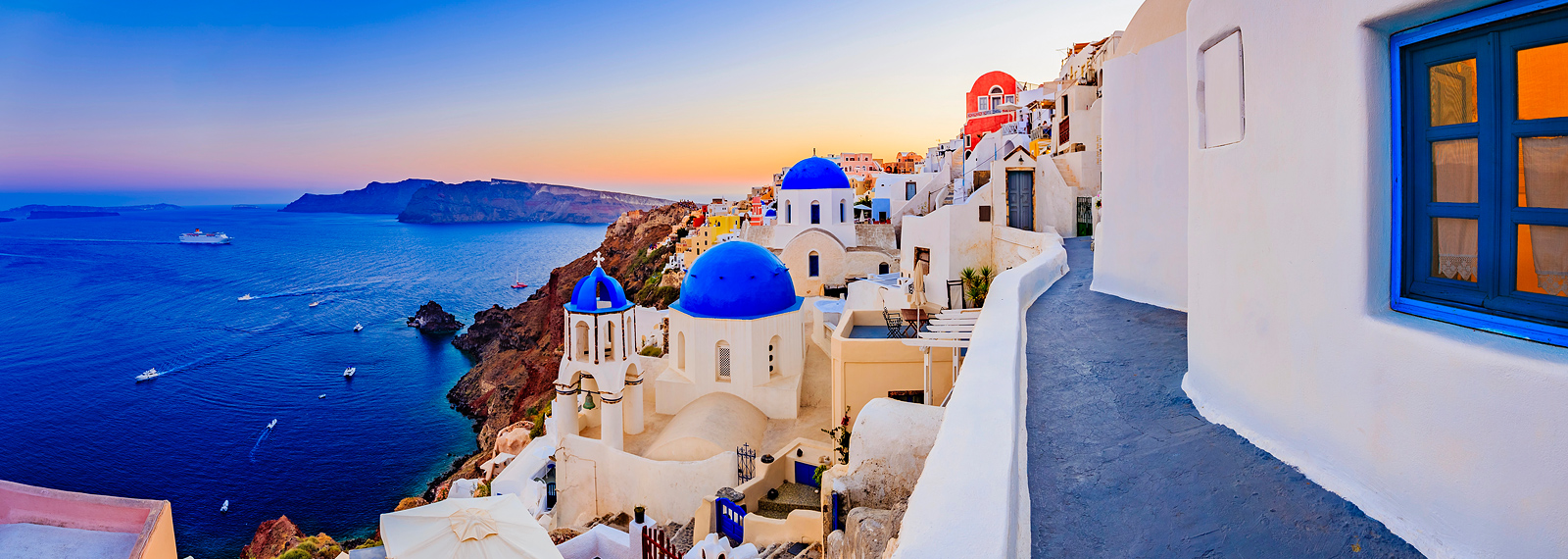
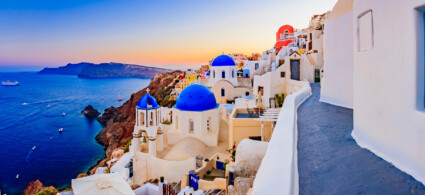
The charming village of Oia
The sophisticated Oia is Santorini’s chic hotspot, home to design hotels, exclusive resorts and luxury villas with pools worthy of a Hollywood star.
It’s hard to imagine that just sixty years ago, this abundance of upmarket accommodation didn’t exist: the traditional village, already less celebrated than the current tourism megastar, had been completely devastated by a terrible earthquake.
Reconstruction has brought Oia greater prestige, and today it’s undoubtedly one of the most captivating villages in the Cyclades.
Despite high hotel prices, many visitors choose it as their island base to experience this splendid town in all its glory as it stretches along the caldera’s steep slopes; others come for the unique experience of staying in a room carved into a niche in the volcanic rock.
The number of visitors is swelled by day-trippers, including cruise ship passengers squeezing in a quick visit.
Staying in Oia allows you to explore the town early in the morning before the crowds arrive. As you already know, prices won’t be budget-friendly.
Firostefani and Imerovigli
The caldera viewed from Imerovigli
Swap front-row panoramas for the villages of Firostefani and Imerovigli just a short distance away, where you’ll find a good selection of mid-range hotels and guesthouses: you won’t be in the thick of the action, but you can still enjoy spectacular caldera views and keep more money in your pocket.
A 15-minute walk from Firostefani or half an hour from Imerovigli (the highest point of the caldera ridge) brings you to the capital with its abundance of bars and venues.
Perissa and Kamari
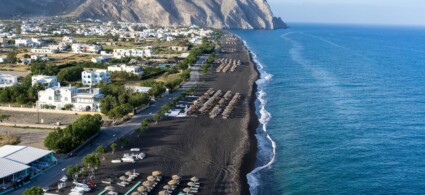
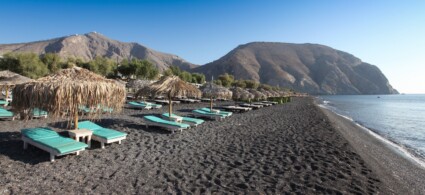
Perissa’s black sand beach
If you’ve made it this far and are despairing that a Santorini holiday is out of reach, we have good news for you.
In the villages of Perissa and Kamari, you’ll find more affordable accommodation, including a hostel and campsite. These are less touristy spots, so hotels offer lower rates.
They’re also ideal if you prefer to avoid the crowds, though if you fancy a taste of the hustle and bustle, local buses connect you to Fira.
Akrotiri Archaeological Site
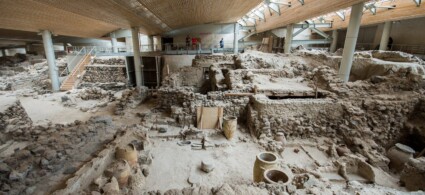
Akrotiri is one of the Aegean’s most significant archaeological sites and a must-see during any Santorini visit.
The remarkable discovery of the ancient Minoan city buried under volcanic ash following a catastrophic eruption occurred in 1967, with excavations continuing to this day.
The ruins open to the public are protected by a remarkable structure of concrete, wood and steel—an engineering feat that allows visitors to wander through the ancient city and fully immerse themselves in classical Greece’s atmosphere.
The Thira archaeological site, though less spectacular, is equally fascinating, where you can walk amongst Hellenistic, Byzantine and Roman ruins.
Boat trips around the caldera
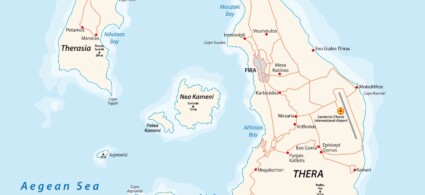
A boat or catamaran trip around the caldera islands is absolutely essential during a Santorini stay—a truly unique experience where you can swim in the thermal springs of Palea Kameni, enjoy the waters around the islet of Thirasia, or visit the Red and White beaches in the island’s south.
Curiously, Greece’s most famous island hasn’t built its reputation on beaches: that said, you’ll certainly find beautiful beaches on Santorini.
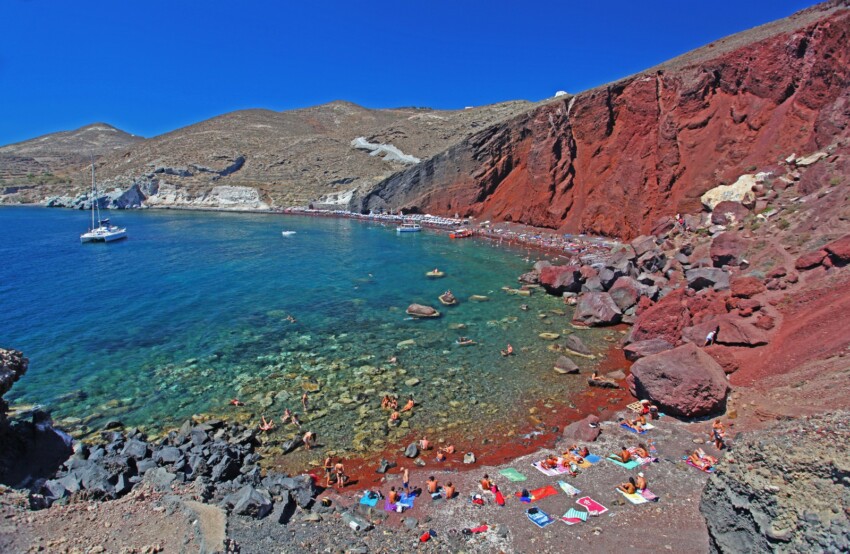
The island’s beaches reflect its volcanic origins, featuring mostly black sand, but true to form, Santorini surprises again with its most celebrated beach—Red Beach, a stretch of reddish sand bordered by towering cliffs in matching russet tones.
Red Beach is equipped with facilities, but as it’s rather small and extremely popular, arrive early to secure a sunbed.
Other must-visit beaches on Santorini include:
Perissa: an 8 km stretch of black sand beach, ideal for families with children, long-distance walkers and water sports enthusiasts. The windy conditions make it perfect for windsurfing and kitesurfing.
Perivolos: a natural extension of Perissa beach with slightly lighter sand.
Kamari: an equipped beach popular with backpackers and young visitors staying in the area’s budget accommodation.
Vlychada: a lunar landscape awaits at this black sand beach, protected by tufa cliffs.
Cape Kolumbo: bordered by grey cliffs, this sandy and pebbly beach on the island’s north coast is among the quietest, occasionally visited by naturists.
Monolithos: a peaceful black sand beach surrounded by trees, perfect for seeking some shade.
Compared to other Greek islands, Santorini is a relatively expensive destination, so plan your trip well in advance.
From mid-June to the end of August, hotel prices soar: this is peak season and advance booking is essential.
If you can choose when to visit, the best times to explore Santorini are spring, from April to early June, and early autumn. Note that September and early October still offer pleasant temperatures and guaranteed swimming conditions.
Winter sees everything quieten down: very few tourists and rock-bottom hotel rates. You won’t have warm enough weather for a swim, but you’ll still enjoy the stunning caldera vistas, spectacular sunsets and delightful evenings in traditional tavernas.
Where to stay on Santorini
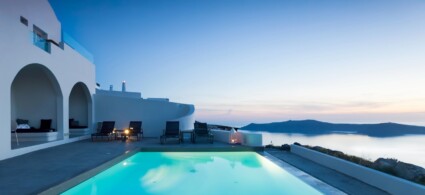
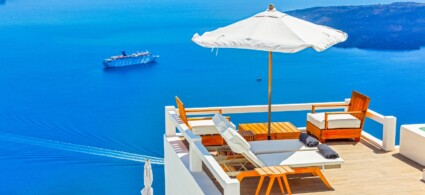
The most scenic area of Santorini, where everyone wants to stay, is naturally the caldera ridge, offering breathtaking views and the finest sunsets. Santorini’s tourism industry is concentrated here: you’ll find the widest choice of hotels, resorts and rooms, but also the steepest prices. If your budget permits, book a room with a pool and caldera views: an truly unforgettable experience!
To spend less, you’ll need to venture away from the caldera and settle for enjoying the stunning vistas of the area during a day visit.
If you’re searching for accommodation but unsure where to book, we’ve selected the best accommodation on Santorini by area for you—discover them in the Where to stay on Santorini section.
Alternatively, use the search form below to check in real time all available accommodation on Santorini for your dates.
We offer best rates If you find it cheaper we refund the price difference.
Free cancellation Most properties allow cancellation without penalty.
We're available 24 hours a day For any problem call Booking.com.
Recommended hotels in Santorini
We offer a selection of hotels at Santorini to suit all categories of travellers. The most booked by tourists are the sea-facing hotels, often right on the beach. If you want to play it safe, choose one of the following: they are among the most booked hotels in Santorini, sorted by number of reviews.
If you prefer space, privacy and the ability to prepare your own meals to a hotel holiday, book a holiday home at Santorini. We recommend a few below, but in this case we advise you to book early because houses and apartments for rent at Santorini are in high demand.
Santorini is one of Greece’s best-connected islands, easily accessible by both plane and ferry depending on your preferences and the time of year.
Santorini Airport
Santorini International Airport (JTR) is located near Kamari in the island’s eastern part, approximately 6 km from Fira. During the high season (April–October), numerous airlines offer direct flights from major European cities, whilst winter services are significantly reduced with flights mainly to/from Athens.
Seasonal direct flights are available from major cities, or alternatively you can connect via Athens, with frequent domestic flights (approximately 45 minutes) operating year-round.
Once landed, you can reach your destination by taxi, public buses connecting the airport to main towns, or private transfer services arranged in advance. Car hire directly at the airport is a convenient option if you plan to explore the island independently.
By ferry
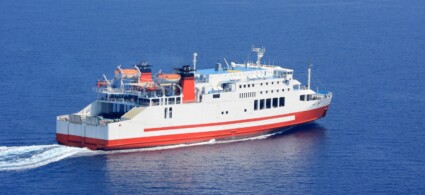
Reaching Santorini by sea offers the thrill of arriving directly into the spectacular caldera. The main port (Athinios) receives ferries from Athens (Piraeus and Rafina ports) and other Cycladic islands.
From Athens, high-speed ferries take around 5–6 hours, whilst conventional ferries require 7–9 hours but offer cheaper fares. Santorini is also well-connected to other Cycladic islands such as Mykonos, Paros, Naxos and Ios, making it easy to incorporate multiple destinations into an itinerary. Less frequent connections also exist to the Dodecanese islands and Crete.
Fascinating facts: all the names of Santorini
The name Santorini is a corruption of Sant’Erini, a name given to the island by Venetians honouring Saint Irene, an early Christian martyr to whom the basilica of Perissa in the island’s south-east was dedicated.
In ancient Greek, Santorini was called Thera, whilst the modern official name is Thira, which encompasses the main island and the surrounding islets.


 Hotel
Hotel  Budget accommodations
  Apartments
  Family Hotel
  Luxury Hotel
  Resorts