BLACK BAY CAVES SUITES
Akrotiri - ΑΚΡΩΤΗΡΙ ΣΑΝΤΟΡΙΝΗΣ
Book now
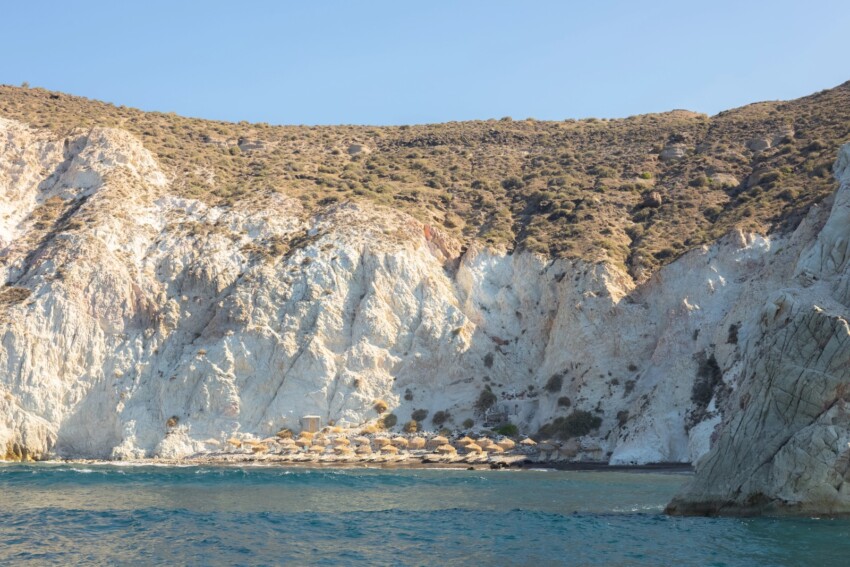
White Beach is one of Santorini‘s most spectacular and photogenic beaches, characterised by the imposing white cliffs that give it its name and create a striking contrast to the deep blue Aegean Sea. Located on the southern coast of the island, just after Red Beach and near Akrotiri, this small bay is one of the hidden gems of Santorini’s beaches.
The beach owes its fame to the spectacular white rock formations that rise more than 20 metres above the shore, created by the island’s thousands of years of volcanic activity. These white pumice cliffs, shaped by wind and sea, offer an almost lunar-like scenery that has made White Beach a must-see destination for photographers and travellers in search of unique landscapes.
The bay of White Beach is fantastic for snorkelling: there are many underwater caves in this area and just as many corners of the coastline to explore. Between Red Beach and White Beach is Kampia Beach, which can be accessed by following a dirt path from Red Beach.
The most convenient and spectacular way to reach White Beach is by sea. Small boats regularly depart from nearby Red Beach and offer 10-15 minute transfers. During the high season (June-August), taxi boats operate from 9am to 6pm with departures every 30 minutes. It is advisable to book your return on arrival to secure a place, especially at weekends and in July and August.
An alternative is to hire a kayak in Akrotiri or Perissa for a more adventurous experience that also allows you to explore other hidden coves along the coast.
For the more adventurous, there is a walking trail that starts at the archaeological site of Akrotiri. The trail is challenging and requires about 20-25 minutes of walking over uneven and steep terrain. The path is not well marked and has some exposed sections, so it is not recommended for those who suffer from vertigo or have mobility problems.
Starting from the Akrotiri car park, follow the signs for ‘White Beach’ along a track through the Mediterranean maquis. Always bring plenty of water, shoes with non-slip soles and adequate sun protection.
The Akrotiri area is an ideal base for White Beach, with boutique hotels and traditional villas offering tranquillity and authenticity. For more options, Perissa and Kamari are a 15-20 minute drive away and have resorts, budget hotels and restaurants.
The impressive cliffs surrounding the bay are composed mainly of compressed volcanic pumice, a material formed during the prehistoric eruptions of Santorini’s volcano. These unique geological formations reach a height of about 25 metres and have visible stratifications that tell the geological history of the island.
The cliffs provide natural areas of shade during the hottest hours of the day, making the beach more comfortable than in other locations on the island. If you look closely at the cliffs, you can see small caves and natural niches carved out by sea erosion.
White Beach lies in a semicircular bay about 200 metres long, protected from the northern winds that often affect the island. The natural conformation of the coastline creates a milder microclimate and generally calm waters, ideal for swimming and snorkelling.
The volcanic sand has shades ranging from dark grey to white, creating an interesting colour contrast with the surrounding rocks. Don’t expect a beach of fine golden sand: the seabed is characterised by volcanic pebbles and coarse sand typical of volcanic islands.
For photography enthusiasts, White Beach offers unique perspectives especially from the cliffs above. The path leading to the beach has several vantage points from which to capture the entire bay from above. The contrast between the white of the rocks, the blue of the sea and the black of the volcanic sand creates extraordinary photographic compositions.
The best times to photograph are early in the morning (7am-9am) and late in the afternoon (5pm-7pm), when the grazing light enhances the details of the rock formations and creates striking chiaroscuro effects.
The White Beach is only 10 minutes by boat from the Red Beach in the Akrotiri area.
 Hotel
Hotel  Budget accommodations
  Apartments
  Family Hotel
  Luxury Hotel
  Resorts