Hotel Hermes
Ermoupoli - Kanari Square
Centrally located in Ermoupoli of Syros, Hotel Hermes offers elegant accommodation with free Wi-Fi throughout.
Book now
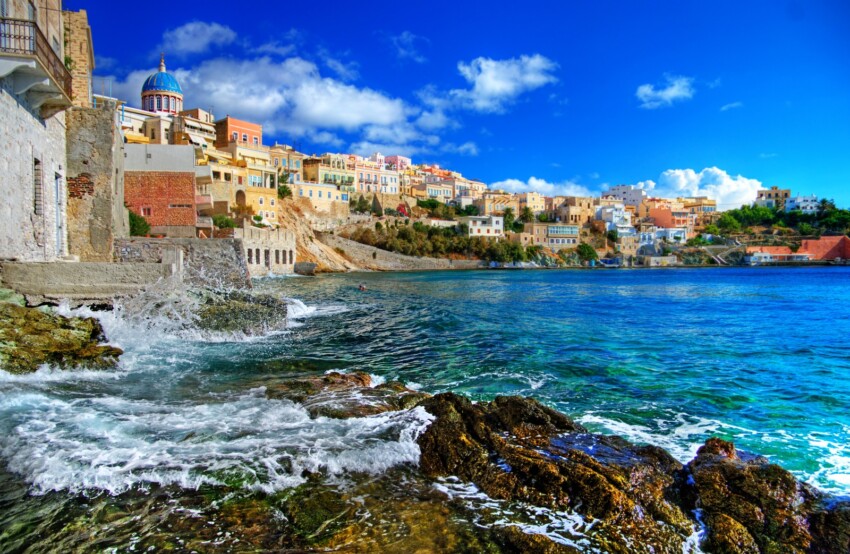
In the heart of the Cyclades archipelago, 78 nautical miles from Athens, lies a unique island that defies all stereotypes: Syros. The administrative capital of the Cyclades, this extraordinary destination is distinguished from its sisters by a completely different charm, consisting of neoclassical architecture, 19th century palaces and a cosmopolitan soul that makes it truly special.
Not many times on a trip to Greece will you encounter an island like Syros: different from everything and everyone, an island in a world of islands. Instead of the traditional small white houses typical of the Cyclades, colourful neoclassical buildings, elegant mansions and a port city that has no equal in the eastern Mediterranean dominate here.
Ermoupoli, the capital, has been nicknamed the ‘Manchester of Greece’ for its industrial and commercial importance in the 19th century. Here, Orthodox and Catholic traditions coexist harmoniously, bearing witness to a complex and fascinating history that has shaped the unique identity of this island.
Syros is the capital of the Cyclades, underrated and authentic like few others. It is the ideal island for the alternative tourist who seeks culture, history and authenticity without forgoing the beautiful beaches and crystal-clear sea that characterise the entire archipelago.
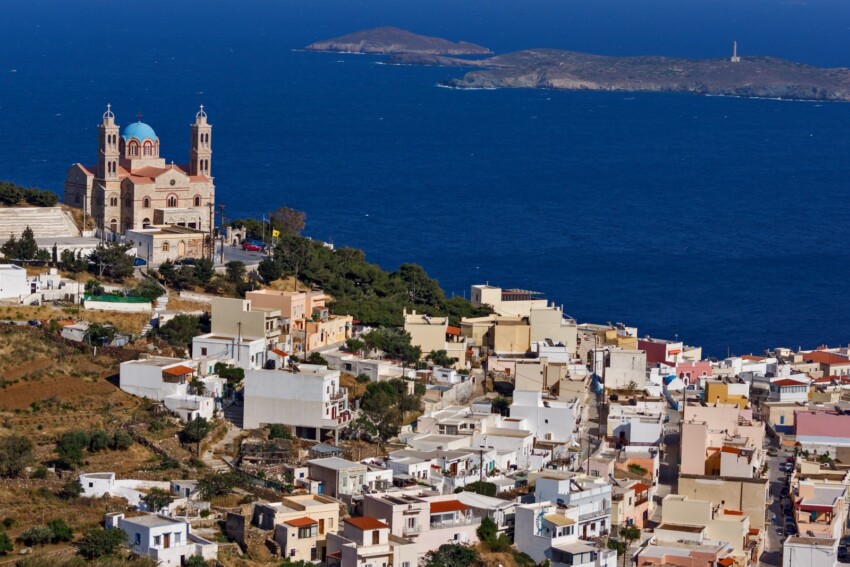
The cultural and architectural richness of Syros makes it a fascinating year-round destination, very different from the typical Cycladic seaside islands. Every corner tells stories of commercial prosperity, religious coexistence and unique traditions.
Ermoupoli stands on a natural amphitheatre and is characterised by its neoclassical palaces and elegant, colourful houses climbing the town’s twin hills. Founded in 1821 by refugees from Chios, Psara and Asia Minor during the Greek War of Independence, it quickly became Greece’s main trading port.
Miaouli Square, paved with marble slabs, is the beating heart of the city. Here stands the majestic Town Hall, designed in 1889 by German architect Ernst Ziller, one of the most important examples of neoclassical architecture in Greece. The building, with its monumental staircase, has become the symbol of Ermoupoli and the Cyclades.
Strolling through the streets of the centre you will discover historical cafes, vintage bookshops and shops selling local specialities, creating a cosmopolitan atmosphere unique in the Cyclades archipelago. The city retains the aura of prosperity of its glorious commercial past.
The Apollo Theatre, inaugurated in 1864, is one of Ermoupoli’s architectural gems. Designed by the Italian architect Pietro Sambo, it is a miniature copy of La Scala in Milan with its horseshoe shape and 300 seats spread over three tiers of boxes.
The theatre’s interior is dominated by the red colour of velvets, carpets and curtains, while the ceiling features elaborate frescoes that lend a sense of opulence to the main hall. After being closed for over 40 years, it was magnificently restored in the 1990s and now hosts plays, concerts and the prestigious Aegean Festival.
A visit to the theatre (open Monday to Saturday from 10 a.m. to 2 p.m.) also allows one to admire the exhibition area on the third floor, which tells the cultural history of Syros and the Cyclades.
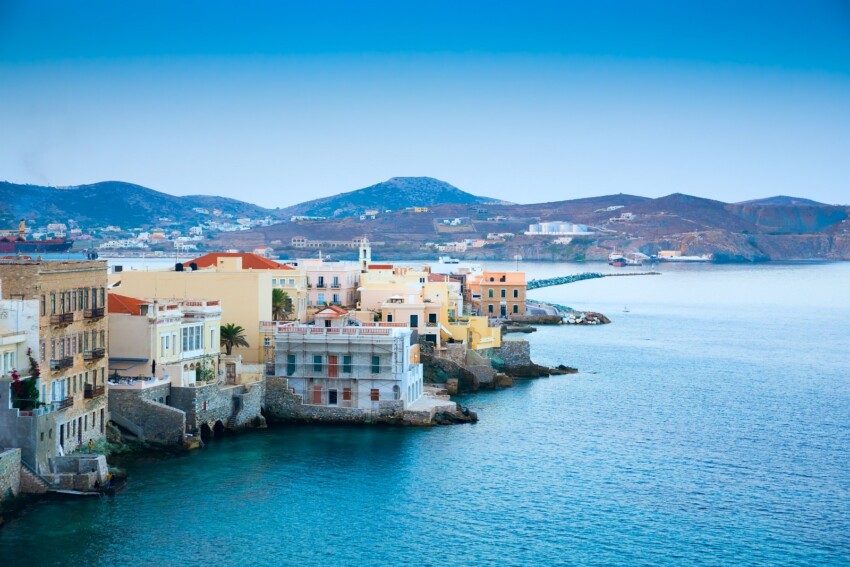
The quarter of Vaporia is the most elegant area of Ermoupoli, bearing witness to the town’s glorious past. Here stand imposing neoclassical villas that belonged to 19th century sea captains and wealthy shipowners, many of which have been masterfully restored.
The Church of Agios Nikolaos (St Nicholas), built between 1848 and 1870, dominates this prestigious quarter with its distinctive blue dome and marble-decorated interior. Dedicated to the patron saint of Ermoupoli, the church holds valuable works of art and is one of the most important religious monuments on the island.
From Vaporia there is a spectacular view of the harbour and the sea, while cobbled streets lead to the beach of Asteria, a rocky platform ideal for swimming and sunset drinks.
Ano Syros (Upper Syros) represents the most traditional soul of the island: a charming medieval village climbing the highest hill, dominated by the Catholic Cathedral of St George. This settlement dates back to the 13th century and has remained almost unchanged over time.
The village is a maze of narrow alleys, whitewashed houses and flower-filled courtyards reminiscent of traditional Cycladic architecture. The coexistence of Catholic and Orthodox communities has characterised Syros for centuries, making it unique in the archipelago.
This is the birthplace of Markos Vamvakaris, the father of rebetiko (the Greek blues), and the small Vamvakaris Museum in the main square recounts the life and work of this extraordinary musician. The climb up to the Church of St George provides one of the most beautiful sunsets in the Cyclades with views across the harbour of Ermoupoli.
The Archaeological Museum of Syros houses a remarkable collection of artefacts that tell the ancient history of the island, from the primitive Cycladic civilisations to Roman times. Particularly interesting are the artefacts that testify to the strategic importance of Syros in ancient trade routes.
The Municipal Library contains numerous rare and ancient editions, while the Industrial Museum explains how the island developed into a leading manufacturing centre in the 19th century. The Cybeli Institute is a modern cultural centre that hosts contemporary art exhibitions and cultural events.
Syros offers a variety of beaches to suit all tastes, from the cosmopolitan bays of the south to the wild and hard-to-reach beaches of the north-west. Distances on the island are short and all the main beaches are easily accessible by public transport.
Galissas is the busiest beach on Syros, popular among travellers for its relaxed atmosphere. The sandy bay is protected from the winds and offers crystal-clear waters ideal for swimming and water sports.
The coastal village retains its traditional charm with its typical Cycladic blue and white houses, while the waterfront taverns serve excellent fresh fish and local specialities. The small white church on the promontory completes the picture-postcard landscape.
Behind the church is Armeos, a pretty pebble nudist beach frequented by those seeking more privacy. Galissas is about 10 km from Ermoupoli and is connected by regular buses throughout the season.
On the west coast, the fishing village of Kini retains an authentic and traditional atmosphere. The sandy beach stretches in a horseshoe-shaped bay with shallow waters, making it particularly suitable for families with children.
The small harbour is still active and the taverns serve fresh fish caught daily from local boats. The statue of a mermaid holding a fisherman has become the symbol of Kini, while the sunset from the bay is considered one of the most romantic of all the Cyclades.
Close to Kini is Delfini, another beautiful, less crowded beach, ideal for those seeking tranquillity in a preserved natural environment.
Finikas is spread over a large natural bay that is home to a modern marina and numerous pleasure boats. The beach combines sand and pebbles and is more developed in terms of tourism than the others, with hotels, restaurants and services for yachtsmen.
Also along the bay is Voulgari Beach, near the village of Posidonia (or Delagrazia), characterised by particularly clear waters and a more exclusive atmosphere.
Azolimnos is a shady beach with golden sand just 5 km from Ermoupoli, easily reached by bus. It offers free umbrellas and sunbeds and three small jetties ideal for diving.
Megas Gialos is popular for its fine sand and crystal-clear waters, while Vari offers a wilder environment with a long sandy coastline. The north-western beaches are more difficult to reach but offer spectacular scenery for those who enjoy coastal trekking.
Syros’ accommodation reflects the cosmopolitan character of the island, with options ranging from charming hotels in the historic buildings of Ermoupoli to beach facilities in coastal villages.
Ermoupoli is an ideal choice for those who want to immerse themselves in the culture and history of the island. The neoclassical hotels in the old town, many converted from renovated historical buildings, offer a unique experience with views of the harbour and bay. The central location makes it easy to reach museums, restaurants and places of interest on foot.
The district of Vaporia is home to some of the most exclusive accommodation, in period villas converted into boutique hotels with panoramic terraces and top-notch amenities. It is the perfect choice for those seeking elegance and tranquillity without sacrificing the convenience of urban amenities.
Galissas is the most developed seaside resort, ideal for families and those who favour proximity to the sea. Here you will find beach hotels, flats with sea views and numerous restaurants specialising in fresh fish. The area is well connected to Ermoupoli by regular buses.
Kini offers a more authentic and traditional atmosphere, with small family-run guesthouses and accommodation that retains the character of a fishing village. It is an ideal choice for those seeking tranquillity and contact with local life.
We offer a selection of hotels at Syros to suit all categories of travellers. The most booked by tourists are the sea-facing hotels, often right on the beach. If you want to play it safe, choose one of the following: they are among the most booked hotels in Syros, sorted by number of reviews.
If you prefer space, privacy and the ability to prepare your own meals to a hotel holiday, book a holiday home at Syros. We recommend a few below, but in this case we advise you to book early because houses and apartments for rent at Syros are in high demand.
Syros is easily accessible by sea and air, thanks to its central location in the Cyclades and its status as the capital of the archipelago.
Syros National Airport is located just 2 kilometres from Ermoupoli and is served by Olympic Air domestic flights connecting with Athens. Flights take about 30 minutes and operate all year round with more frequency during the summer season.
The airport is small but efficient, and transfer to the city is quick via taxi or bus. The most common connection is via Athens with onward travel to Syros.
From the port of Piraeus, ferries take about 3.5-4 hours to reach Ermoupoli, while fast catamarans reduce the journey time to 2 hours 45 minutes. Connections are daily throughout the year, with greater frequency during the summer.
During the summer season, connections are also available from Rafina, the second port of Athens, with a similar journey time. Syros is well connected to all the main islands of the Cyclades, making it an excellent hub for exploring the archipelago.
As the capital of the Cyclades, Syros has regular connections with Mykonos, Tinos, Paros, Naxos, Santorini and many other islands of the archipelago. This makes it perfect for multi-island itineraries and for those who want to explore the Cyclades without the tourist pressure of the more famous destinations.
What's the weather at Syros? Below are the temperatures and the weather forecast at Syros for the next few days.
 Hotel
Hotel  Budget accommodations
  Apartments
  Family Hotel
  Luxury Hotel
  Resorts