Aretanassa Hotel
Halki - Emporio Halki, Greece
Housed in a historical building once used for the storage and production of sponges, Aretanassa Hotel is situated in Halki.
Book now
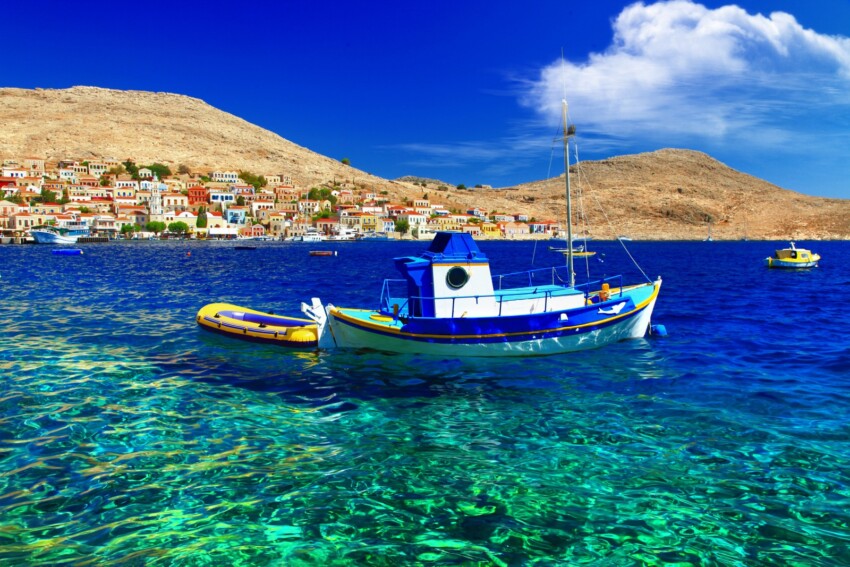
Chalki (also known as Halki) represents one of the most authentic pearls of the Dodecanese, strategically positioned between Rhodes and Tilos. With its 28 square kilometres and barely 300 permanent inhabitants, this elongated island has the distinction of being proclaimed an ‘Island of Friendship and Peace for Young People’ by UNESCO in 1983, with the construction of a dedicated International Centre.
The island’s name probably derives from the Greek word ‘chalkos’ (copper), in reference to the ancient copper mines that characterised the local economy, although some scholars trace it back to the Byzantine term for a type of Mediterranean shell. The island has an arid and mountainous terrain, with the peak of Maistro reaching an altitude of 500 metres, creating a rugged but fascinating landscape.
Chalki experiences a dual seasonal reality: in winter, the population dwindles to around 150 inhabitants, while in summer, the island comes alive, welcoming tourists in search of tranquillity and authenticity. Recent history has seen a strong emigration to Florida that has drastically reduced the population from the 3,000 inhabitants of the most prosperous period to the current residents.
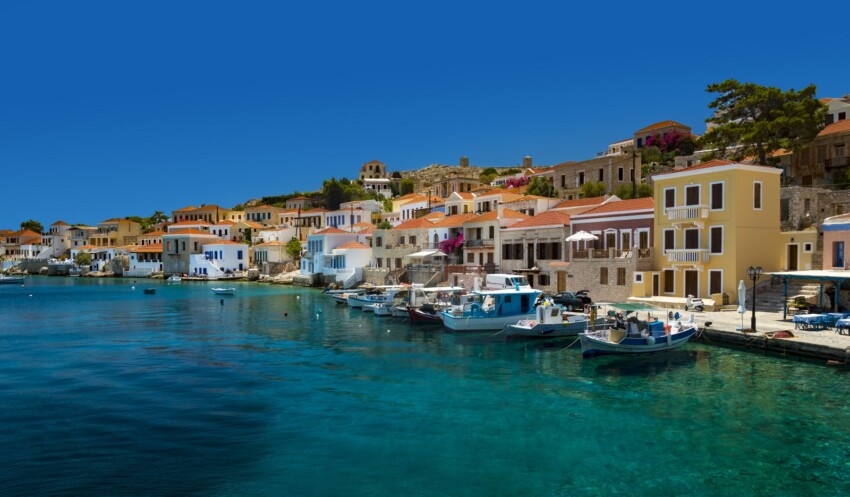
The crystal-clear waters surrounding Chalki offer some of the most spectacular bathing scenery in the Dodecanese, with seabeds that were once among the richest in the Mediterranean due to the presence of sea sponges. Pondamos is the only sandy beach on the island, located just a 10-minute walk from the harbour and easily accessible to families. This expanse of coarse blond sand lies in a sheltered bay with shallow waters ideal for children, while a taverna overlooking the beach offers umbrellas, sunbeds (EUR 6 per full set) and fresh fish specialities. The surrounding vegetation and the location protected from the winds make Pondamos the ideal place for those seeking comfort without sacrificing natural beauty.
Ftenagia is reached by a scenic 15-minute walk from Nimborio, developing as a small cove of multi-coloured pebbles overlooking turquoise waters of extraordinary transparency. Despite the presence of rocks and reefs that require care when swimming, this beach is a paradise for snorkelers thanks to the richness of the seabed and the crystal-clear waters. A traditional tavern located directly on the beach allows you to literally ‘dine with your feet in the water’, offering local specialities and the famous Chalki pasta (pasta with onions and goat cheese).
Kania is one of the hidden gems of the island, reached by a 30-40 minute walk from Nimborio via scenic paths or by taxi boats from the harbour. This small sandy cove surrounded by Mediterranean vegetation offers an intimate and private setting, with waters of a thousand shades of blue and a taverna serving delicious lunches in a dream setting. The relatively isolated location guarantees tranquillity even during the high season, while the surrounding trees provide valuable natural shade during the hottest hours.
Trachia and Areta are the wildest and most spectacular destinations, accessible only by sea via gulet excursions that depart daily from the harbour. Trachia consists of two small pebble beaches located at the foot of the medieval castle, dramatically positioned between high cliffs that create a natural amphitheatre. Areta, regarded as the ‘Bay of Cyclops’ of Homeric legend, lies in a wild setting surrounded by monolithic mountains reaching 400 metres in height, where according to tradition the Cyclops Polyphemus lived. Boat trips also allow you to explore the Small Canyon, a cave used as a hermitage in the early Christian period and adorned with well-preserved 6th century Byzantine frescoes.
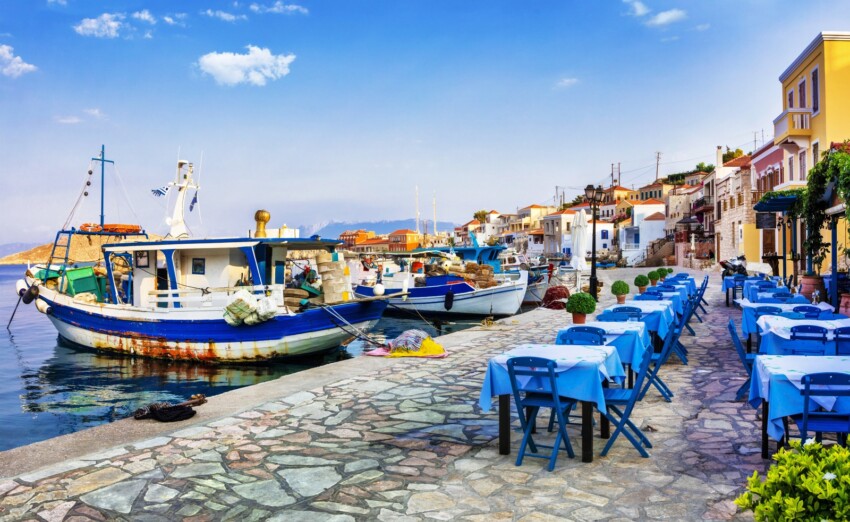
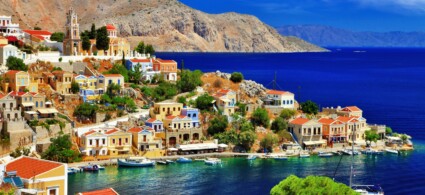
The uniqueness of Chalki lies in its simplicity and the timeless atmosphere that permeates every corner of the island. Nimborio (also called Emborio) is the only real town, developing around an almost completely enclosed natural harbour that creates a sheltered basin of rare beauty. The seaside village features neoclassical buildings in pastel shades – yellow ochre, antique pink, mint green and powder blue – that climb the hillside, creating a colourful amphitheatre that welcomes visitors. Behind the houses stand the three ruined windmills (Vassilakio, Aggelakio and Andrikakio), which follow the ridge of the hill and represent one of the most photographed views of the island.
The pedestrian promenade forms the beating heart of social life, with traditional taverns, cafes and small shops lining the quay where the colourful fishing boats dock. The Clock Tower, a donation from the Greek emigrant community in Florida, dominates the main square in front of the Town Hall, while the Hiona Vouvali building, once used to store sea sponges, testifies to the island’s ancient maritime vocation. Worth visiting is the Byzantine church of Agios Nikolaos, built in 1861, whose splendid bell tower rises above the surrounding houses and houses magnificent frescoes from the period.
A few kilometres from the port, perched on an impassable, rocky hill, are the ruins of the Castle of the Knights of St. John, built in the 14th-15th centuries on the remains of an ancient Greek acropolis. The hike to the castle, while requiring a strenuous walk, offers spectacular views of the island and the surrounding sea, allowing one to admire the remains of Hellenic walls, ancient temple foundations, Byzantine churches and cisterns from various eras. Near the castle is the abandoned village of Chorio, the former capital of the island built in post-Byzantine style, now reduced to picturesque ruins that tell the story of a bygone era.
Chalki ‘s accommodation offer perfectly reflects the authentic character of the island: many of the neoclassical historic mansions have been restored and converted into small boutique hotels and charming holiday homes. The Hotel Aretanassa, owned by the municipality, is the only traditional hotel, while the rest of the offer consists of family pensions, flats and studios run directly by the islanders.
Prices are generally lower than in other Dodecanese destinations, especially when it comes to accommodation in renovated historical mansions. Most of the accommodation is concentrated in the village of Nimborio, making it possible to reach all essential services on foot: taverns, minimarkets, ATMs and the regional medical centre.
We offer a selection of hotels at Halki to suit all categories of travellers. The most booked by tourists are the sea-facing hotels, often right on the beach. If you want to play it safe, choose one of the following: they are among the most booked hotels in Halki, sorted by number of reviews.
If you prefer space, privacy and the ability to prepare your own meals to a hotel holiday, book a holiday home at Halki. We recommend a few below, but in this case we advise you to book early because houses and apartments for rent at Halki are in high demand.
The most frequent and convenient connection is fromRhodes Airport, from where one reaches the small port of Kamiros Skala (not the main port of Rhodes town). From here, ferries and hydrofoils of the Dodekanisos Seaways company depart, taking between 30 minutes and 2 hours to reach Chalki, depending on the type of vessel and weather conditions.
Direct connections from the port of Piraeus take more than 24 hours, crossing several islands of the Dodecanese. Although this option is longer, it allows the journey to become a unique panoramic experience through the archipelago.
Chalki is located along the ferry route connecting Rhodes-Karpathos-Kasos-Kos, making an island hopping itinerary possible. The island is also connected with Tilos and Symi through seasonal connections.
What's the weather at Halki? Below are the temperatures and the weather forecast at Halki for the next few days.
Chalki is located in the western Dodecanese, approximately 15 kilometres from Rhodes to the west and 20 kilometres from Tilos to the south. The island is 300 nautical miles from Piraeus in Athens and is located in a strategic position that made it historically important for the control of trade routes between Greece and Asia Minor.
 Hotel
Hotel  Budget accommodations
  Apartments
  Family Hotel
  Luxury Hotel
  Resorts