Villa Melina Hotel
Kalymnos - Enoria Evaggelistrias
Book now
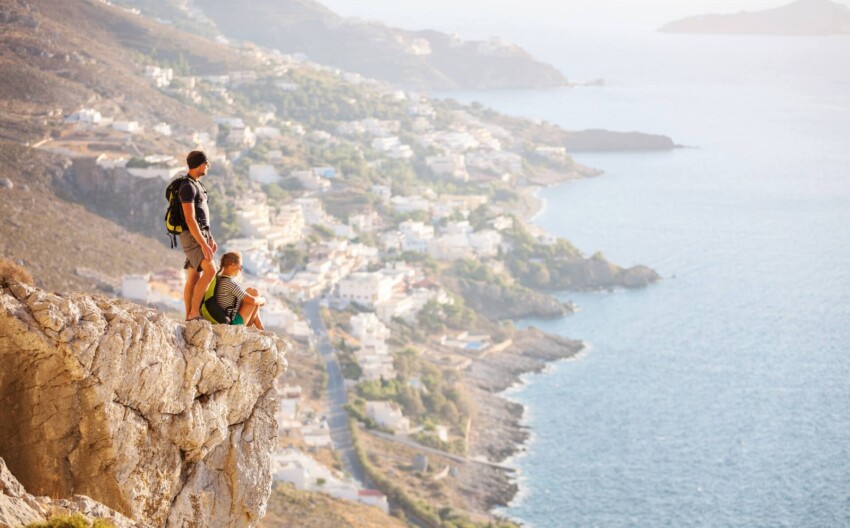
Kalymnos is a somewhat apical Greek island. It is an island of mountains and rocky outcrops overlooking a blue sea that attracts more climbers in search of adrenalin rushes and avid hikers in search of green walks than lazy sunbathers.
The landscape of this island, the fourth largest in the Dodecanese, is very different from the stereotypical image of the picture-postcard Greek island, with its typical cascade of white cottages perched on arid hills. It is a varied landscape, alternating between sheer cliffs, fjords, forests and green valleys covered with olive trees and dotted with beehives for honey production.
Although today it is the climbing routes that are the stars of tourism, Kalimnos’ bond with the sea is deep and unbreakable, at times painful. In the past, the island’s economy was entirely tied to sponge fishing, a risky activity that forged the island’s identity and traditions.
Today, sponges are a souvenir for tourists and only holidaymakers, equipped with modern and safe diving equipment, dive; the heavy and risky diving suits are locked away in the cases of local museums. A reminder to visitors of the importance of the sea and sponge fishing in the history of Kalymnos remains the statue of Poseidon and the diver scanning the harbour of Pothia, the island’s main town.
The large number of tourist climbers has led to a good number of hotels that are open all year round and not only in the summer season as is the case on most Greek islands. You can therefore come to Kalymnos in search of adventure or relaxation at any time of the year and be sure to find what you want, including beautiful beaches.
On Kalymnos one comes more to do than to see, and doing generally implies a good deal of physical exertion.
Thanks to the quantity and variety of rock faces, Kalymnos has established itself as a top destination for climbing for about 15 years, and it is this sport that attracts the majority of tourists to the island. There are almost 2,500 routes, encompassing different levels of difficulty, from those suitable for beginners to the more difficult ones reserved for experienced climbers.
Every year, climbing enthusiasts from all over the world gather in Kalymnos for the Climbing Festival, a three-day event where they have the opportunity to climb with international champions or experience their first climb.
After climbers, divers are the most enthusiastic visitors to Kalymnos. Also thanks to the tradition of sponge fishing that has forged its identity, the island has numerous centres and services for those who want to dive in the transparent waters that bathe it and admire the varied marine flora and fauna.
Those who prefer more relaxing activities can explore the island on foot, following ancient mule tracks, small roads leading to isolated churches or easy mountain paths.
Experienced hikers can tackle the Kalymnos Trail, a rather challenging but rewarding route of about 100 km. The trekking route offers a fascinating combination of mountain landscapes, cliffs, monasteries, Byzantine ruins and castles.
Other sports that can be practised on Kalymnos are windsurfing, sailing, fishing and tennis.
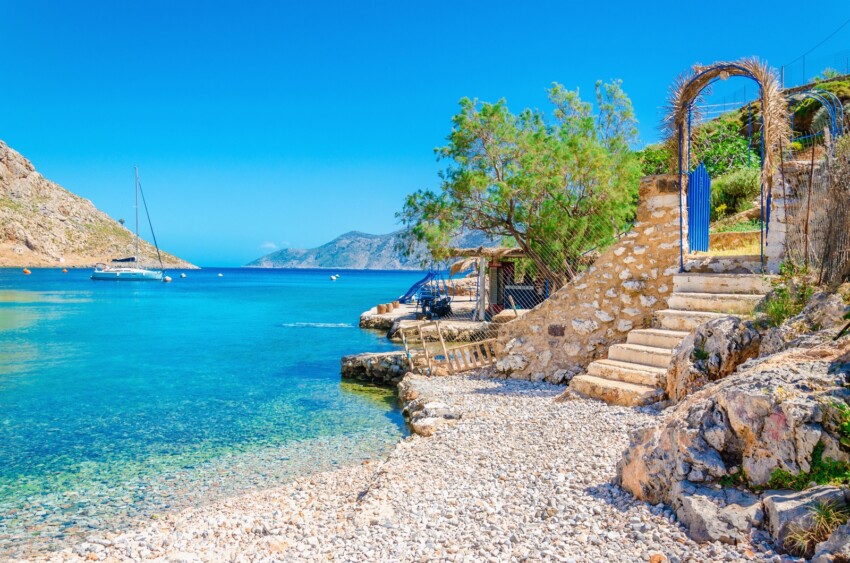
Unlike on other Greek islands, the beaches are not the main attraction on Kalymnos, but a pleasant addition. They are enchanting places where one can enjoy a few hours of well-deserved rest after climbing, hiking or diving.
For those not looking for long, white sandy beaches with a Caribbean feel, Kalymnos may also be suitable for a beach holiday. The waters are blue and clean and from the most popular beaches one can enjoy a splendid view of the neighbouring islets.
The most popular beaches are Myrties and Masouri. Easily accessible, they are mixed pebble, sand and rocky beaches with equipped areas and numerous facilities.
If you like black sand beaches of volcanic origin, the destinations for you are Platys Gialos and Kantouni, which are very picturesque and generally uncrowded.
Other beaches not to be missed in Kalymnos are Emporios and Arginondas along the west coast and Vlyhadia in the south.
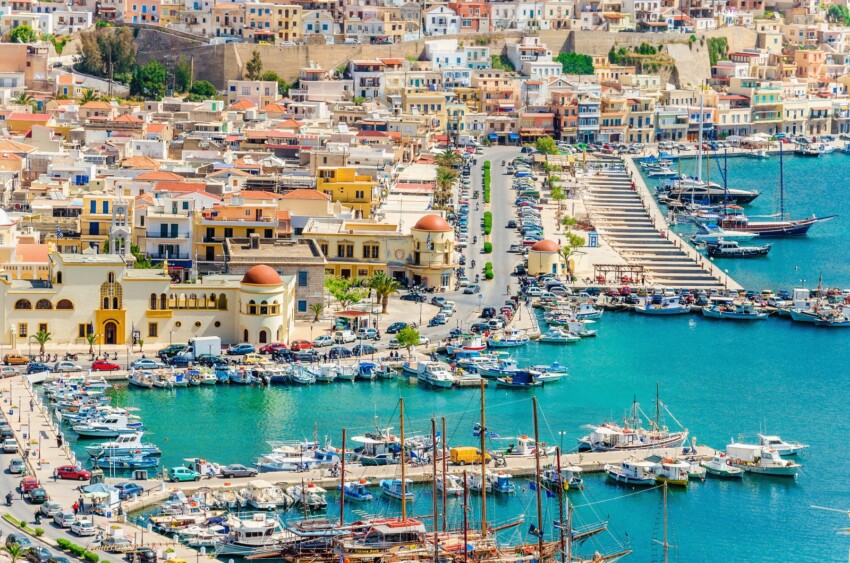
Although it is the magnificent landscapes that attract tourists to the island, Kalymnos is also an island to consider if you love cultural attractions.
There are four museums worth a visit:
Among the things to see in Kalymnos, one cannot fail to mention the pretty Agios Savvas, a characteristic church with an imposing cross overlooking the bay of Pothia. The view from the top of the church is breathtaking, but the interior, decorated in Byzantine style, is also worth a visit. At night, the church is illuminated in blue and it is a very impressive sight.
There are more than 50 caves on the island, all linked to fascinating myths and traditions; you can visit two of them: the Cave of Epta Parthenes (Cave of the Seven Virgins) and the Cave of Kephalas.
Don’t miss a trip to the islets in the surroundings: the easiest to reach is Telendos, a car-free island where you will find nothing but a handful of houses and tavernas. It can be reached by water taxi in just 10 minutes.
Kalymnos is also an excellent base for exploring the more famous islands of Patmos, Leros, Kos and Nisyros on a day trip.
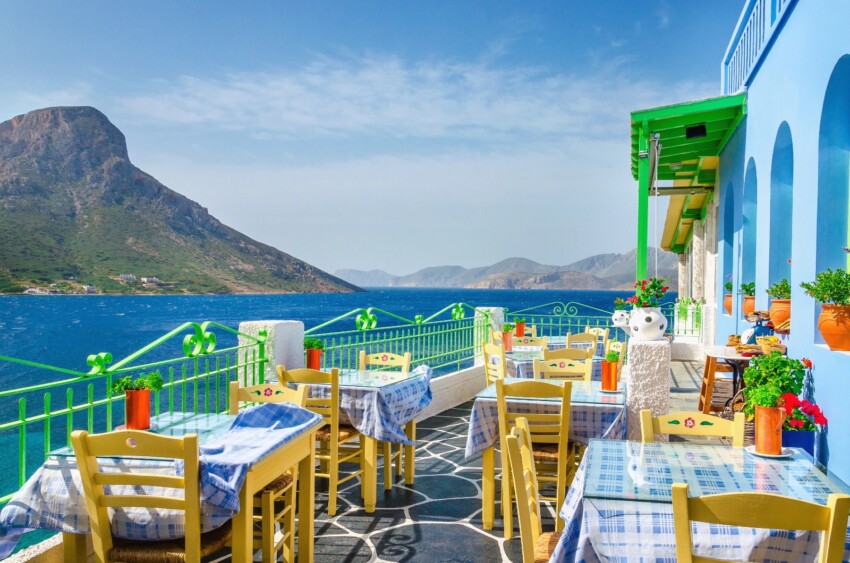
Kalymnos has a dozen or so settlements scattered throughout the territory, but hotels and holiday homes are concentrated in three localities: Pothia (also called Kalymnos Town or Chora), Myrties and Massouri.
In all three, low to mid-range hotels, simple but comfortable studios and flats prevail; it is possible to find some more elegant accommodation, such as boutique homes and charming b&b’s, but for super-luxury it is better to stay on other islands.
Pothia, the capital of Kalymonos, is the third most important city in the Dodecanese, after the capital cities of Rhodes and Kos. It has as many as 11,000 inhabitants and is a lively city throughout the year.
It is an ideal base for exploring the island, especially recommended for those who want a comfortable holiday with everything at hand, those who enjoy city life and those who want to carve out some time for cultural visits during their holiday.
The two main resorts on the island are Myrties and Massouri, two villages about 10 km from the capital; they used to be separate, while today they are a continuous line of hotels, studios and holiday villages. There is a wide choice of hotels and many remain open all year round to accommodate climbing enthusiasts.
Myrties and Massouri are two typical holiday resorts, with plenty of shops, bars, restaurants and a lively nightlife. Due to the amount of facilities and venues, they are suitable for families with children as well as for young people looking for fun, although not as unbridled and transgressive as in the more fashionable Greek islands (Mykonos being the first).
The island of Kalymnos has a small airport served only by domestic flights, so it is not possible to get there by direct flight.
The easiest and cheapest way to get to Kalymnos is to take a flight to Kos and from there a ferry to your final destination. Ferries to Kalymnos leave from the town of Mastichari, not far from the airport; they are quite frequent and take only half an hour.
Another option is to fly to Athens and from there take an internal flight to Kalymnos, but this usually proves more expensive than the air+ferry trip.
What's the weather at Kalymnos? Below are the temperatures and the weather forecast at Kalymnos for the next few days.
The island of Kalymnos is part of the Dodecanese archipelago, the easternmost of Greece's archipelagos. These islands are closer to Turkey than to mainland Greece.
Kalymnos lies between the islands of Kos (to the south) and Leros (to the north); to the east it faces the coast of Turkey.
 Hotel
Hotel  Budget accommodations
  Apartments
  Family Hotel
  Luxury Hotel
  Resorts