Olympos Archipelagos
Olympos - Tziknaki Olympos
Book now
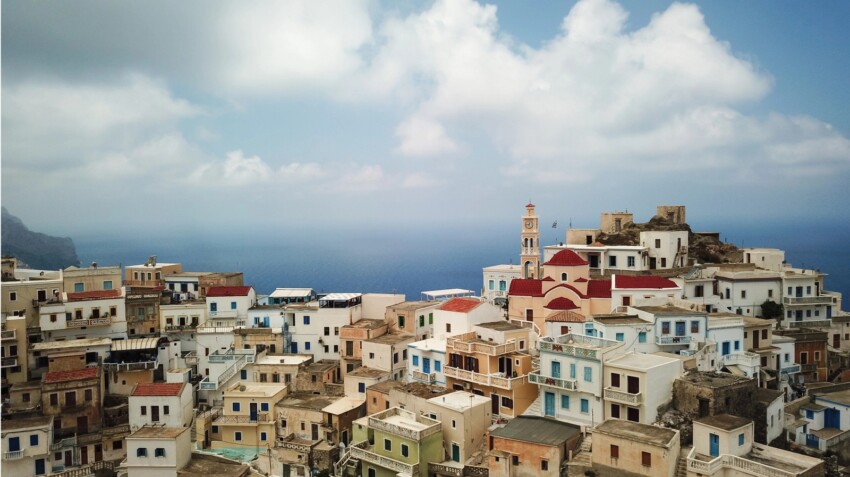
Olympos is one of the most charming and authentic villages in Greece, a mountain village perched 310 metres above sea level on the slopes of Mount Profitis Ilias in the north-western sector of Karpathos. This extraordinary open-air living museum is the biggest attraction in the northern part of the island, where some 500 inhabitants live all year round, preserving millenary traditions rooted in the ancient Doric civilisation.
The village owes its name to the mountain on whose flank it developed, called Olympus in ancient times like many other mountains in the Greek region. Today, the summit is dedicated to the Prophet Elijah (Ai Elias), where a temple stands in his honour. This village is distinguished by being an eagle’s nest clinging to the rock, where pastel-coloured houses follow one another in the shape of an amphitheatre, designed so that one does not cover the shadow of the other.
The most iconic feature of Olympos are its 75 windmills, built from local stones and becoming the undisputed symbol of the village. Many of these mills are still fully functional and each family owns its own, keeping alive an agricultural practice that dates back centuries. The ancient blades continue to face the meltemi, the powerful wind that constantly blows and howls its way through the alleys of the village.
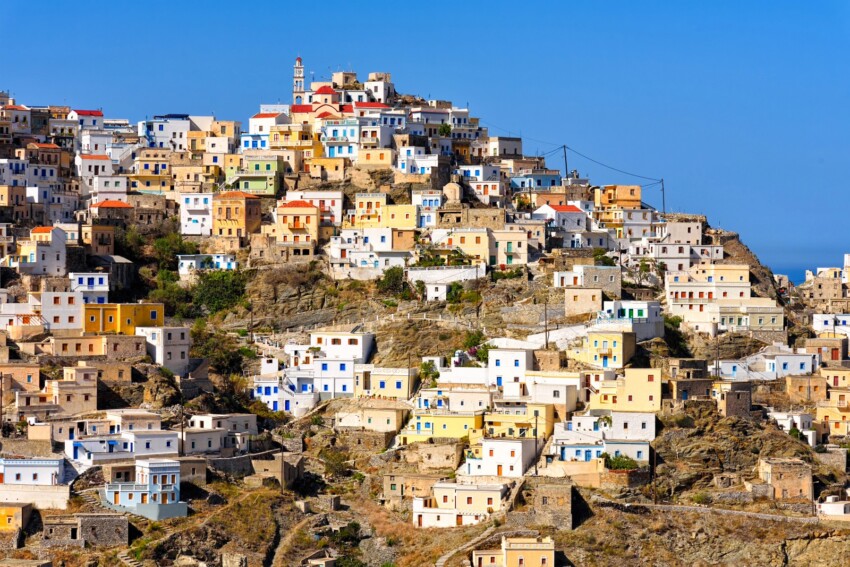
The village itself is the main attraction of Olympos. To stroll through its cobbled streets is to take a true journey back in time, past colourful houses, mule tracks and churches adorned with intricate iconostasis. Houses follow the traditional Dodecanese style with thick walls, flat roofs and colourful geometric decorations, often adorned with motifs reflecting ancient symbols and religious beliefs.
The elderly women of the village still wear traditional costumes called ‘Kawai’ on a daily basis, which are handmade and consist of embroidered dresses and elaborate headdresses. These clothes represent a deep connection to the historical roots of the village and are particularly colourful on holidays. The inhabitants still speak an ancient Doric dialect with words that have been preserved for three thousand years.
Not to be missed is the church of Panagia Vrysiani, whose name derives from the courtyard where there is a fountain with three spouts from which water, considered blessed, flows. Other important churches are Stavros and Agios Nikolaos, located in the square that also houses the war memorial.
Religious festivals are extraordinary times to visit Olympos. The festival of the Panagia on 15 August and that in honour of Christ on 6 August are major events that attract visitors from all over the island. During these celebrations, traditional songs and popular dances, accompanied by the lyre and laouto, fill the streets creating a magical atmosphere.
Among the local culinary specialities are the artisanal brown bread, covered with sesame seeds and fragrant with the scent of cloves, and the famous makarounes, handmade macaroni served with fried onions and goat cheese. You can also taste Saria honey and spices made from wild mountain herbs.
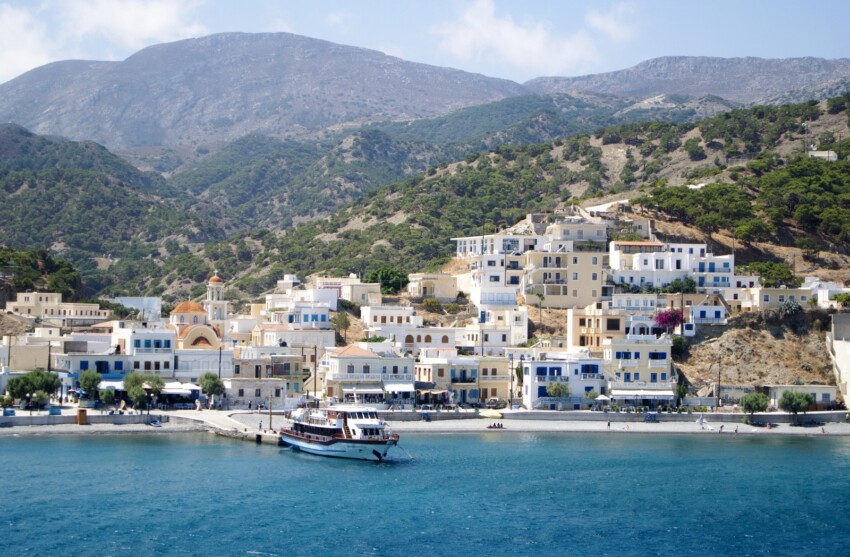
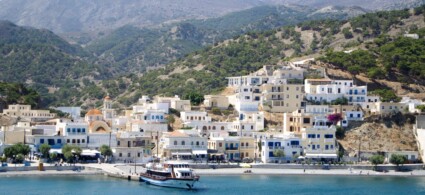
Olympos is located about 8 kilometres from the sea, precisely from the village of Diafani, the island’s second port. Although the village itself has no direct access to the sea, its strategic location offers breathtaking views of both sides of Karpathos and the majestic Aegean.
The beaches closest to Olympos can be reached via hiking trails that descend towards the coast. The path to Forokli and Diafani is about 5 kilometres long and offers spectacular views on the way down. On the way, you pass two watermills where you can enjoy fantastic views of the northern coastline.
The beach of Diafani is easily reached by a pleasant, gentle 5-kilometre descent from the village. This seaside resort offers a pebble beach with diaphanous waters and is the starting point for boat excursions to the island of Saria and remote northern beaches such as Vananda and Papa Minas.
For the more adventurous, paths also lead to wild beaches such as Agios Minas Beach, which can be reached via a dirt road that seems to lead to the moon, revealing a deserted bay served by a small church. Medium-advanced trekking routes to other remote coves on the north coast also depart from Olympos.
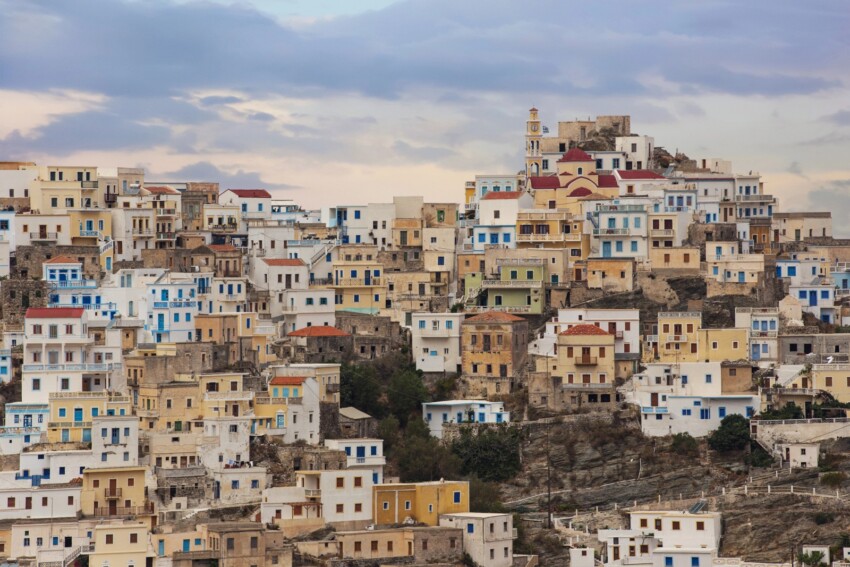
Olympos offers limited but authentic accommodation options, ideal for those seeking a genuine experience in the heart of Greek traditions. Accommodation mainly consists of small hotels, family pensions and rented rooms run by villagers.
It is important to consider that staying in Olympos reduces the travelling radius and is not suitable for those who want to explore the whole island on a daily basis. However, it can be a good choice for a few days’ stay dedicated to discovering the northern part of Karpathos and fully immersing oneself in the atmosphere of this timeless village.
For those who prefer more comfort, it is possible to stay in Diafani (8 km away) and visit Olympos on a daily basis, or choose accommodation in the south of the island and devote at least a full day to the village, perhaps arriving in the late afternoon to enjoy the sunset from the terrace of one of the panoramic tavernas.
Olympos is located 42 kilometres from Pigadia, the capital of Karpathos, and can be reached via a winding asphalt road that takes about one hour to travel. The road, built only in recent years with EU funds, passes by famous beaches such as Apella and Kyra Panagia, reaches the farming village of Spoa and continues into the wild north of the island.
Until 2014, this road was just an impassable dirt track, which is why the village has remained completely isolated from the rest of Karpathos for centuries. Before that, it was just a simple path, which explains how Olympos has been able to keep its thousand-year-old traditions intact.
It is also possible to reach Olympos by public bus from Pigadia, although the service is not daily. Alternatively, many tourists choose the excursions organised by tour operators or the tourist caiques that sail daily from the pier of Pigadia up to Diafani, allowing them to then reach Olympos by land.
 Hotel
Hotel 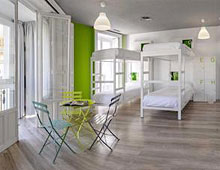 Budget accommodations
 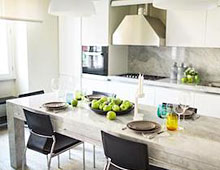 Apartments
 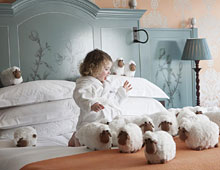 Family Hotel
 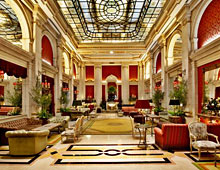 Luxury Hotel
  Resorts