Maritina Hotel
Kos Town - L. Vironos Street 19
Book now
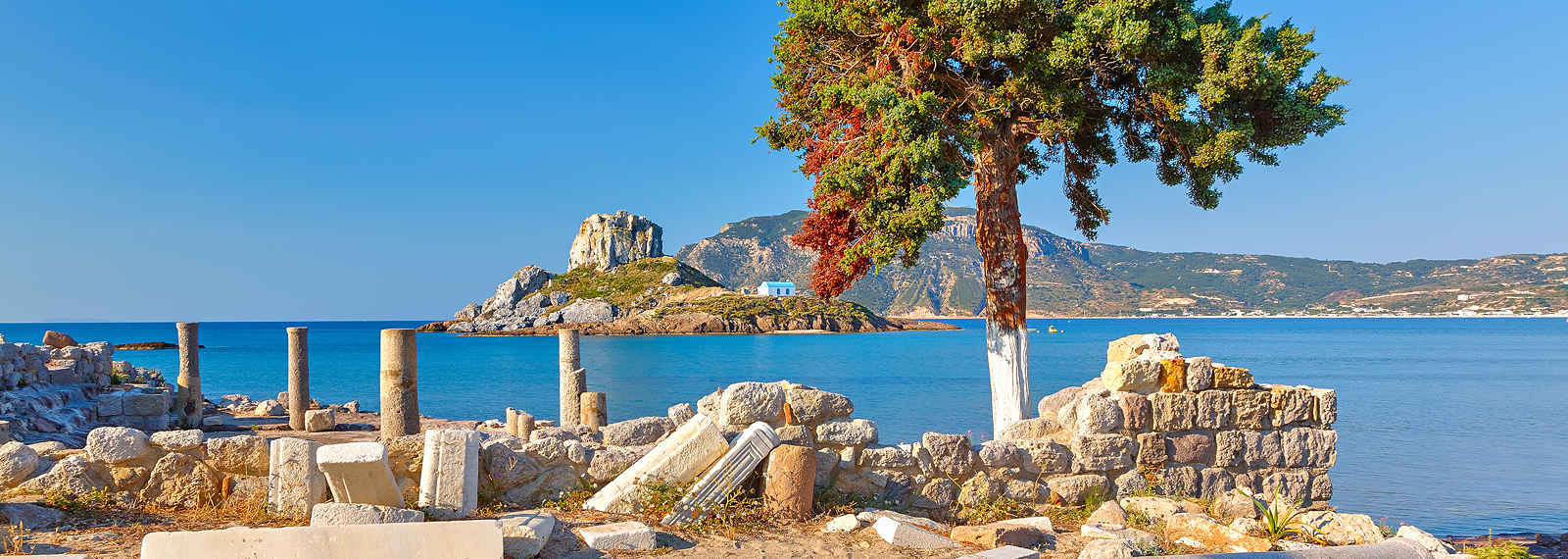
Kos, the third largest island in the Dodecanese, will captivate you with its 290 square kilometres of millennial history and golden beaches. Located just 4 kilometres from the Turkish coast, this ‘island of Hippocrates’ represents the perfect balance of Greek tradition and oriental influences.
The island boasts over 3,000 years of documented history, from the ancient baths of Asklepieion to the remains of the medieval castle of the Knights of Rhodes. With 36 kilometres of sandy coastline and a climate that guarantees more than 300 days of sunshine a year, Kos remains one of the most popular destinations in the eastern Mediterranean.
Its strategic location in the heart of the Aegean makes it an ideal base for exploring the neighbouring Dodecanese islands, with Nisyros reachable in 45 minutes by ferry and Kalymnos in just 20 minutes.
The variety of accommodation ranges from budget flats in the old town to 5-star resorts with spas, providing options for every budget and travel type.
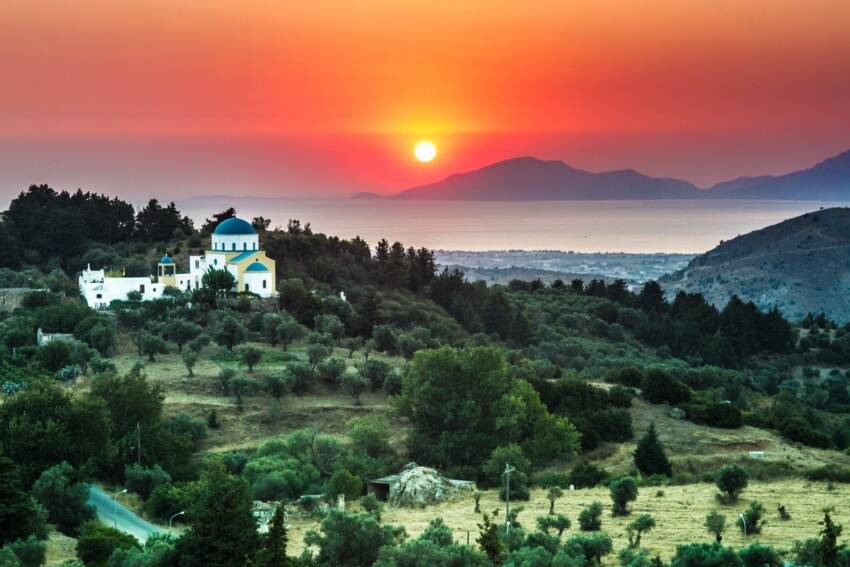
The island offers an extraordinary archaeological heritage combined with breathtaking natural landscapes. The site of Asklepieion, an ancient medical centre dedicated to the cult of Asclepius, is the main attraction with its three panoramic terraces overlooking the Turkish coast.
The historic centre of Kos town is home to 2,400 years of history: from the ancient Agora with its Hellenistic remains to the Knights’ Castle overlooking the harbour. The symbolic Platanus of Hippocrates marks the heart of the old town.
Inland, the village of Zia on the slopes of Mount Dikeos offers spectacular sunsets and the famous Kanelada, traditional cinnamon syrup. The mountain villages of Pyli, Asfendiu and Platani preserve Greek authenticity far from the tourist routes.
For a comprehensive look at all the archaeological sites, museums and attractions on the island, check out our detailed guide on what to see on Kos.
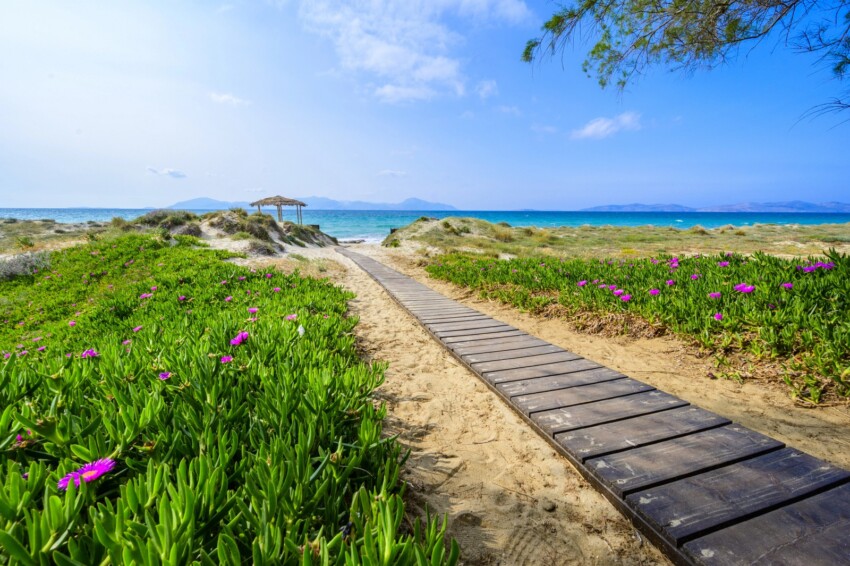
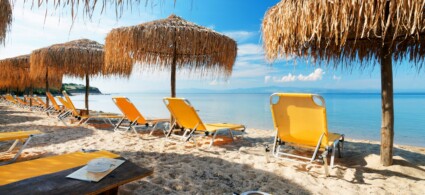
Kos boasts 36 kilometres of coastline with fine golden sand and crystal-clear, Blue Flag award-winning waters. The wind-protected north coast is ideal for families, while the south coast offers perfect conditions for windsurfing and kitesurfing.
Popular beaches include Paradise Beach on the Kefalos peninsula, with fine white sand and full facilities, and Tigaki, which stretches for 10 kilometres with gradual shallows perfect for children. Therma Beach is known for its thermal springs that flow directly into the sea.
The east coast offers wilder beaches such as Camel Beach and Exotic Beach, reachable only by sea or via dirt tracks, ideal for those seeking tranquillity and unspoilt nature.
For a complete guide with details on services, accessibility and features of each beach, check out our in-depth feature on Kos beaches.
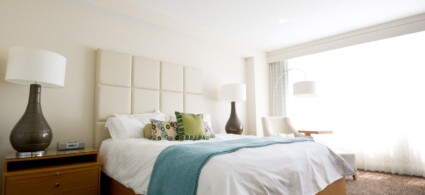
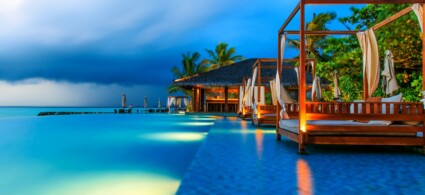
Accommodation ranges from boutique hotels in the old town to all-inclusive resorts on the coast, providing solutions for every budget and preference. Early booking (by March) can guarantee savings of up to 30%.
For a complete overview of the best areas, visit our guide on where to stay in Kos.
The historic centre offers the greatest concentration of tourist services, restaurants and connections. Boutique hotels in the medieval streets retain historical charm with modern comforts, while the seafront hosts 4-5 star establishments with sea views.
Connections to the airport are provided by the public bus every 30 minutes and taxis cost about EUR 25. The bus station to the beaches is 200 metres from the port.
Kefalos, in the south-western part, offers a more relaxed atmosphere and prices that are on average 20 per cent lower than in the capital. The village is 43 kilometres from Kos town but provides direct access to the most beautiful beaches.
Flats with swimming pools are the most popular option, while beach resorts offer attractive all-inclusive packages for stays longer than 7 days.
A former fishing village turned nightlife centre, Kardamena attracts a young European audience. Beach clubs liven up the summer nights, while budget flats make it accessible to limited budgets.
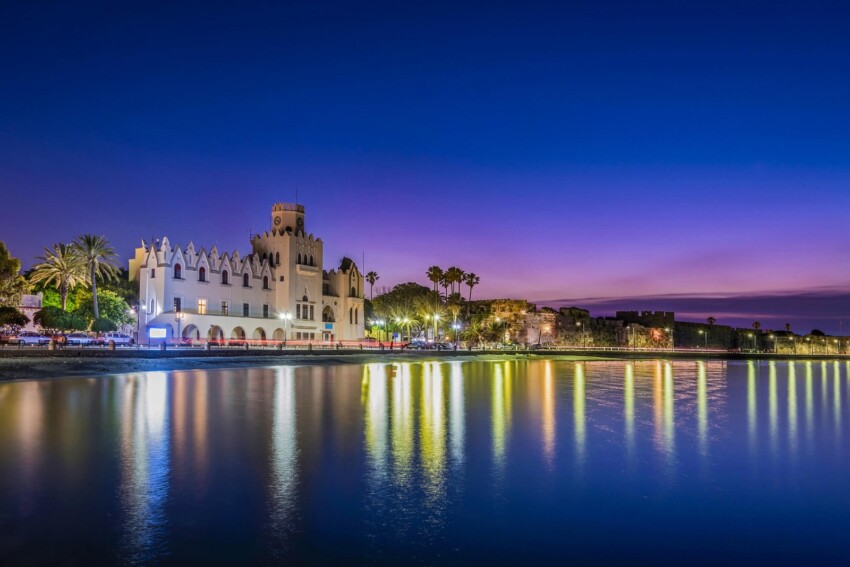
Kos boasts the liveliest nightlife in the Dodecanese, concentrated mainly in the town centre and Kardamena. The party season extends from June to September with international events.
Kos Town offers a more refined atmosphere with wine bars in the medieval streets and traditional ouzerie in the harbour district. The Plateia Eleftherias comes alive after 10pm with live music and traditional dance performances.
The beach bars of Psalidi and Lambi organise sunset parties with international DJs every summer weekend.
Kardamena attracts young people from all over Europe with its megaclubs on the beach. The Banana Moon Bar and the Atlantis Club offer house and techno music until dawn, while Bar Street offers English pubs and cocktail bars.
Kos cuisine blends Greek traditions and oriental influences, emphasising local products such as xinomyzithra cheese and thyme honey from Mount Dikeos.
Katimeria is a fried mizithra cheese cake served with honey and cinnamon, a unique speciality of the island. Sarsoumades (cannoli-like sweets) and loukoumades (balls of dough fried in honey) are the most popular desserts.
Local fish includes mullet, gilthead and snapper caught in the crystal-clear waters of the Dodecanese, often grilled with olive oil and oregano.
The ouzerie in the old harbour serve traditional mezze with a view of the castle, while the taverns of Zia offer homemade dishes in a mountain atmosphere. The fish market in Kos town offers fresh produce every morning.
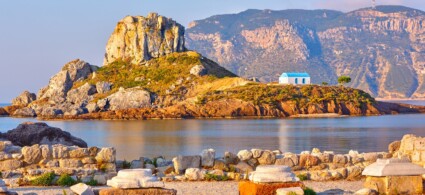
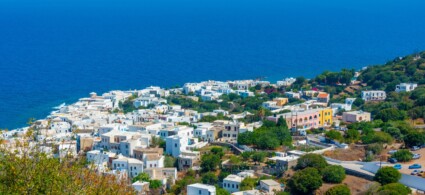
Nisyros is 18 nautical miles away and is home to one of the last active volcanoes in the Mediterranean. The 300-metre-wide Stefanos crater still emits sulphurous vapours and reaches temperatures of 100°C.
The village of Mandraki retains traditional architecture with blue and white houses, while the monastery of Panagia Spiliani offers breathtaking views of the volcanic caldera.
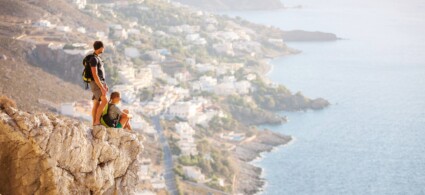
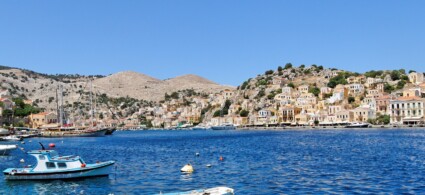
Kalymnos is renowned for natural sponge fishing and rock climbing on limestone cliffs. The harbour of Pothia features colourful neoclassical houses, while Vathy retains a fishing village atmosphere.
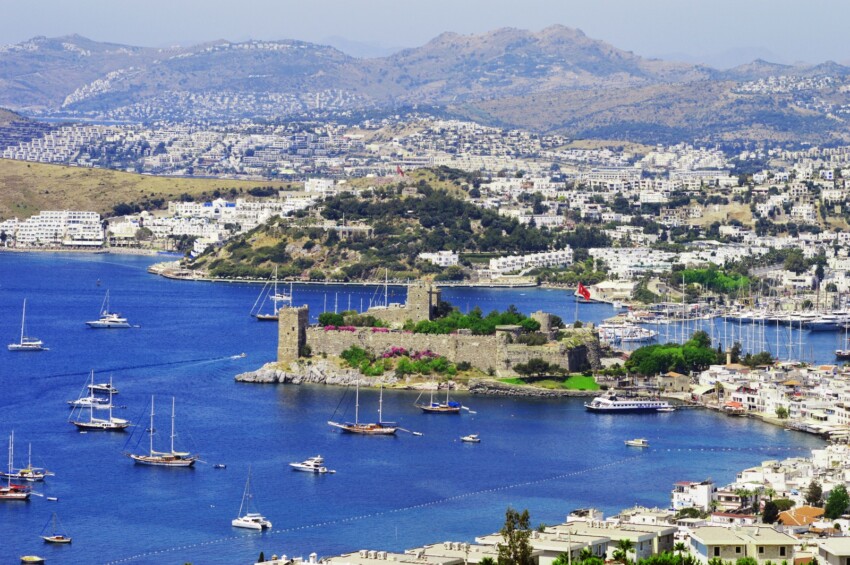
The day trip to Bodrum (Turkey) requires a passport and offers the chance to explore St Peter’s Castle, the traditional bazaar and the beaches of the Turkish Riviera.
Hippocrates Airport is 24 kilometres from Kos Town and receives direct flights from several European airports during the summer season.
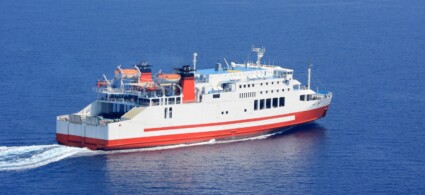
Ferries from Athens (Piraeus) take 12-14 hours with overnight departures. Blue Star Ferries and Dodekanisos Seaways also operate regular connections to Rhodes, Santorini and the other islands of the Dodecanese.
Car hire is the most flexible option for exploring the island. The main roads are in good condition and parking spaces are free except in the centre of Kos town.
The bus network covers all the main tourist destinations with services every 30-60 minutes. Tickets can be bought on board or at tobacconists.
What's the weather at Kos? Below are the temperatures and the weather forecast at Kos for the next few days.



 Hotel
Hotel  Budget accommodations
  Apartments
  Family Hotel
  Luxury Hotel
  Resorts