Maritina Hotel
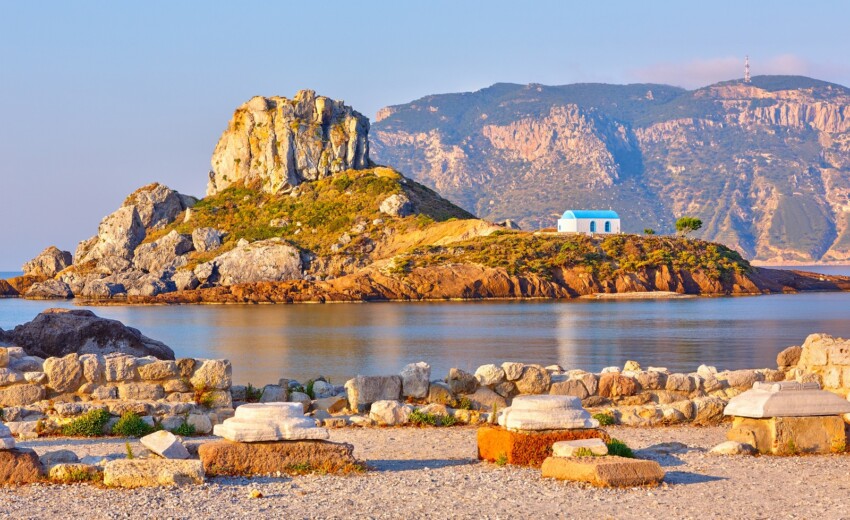
Although the beaches of Kos are considered the most beautiful in the Dodecanese, make some time during your holiday for the fascinating sights of the island.
There are many things to see on Kos, just as varied as the island’s landscape. For example, you can leave the lively resorts along the coast, with their well-equipped beaches and trendy bars, to discover a completely different world in the inland mountains, made up of traditional villages and walking trails.
If, on the other hand, you want to learn more about the thousand-year history of the island, visit the interesting archaeological sites and museums that preserve valuable evidence of Greek, Roman and Byzantine civilisation, plus a mighty medieval castle.
Discover the must-see sights and attractions on Kos one by one.
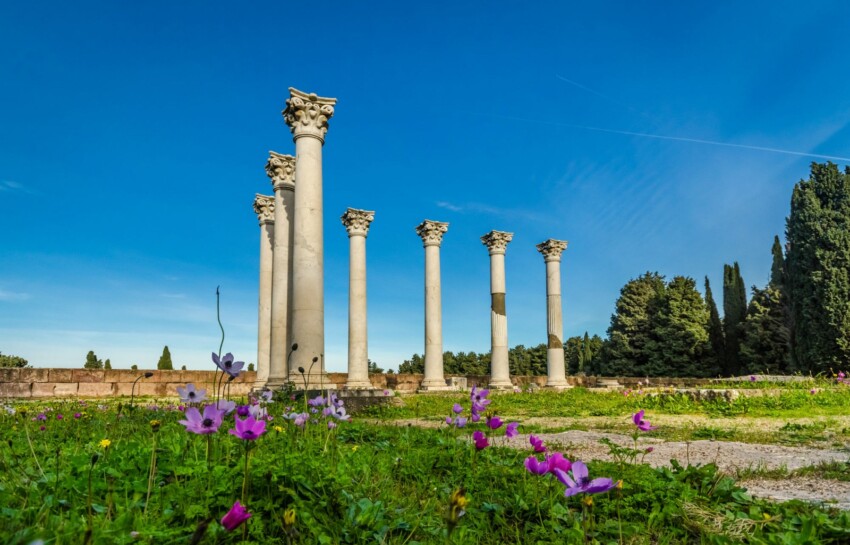
The Asklepieion is the most significant archaeological site on the island and one of the three most important medical sanctuaries in ancient Greece. Built between the 5th century BC and the 3rd century AD on the eastern slope of Mount Dikeos, 100 metres above sea level, this complex was dedicated to Asclepius, god of medicine and son of Apollo.
The sanctuary is spread over three terraces connected by monumental staircases. The first terrace housed the well-preserved Roman baths, where the ‘Asklepeia‘, musical and athletic competitions, were held. The second terrace contained the Ionic temple of Asclepius, while the third reserved for priests housed the main Doric temple with the statue of the god.
Discovered in 1902 by the German archaeologist Rudolf Herzog, it represented in antiquity a true medical centre where the sick followed the therapeutic methods of Hippocrates. The entrance ticket costs 8 euro and from the upper terrace you can admire the Turkish coast and the island of Kalymnos.
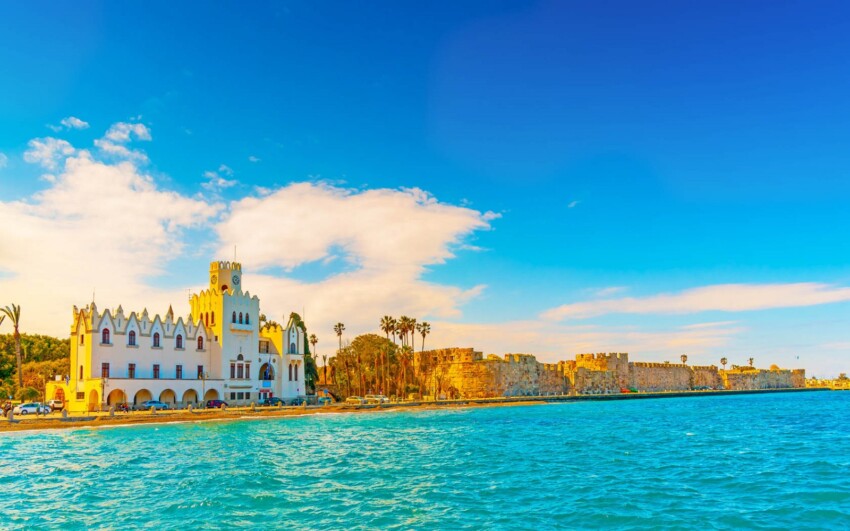
Kos Town, home to more than 19,000 inhabitants, represents the perfect balance between past and present. The town extends on the slopes of Mount Dikeos and its port of Mandraki is the main hub for the local economy.
The historical centre captivates with its architectural layering: Hellenistic ruins, Roman baths, medieval architecture of the Knights of St. John, Ottoman buildings and rationalist constructions from the Italian era follow one another in a unique urban mosaic.
In the heart of the ancient city are the remains of the Agora, the commercial centre of ancient Kos, and the Roman Odeon from the 1st-2nd century AD with 750 seats. The Roman House, a patrician villa from the 3rd century A.D., preserves polychrome mosaics and three inner courtyards. The historical quarter of Havouzia retains traditional architecture with stone and lime houses, while Platáni is home to the Muslim minority with a mosque and cemetery.
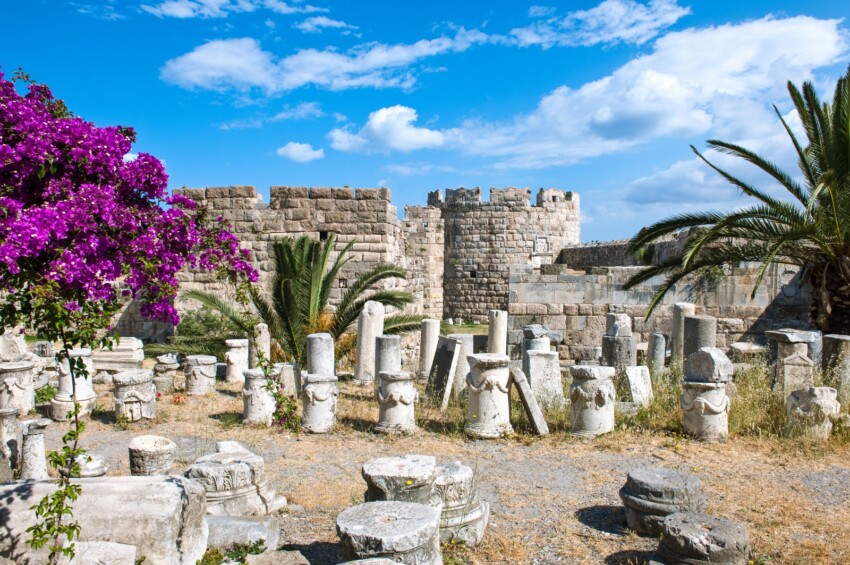
The Castle of the Knights of St. John, also known as Neratzia, dominates the harbour with its imposing 15th century fortified structure. Built to control the strategic passage between Kos and the coast of Asia Minor, it has a double wall and mighty bastions that testify to its military importance.
The medieval fortress, with its circular towers and patrol trenches, was a key bulwark against Ottoman incursions. Inside the walls were barracks, storerooms and a cistern for water supply during sieges.
Unfortunately, following the 2017 earthquake that severely affected the island, the castle remains temporarily closed to the public for structural consolidation works. Nevertheless, its majestic presence continues to characterise the cityscape and can be admired from the outside, especially at sunset when its walls are tinged with golden colours. Restoration work is proceeding slowly due to the huge costs involved.
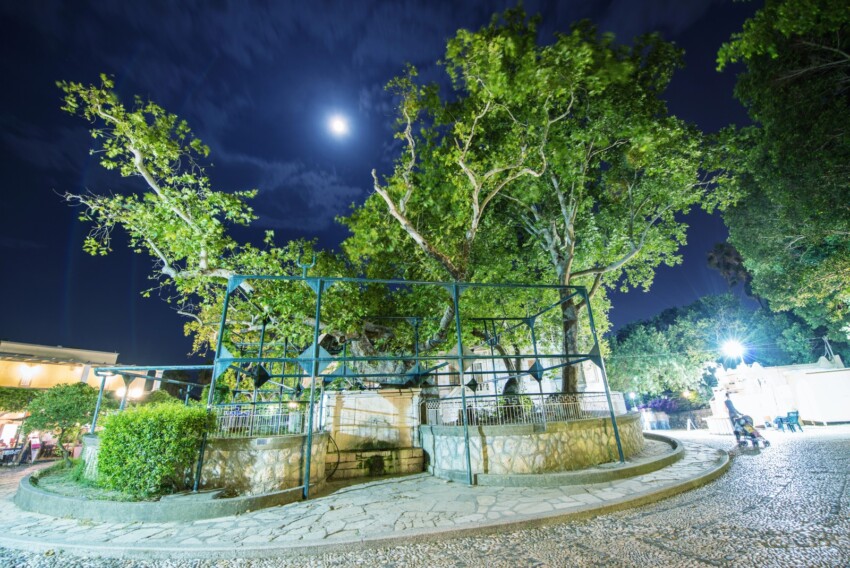
In the central Plateia Platanou stands majestically the legendary Platanus of Hippocrates, one of the most famous trees in Greece and the undisputed symbol of the island. According to millennial tradition, under its shade the great physician gave lessons to his disciples and formulated the basic principles of modern medicine.
With a trunk 12 metres in circumference and an estimated age of 2,400 years, the monumental tree is supported by metal scaffolding that preserves its centuries-old, now fragile structure. The imposing foliage, although smaller than in the past, continues to provide shade in the paved square that is an obligatory resting place.
Legend has it that this plane tree is a direct witness to Hippocratic teachings and still retains the spiritual energy of the father of medicine. The surrounding small square, paved with white marble, is a place of contemplation where tourists and locals alike stop to pay homage to the great physician and the island’s millenary medical tradition.
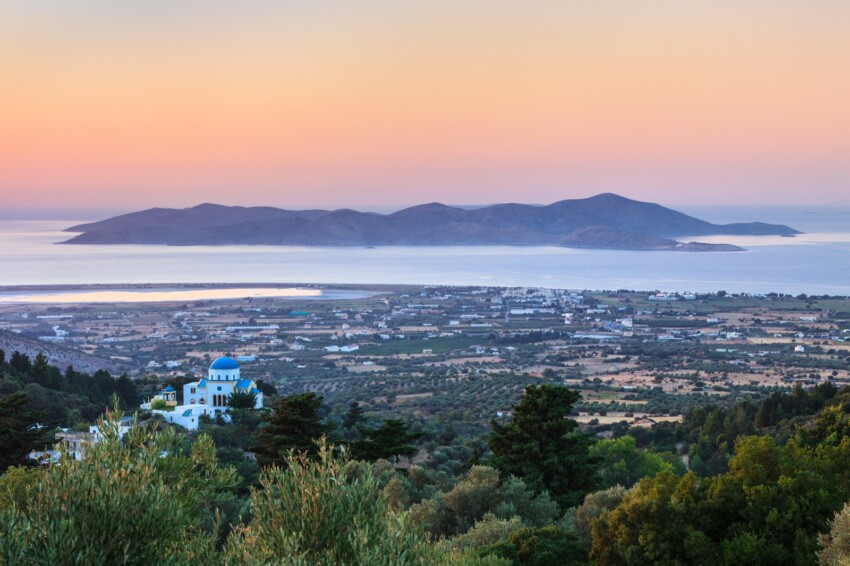
The village of Zia, located 350 metres above sea level on the slopes of Mount Dikeos, is the most romantic and photographed destination on Kos. This traditional village is famous throughout the Aegean for its spectacular sunsets, when the sun plunges into the sea, dyeing the neighbouring islands and the Turkish coast of Bodrum orange and red.
White houses with blue shutters climb along cobbled paths, while traditional taverns and craft shops offer authentic local products such as the famous thyme honey,cinnamon water and hand-painted ceramics. The panoramic view from the main terrace embraces the entire island and on a clear day, Nisyros, Tilos and the Anatolian mountains are clearly visible.
The village becomes particularly crowded at sunset, when hundreds of visitors flock to admire the natural spectacle from the panoramic terraces of the restaurants.
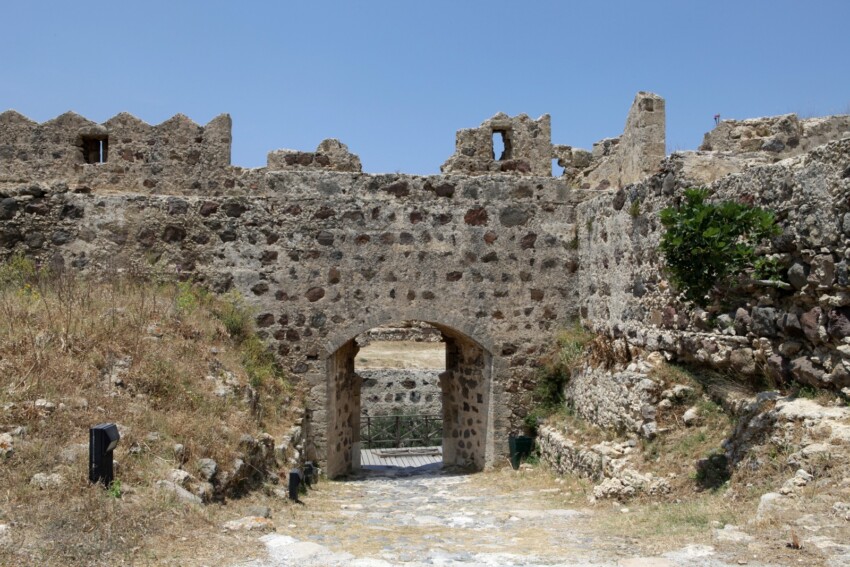
Antimachia, located in the centre of the island, is famous for its 14th century Venetian fortress, built at the behest of the Knights of St. John as a defensive outpost against pirate raids. The mighty walls made of local stone and the Byzantine church of St Paraskevi within the fortified perimeter represent a perfect example of medieval military architecture.
The village also preserves a valuable traditional house converted into an ethnographic museum, where original furniture, agricultural tools and traditional costumes recovered from the surrounding ancient villages are exhibited. The rooms faithfully recreate rural life of the past with the traditional kitchen, bedroom and craft workshop.
Nearby are the characteristic windmills that once ground the local grain, now restored and become a symbol of the island. The surrounding countryside, rich in centuries-old olive groves and vineyards, offers ideal paths for walks in unspoilt nature. The village retains an authentic atmosphere, far removed from mass tourism.
The community of Asfendiou comprises five almost abandoned traditional villages at the foot of Mount Dikeos: Agios Dimitrios, Agios Georgios, Asomatos, Evangelistria and Lagoudi. These mountain villages, surrounded by lush Mediterranean vegetation and fed by perennial natural springs, preserve intact the traditional architecture of the Dodecanese.
Local stone houses with flat roofs to collect rainwater, paved alleys and small Byzantine churches with medieval frescoes tell of a time when life flowed slowly, marked by the rhythms of pastoralism and subsistence farming. Centuries-old olive groves, citrus gardens and fields of wild orchids create a bucolic landscape of rare beauty.
Particularly striking is the church of Agios Georgios with its traditional bell tower and 15th century frescoes. The paths connecting the villages offer breathtaking views of the southern coastline and are ideal for trekking and photographic excursions into the unspoilt nature of the hinterland.
Pyli, in the centre of the island surrounded by expanses of olive trees and wild orchids, represents the most authentic soul of Kos, completely off the beaten track of mass tourism. The modern village retains a traditional rural atmosphere with its central square shaded by ancient plane trees and traditional cafes frequented exclusively by locals.
The village is famous for the tomb of the hero Charmylos, an extraordinary semicircular Hellenistic construction from the 3rd century B.C. consisting of twelve identical crypts that testifies to the historical and religious importance of the area in antiquity. The unique funerary structure is a perfect example of Greek funerary architecture.
A few kilometres away are the remains of the ancient medieval village of Paleo Pyli, perched on the flanks of Mount Dikeos and abandoned in the 19th century. The ruins of the Byzantine fortress and the Church of the Presentation of the Virgin with splendid 14th century frescoes offer a fascinating insight into medieval island life and spectacular views of the plain below.
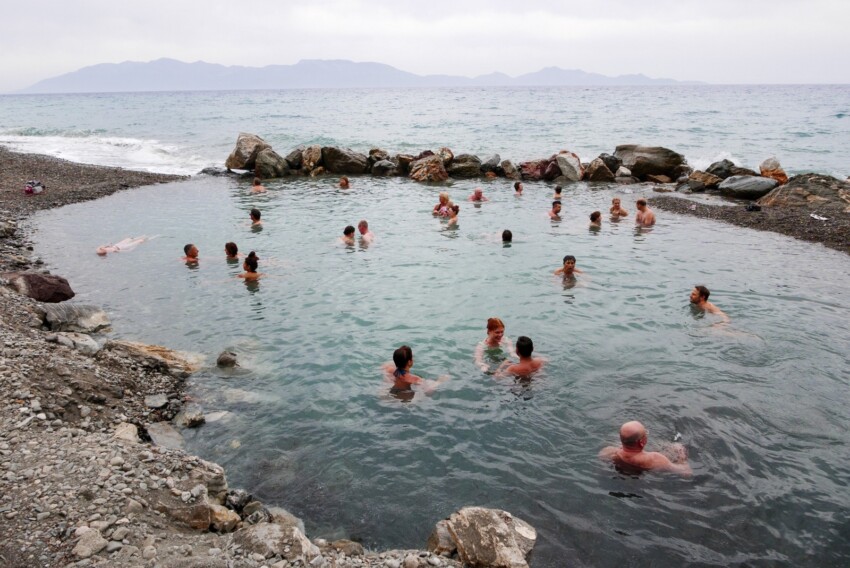
The natural thermal springs of Therma, located along the southern coast near Agios Fokas, are a unique geological phenomenon in the eastern Mediterranean. Thermal springs flow directly onto the pebble beach, mixing with seawater to create natural pools with temperatures ranging from 40° to 50°C.
The sulphurous water, rich in therapeutic minerals such as sulphur, magnesium and potassium, is considered beneficial for joint problems, skin disorders and rheumatic diseases. Even in the height of summer, despite the high temperature of the seawater that offers no refreshment, the spa attracts thousands of visitors for its healing properties.
The thermal baths can be reached by a 10-minute walk from the nearest car park or by special shuttle buses that leave from Kardamena. The natural phenomenon is particularly impressive at sunset, when the sulphurous steam mixes with the colours of the sky creating an almost surreal atmosphere. It is advisable to bring suitable footwear for walking on the slippery pebbles.
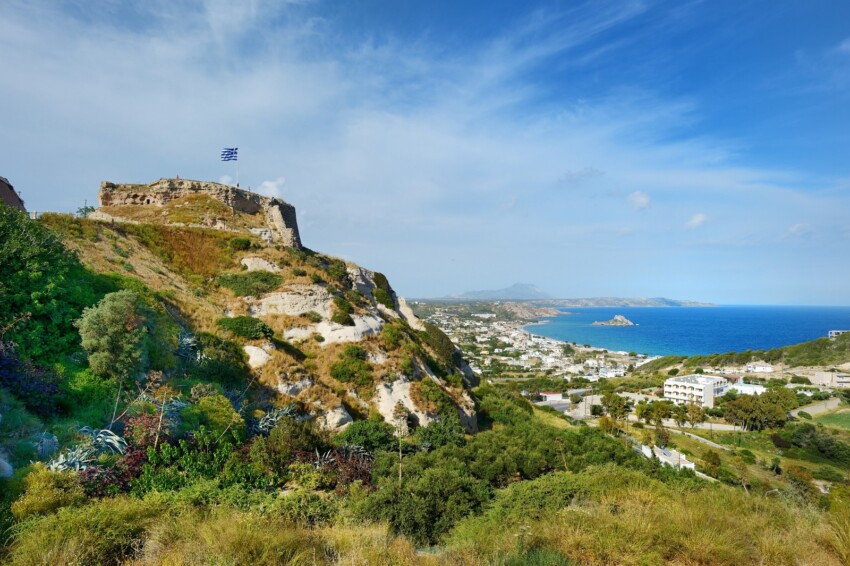
Kefalos, located at the southwestern tip of the island, is one of Kos’ most picturesque and authentic villages. Perched on a scenic hilltop 200 metres above sea level, this ancient village offers a breathtaking view of the Kefalos peninsula and the islands of Nisyros and Gyali.
The village perfectly preserves the traditional architecture with white houses, cobbled alleys and the church of Agios Nikolaos dominating the central square. Nearby are the remains of ancient Astypalaia, the first settlement of Kos, with ruins of Hellenistic temples and Roman baths testifying to the historical importance of the area.
The surrounding countryside, rich in vineyards and olive groves, offers ideal walking paths to the hidden coves of the coast. The small port of Kamari, downstream from the village, retains the atmosphere of a fishing village with traditional tavernas serving freshly caught fish. Boat trips to the smaller islands of the Dodecanese also depart from Kefalos.
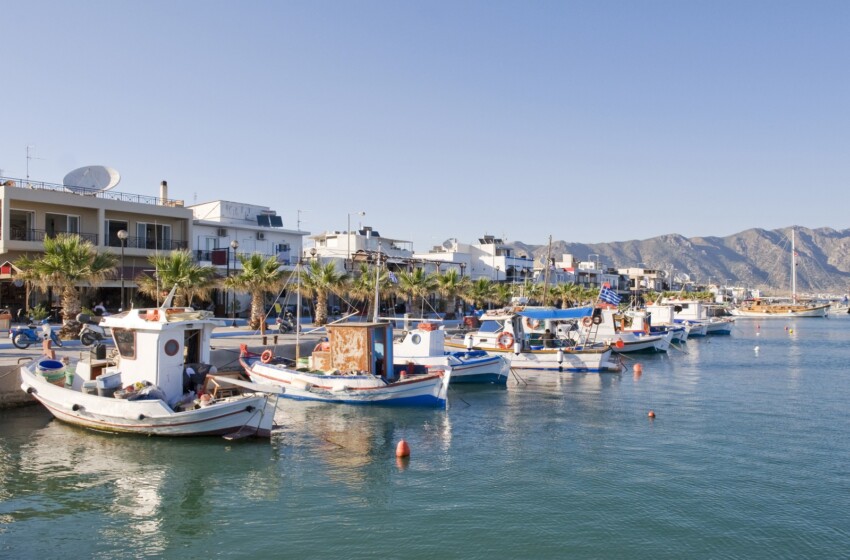
Kardamena, on the south coast, is the liveliest tourist resort on the island after the capital. This former fishing village has been transformed over the years into a modern seaside resort that mainly attracts young European tourists looking for fun and nightlife.
Kardamena’s seafront promenade stretches for over two kilometres with bathing establishments, beach bars and clubs enlivening the summer evenings. During the day, the resort is the main centre for water sports: windsurfing, kitesurfing, water-skiing and paragliding are possible thanks to the constant presence of the meltemi.
Boat trips to Nisyros with a visit to the volcanic crater depart daily from the marina of Kardamena, as well as day trips to the smaller islands of the Dodecanese. Despite strong tourist development, Kardamena still retains traces of its past with the church of Agios Nikolaos and the small fishing harbour where traditional local fishing boats still dock.
Sea excursions are one of the most fascinating ways to discover Kos and the surrounding Dodecanese islands. Daily cruises depart from the harbour of Kos Town and Kardamena, circumnavigating the island and touching the most remote coves and beaches only accessible by sea.
The most popular excursion is to Nisyros, the volcanic island located 16 kilometres from Kos, where it is possible to walk inside the active crater among sulphurous fumaroles and hot springs. Cruises in gulets, traditional wooden boats, offer a more authentic experience with stops for swimming and fish lunches prepared on board.
Trips to the Three Islands – Pserimos, Plati and Kalymnos – are also popular, offering unspoilt beaches, fishing villages and crystal-clear seabed ideal for snorkelling. Sunset cruises along the west coast offer unforgettable views of golden cliffs and mountain villages illuminated by the sunset light.
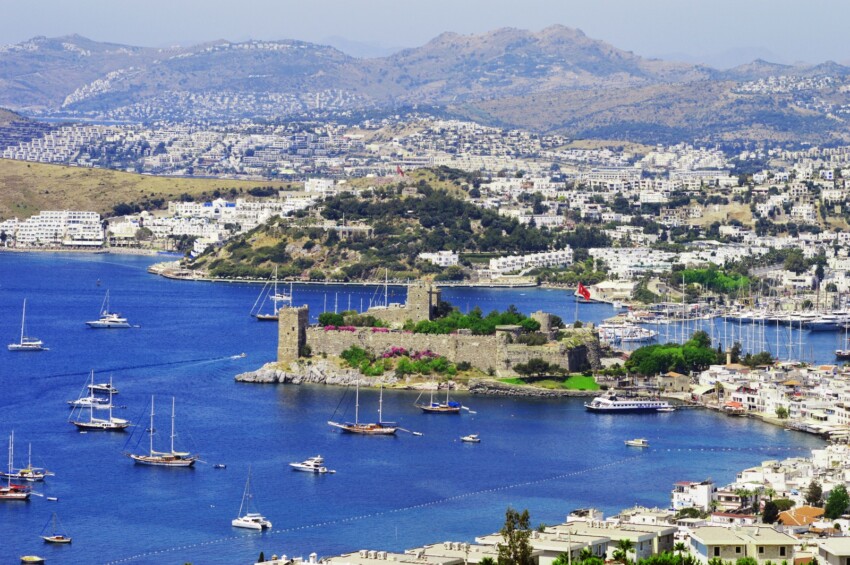
Just 4 kilometres from the shores of Kos is Bodrum, the ancient Turkish Halicarnassus, which is easily reached by daily ferry excursions departing from the port of Kos Town. This elegant coastal town, nicknamed the ‘Saint Tropez of Asia Minor‘, is one of the most fashionable destinations in modern Turkey.
The city offers a fascinating contrast between millennial history and cosmopolitan nightlife. St. Peter’s Castle of the Knights of Rhodes dominates the marina, while the archaeological site of the Mausoleum of Halicarnassus, one of the Seven Wonders of the Ancient World, recounts the grandeur of the ancient capital of Caria.
Traditional bazaars and luxury boutiques alternate in the narrow streets of the old town, while seafood restaurants on the waterfront offer specialities of Turkish cuisine. Please note: a valid passport is required for entry into Turkey. Excursions generally last a full day and include free time for shopping and cultural visits.
In the following map you can see the location of the main places of interest mentioned in this article.
 Hotel
Hotel  Budget accommodations
  Apartments
  Family Hotel
  Luxury Hotel
  Resorts