Leros is a green Dodecanese island that represents a hidden treasure in the Greek archipelago, located between Patmos, Lipsi and Kalymnos. With an area of 53 square kilometres and a population of around 8,000, this mountainous island characterised by numerous deep coves offers visitors an authentic Greek experience far removed from mass tourism.
The island is characterised by its verdant nature, fertile valleys, gentle hills and deep bays that create a varied and fascinating landscape. The rugged coastline, some 46 kilometres long, is dotted with numerous beaches and coves ideal for swimming, diving and fishing.
Leros has a history particularly linked to Italy: from 1912 to 1943, the island was under Italian administration as part of the Dodecanese possession. This period left a unique architectural legacy, particularly visible in the town of Lakki (ancient Portolago), considered one of the best examples of rationalist architecture outside Italy.
The capital of the island is Agia Marina, practically united with two other villages, Platanos and Panteli, forming one charming urban centre. The main port is at Lakki, one of the largest natural harbours in the Mediterranean due to its location and geographical morphology.
Things to do in Leros
Leros offers a perfect balance of historical attractions, natural beauty and Greek authenticity, making it ideal for both families and couples seeking tranquillity and discovery.
Lakki
The town of Lakki, founded in the 1930s under the name of Portolago in honour of Governor Mario Lago, represents a world unicum in 20th century architecture. It is considered the only European town designed and built from scratch without being an extension of an existing town, built entirely according to the canons of Italian rationalism.
Architects Armando Bernabiti and Rodolfo Petracco created an urban layout that blends Italian Rationalism, Art Deco references and Byzantine details. Among the most significant buildings are the covered market (1935) with its characteristic circular shape, the cinema-theatre combined with the Hotel Roma (today the Hotel Leros), the Town Hall building and the Casa del Fascio, and the officer’s palaces reminiscent of the best of Giuseppe Terragni’s rationalism.
This architectural heritage, recognised as one of the most important works of the Modern Movement, is now a candidate for UNESCO World Heritage status.
Castle of Panagia
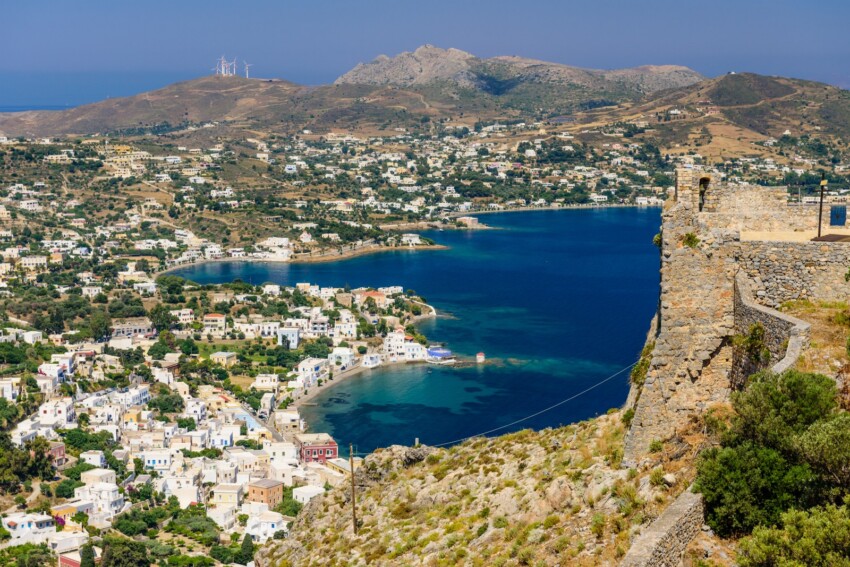
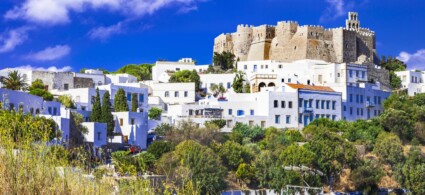
The medieval Castle of Panteli dominates the capital of Leros from Apitiki Hill. Probably built in the 10th century on the site of the ancient acropolis, most of the walls and the church of Panagia have survived to this day. The castle can be reached by climbing 400 steps from Panteli or via a panoramic path.
From the castle there is a spectacular view of the Aegean Sea and the other islands of the Dodecanese. During the summer, theatre performances are organised inside the castle, adding cultural charm to the visit.
Agia Marina and the Old Town
Agia Marina is one of the most beautiful settlements of Leros, characterised by traditional houses that run from the harbour to the foot of the hill. This centre, together with Platanos and Panteli, forms the capital of the island with its white houses, neoclassical buildings and cobbled alleys.
The old town retains the character of traditional 19th century Greek architecture, with numerous neoclassical buildings testifying to the island’s prosperous period of shipping and trade.
Platanos
Platanos is the historical and cultural centre of the island, built amphitheatrically under the imposing castle. Here you will find the small square with the central plane tree, the Town Hall and numerous traditional buildings. The Town Hall houses the island’s archaeological group, while the old church of Agia Paraskevi is nearby.
Panteli
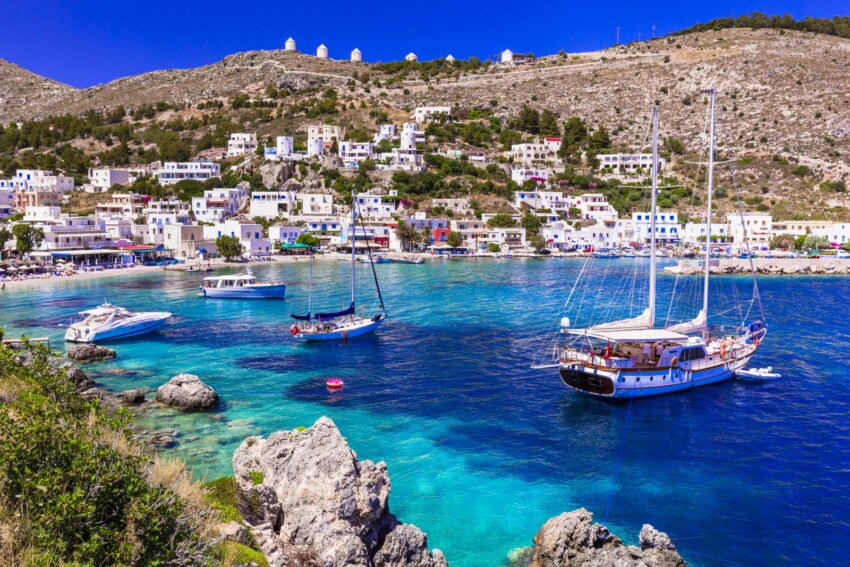
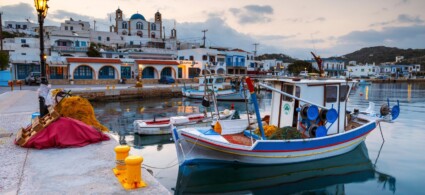
Panteli is considered the most picturesque village on the island, built around the fishing harbour of Leros. This pretty whitewashed village maintains an authentic Greek atmosphere, with tavernas serving fresh fish and seafood right on the waterfront.
The village is surrounded by an enchanting landscape of green trees, steep mountains and excellent coves, and is famous for its Fishermen’s Festival in September with traditional music, wine and fish offered to all.
Partheni and the archaeological site
Partheni, in the northern part of the island, is a historical site known since antiquity for the sanctuary of Artemis Parthenos (hence the present name). The archaeological area of Parthenium contains the ruins of a prehistoric settlement from 3800 BC and the remains of a temple from the Hellenistic period.
Here is also the church of Agios Georgios (10th century AD), built with ancient materials probably from the ruins of the temple of Artemis.
War Museum
Located in an underground tunnel built during the war in the Merikia area, the War Museum houses weapons, uniforms and other items from the Second World War. The museum tells the story of the Battle of Leros in 1943, when Italians, British and Greeks resisted the German attack for 52 days.
Bellenis Tower in Alinda
The Bellenis Tower is an architectural masterpiece built in the early 20th century in the Italian Neoclassical style by Egyptian architect Parisis Bellenis. Characterised by its cylindrical turrets and loopholes, it now houses the Museum of Popular Art and cultural events are organised in its garden during the summer.
The Beaches of Leros
Leros offers a great variety of beaches, from the most organised and busy to the wildest and most secluded, all characterised by crystal-clear waters and enchanting landscapes.
Alinda
Alinda is the longest and most organised beach on Leros, located 5 kilometres northwest of the capital. This large beach of 400 metres combines sand and small pebbles, surrounded by tamarisk trees that provide natural shade. The area is well equipped with umbrellas, sunbeds, lockers and water sports.
The shallow waters and fine golden sand make it particularly suitable for families with children. Shops, fish taverns, supermarkets and car rental services can be found in the vicinity.
Panteli
The beach of Panteli is located in the picturesque village of the same name and is a well-organised sandy beach with all the necessary facilities. It is particularly popular for its relaxing atmosphere and for the opportunity to enjoy fresh fish in the taverns right on the beach.
In recent years, it has seen its popularity and tourist infrastructure grow, while retaining the authentic charm of a fishing village.
Vromolithos
Vromolithos is a picturesque beach located in a beautiful bay south-east of the village of Panteli. The beach is characterised by sand at the ends and small white pebbles in the centre, with crystal-clear waters of a vivid blue colour and gently sloping seabed.
It is a well-organised beach with a beach bar and facilities, surrounded by vegetation and charming villas that make it one of the most elegant resorts on the island.
Agia Marina
The main beach of Agia Marina is located just opposite the town, offering the convenience of being within walking distance. Characterised by soft sand and clear waters, it is popular with families and those who don’t want to give up urban conveniences.
Xirokampos
Xirokampos is a large sandy beach located 9 km south-east of Agia Marina, famous for its deep waters that make it ideal for diving and snorkelling. The area is characterised by extensive slopes that culminate in a beach with beautiful crystal-clear waters.
Nearby is the chapel of Panagia Kavouradena and the ruins of Paleokastro (ancient castle). There is also a diving centre and several campsites.
Dio Liskaria
Dio Liskaria is one of the most popular beaches for sunbathing. The beach combines sand and fine pebbles and is protected from the wind. In the centre is a souvenir shop, a tavern and the Zefyros bar.
Gourna
Gourna is one of the longest sandy beaches on Leros, known for its dark sand and clear, shallow waters. In recent years it has seen an increase in the services offered, with umbrellas, deckchairs, snack bars and water sports. The sunsets from this western beach are particularly spectacular.
Other notable beaches
Agia Kiura: ideal for those seeking absolute peace, with no facilities but crystal-clear blue waters
Koulouki: three bays with fine sand surrounded by pine forest
Merikia: quiet with crystal-clear waters and large trees for shade
Kryfos: one of the most beautiful on the island, accessible by boat, with turquoise waters
Where to stay in Leros
Accommodation on Leros is mainly concentrated in three areas: Platanos, Alinda and Panteli. Agia Marina is curiously devoid of accommodation, while the other localities offer various types of accommodation.
Alinda is the most touristy and developed area of the island, with the most exclusive hotels, beautiful villas overlooking the hillside and the highest concentration of services. Here you will find modern hotels, flats and hostels, all within walking distance of the longest beach on the island.
Platanos offers a few hotels in the old town, ideal for those who want to experience the authentic atmosphere of a traditional Greek village and have easy access to cultural attractions. Panteli offers mainly flats and studios, perfect for those seeking the fishing village experience with fresh fish tavernas and a seaside atmosphere.
We offer best rates If you find it cheaper we refund the price difference.
Free cancellation Most properties allow cancellation without penalty.
We're available 24 hours a day For any problem call Booking.com.
Recommended hotels in Leros
We offer a selection of hotels at Leros to suit all categories of travellers. The most booked by tourists are the sea-facing hotels, often right on the beach. If you want to play it safe, choose one of the following: they are among the most booked hotels in Leros, sorted by number of reviews.
If you prefer space, privacy and the ability to prepare your own meals to a hotel holiday, book a holiday home at Leros. We recommend a few below, but in this case we advise you to book early because houses and apartments for rent at Leros are in high demand.
Leros has a domestic airport at Partheni, in the northern part of the island, 9 km from Platanos. The airport is served by daily flights to and from Athens with Aegean Airlines and Olympic Air, with a flight time of approximately 50 minutes.
It is also possible to reach Leros from Rhodes with flights of approximately 40 minutes, or from Karpathos with flights of just over 10 minutes. Leros is part of the so-called ‘sky bus’ of Olympic Air, which connects five islands of the Dodecanese: Astypalea, Kalymnos, Karpathos, Kasos and Rhodes.
By ferry
Connections by sea are provided by two main companies: Blue Star Ferries and Dodekanisos Seaways. Ferries can call at either of the island’s two ports: Agia Marina on the east coast and Lakki on the west coast.
From Athens: daily or almost daily connections from Piraeus, with overnight trips of around 8-10 hours.
From Rhodes: regular connections with durations of approximately 4-5 hours.
What's the weather at Leros? Below are the temperatures and the weather forecast at Leros for the next few days.
Sunday 8
13°
15°
Monday 9
13°
16°
Tuesday 10
14°
16°
Wednesday 11
14°
15°
Thursday 12
15°
16°
Friday 13
13°
15°
Where is located Leros
Leros is located in the heart of the Dodecanese, between Kalymnos in the south and Patmos in the north, about 20 km north of Kalymnos and close to the Turkish coast.
 Hotel
Hotel  Budget accommodations
  Apartments
  Family Hotel
  Luxury Hotel
  Resorts