Porfyris Hotel
Mandrakion - Mandraki, Nisyros
Located 200 metres from Mandraki Beach, in Nisyros town, Porfyris Hotel offers a swimming pool and breakfast.
Book now
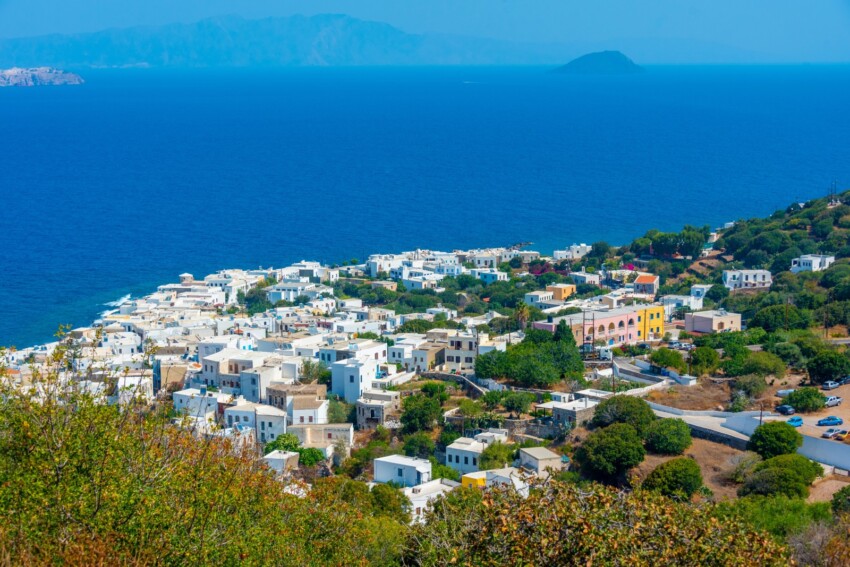
Nisyros represents a geological unicum among the Greek islands, being the only one in the Dodecanese with an active volcano. With its 41 square kilometres and approximately 1,100 inhabitants, this circular island is strategically positioned between Kos and Tilos, a few miles from the Turkish coast.
The Polyvotis volcano, which dominates the centre of the island, represents the youngest and most exuberant volcano in the Aegean, with its last documented eruption in 1888. According to Greek mythology, the island was born when Poseidon chased the giant Polyvotis during the war between the Gods and the Titans, smashing Kos with his trident and giving rise to this extraordinary volcanic formation.
The landscape of Nisyros presents itself as a natural kaleidoscope: the dark grey of the volcanic earth contrasts beautifully with the whiteness of the Cycladic houses, while the green of the hills blends with the blue of the sky and the deep blue of the Aegean Sea. The island is surrounded by small islets such as Gyali, Pyrgousa, Pachia and Strogyli, which complete this fascinating volcanic archipelago.
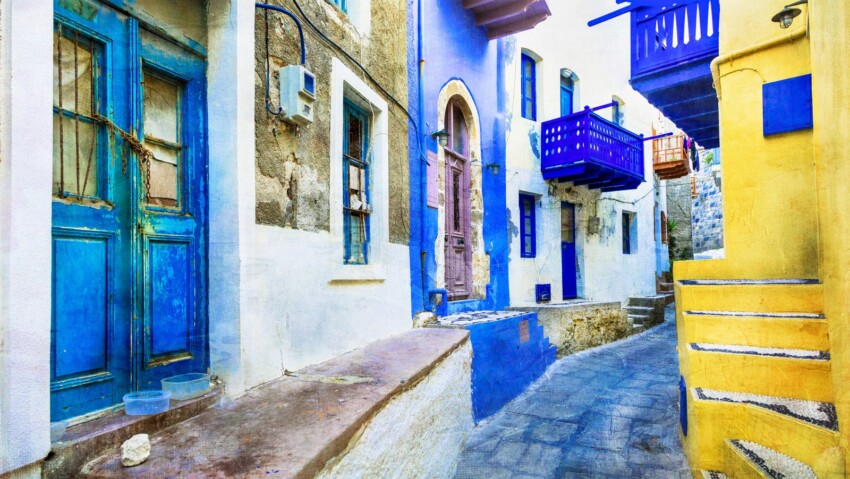
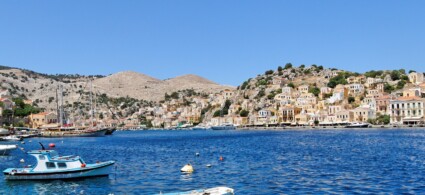
Mandraki forms the beating heart of the island, serving as both the main town and the main port. This charming traditional village lies at the foot of a steep hill on the north-western side, offering a classic Greek island panorama of white houses, colourful wooden balconies and black and white cobbled alleys that create striking colour effects. The square of Ilikiomeni is the meeting point of the locals, while tourists make their way to the main attractions such as the Castle of the Knights of St. John (1325) and Paleokastro, an ancient 4th century B.C. fortress built on the remains of the classical acropolis.
The Monastery of Panagia Spiliani stands spectacularly on a hill to the north-west of Mandraki, built mainly inside a natural cave. This religious centre of the island is divided into two churches: one dedicated to Kimisi tis Theotokou (Assumption of Mary) and the other to Agios Charalambos. Its strategic location offers breathtaking views of the island and is an essential stop to understand the local spirituality.
The volcanic crater is the main attraction of Nisyros, accessible via a scenic road that passes through lunar landscapes of extraordinary beauty. The Polyvotis crater, 260 metres in diameter and 30 metres deep, dominates a caldera formed by five smaller craters, including Stefanos (30 metres in diameter). Active fumaroles and sulphur vapour emissions create a surreal atmosphere, while small sulphur crystals cover the hot ground. The path allows one to walk to the bottom of the caldera, a unique experience in Europe.
Nikia is located 14 kilometres from Mandraki, perched 400 metres above the rim of the volcanic crater. This village is considered the most beautiful on the island due to its unique architecture with white houses, tiled roofs and colourful doors and windows. The famous Porta square, paved with black and white pebbles, houses a small church and two traditional bars from which one can enjoy spectacular views towards Tilos. The Volcanological Museum at the entrance to the village provides interesting information on the geology of the island.
Emborios is a fascinating ghost village in the process of restoration, situated on the edge of the caldera. Destroyed by several earthquakes and abandoned for decades, it is now home to some atmospheric taverns and offers paths leading directly to the craters in 15-20 minutes. Pali is a picturesque fishing village on the north-east coast, developed around a natural bay that serves as a landing place for tourist boats. Local tavernas serve fresh fish, while the marina has breathed new life into this ancient settlement.
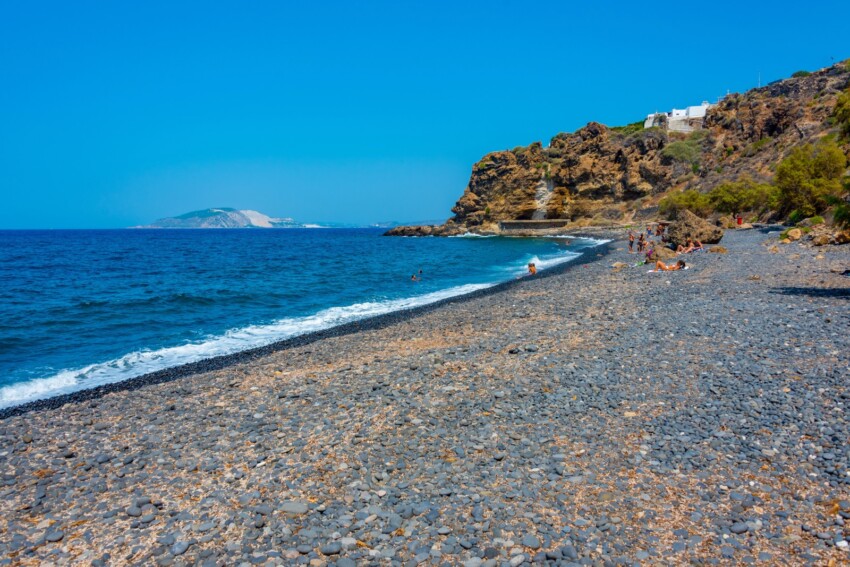
The beaches of Nisyros have unique characteristics due to the volcanic origin of the island, with dark sands and volcanic pebbles creating striking and unmistakable landscapes. Mandraki offers the most accessible beach, located directly behind the monastery of Panagia Spiliani, with dark sands and lava rocks that bear witness to past volcanic activity. Despite its distinctive colour, the water remains crystal clear and inviting for swimming.
Lies spreads out as a long stretch of sand and dark pebbles along the southern coastline, reached by a scenic road that ends in a large dirt esplanade. This beach offers absolute tranquillity and clean waters, ideal for those seeking solitude and direct contact with volcanic nature. The path continues to Pachia Ammos, characterised by large dunes and a wild environment that requires a walk of about 15 minutes.
Avlaki is one of the hidden gems of the island, reached via a winding road that descends to the southern sea. This small cove is home to a church, a private house and a sheltered harbour with stunningly beautiful waters. The isolation and purity of the environment make Avlaki a privileged destination for those who appreciate unspoilt nature.
Pali offers a sandy, well-equipped beach next to the fishing village, with tamarisk trees providing natural shade. The proximity to natural spas and tavernas makes this a perfect destination for families. Hohlaki is distinguished by its volcanic pebbles and is one of the most scenic beaches on the island. It is also popular with windsurfers and snorkellers for its rich and varied seabed.
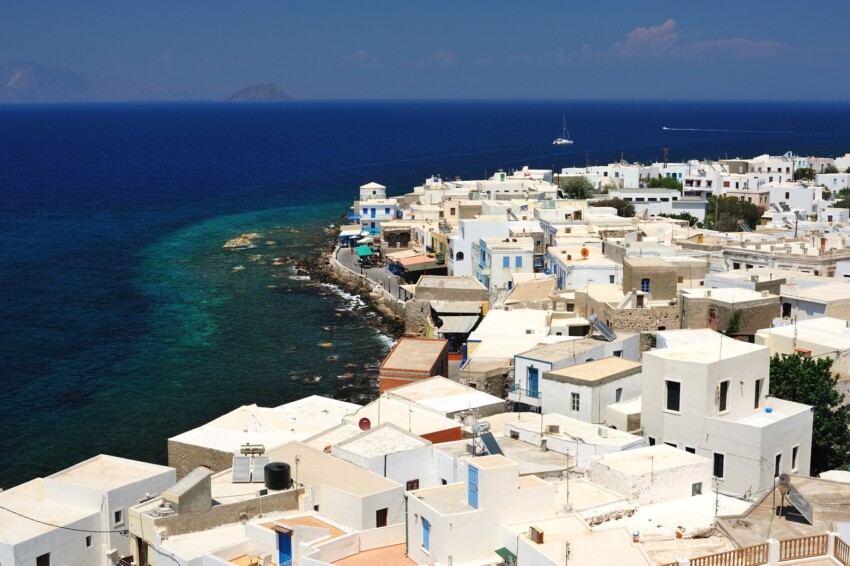
The accommodation offer of Nisyros reflects the quiet and authentic character of the island, with a single hotel in Mandraki flanked by several guesthouses, studios and bed & breakfasts run mainly by local families. Accommodation is concentrated in the main town, offering the convenience of being close to essential services and major attractions.
Pali has some flats and studios overlooking the bay, ideal for those seeking more tranquillity and direct contact with the sea. During the high season it is essential to book in advance, considering the limited accommodation capacity on the island. Many local owners rent rooms in their homes, offering an authentic experience of Greek hospitality at affordable prices.
We offer a selection of hotels at Nisyros to suit all categories of travellers. The most booked by tourists are the sea-facing hotels, often right on the beach. If you want to play it safe, choose one of the following: they are among the most booked hotels in Nisyros, sorted by number of reviews.
If you prefer space, privacy and the ability to prepare your own meals to a hotel holiday, book a holiday home at Nisyros. We recommend a few below, but in this case we advise you to book early because houses and apartments for rent at Nisyros are in high demand.
The most frequent and convenient connection is from Kos, either from the main port or from Kardamena (the nearest point). Ferries take 1 hour from Kardamena and 2 hours from Kos Town, with daily connections during the summer season. Organised excursions leave at 9.30am and return in the afternoon, but it is possible to use the same ferries for independent explorations.
Rhodes Airport is a viable alternative, with ferries connecting the main port to Nisyros twice a week. The journey takes about 3-4 hours and allows you to visit other islands of the Dodecanese while sailing.
Direct connections from the port of Piraeus operate 1-2 times a week with a journey of about 12 hours. Nisyros is also connected with Tilos, Symi, Astypalea, Leros, Patmos, Paros, Naxos and Syros, making interesting multi-island tours in the Dodecanese possible.
What's the weather at Nisyros? Below are the temperatures and the weather forecast at Nisyros for the next few days.
Nisyros is located in the heart of the Dodecanese, 18 kilometres from Kos to the south-west and 28 kilometres from Tilos to the north-east. The island is about 160 kilometres from Rhodes and is only 12 kilometres from the Turkish coast, in a location that has always favoured cultural and commercial exchanges.
 Hotel
Hotel  Budget accommodations
  Apartments
  Family Hotel
  Luxury Hotel
  Resorts