Skala Hotel
Skala - Skala, Patmos
In a garden of bougainvilleas, 50 metres from Skala Beach in Patmos, this hotel offers a pool and a breakfast buffet with local products.
Book now
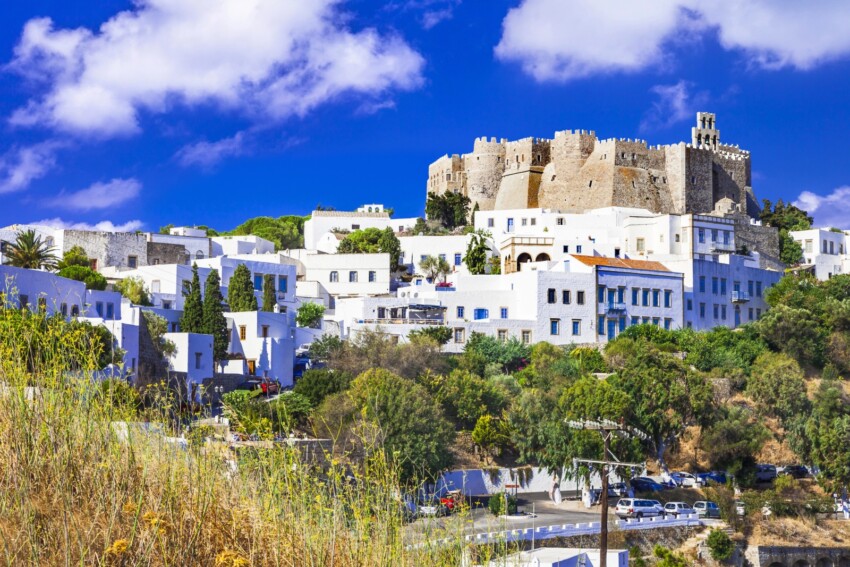
Patmos emerges from the waters of the Aegean as an island with a deeply mystical character, known throughout the Christian world as the ‘Jerusalem of the Aegean’ or the‘Holy Island’. Located in the northern part of the Dodecanese, between Leros and Ikaria, this 35-square-kilometre island is home to around 2,500 inhabitants and is one of the most important places of Christianity.
According to ancient Christian tradition, in 95 A.D. the Apostle St. John the Evangelist was exiled here by the Emperor Domitian and in a cave he received divine visions that led him to write the Apocalypse, the last book of the New Testament. The Greek Parliament has officially recognised Patmos as a Sacred Greek Island, whileUNESCO has declared the historic centre of Chora, the Monastery of St. John and the Cave of the Apocalypse a World Heritage Site since 1999.
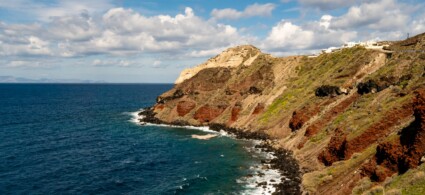
The island has a volcanic conformation articulated in three rocky blocks joined by narrow isthmuses, creating numerous bays and inlets along its 63 kilometres of coastline. Mount Profitis Ilias reaches an altitude of 269 metres, offering spectacular views of the entire Dodecanese archipelago.
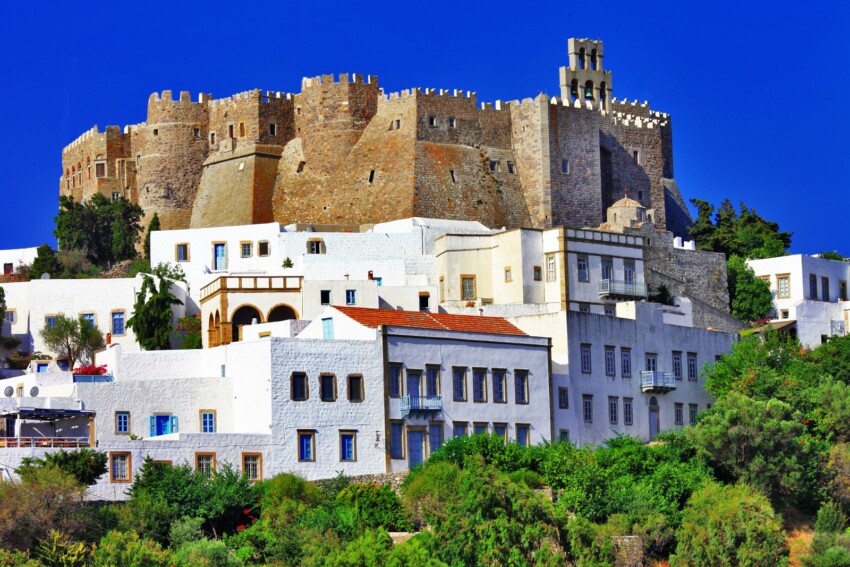
Chora is the spiritual and architectural heart of Patmos, perched on a hill 4 kilometres from the port of Skala. This medieval village, inhabited continuously for centuries, retains the charm of an open-air museum with its labyrinth of narrow white streets, hidden courtyards and panoramic terraces. The Monastery of St. John the Theologian towers majestically from above, built in the 11th century by the monk Christodoulos at the behest of Emperor Alexius Comnenus. From the outside, this fortress-monastery, which still functions today, has the appearance of a medieval castle with imposing defensive walls, while inside it houses courtyards of rare beauty, richly frescoed chapels and a museum of sacred art displaying Byzantine icons, sacred vessels, 9th century embroidery and priceless illuminated manuscripts. The monastic library preserves part of the 6th century Gospel of St Mark, written in gold and silver lettering on purple parchment.
The Cave of the Apocalypse is located halfway between Skala and Chora, transformed into a sanctuary that attracts pilgrims from all over the world. Descending 40 steps to a depth of 4 metres, one reaches the underground chamber where St John received divine revelations. A silver halo highlights the spot where the apostle rested his head while resting, while a silver frame indicates where he rested his hand to get up. The triple cleft in the rock symbolises the Holy Trinity, from which, according to tradition, the voice of God came out. In the 17th century, a monastery was built around the cave, which preserves the mystical atmosphere of the place.
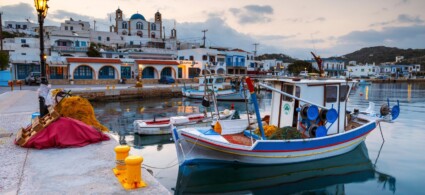
The Monastery of Zoodochos Pigi, half-hidden among the narrow streets of Chora, was founded in 1607 as a shelter for widows, orphans and persons with disabilities. The monastery museum exhibits 220 icons from the 14th to the 19th century, while the fresco of the Virgin Mary of Eleousa from 1763 is considered miraculous. Skala is the harbour and vital centre of the island, with its lively promenade lined with traditional taverns, cafes and exclusive boutiques. The main square is the social heart of the island, while nearby is the Baptistery where St John baptised the locals.
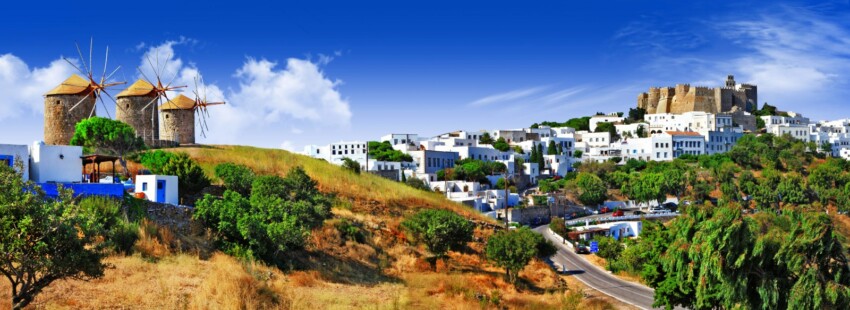
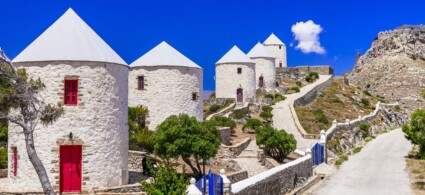
The three windmills on the road between Skala and Chora, built between the 17th and 19th centuries and restored in 2012, offer some of the most iconic images of Patmos against the backdrop of the Aegean Sea. The Kastelli conceals the remains of the ancient acropolis with Hellenic walls from the 4th-3rd century B.C. made of black stone, evidence of the classical Greek presence on the island.
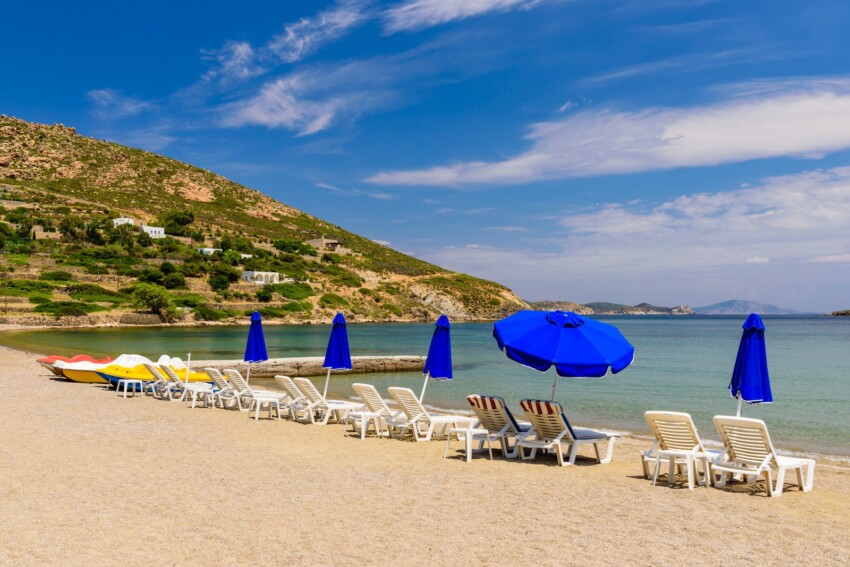
The more than 20 beaches of Patmos are spread out along an articulated coastline that offers ever-changing scenery, from sheltered bays to sandy expanses open to the sea. Psili Ammos is one of the pearls of the island, reached by a 30-minute walk from the south-western end via a scenic path. This sandy bay with fine white sand and turquoise Caribbean waters is protected by numerous tamarisk trees that provide natural shade. A tavern with tables planted directly in the sand serves simple dishes in a dreamlike setting.
Kambos stands out as the most popular and best-equipped beach on the island, with a long stretch of sand served by umbrellas, sunbeds, tavernas and beach bars. The famous George’s Place organises beach parties during full moon nights, while water sports facilities and the Seatrac system for people with disabilities make this an ideal destination for families. Regular bus connections to Skala facilitate access, while the village of the same name 600 metres away offers traditional tavernas and a pretty white church.
Grikos is built around a picturesque fishing village 5 kilometres from Skala, protected by the islet Tragonisi that creates a lake-like environment. The calm, shallow waters, together with the sand mixed with pebbles and excellent tavernas, make this a perfect destination for families. Legend has it that St John baptised the island’s inhabitants here, adding a touch of sacredness to the seascape.
Lambi charms visitors with its colourful pebbles that create a natural mosaic along the shore. Located 7 kilometres north of Skala, this beach offers an excellent taverna specialising in fresh fish, with tables set right on the shore. The northern exposure can make the sea rough during northerly winds, but on calm days it is an unforgettable sight.
Livadi Geranou is characterised by cool, crystal-clear waters ideal for snorkelling, while tamarisk trees provide plenty of shade. On calm days, it is possible to swim to the islet of St George, turning swimming into an adventure. Vagia offers a long, quiet beach with very cold but crystal-clear waters, while Didimes (the Twins) has two almost identical coves that can be reached by a 15-20 minute walk along a dirt path.
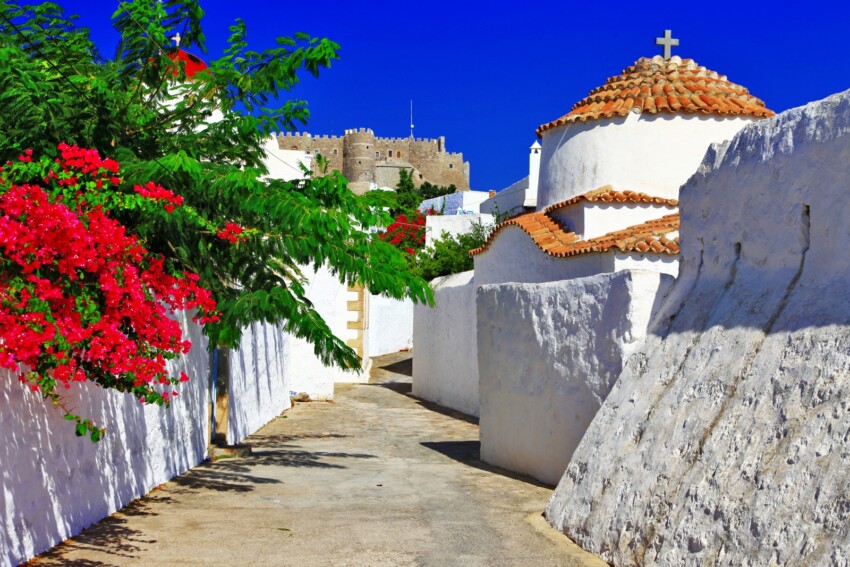
The accommodation on Patmos is characterised by high quality and a refined atmosphere, with facilities distributed mainly between Skala and Grikos. Skala concentrates most of the hotels and guesthouses, offering the convenience of being close to the harbour, restaurants and essential services. Accommodation ranges from luxury boutique hotels to traditional studios run by local families.
Grikos has seen an increase in supply in recent years, with facilities of various levels including luxury solutions overlooking the sheltered bay. Chora offers few but exclusive accommodations immersed in the medieval atmosphere of the historic village. During the high season, it is essential to book well in advance, considering that Patmos attracts a particularly loyal quality of tourism.
We offer a selection of hotels at Patmos to suit all categories of travellers. The most booked by tourists are the sea-facing hotels, often right on the beach. If you want to play it safe, choose one of the following: they are among the most booked hotels in Patmos, sorted by number of reviews.
If you prefer space, privacy and the ability to prepare your own meals to a hotel holiday, book a holiday home at Patmos. We recommend a few below, but in this case we advise you to book early because houses and apartments for rent at Patmos are in high demand.
Patmos has no airport, so the only access is by sea via ferries and catamarans connecting the island with various Greek and international destinations.
The quickest and most convenient option involves a flight to Kos Airport, followed by daily ferries from Kos to Patmos. The port of Kos is about 45 minutes from the airport and connections take 2-3 hours to reach Skala.
Direct ferries from Athens leave from the port of Piraeus with Blue Star Ferries, taking 7-9 hours depending on the type of vessel. Connections operate 3-4 times a week during the summer season, decreasing in winter.
Patmos is well connected with Leros (1 hour), Kalymnos (2 hours), Rhodes (4-5 hours), as well as Samos, Mykonos and Tinos during the tourist season. Some travellers use the connection from Bodrum (Turkey) with daily ferries.
Patmos is located in the northern Dodecanese, 37 nautical miles from Kos to the northeast and 25 miles from Leros to the south. The island is 163 nautical miles from Piraeus and lies 12 miles off the Turkish coast, in a location that has always favoured pilgrimages and cultural exchanges in the eastern Mediterranean.
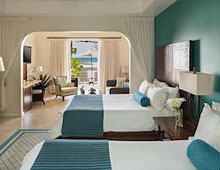 Hotel
Hotel 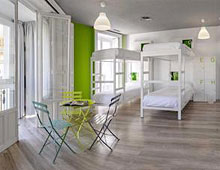 Budget accommodations
 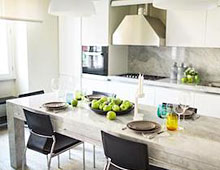 Apartments
  Family Hotel
 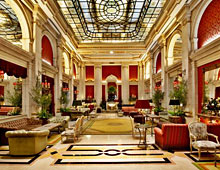 Luxury Hotel
  Resorts