Rhodes: Speedboat Trip to Symi with Free Time to Explore
4.268 reviews
Buy now
From 30,00€ per person
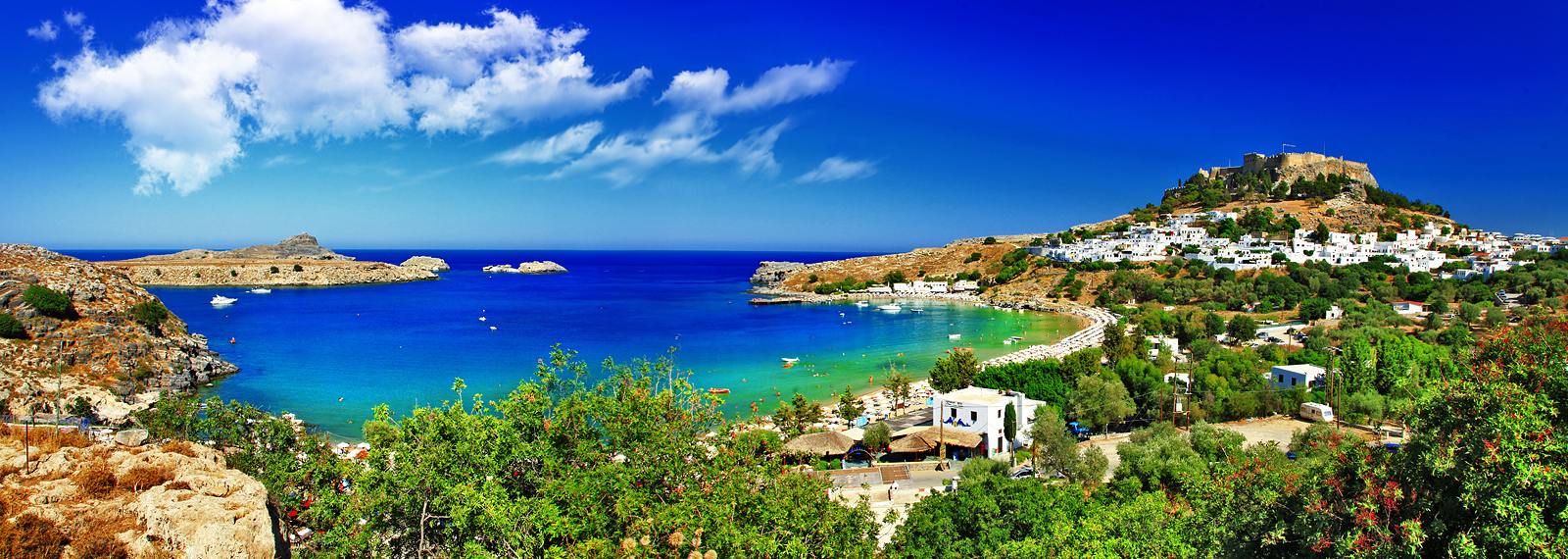
In Rhodes, one’s gaze is already turned towards Turkey, yet the island is profoundly, undeniably and proudly Greek. An island of myth (remember the famous Colossus?), it was one of the first Greek islands to be colonised by tourism and is still one of the most popular.
No wonder: situated in the southern Aegean, with a sea of the typical blue colour that has made Greece’s seaside resorts so popular, Rhodes is a large island (about 100 km between the northern and southern tips) with a history stretching back thousands of years, offering international travellers a wide variety of attractions.
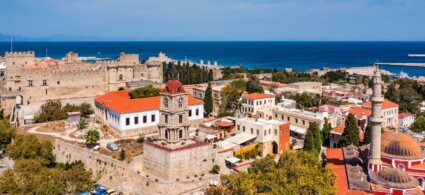
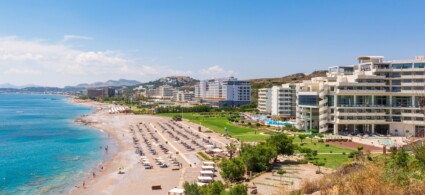
True, most tourists come here for the beaches: many, beautiful, for all tastes. But here, sunbathing and diving can be interspersed with interesting cultural visits (perhaps to the historic quarters of Rhodes Town or the archaeological site of Kamiros), days of fun in the theme parks or nightclubs of Faliraki, exciting boat trips to the neighbouring island of Symi or refreshing walks in the inland forests.
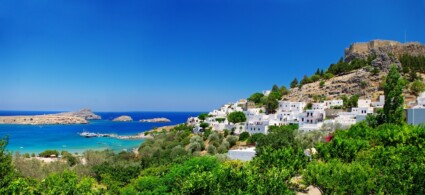
Don’t miss the enchantment of Lindos, the romantic town that of all Rhodes’ resorts best embodies the image of picture-postcard Greece with its cascade of white cottages sloping down to a blue sea and delightful little restaurants with roof terraces.
In short, Rhodes is an all-inclusive island: for the price of a single holiday you get relaxation, fun, romance, culture, nature and gastronomic delicacies combined with the friendliness and joie de vivre that characterise the Greek people. An ideal destination for everyone: young people, families, couples, solo travellers, groups of friends.
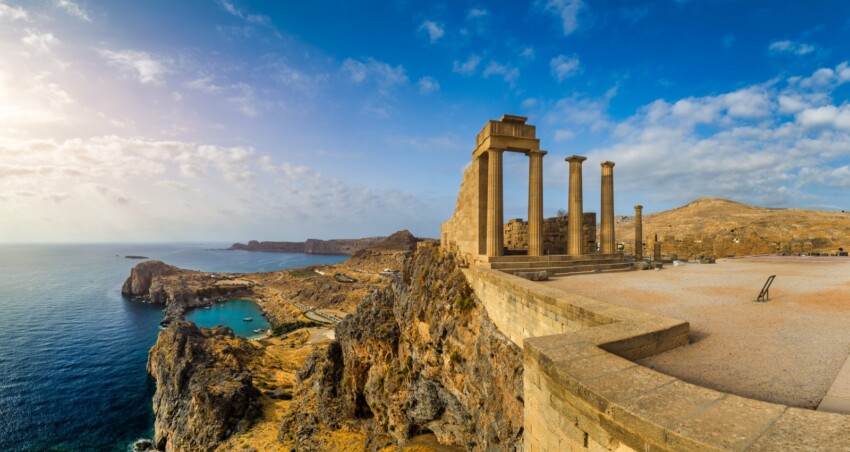
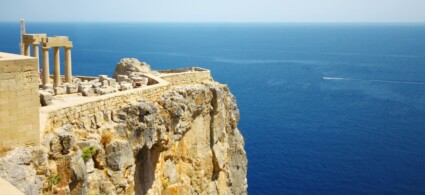
Rhodes offers an extraordinary historical and natural heritage that combines evidence of different civilisations with breathtaking landscapes. The city’s medieval old town, a UNESCO heritage site, houses the magnificent Grand Master’s Palace and the Street of the Knights, while the ancient Acropolis of Lindos dominates the sea from its 116-metre height with the Doric temple of Athena Lindia.
Archaeological sites on the island include the ancient Kamiros, a perfectly preserved Doric city, and the Acropolis of Rhodes with its Hellenistic stadium and the remains of the temple of Apollo. The island also surprises with its natural landscapes: from the Valley of the Butterflies, a natural sanctuary where thousands of butterflies create a unique spectacle, to the Seven Springs with their cool spring waters.
The medieval castles of Kritinia and Monolithos, perched on rocky promontories, offer spectacular views and bear witness to the island’s crusader past. The picturesque villages in the hinterland retain an authentic Greek atmosphere, while every nook and cranny tells a thousand-year history ranging from Greek mythology to the medieval crusades.
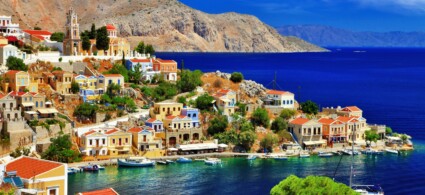
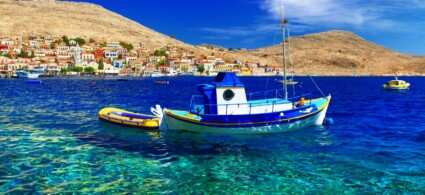
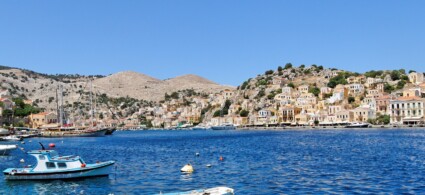
The most typical excursion is certainly by boat to the island of Symi, not far from Rhodes; however, you can also take part in a guided day tour to inland attractions such as Kallithea or the Valley of the Butterflies.
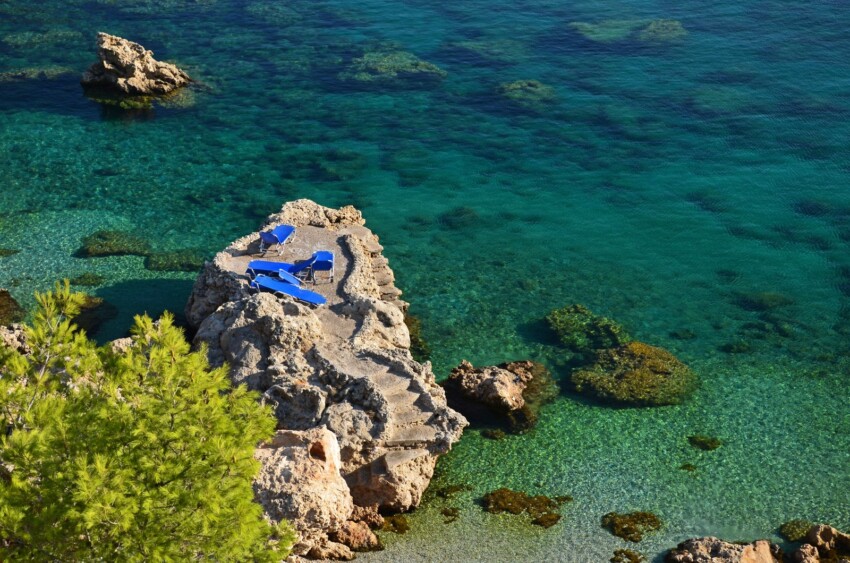
The beaches of Rhodes offer an extraordinary variety of coastal landscapes that satisfy every type of traveller. The west coast, exposed to the Meltemi winds, offers wild scenery and waves perfect for water sports, while the east coast boasts crystal-clear waters and sheltered coves ideal for relaxation.
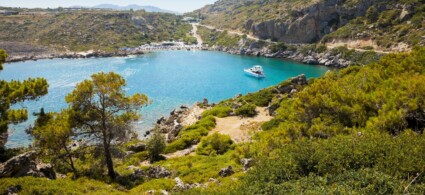
Among the island’s pearls are Anthony Quinn Bay, a small inlet with turquoise waters surrounded by red rocks, and the famous Faliraki, renowned for its lively nightlife and water activities. No less fascinating are the beaches of Lindos, with the picturesque heart-shaped bay of St Paul’s opening at the foot of the acropolis.
The south coast surprises with Prasonisi, where the two seas meet, creating a unique natural spectacle that is particularly popular with surfers. The hidden coves along the east coast, such as Ladiko and Tsambika, offer quiet retreats away from the crowds, while the wide sandy expanses of the west coast offer unforgettable sunsets over the Aegean Sea.
Rhodes is a very large island, so it is a good idea to choose carefully where to stay to avoid spending many hours of your holiday commuting by car.
Most resorts are located along the east coast; of these, the two most famous are Lindos and Faliraki.
Lindos is the most beautiful and romantic town on the island, with a quaint old town and enchanting beaches; Faliraki is the most popular seaside resort, with plenty of hotels, bars, shops and clubs. It is recommended for families who want service and comfort and for young people looking for nightlife.
The city of Rhodes, the island’s capital, is located on the northern tip and has something for everyone with its many cultural attractions, well-equipped beaches and nightlife districts.
The west coast is particularly popular with surfers and tourists who want the comfort of an all-inclusive resort.
We offer a selection of hotels at Rhodes to suit all categories of travellers. The most booked by tourists are the sea-facing hotels, often right on the beach. If you want to play it safe, choose one of the following: they are among the most booked hotels in Rhodes, sorted by number of reviews.
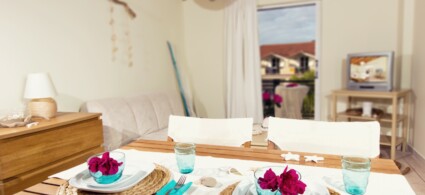
If you prefer space, privacy and the ability to prepare your own meals to a hotel holiday, book a holiday home at Rhodes. We recommend a few below, but in this case we advise you to book early because houses and apartments for rent at Rhodes are in high demand.
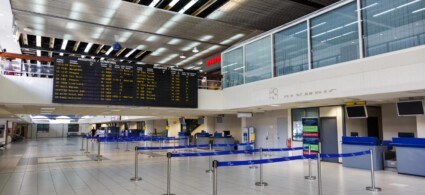
Despite being one of the Greek islands furthest from the rest of Europe, Rhodes is one of the easiest to reach. The reason is simple: the island has an international airport served by numerous low-cost flights. Getting to Rhodes is therefore very easy, just take a direct flight and in just over two hours you are already at your destination!
It’s a different story if you want to travel by ferry: you first need to arrive in Athens and then take a ferry from the port of Piraeus. This is a very long journey and much more expensive than a direct flight.
Instead, there are direct ferries to/from all the islands of the Dodecanese, with daily or weekly departures depending on the island.
The best way to get around Rhodes is to rent a car. This way you can explore the island freely, leaving when you want and stopping whenever you want. Keep in mind that many of the most beautiful beaches are difficult or impossible to reach by public transport.
There is a local bus service run by the Ktel company that touches all the main locations on the east and south coasts of the island, including some inland towns. However, services are not very frequent, so it is important to enquire about timetables before travelling.
Taxis are reasonably priced and are certainly a better option for getting to the airport, especially if there are two or three of you sharing the expense.
The easiest way to get around the island without a car is to use the hop on hop off tourist buses. The one-day or multi-day ticket allows unlimited travel with stops at the island’s main tourist attractions.
What's the weather at Rhodes? Below are the temperatures and the weather forecast at Rhodes for the next few days.
Rhodes is the easternmost of the inhabited islands of Greece. It is part of the Dodecanese, an archipelago of Greek islands washed by the Aegean Sea that are closer to Turkey than to mainland Greece: Turkey's coastline is less than twenty kilometres from Rhodes, while Athens is more than 500 km away!





 Hotel
Hotel  Budget accommodations
  Apartments
  Family Hotel
 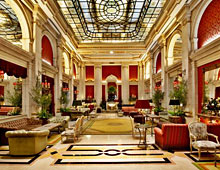 Luxury Hotel
 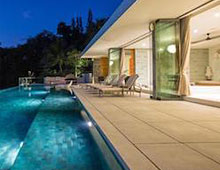 Resorts