Bestseller
Rhodes: High-Speed Boat to Symi Island & Saint George's Bay
From 59,00 €
Buy the ticket
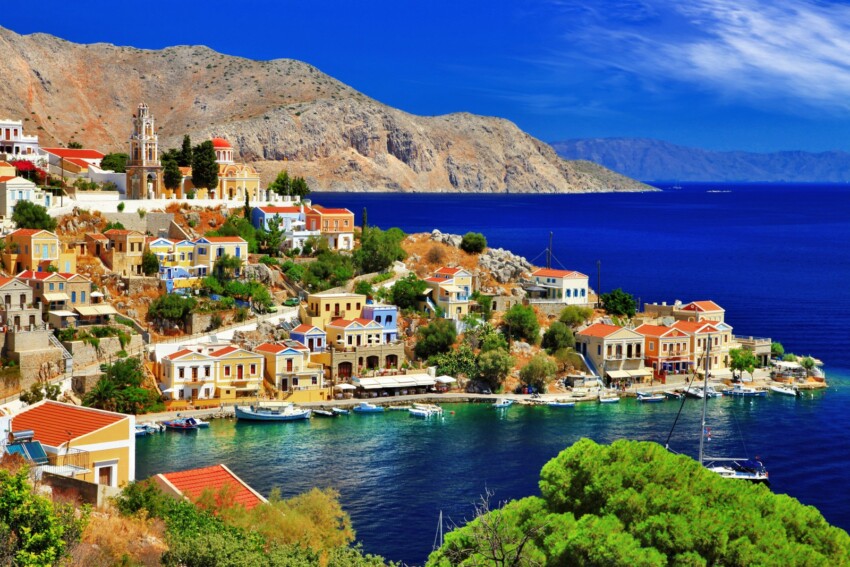
Symi is a true jewel of the Dodecanese, located just 41 kilometres north of Rhodes and 5 kilometres from the Turkish coast. This picturesque island distinguishes itself from classic Cycladic destinations by its multicoloured neoclassical architecture, which provides visitors with a unique experience among Greek islands.
The island boasts an area of 68 square kilometres and is home to approximately 2,600 inhabitants, mainly concentrated in the charming capital Gialos. Symi’s mountainous configuration, with Mount Vigla reaching an altitude of 616 metres, creates spectacular landscape contrasts between the crystal-clear waters of the Aegean Sea and the rocky reliefs that plunge straight into the sea.
According to Greek mythology, Symi owes its name to the nymph bride of Poseidon, also considered the birthplace of the Three Graces. The island’s rich history is still reflected today in its well-preserved architecture and the maritime traditions that continue to characterise local life.
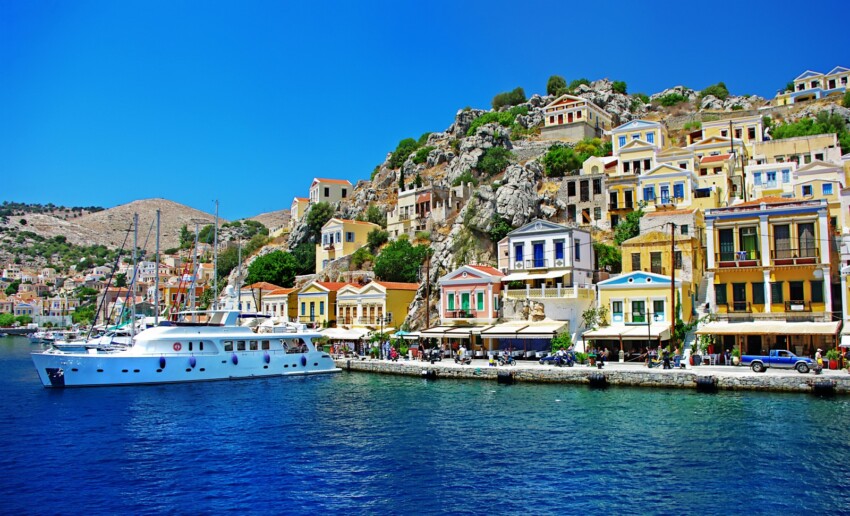
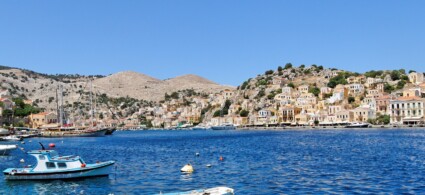
Gialos constitutes the beating heart of Symi and is one of the most photographed harbours in the Dodecanese. The natural harbour is set in a deep rocky inlet, so much so that during World War II it was used as a base for Italian submarines. Neoclassical houses in pastel colours – from ochre yellow to Venetian red, emerald green to cobalt blue – climb the hillside, creating a natural amphitheatre of rare beauty.
Elegant cafés, traditional taverns and local craft shops line the promenade. The Clock Tower, built in 1884, dominates the main square and is a landmark for finding one’s way through the maze of alleys leading up to the upper part of the village.
Connected to Gialos by the historic Kali Strata staircase of over 500 steps, Ano Symi represents the oldest part of the settlement. This medieval village, abandoned for decades and revived in recent years, retains the atmosphere of the past amid traditional stone houses and cobbled streets.
The Castle of the Knights of St. John, built in the early 15th century on the foundations of a Byzantine fortification, offers breathtaking views of the island and the surrounding sea. Nearby is the Archaeological and Folklore Museum, housed in the former palace of the Hatziagapiditis family, which contains valuable artefacts from the Classical to Byzantine periods.
23 kilometres from Gialos, in the southern bay of the island, stands the Monastery of Archangel Michael Panormitis, the most important sanctuary in Symi. Founded in the 15th century on an ancient temple dedicated to Apollo, the monastery is an important centre of pilgrimage for Orthodox believers throughout the Aegean.
The interior of the monastery houses Byzantine frescoes of considerable artistic value and the miraculous icon of the Archangel Michael, unique in Greece for its natural size. Tradition has it that the faithful bring brooms to the feet of the icon, asking the archangel to metaphorically ‘cleanse’ their lives, and then bring them home as a blessing.
The monastery complex also includes two interesting museums: one houses liturgical objects, silver icons and sacred vestments, while the other exhibits a collection of popular art and maritime traditions.
Symi is one of the most popular day trips from Rhodes, perfect for those who wish to discover the authentic beauty of the Dodecanese without changing base. Numerous companies organise guided tours that combine sightseeing with relaxing on the most beautiful beaches.
Tour operators in Rhodes offer complete excursions that include a fast catamaran transfer, a guided tour of Gialos and Chorio, free time for swimming and a traditional lunch. The standard duration is 8-10 hours with departure from the port of Mandraki at 9:00 am and return around 6:00 pm.
During the 50-minute cruise, guides provide historical information about the archipelago and sites of interest. Many excursions include a stop at the Panormitis Monastery to admire the Byzantine frescoes and the miraculous icon of the Archangel Michael.
Marathounda is one of Symi’s most distinctive beach destinations. This natural bay with crystal-clear waters is distinguished by the wild goats that freely descend to the shore, creating a unique atmosphere in the Mediterranean. The beach of pebbles and coarse sand is partially equipped with free sun beds and umbrellas.
The local tavern offers fresh fish specialities in a genuine environment, far from mass tourism. Accessibility is by land via a 15-minute scenic road from Panormitis, or by taxi boat from Gialos with regular departures in the summer months.
Agia Marina consists of a small sandy beach on the mainland and a charming rocky islet that can be reached by swimming, where a small chapel stands. The clear turquoise waters make this stretch of coastline ideal for snorkelling and diving.
The beach is equipped with a beach bar and restaurant, while the islet offers shallow waters perfect for families with children. The connection from Pedi requires a 20-minute walk following the red circles painted on the rocks, or you can opt for taxi boats that depart from both Gialos and Pedi.
The bay of Pedi, only 2 kilometres from Gialos, is one of the most popular locations for families. This small fishing village is built around a well-organised pebble beach with calm waters and full facilities.
The village retains its traditional character with blue and white houses reflected in the sea, while local tavernas serve freshly caught fish. The bus connection every 30 minutes with Gialos (cost 2 euro) makes Pedi easily accessible even without one’s own transport.
Considered the most spectacular beach in Symi, Agios Georgios Dysalonas (St George) is hidden in a narrow inlet on the west coast of the island. Access is only possible by sea, making this destination a true paradise for those seeking absolute tranquillity.
Turquoise waters contrast beautifully with the high cliffs surrounding the bay, while a small monastery perched on the cliffs completes the picture-postcard view. The absence of services requires one to carry water and food for the entire day.
Most accommodation is concentrated in Gialos, where you will find boutique hotels, family pensions and traditional flats. Prices are generally higher than on other Dodecanese islands, reflecting the exclusivity of the destination and the limited accommodation capacity.
Pedi offers quieter alternatives with some facilities directly overlooking the bay, ideal for those seeking relaxation and contact with nature. Advance bookings are strongly recommended, especially for the months of July and August when availability becomes limited.
We offer a selection of hotels at Symi to suit all categories of travellers. The most booked by tourists are the sea-facing hotels, often right on the beach. If you want to play it safe, choose one of the following: they are among the most booked hotels in Symi, sorted by number of reviews.
If you prefer space, privacy and the ability to prepare your own meals to a hotel holiday, book a holiday home at Symi. We recommend a few below, but in this case we advise you to book early because houses and apartments for rent at Symi are in high demand.
The most frequent and convenient connection to Symi is from the port of Rhodes. Two companies offer regular services: Dodekanisos Seaway (50 minutes) and Anes Ferries (1 hour 30 minutes). During the summer, up to 4 daily departures are available. Rhodes Airport is about 45 minutes from the main port, which is easily reached by regular bus services, taxis or private transfers.
Direct connections from Athens depart from the port of Piraeus with Blue Star Ferries, taking 11-16 hours depending on the type of vessel. Departures are guaranteed 2-4 times per week during the summer season.
Symi is well connected with the main islands of the archipelago: from Kos the journey takes 1.5-3 hours, while from Kalymnos it takes about 2 hours. During the summer there are also connections with Karpathos and other smaller destinations.
What's the weather at Symi? Below are the temperatures and the weather forecast at Symi for the next few days.
Symi is located in the southern part of the Dodecanese archipelago, 41 kilometres from Rhodes to the north and 158 kilometres from Kos. Its proximity to Turkey (just 5 kilometres) has historically influenced the island's trade and cultural exchanges.
 Hotel
Hotel  Budget accommodations
  Apartments
  Family Hotel
  Luxury Hotel
  Resorts