Port of Piraeus
From Piraeus port in Athens ferries leave for the Greek islands, but not only. Here is how to get to the port from the centre of Athens plus other useful info.
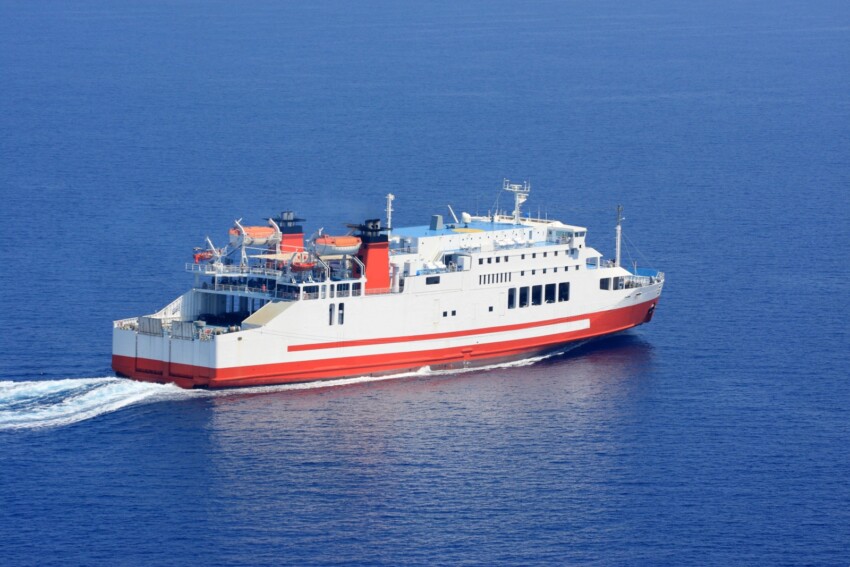
Every year, millions of European travellers choose to take a ferry to reach Greece, preferring the comfort of a ship to flying, so they can enjoy the journey from the very first moment. This is a choice with ancient roots: the sea routes between Southern Europe and the Greek peninsula are among the most frequently used in the Mediterranean, connecting ports such as Ancona, Bari, Brindisi and Venice to Greece’s main ports of Patras, Igoumenitsa and Corfu.
The crossing is not merely a means of transport: it’s a holiday in itself. Setting off in the evening, dining on board while watching the sunset over the Adriatic and waking up with the Greek coast on the horizon is an experience that no budget airline can offer. For those travelling by car or motorhome, the ferry represents the only truly practical alternative.
In this guide, you’ll find all the information you need to organise your trip perfectly: the available routes, the shipping companies, the types of on-board accommodation, indicative prices and tips for making the most of your crossing.
Maritime connections between Europe and Greece are concentrated almost exclusively on the Adriatic route, with Italian ports serving as the main departure hub for travellers coming from Central and Western Europe. However, there are also routes from other countries that are worth knowing about.
The Ancona–Patras route is the longest of the main Adriatic routes (approximately 500 km) and the most used by travellers arriving from Central and Northern Italy. The crossing takes between 20 and 22 hours depending on the ship and intermediate stops: many ferries call at Igoumenitsa before arriving at Patras, making it possible to disembark in that city as well.
From Bari, ferries depart heading directly to Patras (approximately 15 hours), Igoumenitsa (approximately 8 hours) and Corfu (approximately 9 hours). It’s the main port for travellers from Southern Italy and is well connected to the motorway network. Ferries from Bari are generally overnight services, which allows you to save time without losing a night’s accommodation.
From Brindisi, a port historically linked to Greece since Roman times, ferries depart for Corfu (approximately 7 hours) and Igoumenitsa (approximately 9 hours). The shorter crossings from Brindisi are very popular with those who want to minimise time on board. The port is easily accessible by car via the A14 motorway.
From Venice, you can reach Igoumenitsa and Patras in approximately 30–34 hours of sailing. It’s the ideal route for those coming from northeast Italy, Austria, Slovenia or southern Germany. Departing from Venice has the added appeal of sailing along the Croatian coast, and many ferries stop at Trieste, Bar, Corfu or Igoumenitsa.
From Trieste, there are seasonal connections to Greece, often in combination with services from Venice operated by the same companies.
For travellers coming from the Balkans, there are ferry connections from Bar (Montenegro) to Bari, from which you can then continue to Greece, or travel overland through Albania and North Macedonia. From Ancona port you can also reach Croatia and then take another ferry to Greece, though this is a less direct route.
From Albania, the port of Vlorë (Vlona) offers fast ferries to Corfu in less than 90 minutes: a practical solution for those entering Greece via the overland Balkan route.
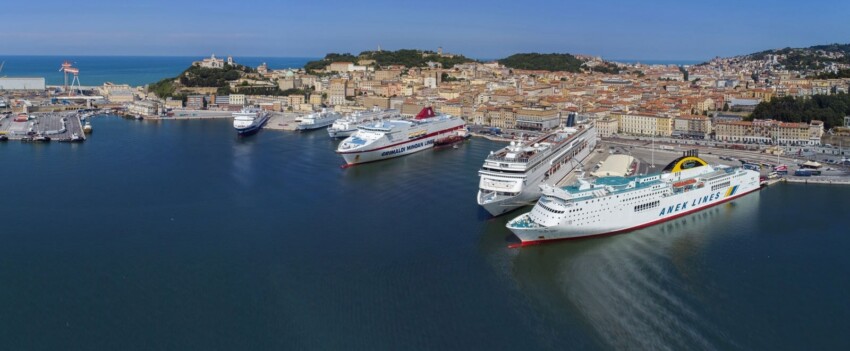
There are basically four Italian ports from which you can take a ferry to Greece, and naturally they are all positioned along the Adriatic coast: Venice, Ancona, Bari and Brindisi.
All these cities offer direct connections to ports on mainland Greece and the island of Corfu; services operate year-round but additional lines are introduced during the summer months. From Bari and Brindisi, ferries also depart for other Ionian islands.
The Apulia ports are the closest to Greece and for this reason they are preferred not only by those living in the area but also by those who don’t enjoy long sea voyages.
Situated in a strategic position in the centre of the Adriatic Sea, Ancona port is one of the most important Italian ports for international vehicle and passenger traffic.
Ancona–Igoumenitsa–Patras is the main ferry route from Italy to Greece. The duration of the sea journey from Ancona to Greece can vary from a minimum of 15 hours (if the destination is Igoumenitsa or Corfu) to more than 21 hours (Patras).
The port is located right next to the city centre, just 2 km from the railway station.
Reaching Ancona port by car is very straightforward. Simply take the A14 motorway, exit at Ancona Nord or Ancona Sud (depending on your direction of travel) and follow the signs for Ancona/Porto Imbarchi (Port Embarkation).
If you prefer to reach Ancona port by public transport, you won’t have any difficulty. The port and railway station are connected by local bus lines with frequent services (approximately every 20 minutes). From the check-in terminal, you can reach the quays via a free shuttle bus operating from late morning until late afternoon with departures approximately every 15 minutes.
The passenger terminal of the maritime station offers numerous services, including internal ticketing, baggage storage and baggage transport service.
Bari port is a strategic hub for connections between Italy and the entire Balkan region. With regard to connections to Greece, in addition to direct ferries to Igoumenitsa, Patras and Corfu, which are also available from central and northern Adriatic ports, Bari port offers seasonal connections to the islands of Zante and Kefalonia.
The duration of the sea journey from Bari to Greece varies from a minimum of 8–9 hours (Igoumenitsa and Corfu) to more than 19 hours (Zante); the crossing to Patras is around 16 hours.
The port is located in the centre of Bari, right next to the Old Town. Reaching Bari port by public transport is easy: Bari Centrale railway station is 6 km away and is connected by local buses; from the Maritime Station bus stop you can reach the passenger terminal comfortably on foot.
If you want to reach Bari port by car, we recommend taking the Bari–Bologna ring road (SS16), exiting at junction 4 Fiera/Port and following the signs from there.
The passenger terminal of the maritime station has essential services.
Brindisi port is absolutely the closest to Greece: from here, you can reach the island of Corfu in less than seven hours. Like Bari, Brindisi also offers both year-round connections to the main ports of Igoumenitsa, Corfu and Patras and seasonal connections to Zante and Kefalonia.
The duration of the sea journey from Brindisi to Greece ranges from a minimum of 6 hours and 30 minutes (Corfu) to a maximum of 19 hours (Zante). The crossing to Igoumenitsa takes approximately 8 hours, while Patras requires around 16 hours.
Brindisi port is multi-purpose, meaning it includes quays dedicated to ferry arrivals and departures, others reserved for cruise ships and still others for commercial cargo vessels. It is located approximately 4 km to the east of the city’s historic centre and is situated opposite the Salento Airport, which occupies the opposite shore of the same gulf.
For those wanting to reach Brindisi port by car from northern Italy, the main artery is the A14 motorway. If instead you’re coming from or want to reach the Ionian and Tyrrhenian regions, the connections are: SS7 to/from Taranto, SS106 to/from Calabria, the expressway to Potenza to/from Salerno and Naples.
The port area cannot be reached by bus. If you want to reach Brindisi port by public transport, we recommend taking a train to the central station and from there moving on by taxi. The distance is only 4 km, so the cost won’t be excessive.
Do you dream of departing for your Greek holiday from Venice so you have the chance to see the marvellous lagoon city unfold before your eyes? Be aware that Venice’s ferry port and Venice’s cruise port are not the same.
The former, which is also where ferries to Greece depart from, is not located in the historic centre but in Fusina, an area of the mainland approximately 20 km from Piazzale Roma, the nerve centre of Venice’s centre beyond which it’s no longer possible to travel by car or bus.
From the Fusina area, both international ferries and shuttle boats to Alberoni Beach on the Lido island depart: these are two different departure points, 1.5 km apart: make sure to follow the “ferry” signs. The official name of the port you’re interested in is Terminal Venice Ro-Ro but on road signs it’s called Terminal Fusina Ferries, which is where the confusion with the shuttle boat departure point arises.
The duration of the sea journey from Venice to Greece is very long and can vary from a minimum of 24 hours (Igoumenitsa and Corfu) to more than 30 hours (Patras).
To reach Venice/Fusina ferry port by car, you don’t need to pass through Veneto’s main city. It’s recommended that you exit the A57 motorway (more commonly known as the Mestre bypass) at Venice–Mestre and follow the direction towards Ravenna until you encounter the signs for Terminal Fusina Ferries.
If you want to reach Venice ferry port by public transport, you have two options. You can arrive by vaporetto (water bus) from Venice’s historic centre and from the Lido island (line 16 and Fusina Circular line). The other option is to arrive by train at Venice–Mestre and from there continue by local bus; the stop is located approximately 250 metres from the railway station.
The maritime terminal is very small and equipped with essential services. There are no food outlets or baggage storage facilities.
Patras is Greece’s main international port and the primary point of entry by sea for European travellers. Located in northwestern Peloponnese, the city is connected to Athens by an excellent motorway (approximately 210 km, 2.5 hours’ drive) and is situated close to the Gulf of Corinth. From the port, you can also easily reach the Ionian coast, the Ionian islands and central Greece.
The passenger terminal is modern and equipped with all the main services: currency exchange, car hire, taxis and buses to the city centre. Car hire in Patras is recommended, especially for those intending to explore Peloponnese or head towards central Greece independently.
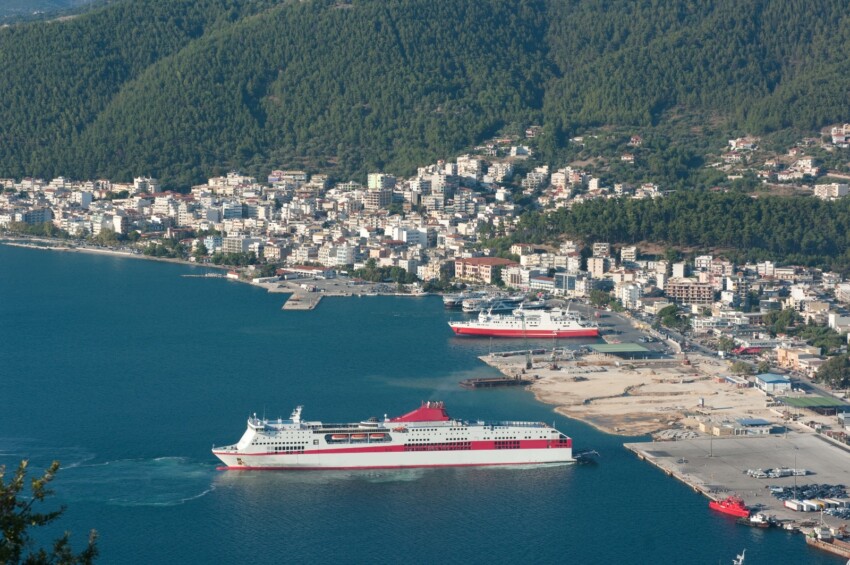
Igoumenitsa is Greece’s northernmost port and the closest to the Italian coast. The capital of the Epirus region, it’s the natural gateway for those wanting to quickly reach the Ionian islands or continue towards northern Greece and Macedonia. The Egnatia Highway, a historic Roman road today a modern motorway, starts right here and crosses all of northern Greece until Turkey.
The port is modern and functional, with various services for transiting passengers. For those disembarking at Igoumenitsa and wanting to reach Athens, the distance is approximately 470 km (5–6 hours’ drive). Ferries to Corfu depart frequently from the same port, with crossings of approximately 90 minutes.
Although technically an island and not a mainland port, Corfu is a very common intermediate stop on Adriatic routes. Many passengers disembark here already during the crossing without waiting for Igoumenitsa or Patras. The port of Kerkyra (the island’s capital city) receives large international ferries and has excellent connections to other islands and the mainland.
Some seasonal routes, particularly from Brindisi and Bari, include calls or final destinations on the Ionian islands. Kefalonia and Zante (Zakynthos) are accessible by direct ferries in summer. These are less frequent routes compared to the main ones, so it’s advisable to check availability and timetables in advance.
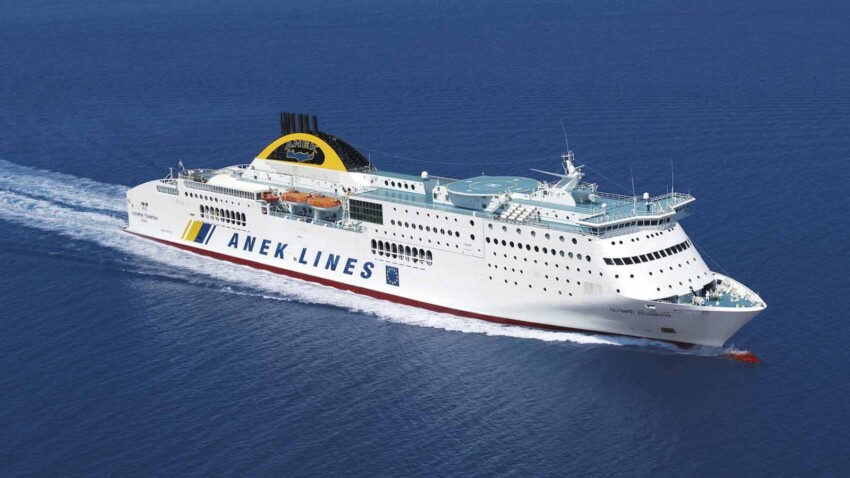
The Greek ferry market is dominated by a small group of operators that have been serving the Adriatic route for decades, ensuring high safety standards and modern fleets.
Grimaldi Lines is one of the principal operators on the Ancona–Patras and Brindisi–Igoumenitsa/Corfu routes. The Naples-based group operates large ships equipped with private cabins, restaurants, bars, outdoor pools and spacious vehicle garages. It is often recommended as the best choice for value for money.
Minoan Lines operates mainly on the Venice–Ancona–Igoumenitsa–Patras route with high-quality ships. The company’s vessels are among the largest and most modern in service on the Adriatic, featuring extensive common areas, self-service and à la carte restaurants, and quality accommodation.
Superfast Ferries, now part of the Attica group, is known for the speed of its ships and good on-board services. It operates from Ancona, Venice and Bari to Patras and Igoumenitsa. The name reflects the fleet’s defining characteristic: the fastest crossings available on the Adriatic route.
Jadrolinija is the main Croatian shipping company and offers routes from Ancona and other Italian ports to Dalmatia, with connections to Greece in combination with other operators. It is particularly useful for those wishing to combine Greece and Croatia in the same trip.
On the Bari–Igoumenitsa/Corfu route, mid-sized companies such as Ventouris Ferries also operate, and on specific routes, seasonal operators. Prices can be competitive, but it is important to verify the quality of the vessels and included services before booking.
Choosing your accommodation is one of the most important aspects to consider when booking a ferry to Greece, especially for longer crossings such as Venice–Patras.
Cabins are available in various configurations: cabins with 2, 3 or 4 bunks, often with private bathrooms in the higher categories. Cabins with portholes or windows are more expensive but provide natural light and ventilation. For long overnight crossings, they offer the most comfortable solution and guarantee adequate rest. Some companies also offer de luxe cabins with large windows, careful furnishings and additional amenities.
Reclining seats (Pullman seats or aircraft-style seats) are a more economical alternative to cabins. They are located in large air-conditioned lounges and are suitable for 8–10 hour crossings, though less recommended for journeys exceeding 15 hours. Quality varies considerably from ship to ship: on newer vessels they are spacious and recline satisfactorily.
Deck passage is the most economical accommodation option: it does not include an assigned seat and passengers can settle in the ship’s common areas with their own sleeping bag or mat. It is a popular choice among budget-conscious and younger travellers, but requires a degree of flexibility, especially if the sea is not perfectly calm. It is not always available on all ships.
Ticket prices vary considerably depending on the route, company, time of year and accommodation chosen. Generally speaking, July and August see significantly higher fares compared to the low season (October–March).
A one-way ticket in a reclining seat from Bari to Igoumenitsa can cost between €30 and €70 per person in low season, with a significant supplement for car transport (€60–120). In high season the same fares can almost double. For longer routes such as Venice–Patras, a double cabin with car included can exceed €300 per person in peak summer.
Advance booking is always advisable: in summer, seats sell out quickly, especially those for vehicles, and early booking fares are often the most competitive.
Adriatic routes operate year-round, but departure frequency varies considerably between low and high seasons. In July and August, the maximum number of daily sailings is reached on almost all routes; in winter months, some routes are reduced to just a few departures per week.
Shoulder months (May, June and September) often represent the best compromise between reasonable prices, good weather and seat availability. During these periods, the Adriatic is generally calm and temperatures allow you to enjoy the open decks during the crossing.
Those who suffer from seasickness should note that the Adriatic can be rough, especially between October and March. Modern ships are equipped with stabilisers that reduce rolling, but in case of strong winds, the crossing can be uncomfortable.
Arrive at the port at least 2–3 hours before your departure time, especially in high season. Vehicle boarding takes time and queues at port facilities can be long. Have your passport or identity card and your printed or downloaded booking confirmation readily available on your phone: connectivity at the quay is not always guaranteed.
Check vehicle restrictions: large caravans and motorhomes often require special fares and reserved space in the ship’s garage. Some ferries have height or weight limitations.
Bring a warm layer even in summer: air conditioning in indoor areas is often very intense and outdoor decks can be cold at night. Many ships have paid luggage storage near the garage, useful if you don’t want to carry all your luggage to your cabin.
Restaurants and bars on board are almost always expensive compared to on-shore prices: packing some snacks and water in your carry-on bag is always a good idea. Food quality varies widely between companies: on high-end ferries such as Minoan or Superfast you can find restaurants with good quality à la carte menus.
Disembarking at Greek ports can take time, especially in Patras during high season. Be ready to collect your vehicle from the garage at the times indicated by the announcements. If you have booked a car rental, agencies are generally located near the port exit or directly inside the passenger terminal.
The shortest crossing is from Brindisi to Corfu, which takes approximately 6–7 hours with conventional ferries. From Bari to Igoumenitsa takes around 8–9 hours. To reach Patras from Bari takes approximately 14–15 hours.
Yes, all ferries on the Adriatic routes transport cars, motorcycles, motorhomes and lorries. The vehicle supplement must be booked together with your passenger ticket. In high season, car spaces sell out quickly, so it is essential to book well in advance.
Greece is part of the Schengen area, so EU citizens can enter with a valid ID card. Non-EU citizens should check visa requirements before departure.
The main routes (Ancona/Bari/Brindisi–Igoumenitsa/Patras) operate year-round, although with reduced frequencies in winter. Some seasonal routes to the Ionian islands are active only from April/May to October.
Most modern ships offer Wi-Fi connection for a fee, with varying speeds. In the middle of the Adriatic, connectivity can be limited. It is advisable to download offline maps and entertainment before boarding.
Yes, almost all companies accept pets on board, but conditions vary: some require them to remain caged in the garage, others have pet-friendly cabins. You must book the pet place in advance and bring a microchip, health certificate and, if returning to the EU from a third country, additional certification.
Check-in takes place at the port facilities or, in some cases, online before departure. It is advisable to arrive at the port at least 2 hours before departure (3 hours in high season for those travelling with a vehicle). Companies tend to close boarding approximately 30–45 minutes before departure.
From Rome, the most convenient solution is to reach Ancona by car (approximately 3 hours on the A24/A25 or A1 motorway) and board ferries to Igoumenitsa or Patras. Alternatively, Bari is reached in approximately 4 hours and offers comfortable overnight crossings to Greece.
It depends on the type of trip. For those travelling without a car with Athens or a well-connected island as their destination, a low-cost flight is often cheaper and faster. The ferry becomes the best choice for those taking a car, travelling with family and lots of luggage, wanting to explore multiple areas of Greece, or seeking a slow and relaxed travel experience.
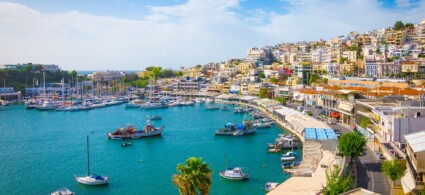
Most ferries to Greek islands depart from the Piraeus port, the main port of Athens.
 Hotel
Hotel  Budget accommodations
  Apartments
  Family Hotel
  Luxury Hotel
  Resorts