Antikythera is a Greek island located in the southernmost part of the Peloponnese not too far from Crete. The island can be reached by a four-hour boat ride from the Peloponnese, two hours from Crete and ninety minutes from Kythera.
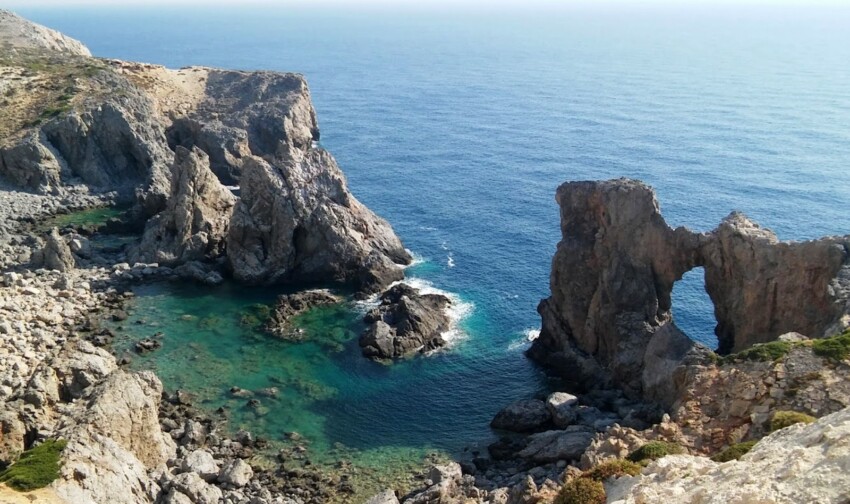
Antikythera – or Antikythera – is a small Greek island in the south of the Peloponnese located not far from the islands of Kythira and Crete. Antikythera is an island with an ancient history but its predominantly rocky and barren terrain has remained untouched and wild over time.
It is not the island for those looking for luxurious resorts, high-end restaurants or shopping outlets, but it is the ideal destination for a simple stay of relaxation and tranquillity. The island became famous in the 20th century when the wreck of a Roman ship carrying valuable objects such as statues, coins and the famous ‘Antikythera machine‘ was discovered around its shores.
Although not yet known for mass tourism, Antikythera is the perfect destination for those who love diving and snorkelling thanks to its fantastic seabed. The atmosphere here is quiet and relaxed, the main centre being Potamos where the harbour and the only settlement are located. The island is permanently inhabited by just over forty inhabitants, a number that increases somewhat during the summer season but even in the warmer central months only a few shops and the most essential services can be found here.
Antikythera is not a well-known island, so any month of the year is perfect for visiting this beautiful area. Summer is the best season because all services can be found open and active, while in winter life on the island is almost absent. Antikythera, unlike the other Greek islands that are best visited towards the beginning or end of summer to avoid the large influx of tourists, is suitable all year round.
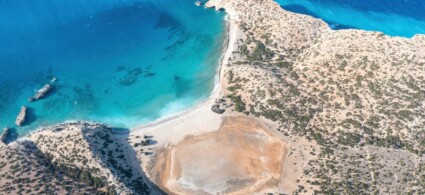
If you want to spend days of pure relaxation in an area with a peaceful atmosphere, Antikythera is the destination for you. The island is largely rocky, there are no beaches apart from a few wild coves that can be reached by boat or by walking along a few paths surrounded by Mediterranean shrubs.
To the north of the island are the remains of the stronghold of the ancient city of Aigila, once the port of Antikythera. The walls date back to the Hellenistic period and enclosed a town estimated to have had around a thousand inhabitants. Not only various archaeological artefacts such as arrowheads, small catapults and other war objects were found here, but also a statue of the god Apollo that is now housed in the Archaeological Museum of Athens. The statue allowed experts to trace the existence of a temple dedicated to the god Apollo and to find some remains of this building.
Potamos is the island’s main town and the location of its only port. According to experts, the first settlement in this area dates back to the 4th or 5th century A.D. so much so that several tombs and numerous objects similar to the presses that were used for pressing grapes and olives have been found. Hiking enthusiasts can reach the Apolitara lighthouse at the southern end of the island. The lighthouse is 23 metres high and was built in 1926. It can only be reached by boat or on foot by following an approximately 5 km long route from the small town of Galaniana.
As already mentioned, Antikythera is a lonely island and there are no equipped beaches, let alone many accommodation facilities. The most beautiful beach is that of Xiropotamos, located along the northern part of the island. Here, a narrow strip of sand and pebbles meets the deep blue sea that is frequented by divers. Other beaches on the island are Kamarela beach and the small beach of Potamos right next to the harbour.
Antikythera welcomes mostly day tourists who enjoy diving in its beautiful waters. The island apart from a few small cafés, several churches, a few grocery shops and a medical centre does not have many other services. There are private houses that rent out rooms or studios. The best way to find accommodation here is to contact the locals directly and this is often possible via the information centre on the island of Kythera.
Antikythera is not directly accessible. The easiest way to reach it is by boat from the port of Kythera. It is best to fly to Athens (which is well connected to several cities) and then from there first reach Kythera and then Antikythera by boat.
During the high season, there is also a direct connection from the port of Gythio in the Peloponnese that stops first in Kythera and then continues on to Antikythera.
Another alternative is to reach the island from Crete but these connections are only available in summer. Crete is very close to Antikythera so once you have landed at the port of Chania you only need to reach the port and then embark for Antikythera.
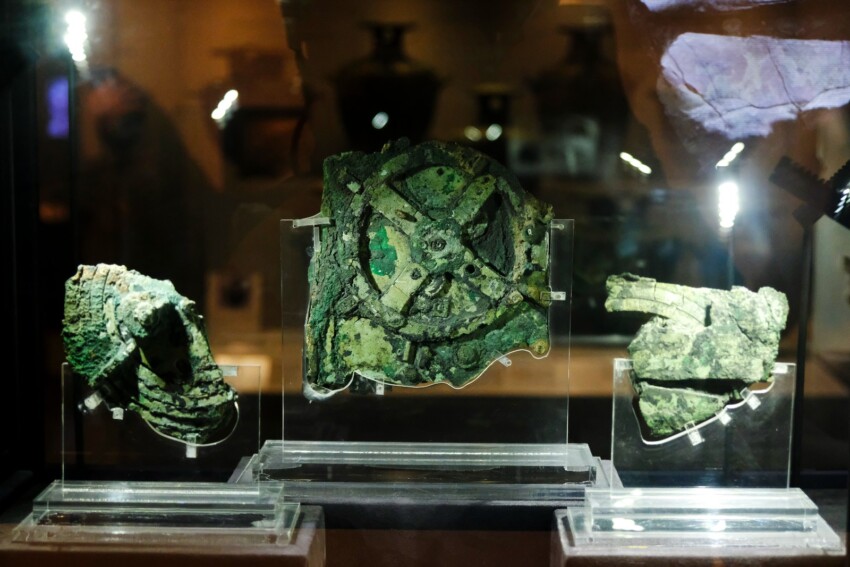
In the early 20th century, a group of fishermen searching for sponges found the wreck of a Roman ship off the coast of Antikythera. The vessel, dated around the 1st century B.C., contained valuable bronze and marble art objects inside.
Among the artefacts recovered from the wreck was also the so-called Antikythera Machine, an ancient solar and lunar calendar calculator. Preserved at the Archaeological Museum in Athens, this special machine has long been the subject of study by many experts who were initially unclear about its use and operation. Over time, the mechanism was studied and it was realised that this was a special calendar based on the knowledge that Babylonian scientists had about time and astronomy. Already at that time, they understood that the sun, moon and planets moved according to repeated cycles.
Antikythera is a Greek island located in the southernmost part of the Peloponnese not too far from Crete. The island can be reached by a four-hour boat ride from the Peloponnese, two hours from Crete and ninety minutes from Kythera.
 Hotel
Hotel  Budget accommodations
  Apartments
  Family Hotel
  Luxury Hotel
  Resorts