Corfu Town
During your holiday in Corfu, devote at least one day to the capital: Corfu Town is an elegant town with a wealth of attractions not to be missed.
Corfu is a very large island with a very long history. These two characteristics together make it an ideal destination for a complete holiday, by the sea and beyond.
When you can’t stand the heat on the beach any longer, there are plenty of things to see and do: visit interesting museums, discover the island’s ancient crafts in the inland villages, get in touch with unspoilt nature, photograph quaint little churches, be enchanted by Venetian and Viennese influences. Sunset time? It’s the ideal time to admire breathtaking views capable of bewitching princesses and emperors with their beauty and soothing their restless souls.
Visiting Corfu outside the most famous beaches is a fascinating experience, introducing you to great personalities who made European history and humble villagers whose daily routines have made the island’s traditions survive to this day.
Dry your costume and get in the car: Corfu’s top attractions await you!
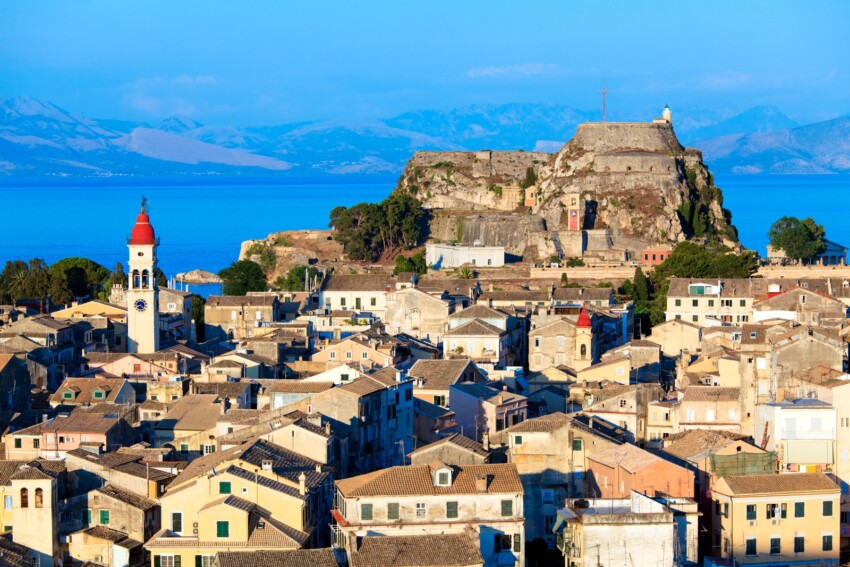
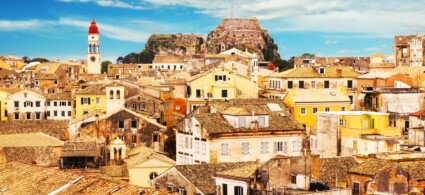
The capital of Corfu is an elegant town where traces of Venetian rule are very evident. It is an ideal base to stay in for those who want to combine sea and city life, but is also worth a visit for those staying elsewhere.
Packed with interesting museums, boutiques and lively places to have a drink while watching people go by, Corfu Town (called Kerkyra in Greek) will keep you busy for at least half a day, or more.
Attractions not to be missed are the Church of St Spiridon, easily recognisable by its distinctive red dome; the Royal Palace, the largest building in Corfu; the characteristic Cambiello quarter; the Spianada, the main square overlooked by the Old Fortress.
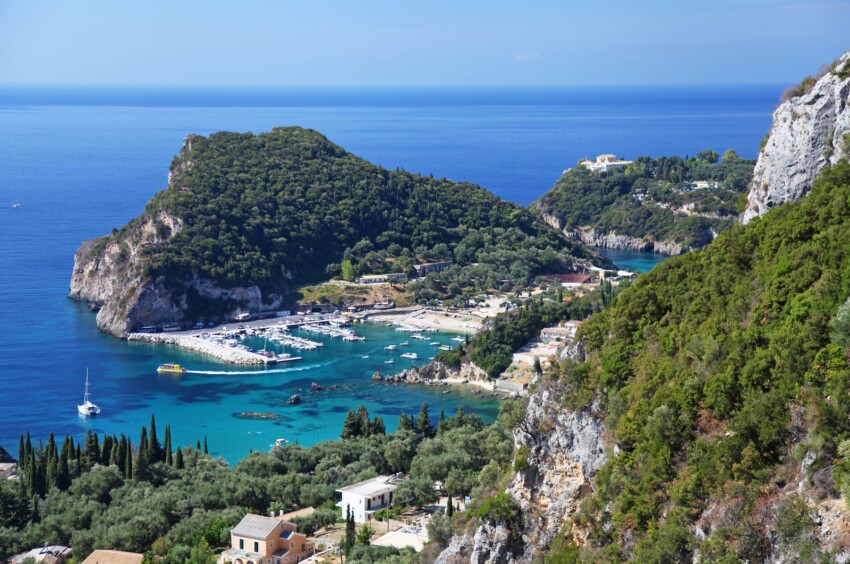
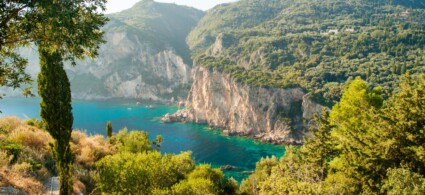
According to the locals, Paleokastritsa is the most beautiful area of Corfu, and since they certainly know a thing or two about scenic beauty, this stretch of coastline on the west side of the island is a must-see.
The area includes the beach of the same name, which is the main one and the only equipped one, and a series of paradisiacal coves and inlets that can only be reached by sea. Thanks to the taxi boat service, getting from one to the other is not that difficult: it is worth seeing as many as possible!
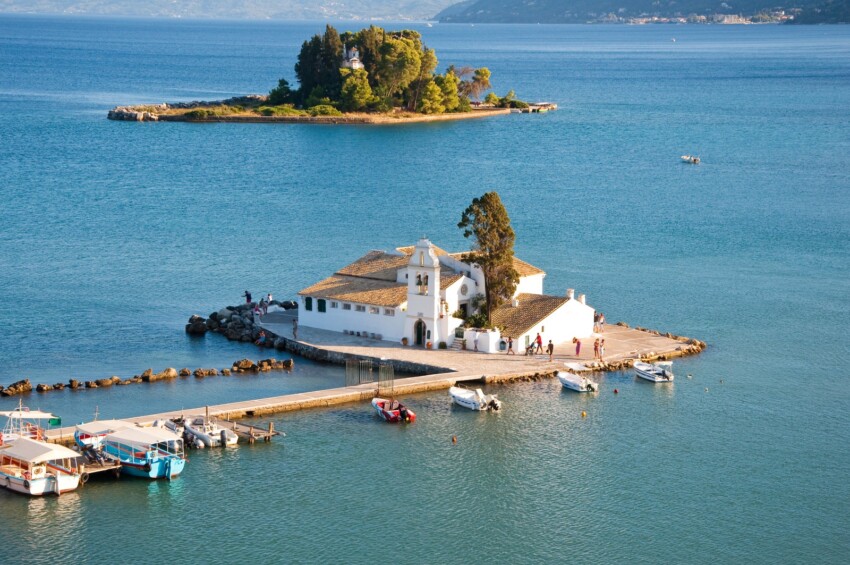
Corfu’s most photographed attraction is the Monastery of Vlachérna, a quaint little white church from the 18th century scenically located on an islet connected to the mainland by a small footbridge. The effect is that of a building suspended over the sea: an enchantment, especially at sunset when the sky is tinged with evocative colours.
The islet is located on the Kanoni peninsula, about 4 km from Corfu, and can be reached by a beautiful walk from the town centre. You can continue the day with a visit to the uninhabited and wild islet of Pontikonissi by taking a boat from the Vlachérna pier.
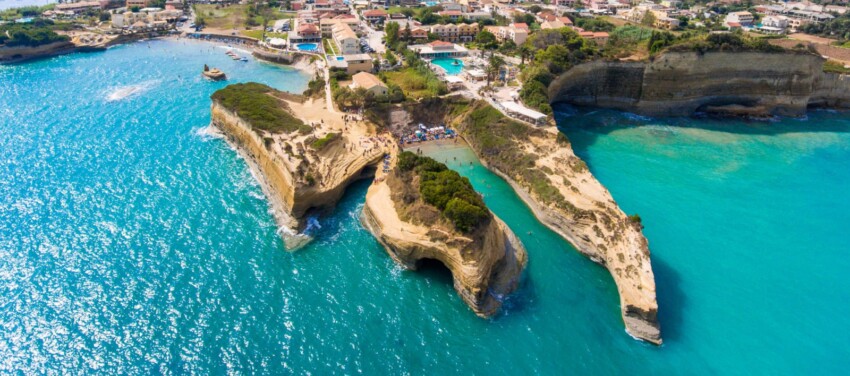
Another scenic wonder of Corfu not to be missed is the Canal d’Amour near Sidari (north of the island), a kind of small fjord created by cream-coloured rocks jutting out into the sea. A masterpiece of nature, created over years and years of very slow erosion by wind and sea.
It is a very picturesque place (and much photographed!) but it is also an ideal spot for a few hours of relaxation. At the end of the fjord there is a small sandy beach where you can lay out your towel and admire the beauty of the place.
If you visit Canal d’Amour as a couple, be sure to take a swim: according to a local belief, lovers who swim in these waters remain bound for life.
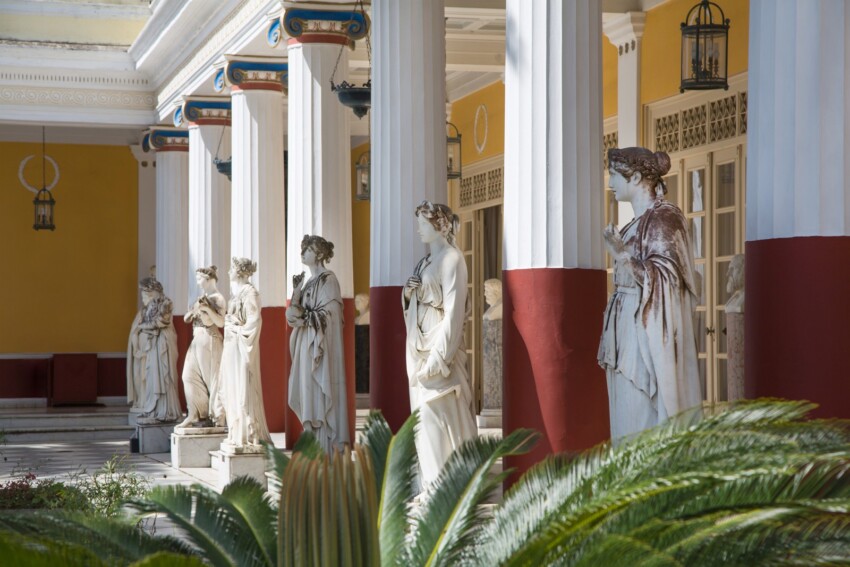
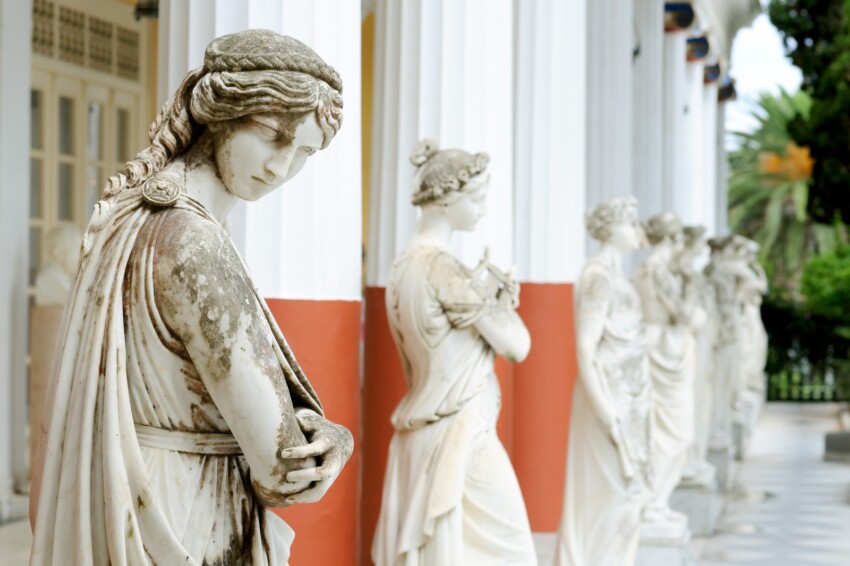
Viennese atmospheres on one of the most beautiful Greek islands: the Achilleion Palace is the palace where the restless Elizabeth of Austria, better known as Princess Sissi, came to stay in search of peace. It is an elegant 19th-century neoclassical building far from the hustle and bustle of the seaside resorts, hidden among silent olive groves.
It was Sissi herself who wanted to dedicate the palace to the Homeric hero Achilles, who is also honoured by a statue depicting him at the fateful moment when Paris pierced his heel.
Don’t let the name mislead you: the Emperor’s Throne is not a chair of gold and brocades but a belvedere in the village of Pelekas from which Wilhelm II, Emperor of Austria, enchantedly admired the Corfu sunsets. And it takes a lot to impress a nobleman accustomed to luxury…
Climb the stone steps leading up to this panoramic terrace, also known as the Kaiser’s Observatory, and enjoy the same enchanting view of expanses of vineyards and olive groves, dreamy beaches and traditional villages.
After taking breathtaking photos, stop for a while to wander around the streets of Pelekas, a quaint village perched in the hills of central-western Corfu that for decades was a popular destination among hippies from all over Europe.
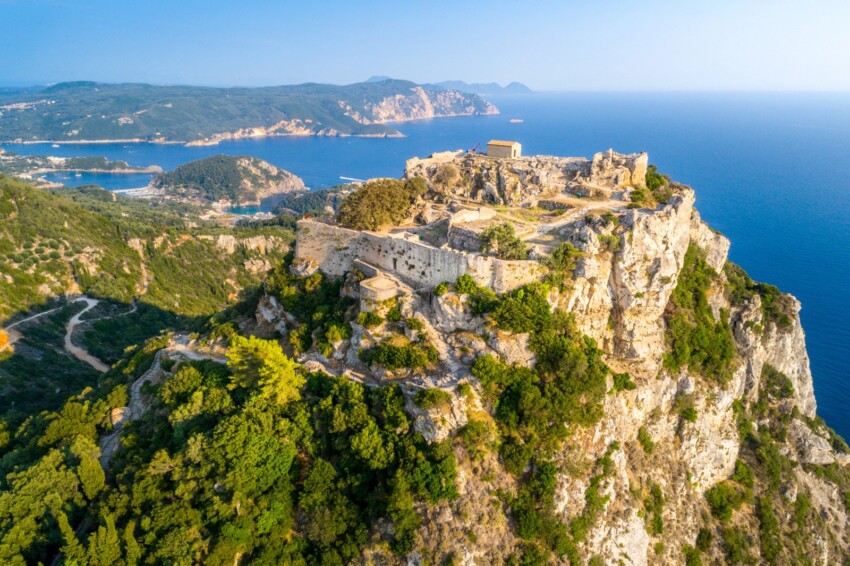
If you love beautiful views, another attraction to put on your list of must-sees in Corfu is the fortress of Angelokastro, a medieval citadel built on a hilltop 3 km from the village of Lakones. It was built in the 13th century at the behest of Michael II of Epirus.
The final section of the path to reach it is rather steep, but you will be rewarded with a splendid view of the sea and the green hills in the surroundings. Then back down, turn around and look at this impregnable fortress from below: it is a truly impressive sight!
No holiday in Greece, whether mainland or islands, is complete without a visit to the ancient ruins. On Corfu, the best of cultural tourism is the archaeological site of Paleopolis, located on the Kanoni peninsula.
The visit follows a guided tour that starts at the Roman baths and includes the agora area, the military port of Alcinoo (King of the Phaeacians), the sanctuary of Artemis and a tower of the city walls. The archaeological site of Paleopolis can be visited independently, without having to participate in a guided tour; audio guides are available.
At the end of the tour, those who want to learn more about the excavations and the finds can visit the Mon Repos Museum, a 10-minute walk away.
Lake Korission provides a pleasant diversion from the beaches and olive-covered hills. The landscape here is quite different: in spite of its name, it is a lagoon that stretches along a stretch of sea in the south-west part of the island. Walking on the bridge across the lagoon, you can admire the typical lagoon landscape and the many birds that inhabit it, including some very rare species.
Visit Lake Korission at sunset if you want to get your fill of romance or if you are a nature photography enthusiast.
One of the best experiences to have in Corfu is a boat trip, but don’t disdain its inland equivalent: a tour of the island’s villages. While the coast is now completely devoted to tourism, the villages away from the sea have retained a more traditional atmosphere.
They are the right places to discover what life was like on Corfu before the advent of tourism, to learn about crafts and customs that are centuries old, taste genuine local products and admire unspoilt landscapes. On the other hand, to discover the maritime traditions, it is necessary to visit the coastal villages where a strong tourist infrastructure has not yet developed.
Among the most beautiful villages on Corfu are: Lefkimi10, a fishermen’s village; Strinilas11, a mountain village on Mount Pantokratoras, the highest on the island; Palia Perithia12, a sparse cluster of stone houses surrounded by total silence.
In the following map you can see the location of the main places of interest mentioned in this article.
 Hotel
Hotel  Budget accommodations
  Apartments
  Family Hotel
 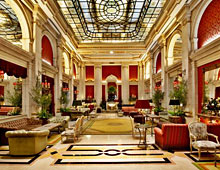 Luxury Hotel
 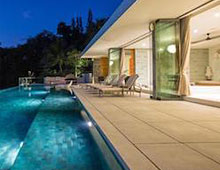 Resorts