Hotel Omirikon
Vathi, Ithaka - Georgios Drakoulis Av. Ithaca
Situated in Vathi, Ithaka, Hotel Omirikon has a seasonal outdoor swimming pool, shared lounge, terrace, and free WiFi throughout the property.
Book now
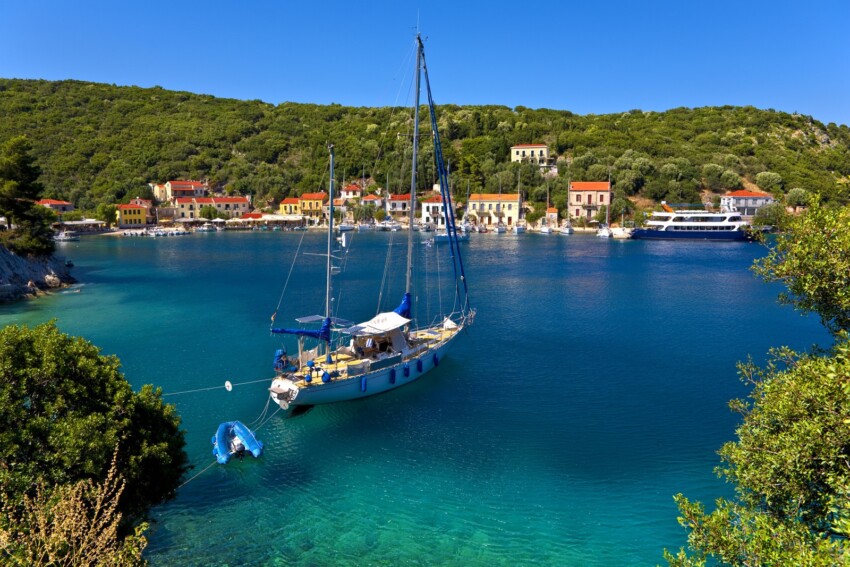
Ithaca, in Greek Ithaki, is universally known as the island of Ulysses, the beloved homeland to which the Homeric hero returned after a very long journey full of vicissitudes.
Everywhere, the names of the accommodations will remind you, if you have ever forgotten, that this is Ulysses’ homeland, with obvious references to the protagonists of his epic: Odysseo Loft, Calypso Apartments, Tilemachos Traditional House… it seems the Homeric hero never left!
But apart from hotel and shop signs, the myth of Odysseus has left few traces on the island. Tourists who decide to stay in Ithaca, instead of visiting it on a day trip from neighbouring islands like Kefalonia, choose it not so much for its Homeric fame but for the beauty of its landscape and its tranquillity.
Sleepy and sparsely inhabited, this butterfly-shaped island created from two pieces of land joined by a narrow isthmus, with a jagged coastline dotted with small beaches and coves, picturesque villages scattered here and there and delightful little harbours, is the ideal destination for a no-frills, simple holiday.
You too will want to return, but don’t be like Ulysses: don’t wait ten years!
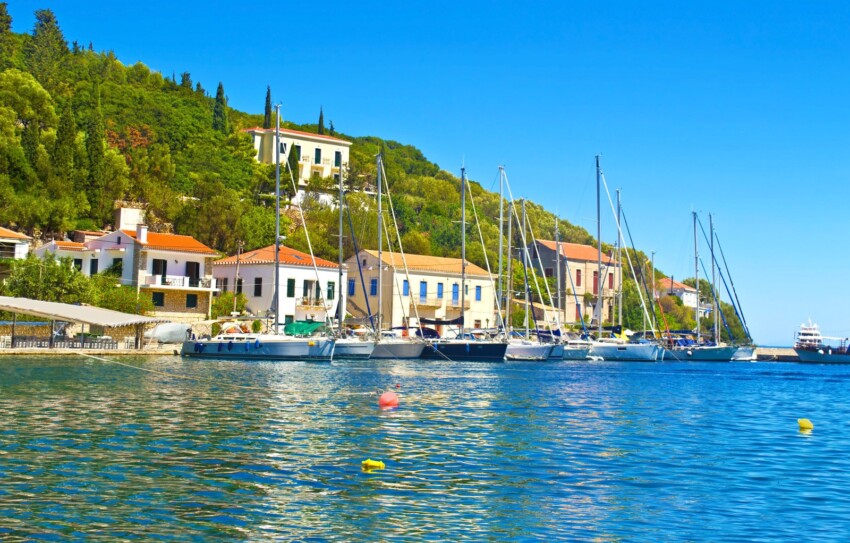
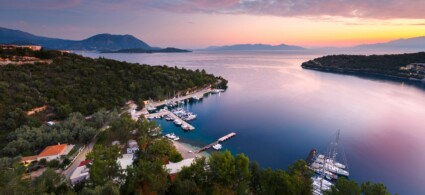
The cultural and natural heritage of Ithaca offers numerous attractions that allow you to immerse yourself in Homeric legend and Greek tradition. Vathi, the island’s capital, is built around a deep and protected natural bay, considered one of the most beautiful natural harbours in the Mediterranean. The historical centre preserves elegant neoclassical buildings from the 19th century and houses the Archaeological Museum, which holds exhibits that testify to the human presence on the island from the Mycenaean to Roman times, including objects that may be connected to the legend of Ulysses.
The Cave of the Nymphs (Nymphaeum) represents one of the most important mythological sites on the island, identified by tradition as the place where Ulysses hid the treasures given to him by the Phaeacians. Situated in the bay of Dexia, this natural cave with stalactites and stalagmites can be reached via a 30-minute path and offers an evocative experience related to Greek mythology. The Monastery of Panagia Kathara, perched on a hill at an altitude of 600 metres, offers spectacular views of the entire Ionian archipelago and preserves important 16th century Byzantine icons.
Kioni is the most picturesque village on the island, with its colourful traditional houses reflected in the waters of the natural harbour, surrounded by cypress and ancient olive groves. The Castle of Ulysses (Kastro), located in the north of the island, preserves the remains of a 16th century Venetian fortress built on the remains of an earlier Greek acropolis. For trekking enthusiasts, the mountain trails that criss-cross the island offer breathtaking views and the chance to discover small Byzantine churches hidden among the vegetation, such as the church of Agios Athanasios with frescoes from the 14th century.
Another interesting town is Anogi, the ancient capital, 16 km north-west of Vathy. If you want to get to know the more authentic Ithaca, visit the rural villages of Exogi and Kolieri, also in the north of the island.
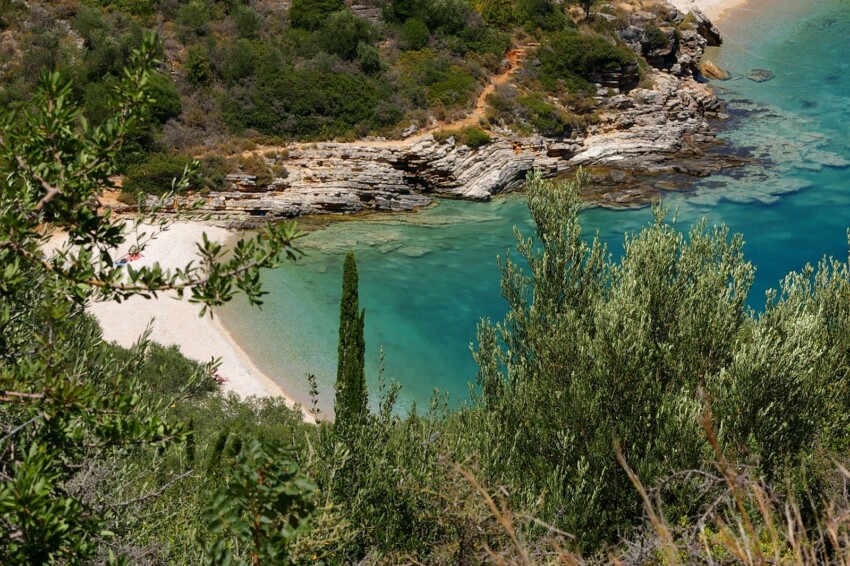
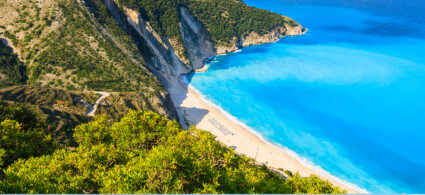
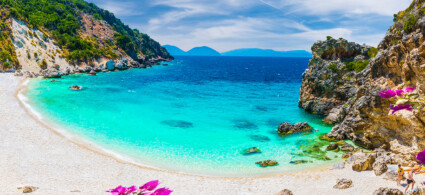
The beaches of Ithaca are small, hidden gems that offer an intimate and authentic bathing experience, characterised by sheltered bays and waters of extraordinary purity. Sarakiniko Beach is the most famous and accessible beach on the island, located on the west coast and accessible via a 2 km dirt road. This crescent of white pebbles is protected by Mediterranean-covered hills and offers turquoise waters with gently sloping seabed, making it ideal for families.
Filiatro Beach is considered one of the most beautiful on the island, accessible only by sea or via a 45-minute trekking trail. Its golden sand is surrounded by limestone cliffs that create a natural pool with incredibly clear waters. Gidaki Beach offers an even wilder experience, accessible only on foot via a mountain path that takes about 1 hour to walk, but which rewards with a multi-coloured pebble beach and crystal-clear waters in a completely untouched environment.
The small coves along the east coast, such as Mnimata and Piso Aetos, offer intimate spots where one can find absolute tranquillity even in the summer months. Many of these beaches are only accessible by sea, making it advisable to hire a small boat to explore the coast and discover secret corners that retain their primordial charm. The wild and unspoilt nature of the beaches of Ithaca is their main charm, offering an authentic alternative to the more touristy destinations of the Ionian archipelago.
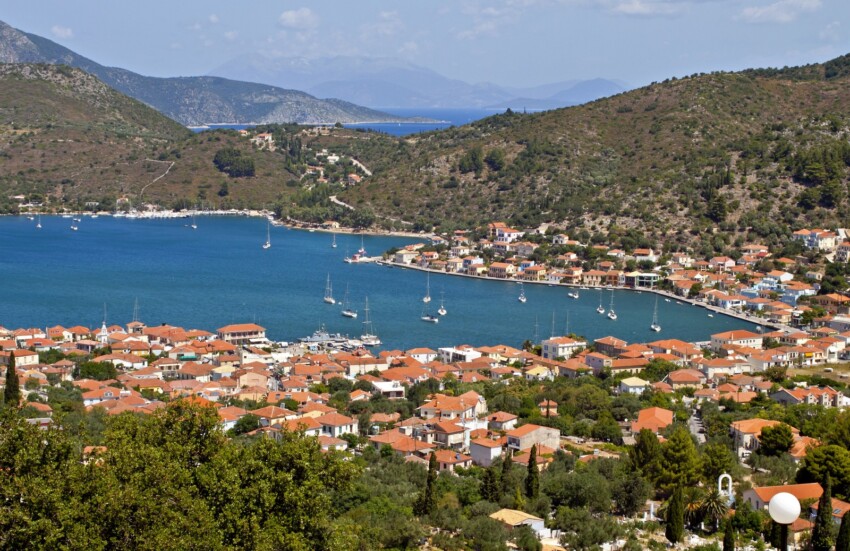
Vathi is the most practical choice for accommodation, concentrating most of the island’s services and offering boutique hotels, traditional guesthouses and flats overlooking the picturesque natural harbour. The capital provides proximity to the main maritime links and a selection of authentic tavernas serving local specialities.
Kioni attracts those looking for a more romantic and picturesque atmosphere, with small charming hotels and traditional villas overlooking the sea. This fishing village offers a more intimate experience but with limited facilities, ideal for couples seeking tranquillity. Frikes is perfect for those who want an authentic experience in a small fishing port, with few but cosy family-run accommodations.
The Perachori area and inland villages offer farmhouses and traditional houses surrounded by nature, ideal for those who enjoy trekking and rural life. Due to the limited accommodation capacity on the island, it is advisable to book well in advance, especially for the summer months. For a more complete experience of the Ionian Islands, many visitors combine a stay in Ithaca with the neighbouring larger islands.
We offer a selection of hotels at Ithaca to suit all categories of travellers. The most booked by tourists are the sea-facing hotels, often right on the beach. If you want to play it safe, choose one of the following: they are among the most booked hotels in Ithaca, sorted by number of reviews.
If you prefer space, privacy and the ability to prepare your own meals to a hotel holiday, book a holiday home at Ithaca. We recommend a few below, but in this case we advise you to book early because houses and apartments for rent at Ithaca are in high demand.
Although there is no airport in Ithaca, getting here will be much easier for you than for Odysseus… instead of ten years, budget a day or two between plane and ferry.
The main ferries leave from Patras (4 hours) and Astakos (2.5 hours), while during the summer there are also direct connections from Kyllini (3 hours). The busiest route is the one connecting Ithaca with Kefalonia, with ferries operating several times a day during the high season (30-minute sailings).
The most convenient option is to fly to Kefalonia and then continue by local ferry. During the summer, some operators offer daily excursions from Lefkas and the other Ionian Islands.
Once on the island, hiring a car is recommended to explore the more remote beaches and inland villages, considering that public transport is limited. The roads are narrow and winding but well-maintained, and the island can be crossed completely in about 45 minutes by car.
What's the weather at Ithaca? Below are the temperatures and the weather forecast at Ithaca for the next few days.
Because of its indissoluble link with the myth of Ulysses (true or false), the name of Ithaca exerts a powerful fascination: for everyone, the Homeric hero represents the desire to escape, to learn, to challenge the unknown, but also the desire to return to what one loves, and in a certain sense, Ithaca is also a metaphor for utopia.
Because of this evocative power, the name Ithaca has been used (sometimes abused) in very different contexts: the name Ithaca has been given to three different cities in the United States, an asteroid, a publishing house, a ship, a college and even a shotgun.
Ithaca is located in the Ionian Sea, just 2 km from the east coast of Kefalonia and 15 km from Lefkada. It is located approximately 25 km from the west coast of mainland Greece and 80 km from Patras.
 Hotel
Hotel  Budget accommodations
  Apartments
  Family Hotel
  Luxury Hotel
  Resorts