Tourist Boutique Hotel
Argostoli - Antoni Tritsi 109
The seaside Tourist Hotel offers air-conditioned and soundproofed rooms.
Book now
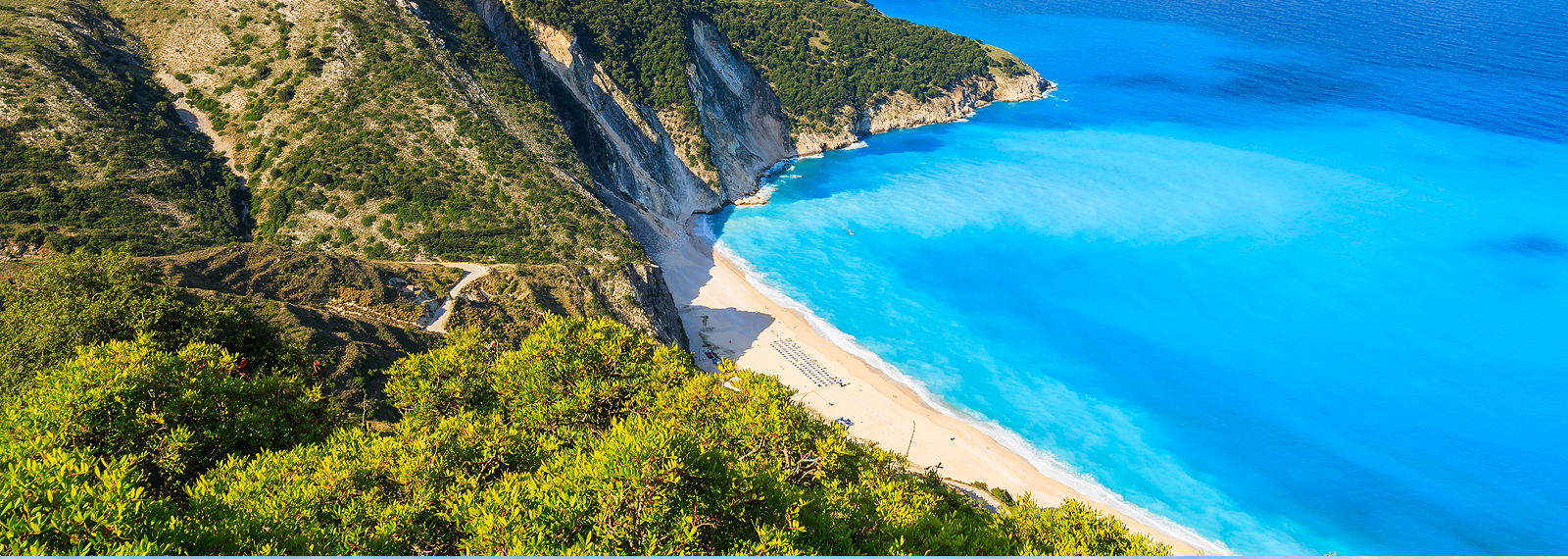
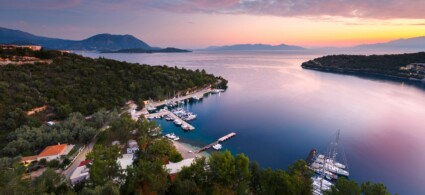
Dubbed Captain Corelli’s Island by the dramatic film that relaunched it as an international tourist star, Kefalonia (or Cephalonia) is the largest of the Ionian Islands, a true natural paradise that captivates visitors with its extraordinary scenic diversity. Located in the heart of the Ionian Sea, this magnificent Greek island offers a perfect mix of breathtaking beaches, imposing mountains and picturesque villages that preserve local traditions intact.
The island is famous for its crystal-clear waters ranging in colour from turquoise to deep blue, framed by white limestone cliffs and smooth pebble beaches. Mount Ainos, at an altitude of 1,628 metres, dominates the inland landscape, creating a spectacular contrast with the seashore. This mountain is covered with the rare Kefalonian fir (Abies cephalonica), an endemic species that gives the island a unique character among Greek islands.
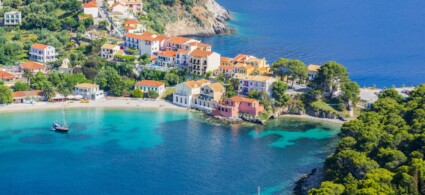
Kefalonia’s cultural richness is reflected in its Byzantine monasteries, traditional Venetian architecture and picturesque mountain villages such as Assos and Fiskardo. The island has managed to maintain a perfect balance between tourism development and environmental conservation, offering visitors an authentic experience of island Greece. For those who also wish to explore the neighbouring islands, Kefalonia is an ideal base for discovering the entire Ionian archipelago.
The best time to visit Kefalonia is from May to October, when the weather conditions are optimal for enjoying both the beaches and inland excursions. The months of June and September are the ideal compromise, offering pleasant temperatures (23-28°C), perfectly swimmable sea and fewer tourists than the summer peak.
Summer (July-August) guarantees sunny days and temperatures reaching 30-32°C, ideal for beach life, but coincides with the most crowded period and higher prices. Spring (April-May) is perfect for hikers and nature lovers, when the island is coloured with wild flowers and temperatures remain in the 20-25°C range. Autumn (September-October) offers still-warm seas and excellent conditions for hiking, while winter can be rainy but provides atmospheric surroundings in traditional villages.
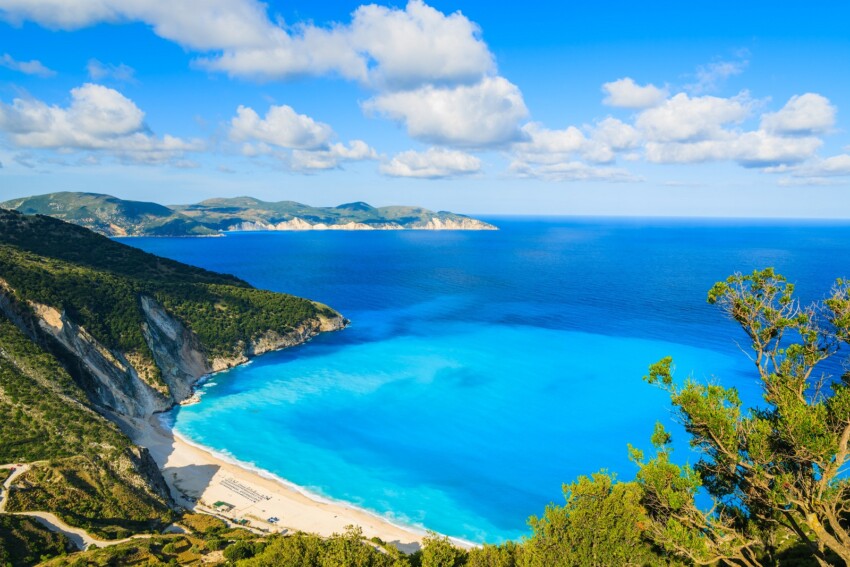
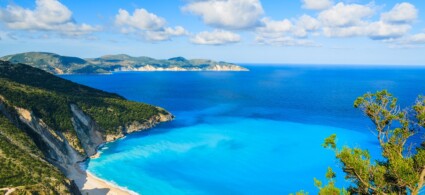
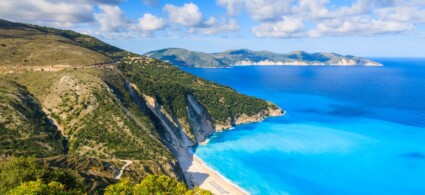
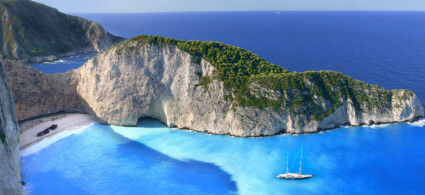
The beaches of Kefalonia are considered among the most spectacular in the entire Mediterranean, characterised by waters of exceptional transparency and natural scenery of rare beauty. Myrtos beach is undoubtedly the island’s icon: this crescent of white pebbles is framed by vertical cliffs that reach a height of 160 metres, creating a striking colour contrast with the deep blue sea. The waters here are particularly deep, quickly reaching 20-30 metres from the shore, and the beach is exposed to north-westerly winds, often creating spectacular waves.
Antisamos beach offers a completely different experience, with its fine, golden sand surrounded by lush Mediterranean vegetation. This sheltered bay is ideal for families thanks to its gradual seabed and calm waters.
Petani Beach and Xi Beach complete the picture of unmissable beaches: the former characterised by multi-coloured pebbles and turquoise waters, the latter famous for its reddish sand rich in clay. Each beach on the island has unique characteristics, from the Koutavos Lagoon with its natural thermal waters, to the small hidden coves accessible only by sea, offering visitors a wide range of bathing experiences in settings of incomparable natural beauty.
Kefalonia’s historical and cultural heritage offers numerous attractions that go far beyond the beautiful beaches. The Monastery of Agios Gerasimos, dedicated to the patron saint of the island, is the spiritual heart of Kefalonia and hosts important religious celebrations, particularly on 16 August when thousands of the faithful gather for festivities.
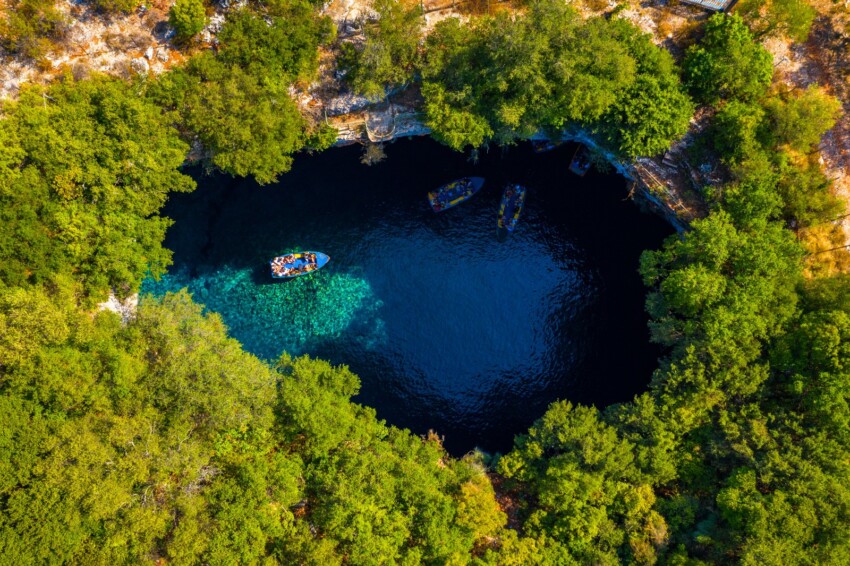
The Cave of Melissani, discovered in 1951, is a unique geological phenomenon where an underground lake with cobalt-blue waters stretches for more than 150 metres, creating extraordinary plays of light when the sun’s rays penetrate through the opening of the collapsed vault.
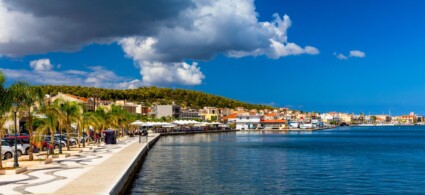
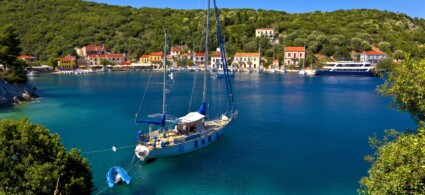
Argostoli, the island’s capital rebuilt after the 1953 earthquake, retains its traditional character with its picturesque waterfront and the characteristic Drapano bridge. The village of Assos retains its Venetian architecture with colourful houses overlooking a sheltered bay, while Fiskardo is the only village on the island that survived the earthquake, offering a perfect example of traditional Ionian architecture.
For trekking enthusiasts, the trails of the Mount Ainos National Park offer spectacular views and the chance to observe the island’s famous wild horses. Robola wine cellars offer the chance to taste the finest local wine, while the Koutavos Lagoon offers a unique experience with its Caretta caretta sea turtles that nest along the shores during the summer.
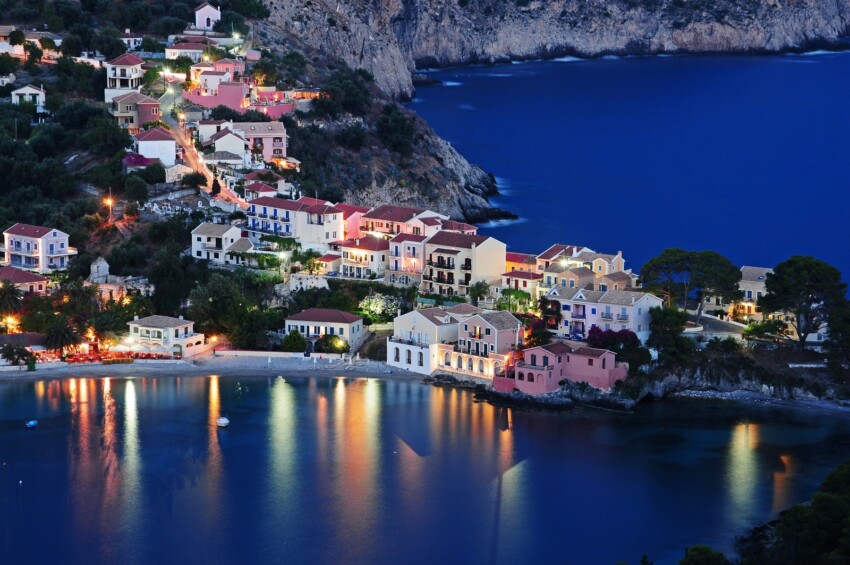
Argostoli is an ideal choice if you want to be in the heart of the island, with hotels, restaurants and shops within easy reach, as well as efficient connections to all the main attractions. The area offers accommodation for every budget and ensures proximity to the main port for possible excursions to neighbouring islands.
Fiskardo attracts those seeking a more refined and exclusive atmosphere, with boutique hotels and luxury villas overlooking the picturesque harbour. The Lassi area is perfect for families, being close to some of the most beautiful and accessible beaches on the island. Sami offers a great base for exploring the east coast and the famous caves, while mountain villages such as Assos provide an authentic experience away from mass tourism. For more details on accommodation, check out our complete accommodation guide.
We offer a selection of hotels at Kefalonia to suit all categories of travellers. The most booked by tourists are the sea-facing hotels, often right on the beach. If you want to play it safe, choose one of the following: they are among the most booked hotels in Kefalonia, sorted by number of reviews.
If you prefer space, privacy and the ability to prepare your own meals to a hotel holiday, book a holiday home at Kefalonia. We recommend a few below, but in this case we advise you to book early because houses and apartments for rent at Kefalonia are in high demand.
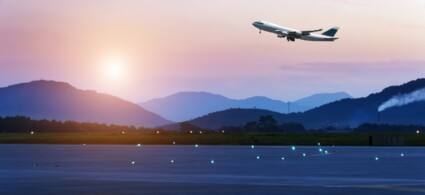
Kefalonia is easily accessible by air and sea.Kefalonia International Airport (EFL), located 8 km from Argostoli, receives international flights during the summer season with companies such as Volotea, Ryanair and specialised charters. Connections are mainly active from May to October, with flights from various cities in Europe. For detailed information on flight connections, see our guide to flights to Kefalonia.
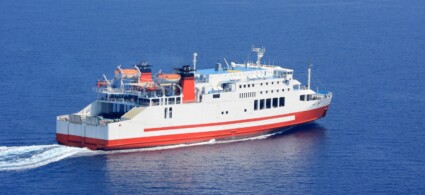
By sea, the island is connected by regular ferries from Patras (4 hours), Kyllini (1.5 hours) and Astakos (2.5 hours). Once there, car rental is highly recommended to freely explore the island and reach the more remote beaches and mountain villages.
What's the weather at Kefalonia? Below are the temperatures and the weather forecast at Kefalonia for the next few days.
A historical episode that deeply disturbed the tranquillity of Kefalonia is the Nazis’ vicious reprisal against an Italian contingent stationed on the island during World War II, which occurred after the armistice in September 1943.
These historical events are the context for the fictional events of Louis de Bernières’ novel Captain Corelli’s Mandolin, from which the famous 2001 film starring Nicolas Cage and Penelope Cruz was made.
The massacre of the Acqui division is commemorated in a small museum in Argostoli.

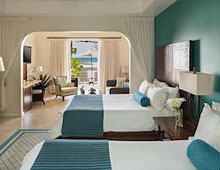 Hotel
Hotel 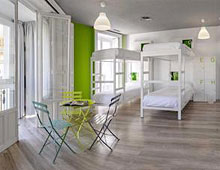 Budget accommodations
 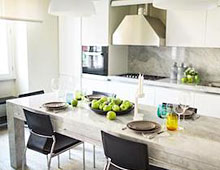 Apartments
  Family Hotel
  Luxury Hotel
  Resorts