Tourist Boutique Hotel
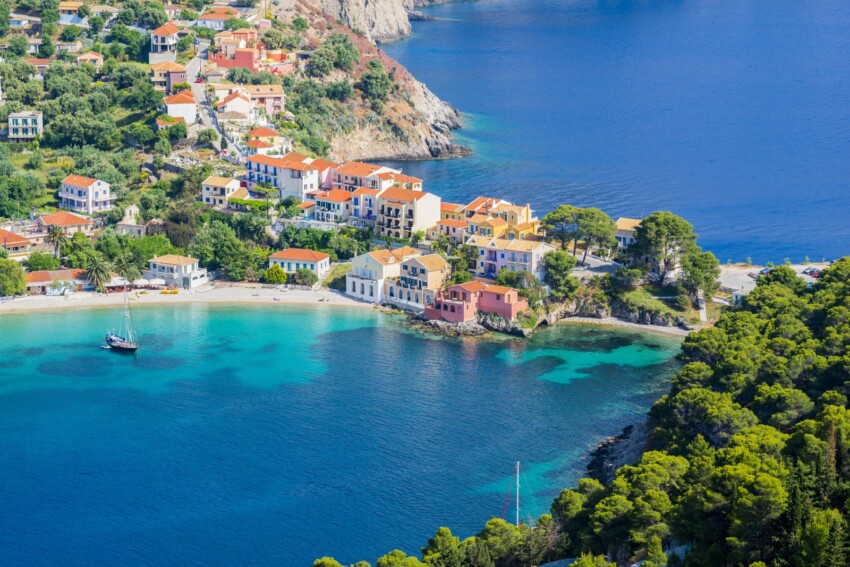
Kefalonia, the largest of the Ionian islands, offers an extraordinary natural and cultural heritage that goes far beyond its famous beaches. This volcanic island has a complex geology that has given rise to unique phenomena such as underground caves, mysterious lakes and spectacular rock formations.
Kefalonia’s rich landscape ranges from the fir forests of Mount Enos to the limestone cliffs plunging into the crystal-clear sea. The island has preserved authentic traditions in its mountain villages, while the coastline offers panoramas that have been the backdrop for international film productions.
The island’s historical heritage reflects centuries of Venetian, French and British rule, visible in the architecture of its coastal towns and in the archaeological sites scattered across the territory. Unique geological phenomena, such as the caves of Drogarati and the underground lake of Melissani, testify to the intense volcanic activity that shaped this land.
Kefalonia will surprise you with its authenticity and the variety of experiences it offers, from trekking in the highest mountains of the Ionian Islands to discovering hidden treasures in ancient monasteries and traditional villages.
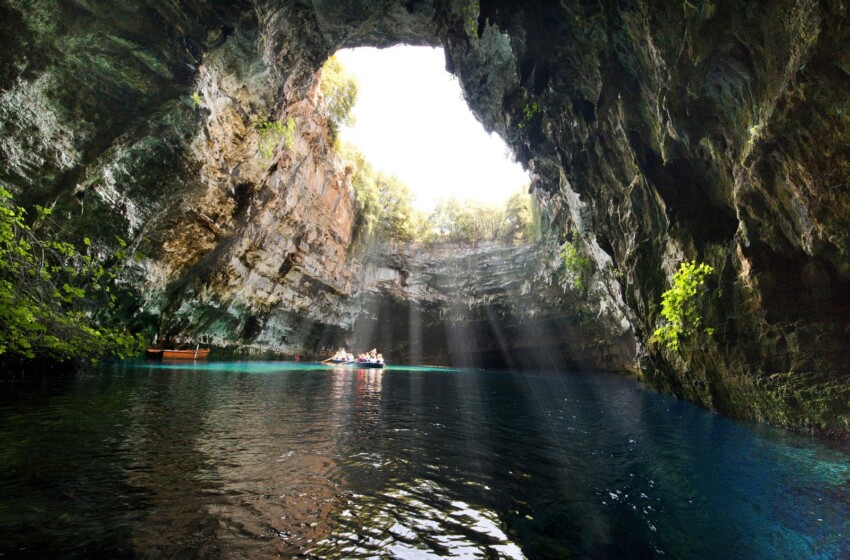
The cave of Melissani represents one of the most fascinating geological phenomena in Greece. This underground lake was formed by the partial collapse of the vault of a karstic cave, creating a magical environment where sunlight filters through the natural opening and illuminates the turquoise waters with iridescent reflections.
The lake’s crystal-clear waters reach a depth of 39 metres and are fed by underground springs that run through the entire island. A boat trip inside the cave will allow you to admire the stalactites and rock formations, while the natural light creates plays of colour that change during the hours of the day, reaching their maximum splendour around midday.
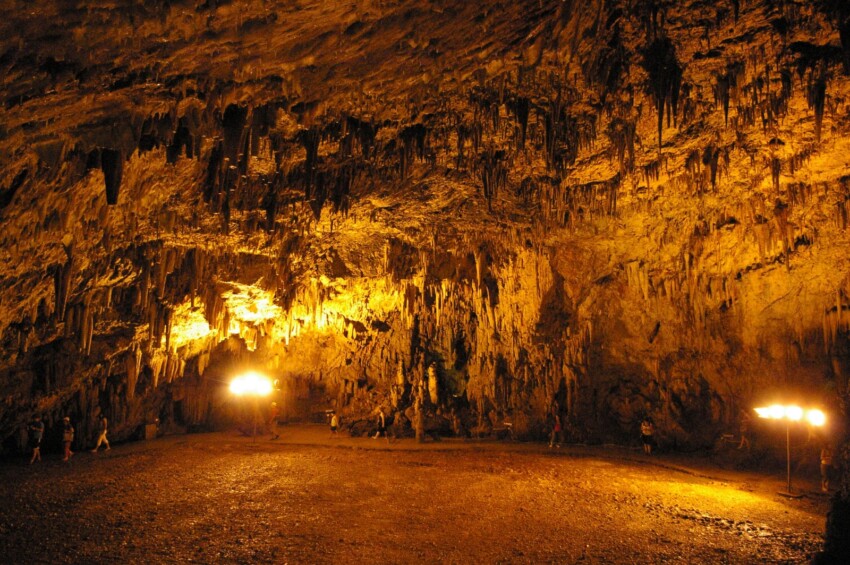
A few kilometres from Sami, the Drogarati cave offers an underground spectacle of rare beauty. This limestone cave, discovered some 300 years ago after an earthquake, stretches 95 metres in length and reaches a maximum height of 20 metres, creating a natural space of cathedral-like proportions.
The stalactite and stalagmite form ations that decorate the cave have taken millennia to form, creating natural columns and strikingly shaped rock drapes. The main hall, called the Apotheosis Hall, boasts perfect acoustics, making it the occasional venue for classical music concerts. The constant temperature of 18°C and 85% humidity have perfectly preserved these unique geological formations.
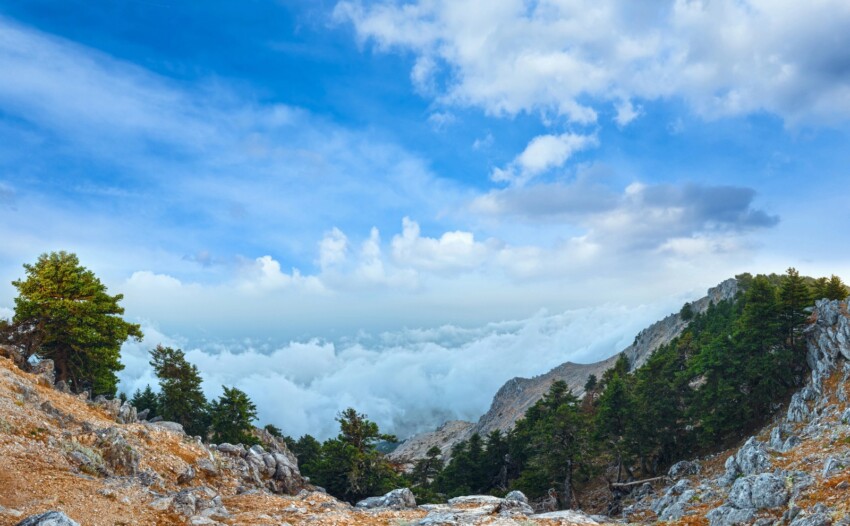
Mount Enos, at 1,628 metres high, is the highest peak in the Ionian Islands and forms the heart of the National Park of the same name. This limestone mountain is home to the only fir forest on the Greek islands, theAbies cephalonica, an endemic species that characterises the landscape with its dense and fragrant vegetation.
The hiking trail leading to the summit offers breathtaking views of the entire Ionian archipelago and, on clear days, allows glimpses of the Peloponnese coastline. The park’s fauna includes wild horses, mountain goats and numerous species of birds of prey. The special microclimate of the mountains, with cooler temperatures and abundant rainfall, creates a unique environment that contrasts with the Mediterranean climate of the coast.
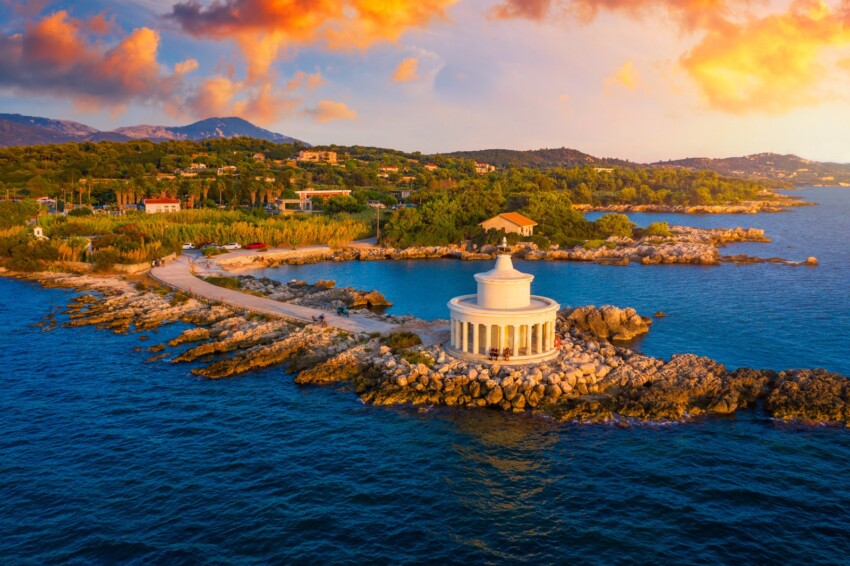
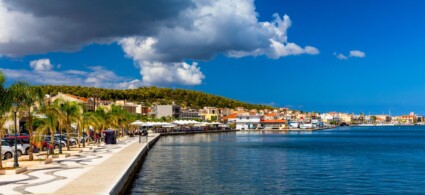
Argostoli, completely rebuilt after the devastating earthquake of 1953, is today a modern city that has managed to reinvent itself while maintaining its authentic character. The capital‘s promenade, with its palm trees and traditional cafes, offers a pleasant evening stroll, while the Drapano bridge over the Koutavos lagoon has become a symbol of the city.
The Archaeological Museum of Argostoli houses important exhibits that testify to the thousand-year history of the island, from the Mycenaean civilisations to the Roman era. The Korgialenios Library, one of the most important in Greece, is housed in a neoclassical building representing the island’s post-war cultural revival. The Saturday morning market transforms the streets of the centre into a riot of local produce, from Kalamata olives to Robola wine, the island’s wine speciality.
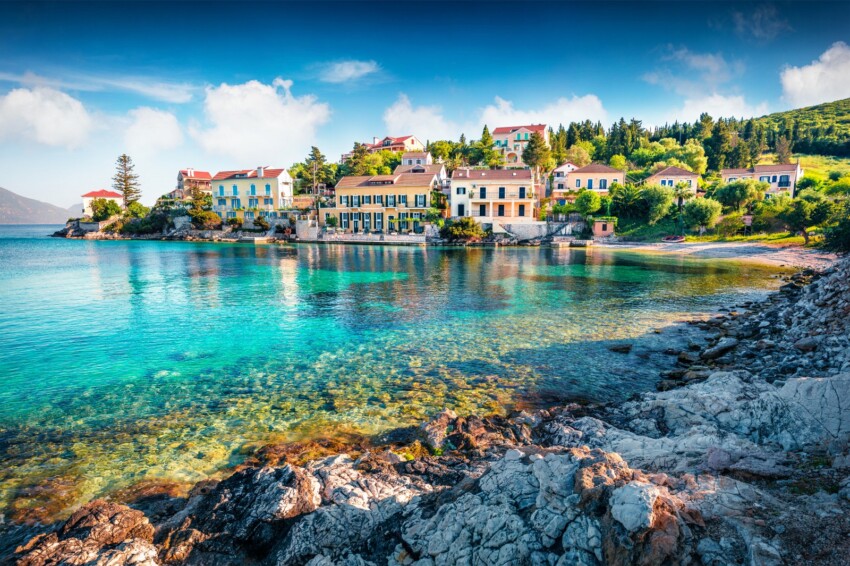
Fiskardo is the only village in Kefalonia that survived the 1953 earthquake, preserving its 18th century Venetian architecture intact. This seaside village in the north of the island charms with its colourful houses reflected in the waters of the marina, creating a picture-postcard atmosphere that attracts visitors from all over the world.
The Fiskardo marina welcomes luxury yachts and traditional boats, while waterfront taverns serve fish specialities prepared from the catch of the day. The coastal promenade that connects the harbour to the surrounding coves offers panoramic views of the Ithaca Canal and allows one to discover ancient Roman ruins hidden amongst the Mediterranean vegetation. The village is also a starting point for excursions to nearby islands and for diving in the seabed rich in marine life.
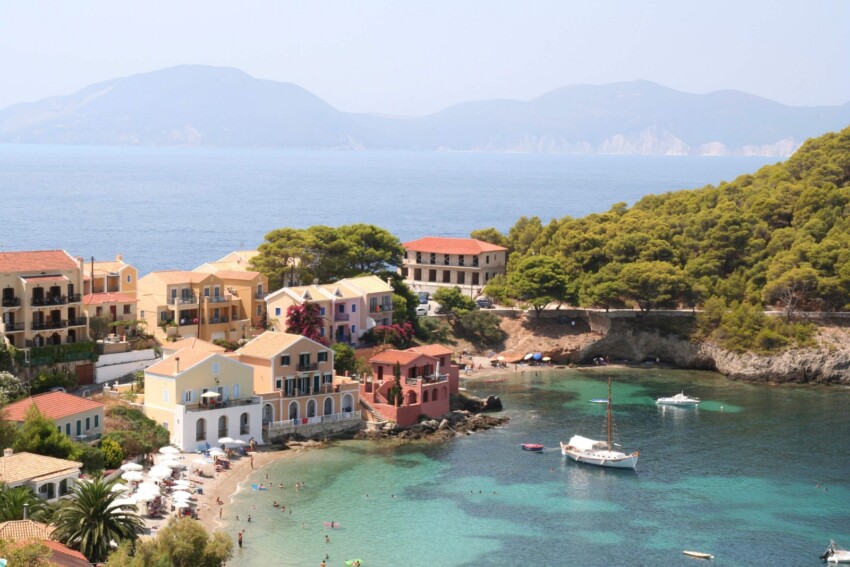
Assos is considered one of the most beautiful villages in Greece, lying on an isthmus connecting the mainland to a fortified peninsula. The traditional pastel-coloured houses, with their red tiled roofs and bougainvillea decorating the walls, create an environment of rare architectural beauty that is perfectly integrated into the natural landscape.
The Venetian fortress that dominates the peninsula dates back to the 16th century and offers exceptional panoramic views of the island’s west coast. The castle of Assos still preserves its perimeter walls, the church of St. Mark and the remains of the palace of the Venetian Provveditore. The small harbour of Assos, protected from the waves, hosts colourful fishing boats and becomes one of the most romantic spots in Kefalonia at sunset, when the golden lights of the sun reflect off the facades of the houses.
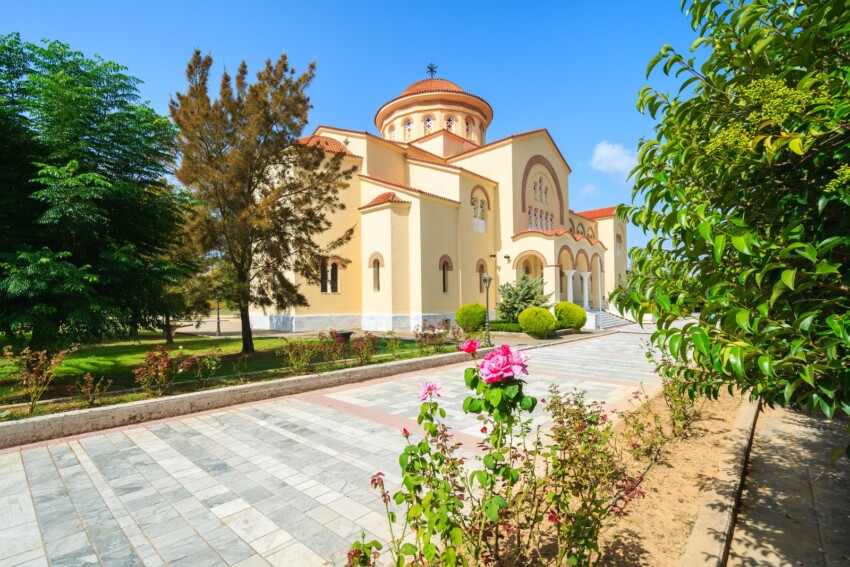
The Monastery of Agios Gerasimos is the most important sanctuary in Kefalonia, dedicated to the patron saint of the island. This monastic complex, rebuilt after the earthquake of 1953, houses the relics of Saint Gerasimos, a monk who in the 16th century dedicated himself to the care of the mentally ill and the reclamation of the island’s marshes.
The main church houses the glass coffin containing the saint’s body, which is visited by pilgrims from all over Greece. On 16 August and 20 October, the dates of the main celebrations, thousands of the faithful gather for the procession of St Gerasimos through the surrounding vineyards. The monastery garden still grows the vines planted by the saint, while St Gerasimos’ original cell has been converted into an underground chapel that pilgrims can visit.
Divarata is a small mountain village that retains the traditional character of rural Kefalonia. Situated at an altitude of 400 metres, this village offers spectacular views of the western coastline and is an ideal starting point for hiking trails through centuries-old olive groves and Mediterranean maquis.
The village’s stone houses, with their flower gardens and cisterns for collecting rainwater, bear witness to a lifestyle that has adapted to the characteristics of the mountainous terrain. The church of Divarata, dedicated to the Transfiguration, has 18th century frescoes and an iconostasis carved by local master craftsmen. The village tavern serves specialities such as kouneli stifado (rabbit stew) and mandolato, a traditional sweet made with almonds and honey.
Ancient Sami was one of the four city-states of Kefalonia in classical times and its archaeological remains testify to the strategic importance of the island in antiquity. Excavations have uncovered sections of the cyclopean walls from the 5th century B.C., which stretched for more than two kilometres, protecting the city from sea raids.
Finds at the site include pottery, coins and statues testifying to trade with Athens, Corinth and Magna Graecia. The Hellenistic necropolis contains chamber tombs excavated in the rock, while the Roman agora features the remains of the forum and an early Christian basilica with well-preserved mosaics. The theatre of Sami, of which the foundations remain, could seat about 3,000 spectators and is now the subject of a restoration project that will allow it to be used for tourism.
Lixouri, the second largest town on the island, is characterised by its cosmopolitan atmosphere and rich cultural tradition. Located on the Paliki peninsula, this town has been the birthplace of important Greek poets and musicians and keeps the tradition of serenades and Ionian folk music alive.
The central square of Lixouri, surrounded by historical cafés and neoclassical palaces, is the heart of the town’s social life. The Iakovatos Museum houses a valuable collection of Byzantine icons and manuscripts that bear witness to the island’s Orthodox culture. The municipal library of Lixouri, one of the oldest in Greece, holds rare editions and historical documents that narrate the history of the Ionian Islands. The ferry connection to Argostoli across the gulf offers a unique perspective on the island’s geography.
In the following map you can see the location of the main places of interest mentioned in this article.
If you visit Kefalonia by car, we recommend that you set aside at least a week to properly explore these attractions, considering that the distances on the island take time to cover on mountain roads. Renting a car will allow you to reach even the most remote places and fully appreciate the island’s varied landscape.
As for accommodation, check out our guide on where to stay in Kefalonia to find the ideal accommodation according to your needs and the type of holiday you want.
 Hotel
Hotel  Budget accommodations
  Apartments
  Family Hotel
 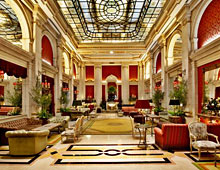 Luxury Hotel
 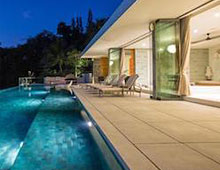 Resorts