Holidaying in Greece has for decades been synonymous with a trip to Athens or a stay on the islands. But, perhaps tired of island hopping or simply eager to learn more about a country and culture that have much in common with Western Europe, tourists are increasingly showing interest in mainland Greece.
It is a vast and extremely diverse territory with an irregular shape that can be roughly described as a central body with a three-fingered offshoot to the north (the Chalkidiki Peninsula) and a three-fingered appendage to the south (the Peloponnese).
Mainland Greece is undoubtedly the top destination for those irresistibly attracted by ancient ruins: Athens, Olympia, Mycenae, Sparta, Delphi and other landmarks of Greek classicism can be found on the mainland, as well as splendid museums, amphitheatres and lesser-known but fascinating sanctuaries.
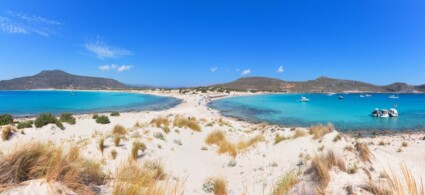
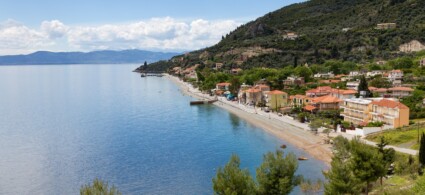
Mainland Greece is also a good alternative to the islands for those who want to take a beach holiday: its rugged coastline hides coves and dream beaches washed by clear blue waters. From north to south, along the east coast and along the west coast, you are sure to find everything you expect to find on the islands: beautiful sea, dreamy beaches, good food, warm hospitality.
The mountains in northern Greece, as well as the Peloponnese, are ideal destinations for relaxing holidays in the countryside, far from the hustle and bustle of modernity.
And then there are the monasteries of Meteora, shopping in Thessaloniki, the Pelos train, the multicultural cities of Thrace… in mainland Greece there is something for everyone, from the comfortable tourist to the adventurous traveller in search of unusual destinations.
The important thing is to know where to go, and for that there is our mini-guide to mainland Greece: divided into regions and macro-areas, it contains the most beautiful locations for each area. Choosing where to go this year in Greece will be easy!
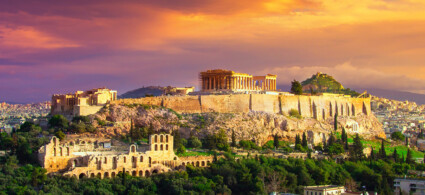
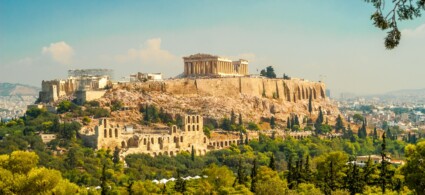
Attica is the southern region of Greece that includes the country’s capital in its territory. Obviously, Athens is the tourist star of the region: world-famous for its splendid Acropolis topped by the Parthenon, the symbol of classicism, it is a fascinating metropolis pulsating with energy. An ideal destination for a fantastic two- or three-day stay… you will certainly want to stay longer!
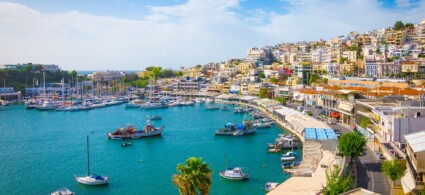
Athens is also the starting point for a holiday in the Greek islands. From Piraeus, Greece’s main port, ferries leave for both the famous and lesser-known islands without an airport.
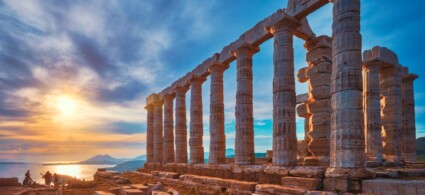
The rest of the region remains off the international tourist circuit while attracting strong local tourism. In the summer months, many Attica seaside resorts, particularly those on the Apollo Coast, are literally taken by storm by Athenians, especially at weekends.
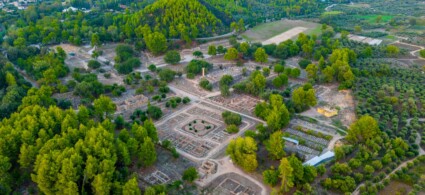
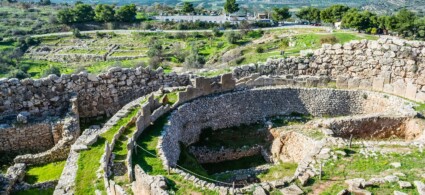
The Peloponnese is the most famous region of mainland Greece, thanks to the glorious cities of the past whose ruins we can admire today. We speak of Olympia, cradle of the Olympic Games, Mycenae, kingdom of Agamemnon, and Sparta, eternal city-state rival of Athens: three names indelible in the collective memory, linked to stories and legends that are the foundation of European and Mediterranean culture.
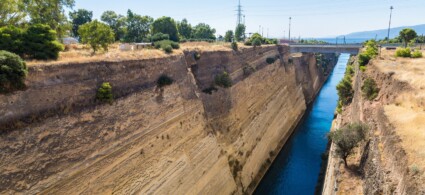
Although formally still considered a peninsula, the Peloponnese became an island with the cutting of the Corinth Canal at the end of the 19th century. It is easily reached thanks to the presence of the port of Patras and you don’t need to go anywhere else to have a memorable holiday: the region offers an incredible amount and variety of things to see and do.
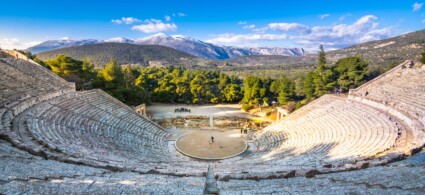
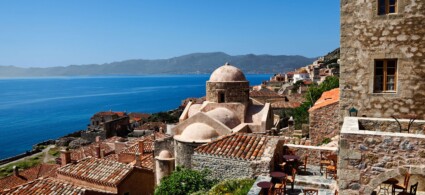
It is impossible to summarise in one paragraph the must-see attractions in the Peloponnese: this region concentrates all the best of a holiday in Greece. In addition to the places of myth (and here we must add Epidaurus with its magnificent theatre), in the Peloponnese you can visit remote and traditional areas such as the Mani Peninsula, spectacular gorges, Byzantine ruins and mountain landscapes. One can also experience the bucolic idyll of the Arcadia region.
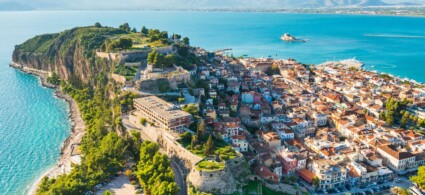
Needless to say, for those who want a beach holiday, there is a wide choice of locations. Kalamata is perfect for those who want to combine beautiful sea and urban atmosphere, Nafplio is more romantic; the most beautiful beach in the Peloponnese, however, is Voidokilia, 7 km from Pylos.
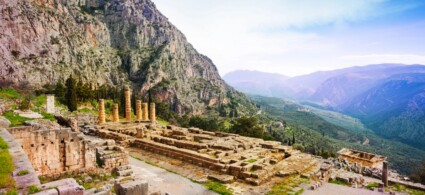
Central Greece is a favourite with history buffs. It is the geographic heart of modern Greece, but it is also the symbolic heart of ancient Greece. This region is home to Delphi, the city of the famous oracle, which for the ancients represented the centre of the world and the place where humans could enter into direct communication with the gods.
Other places linked to myth are Mount Parnassus, today a popular destination for skiers, and Ancient Thebes.
The region’s seaside towns, overlooking the Gulf of Corinth or the Aegean Sea, are local tourism destinations to consider if you are not a fan of touristy seaside resorts: note the names Galaxidi, Nafpaktos, Messolongi. The equivalent for those who love nature and trekking is the Iti National Park.
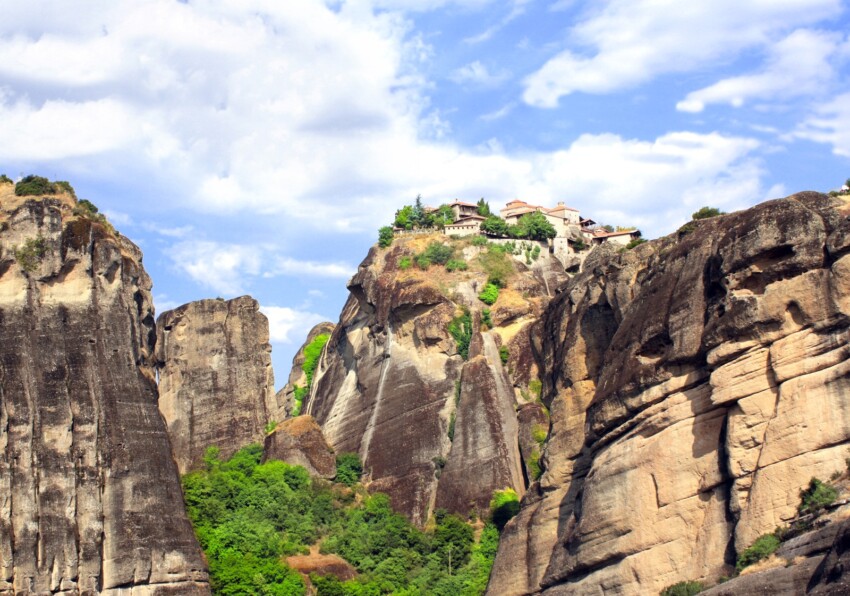
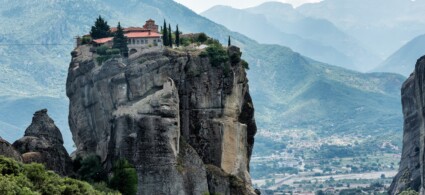
Thessaly only needed one attraction to become one of the most visited areas of mainland Greece. It is in this small central-eastern region that you will find The Meteors, six fascinating ancient monasteries perched atop sandstone pinnacles.
You can visit them on a day trip from Athens, but it’s a long journey and doesn’t allow you to fully savour the magic of this place. It’s better to stay a night or more in Kalambaka or Kastraki, the two small towns at the foot of the rocky mountains on which the monasteries stand.
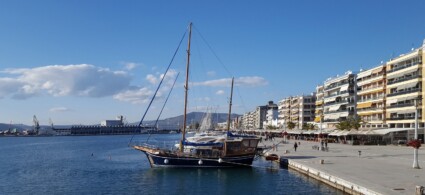
If you are looking for a seaside holiday in Thessaly, the destination for you is the Pelion Peninsula, a lush stretch of coastline along which you will find beaches and coves that are no match for more famous seaside resorts. Volos is the city from which to explore the peninsula.
If you prefer the mountains, you can climb to the top of Greece’s iconic peak, the mythical Mount Olympus.
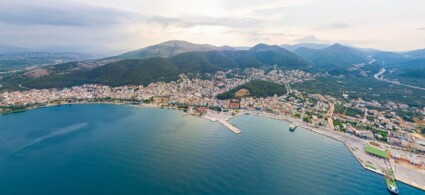
Many tourists pass through Epirus but few stop over: they arrive at the port of Igoumenitsa and leave immediately for other destinations. This is a pity: this small region in north-western Greece hides treasures that should not be missed.
Definitely worth a stop is Ioannina, a pretty and lively university town nestled along the shores of a lake. Stay at least one night to have time to take a leisurely tour of the city centre, take a boat trip to the island of To Nisi and enjoy an evening in one of the many bars in the centre.
A must-see for nature lovers and hikers is Zagorohoria, an enchanting mountainous area of gorges (including the spectacular Vikos Gorge), forests and villages where time seems to stand still.
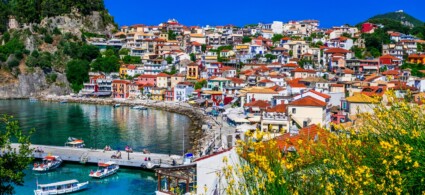
Epirus should also be considered by those who want to take a beach holiday away from Greece’s best-known seaside resorts. Parga is a very good option: beautiful beaches, splendid sea, a romantic old town and good-value hotels.
The Greek region of Macedonia is often confused with North Macedonia, which is an independent republic, and with historical Macedonia, a large territory now divided between six different nations.
Greek Macedonia is thus a portion of historic Macedonia. It is a very large region, occupying a large part of northern Greece and encompassing completely different realities… which means that Macedonia is a destination for many different types of holiday.
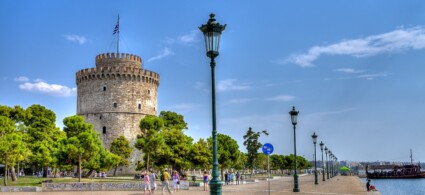
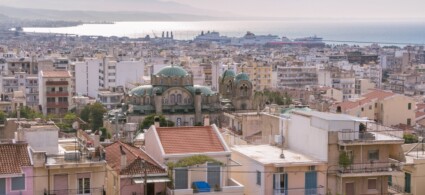
Perfect for an unusual city-break is Thessaloniki, Greece’s second largest city. Although less charming than Athens, like the capital it offers enough museums, shops and clubs to fill two or three days with satisfaction. There are easily accessible city beaches, certainly not the most beautiful in Greece but suitable for a refreshing dip after museum visits.
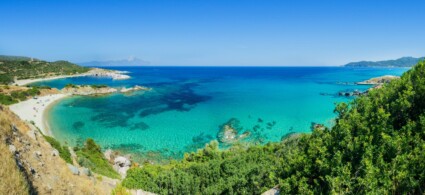
For a seaside holiday, study the map of the Chalkidiki Peninsula well: it is a peninsula formed in turn by three peninsulas (Kassandra, Sithonia and Mount Athos), three fingers that slip into the northern Aegean. Along the 500 km of coastline in this area, there is a succession of enchanting beaches and bays, all waiting to be discovered. There is something for everyone, from crowded party beaches to secluded coves where no one will bother you.
If you want to combine sea, mountains and myth in one holiday, base yourself in Litohoro, a small town located along the north-east coast of mainland Greece, close to the eastern slopes of Mount Olympus.
Thrace is the north-eastern outpost of mainland Greece. Nestled between Bulgaria and Turkey, it is a remote area with a border atmosphere. Few tourists venture here, and not so much because of the remoteness but because Thrace does not correspond to the postcard image of Greece.
The multicultural identity of this region has been shaped over the centuries by the succession of empires and migratory flows that have left clear traces of different peoples and cultures. Here, churches coexist with mosques, moussaka with kebabs, the Greek language with Turkish and Pomak (Bulgarian dialect).
It is a very fascinating destination, recommended for curious travellers in search of unusual destinations and for those who love multicultural suggestions. There is no shortage of attractions.
The cities are the best destinations to fully savour the cultural melting pot that characterises the region: you can stop in Alexandroupoli, the main city located along the coast, or in Xanthi, Orestiada or Komotini.
The real wonder of Thrace, however, still almost unknown to tourists, are its natural landscapes. The Evros Delta and the Dadia-Lefkimi-Soufli National Park are two unmissable destinations for nature walkers and birdwatchers. Don’t miss the Rhodope Mountains if you are looking for off-the-beaten-track trekking or adrenaline-fuelled days of rafting and kayaking.
 Hotel
Hotel  Budget accommodations
  Apartments
  Family Hotel
  Luxury Hotel
  Resorts