Mount Athos Glassbottom Cruise with Ammouliani Island visit
592 reviews
Buy now
From 30,00€ per person
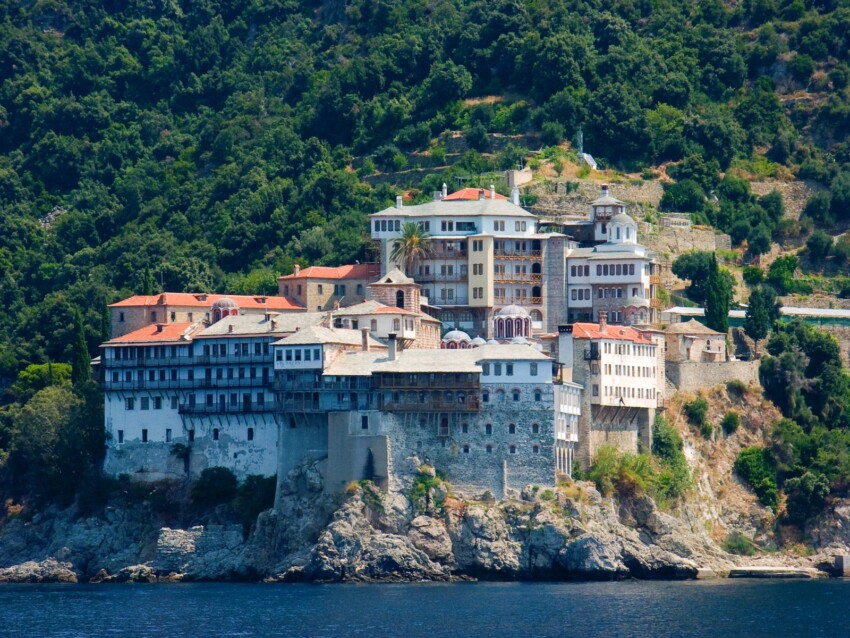
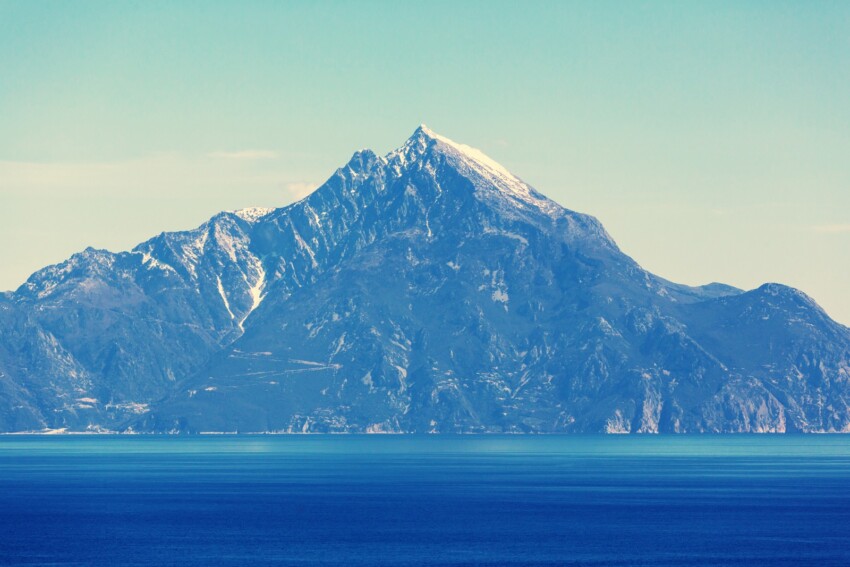
Mount Athos is a unique experience in the world, an Autonomous Monastic Republic that has ruled the easternmost peninsula of Chalkidiki since 963 A.D., following laws and traditions dating back thousands of years. This 335-square-kilometre territory, recognised as a UNESCO World Heritage Site since 1988, is home to twenty Orthodox monasteries that hold the world’s largest collection of Byzantine art. The peninsula stretches 50 kilometres into the Aegean Sea, reaching its highest elevation with the peak of Mount Athos at 2,033 metres above sea level.
The‘Holy Mountain‘, as it is known to the Orthodox faithful, maintains a special regime within the Greek state that guarantees monastic self-government through the Holy Community (Iera Koinotita). This institution, which brings together representatives of the twenty monasteries, manages all aspects of civil and religious life according to the Julian calendar and ancient Byzantine traditions. Access is strictly regulated: only men can obtain permission to visit, while women have been forbidden entry for over a thousand years.
The mountainous area has exceptional biodiversity thanks to the geographical isolation and religious protection that have preserved intact ecosystems. Chestnut, beech and pine forests cover 75 per cent of the peninsula and are home to rare species such as the golden eagle and the Balkan roe deer. The rugged coastline alternates between vertiginous cliffs and small bays where monks have built their skiti (hermitages) and kellia (cells).
For travellers wishing to understand Orthodox spirituality and admire priceless art treasures, Mount Athos offers a transformative experience, albeit one reserved for the lucky few. Those without access can still appreciate the majesty of the monasteries on cruises from Chalkidiki that circumnavigate the peninsula.
Mount Athos is home to twenty main monasteries, each with a thousand years of history and unique artistic treasures. Each monastery functions as a small, self-sufficient city, with churches, libraries, craft workshops and farmland. Visits require careful planning as each structure has specific timetables and particular traditions to respect.
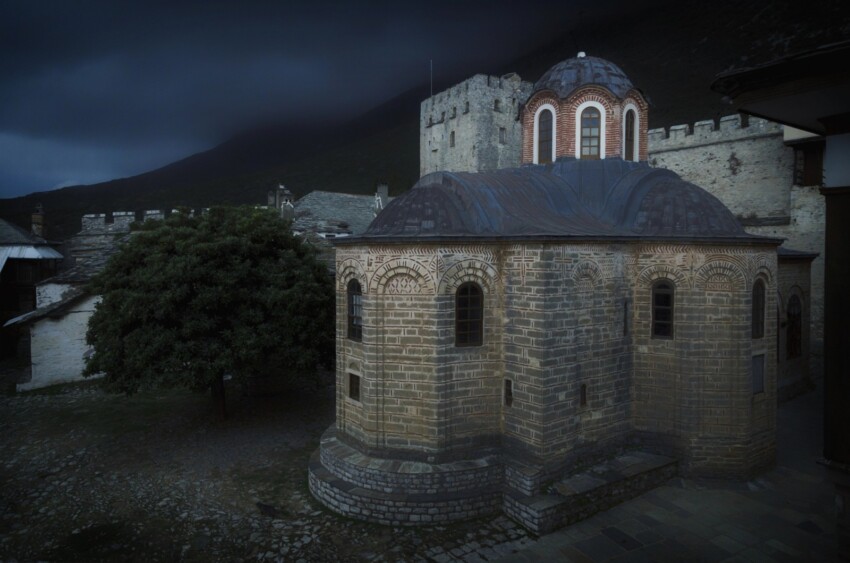
Grande Lavra is the oldest and most important monastery on Mount Athos, founded in 963 AD by St Athanasius the Athonite with the support of the Byzantine Emperor Nicephorus II Phoca. The complex covers 23 hectares in the south-eastern part of the peninsula, overlooking a natural bay where the ferry from Ouranoupoli lands. The katholikon (main church) houses 14th century frescoes attributed to the school of Theophanes the Greek, considered among the masterpieces of late Byzantine art.
The monastery library holds over 2,500 manuscripts, including 10th century codices that represent unique testimonies to the Byzantine textual tradition. The treasury includes gold reliquaries, miraculous icons and Constantine’s Cross, donated by the emperor himself. The monastery houses around 320 monks, the largest number among all Athonite cenobia. The 14th century fortified tower offers exceptional views of the east coast and the Northern Sporades Islands.
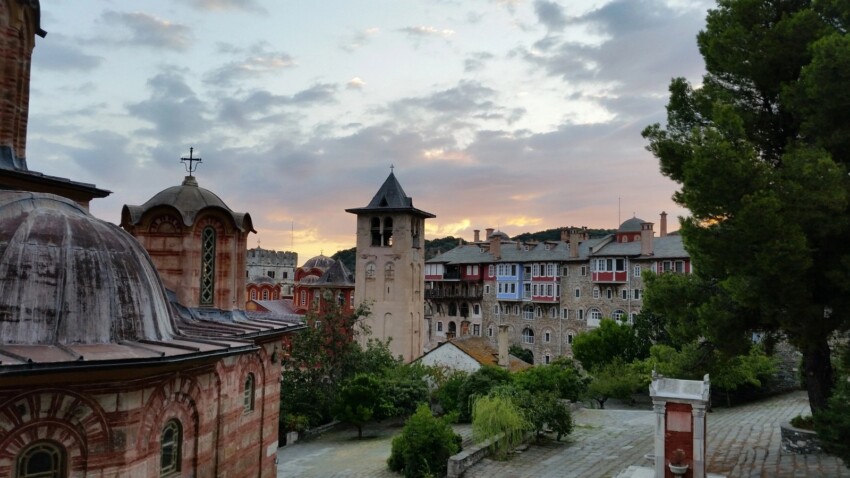
The monastery of Vatopedi, second in importance after Grande Lavra, owes its name to a legend according to which Emperor Theodosius I took refuge there as a child after a shipwreck (‘vatos’ means bush, ‘paidion’ child). Founded in 972 A.D., the complex features architecture reflecting different historical periods, from the 10th century Byzantine walls to the 18th century Ottoman additions. The monastery is famous for guarding the Holy Belt of the Virgin, one of the most venerated relics of Orthodoxy.
The Vatopedi Library has the second largest collection on Mount Athos with over 2,000 manuscripts, including palimpsests that have preserved otherwise lost classical texts. The museum exhibits portable Byzantine icons, gold-embroidered liturgical textiles and priceless ecclesiastical goldwork. The monastery operates twelve dependent monasteries spread across the peninsula, maintaining one of the most dynamic monastic communities with around 120 monks.
Iveron, also known as the Monastery of the Iberians, was founded in 980 A.D. by Georgian monks led by John the Iberian and his son Euphemius. The name derives from the ancient name for Georgia (Iberia), and the monastery still maintains close ties with the Georgian Orthodox Church. The location on the north-east coast offers spectacular views of the Gulf of Agios Oros and the neighbouring monasteries of Koutloumousiou and Pantokratoros.
The katholikon of Iveron holds the miraculous icon of the Panagia Portaitissa (Our Lady of the Gate), one of the most venerated images of Eastern Orthodoxy. According to tradition, the icon miraculously arrived from the sea in the 11th century and is only displayed on special occasions. The library has important Georgian manuscripts documenting the Caucasian presence on Mount Athos. The monastery controls the port of Dafni, the main access point to the peninsula, managing the arrival of pilgrims.
Chilandari is the only Serbian monastery on Mount Athos, founded in 1198 by Stefan Nemanja (St. Simeon) and his son St. Saba, founder of the autocephalous Serbian Church. The complex, located in the north-western part of the peninsula, is an important spiritual centre for Serbian Orthodoxy and houses relics of the founding saints. The architecture reflects the influence of Serbian medieval art, with decorated portals and frescoes following the style of the Mileševa school.
The monastery library holds some 800 Slavic manuscripts, including important historical documents on the relations between Byzantium and the medieval Serbian kingdoms. The katholikon, rebuilt after a fire in 1722, features a Baroque carved wooden iconostasis considered one of the most beautiful on Mount Athos. Chilandari runs the kellia of St Saba, a complex of monastic cells where the Serbian saint lived, now a pilgrimage destination for the Balkan faithful.
The Russian monastery of St. Panteleimon, also called ‘Rossikon’, represents the Eastern Slavic presence on Mount Athos since the 11th century. The present complex was rebuilt in the 19th century when the Russian community reached its apogee with over 2,000 monks. The architecture reflects the Moscow style with green onion domes and colourful facades contrasting with the austere Byzantine tradition of the other monasteries.
The main church, dedicated to St Panteleimon the martyr, houses relics of the saint brought from Constantinople in 1200. The monastery houses one of the most important Slavic libraries in the world, with Russian, Bulgarian and Serbian manuscripts documenting the spread of Orthodoxy in Eastern Europe. During the Soviet period, St. Panteleimon remained the only spiritual link between the Russian world and traditional Orthodoxy. Today, the community numbers about 40 monks, mainly Russian and Ukrainian.
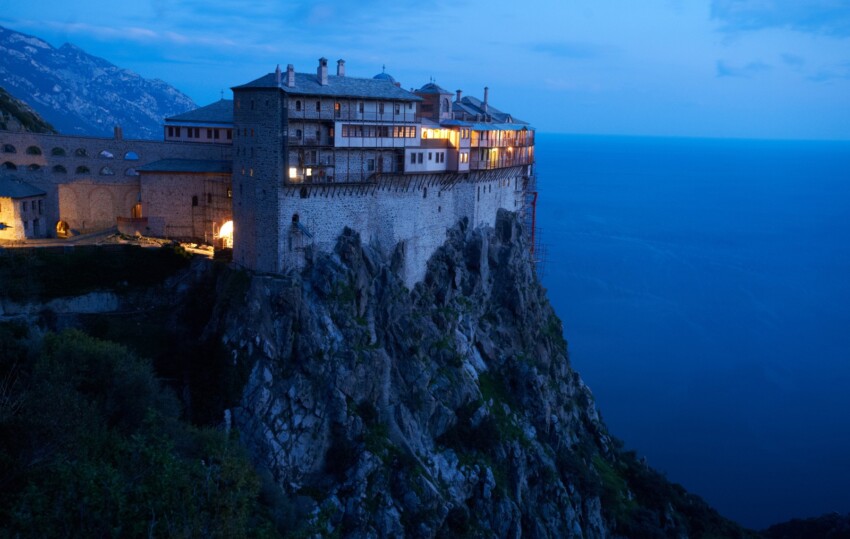
Simonopetra is perhaps the most spectacular monastery on Mount Athos because of its unique location, built on a 330-metre high rock rising vertically from the sea. Founded in 1257 by Saint Simon, the complex features daring architecture that defies the laws of gravity, with cantilevered buildings that appear to be suspended in the void. The current structure dates back to the 18th century, after a fire destroyed the original medieval building.
The monastery can only be reached via a path carved into the rock that winds its way up 200 metres, offering breathtaking views of the west coast of the peninsula. The library holds valuable Greek manuscripts and a collection of Byzantine portable icons. Simonopetra is famous for its monastic choir, considered among the best interpreters of traditional Byzantine chant. The community of 50 monks maintains close relations with the Ecumenical Patriarchate of Constantinople.
The monastery of Dionisiou, perched on an 80 metre high cliff on the south-western coast, was founded in 1375 by St. Dionysius of Korisos with the support of Emperor Alexius III Comnenus of Trebizond. The complex features post-Byzantine architecture incorporating elements of the Balkan Renaissance, with frescoed loggias and decorated inner courtyards. The strategic location allowed control of the sea routes to Mount Athos.
The katholikon of the monastery contains frescoes from 1547 by Zorzi and Frangos Katelanos, Cretan painters of the post-Byzantine school. The library holds 804 manuscripts, including important liturgical texts in medieval Greek. Dionisiou is famous for the relic of St John the Baptist, a hand of the Forerunner preserved in a 14th century silver reliquary. The monastery runs several skites on the west coast, maintaining craft traditions such as woodworking and icon production.
Koutloumousiou occupies a central position on the peninsula, connecting the east and west coast monasteries via ancient monastic paths. Founded in the 13th century, the complex was rebuilt in the 16th century after the ravages of Catalan incursions. The monastery owes its name to the Byzantine family of Koutloumos, benefactors of the monastic institution in the medieval period.
The main church has frescoes from 1540 attributed to the painter Teofane Strelitzas, depicting scenes from the life of Christ and Orthodox saints with a realism that anticipates Renaissance art. The monastery houses the relic of Saint Charalambos, venerated for its thaumaturgic properties. The library has 662 manuscripts, including important theological texts from the late Byzantine period. Koutloumousiou runs the skiti of St Panteleimon, an important centre of monastic artistic production.
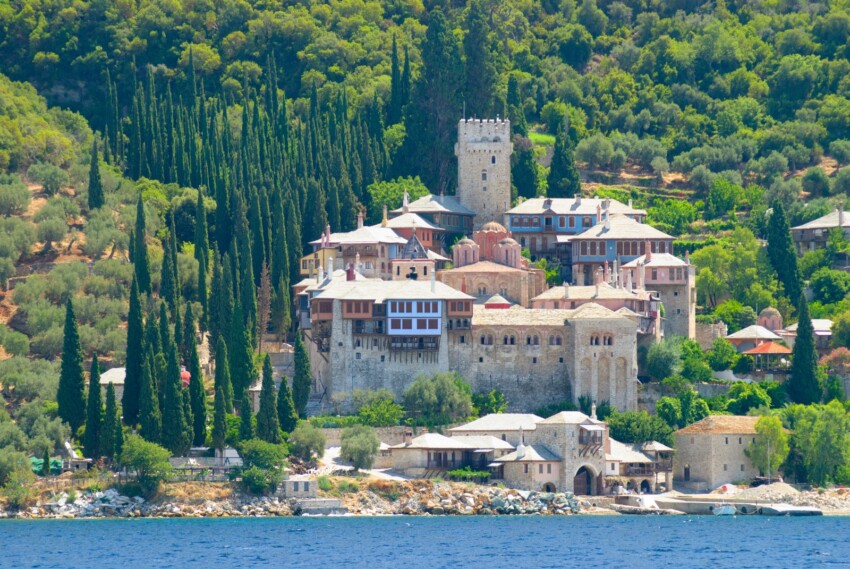
Cruises from the sea represent the only opportunity to admire the twenty monasteries of Mount Athos for those who cannot get diamonition or for women. Boats depart daily from Ouranoupoli and Ierissos during the summer season, maintaining the safety distance prescribed by the monastic authorities. The tour generally circumnavigates the peninsula offering spectacular views of the cliff-top complexes, including Grande Lavra, Simonopetra and Dionisiou.
Accommodationon Mount Athos follows thousands of years old monastic rules that turn the stay into a unique spiritual experience. Authorised visitors may only stay in the archontariki (guest houses) of the monasteries, spartan but cosy structures that reflect traditional Byzantine hospitality. There are no commercial hotels or conventional tourist facilities, as the peninsula maintains its exclusively religious character.
Each monastery has a guesthouse with simple rooms, usually with 2-4 beds, communal facilities and a secluded atmosphere. Guests share meals with the monastic community in the trapeza (refectory), following liturgical silence and Orthodox dietary rules. Meals are vegetarian and follow the calendar of ecclesiastical fasts. Accommodation is free, but donations are welcome for the upkeep of the facilities.
Karyes, the administrative capital of Mount Athos, hosts the guesthouse of Epistasia (monastic government) for pilgrims in transit between monasteries. The facility offers coordination services for visits and information on the paths connecting the twenty cenobia. The isolated kellia (monastic cells) do not receive outside visitors, maintaining their eremitic character.
Skiti (small monastic communities) offer a more intimate experience, with accommodation for up to 5-6 guests who wish to deepen their contemplative life. These structures require special spiritual preparation and are recommended for pilgrims with previous monastic experience.
Access to Mount Athos requires careful planning that begins months before the trip, as the monastic authorities issue limited permits and the procedure is complex. The diamonition (residence permit) must be applied for through the Bureau of Pilgrims in Thessaloniki or online through the official Mount Athos website, specifying precise dates and monasteries to be visited.
From Thessaloniki, the most direct connection is by KTEL bus to Ouranoupoli (2-hour journey), the last town before the border with the Monastic Republic. Buses leave from the Macedonia station every two hours during the summer season, with tickets costing EUR 15. By car from Thessaloniki, one drives along the main road towards Chalkidiki for 120 kilometres, passing through Polygyros and reaching Ouranoupoli, where there are long-term parking facilities.
From the port of Ouranoupoli, ferries of the Holy Mount Lines operate three daily trips to Mount Athos during the summer. The journey takes 2 hours and 30 minutes to Dafni, the main port of the monastic peninsula. Tickets must be purchased by presenting a valid diamonition. During the crossing, it is possible to admire the monasteries of the east coast from a unique marine perspective.
Internal connections within the peninsula are provided by monastic buses that connect Dafni with Karyes (administrative capital) and some of the main monasteries. Most of the travelling is done on foot along traditional footpaths that pass through centuries-old forests and offer exceptional views. The paths are signposted and maintained by the monastic community, but require good physical condition due to the significant elevation differences.
Alternative transports include sea taxis connecting coastal monasteries and mules for transporting heavy luggage along mountain trails. Some monasteries offer transfer services for guests, but prior arrangements must be made with the archondaris (hospitality manager).
Mount Athos occupies the easternmost peninsula of Chalkidiki, extending 50 kilometres into the Aegean Sea like a finger pointing towards Asia Minor. It is 120 kilometres from Thessaloniki, 380 kilometres from Athens and 25 kilometres from the city of Polygyros, the regional capital.
 Hotel
Hotel  Budget accommodations
  Apartments
  Family Hotel
  Luxury Hotel
  Resorts