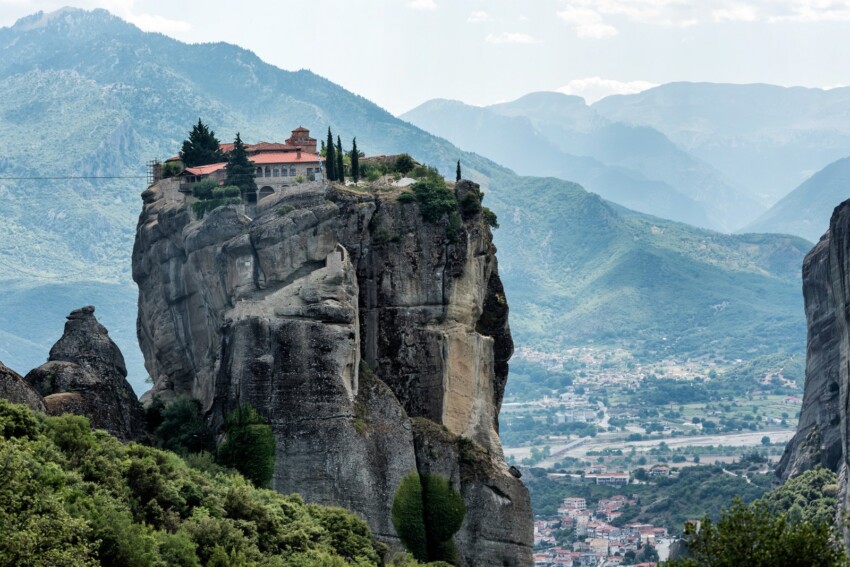
Bestseller
Thessaloniki: Full-Day Bus Trip to Meteora
From 49,50 €
Buy the ticket
After the Parthenon in Athens, one of the most visited tourist attractions in mainland Greece are The Meteors, an extraordinary example of how human ingenuity can enhance the wonders of nature rather than deface them.
In a metaphysical landscape that could be the ideal setting for the next Star Wars saga film (but has already been used for James Bond movies in the 1980s), towering sandstone towers stand atop six ancient monasteries.
Seen so suspended, the Meteor monasteries seem inaccessible, but in reality they are all open to visitors and can be reached, more or less easily, on foot, by bus or car. Between breathtaking views, steep steps and vertiginous descents, a visit to The Meteors is both an adventure, a mystical moment and a fascinating cultural journey.
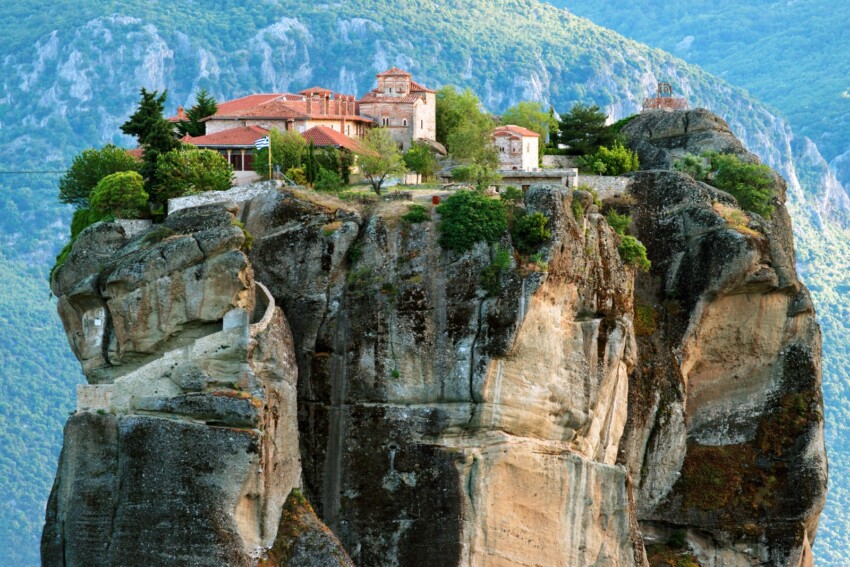
The first hermits settled in the natural cavities of the rocks on which today stand The Meteors around the 11th century. These cavities, accessible only by ropes or removable ladders, were a perfect refuge for spiritual isolation and to escape the persecution of Christians by the Turks.
The first monasteries on top of the rocks were built around the 14th century and quickly became important centres of worship, to which new monasteries were gradually added until there were 24 in total.
Today, only six remain, still in operation. Due to its beauty and its perfect integration with the surrounding area, the Meteora monastery complex was declared a UNESCO World Heritage Site in 1998.
The six Meteora monasteries that we can visit today have a very similar structure, built around a central courtyard onto which face the monks’ cells, the refectory and one or more chapels for prayer. In the centre of the courtyard is the katholikon, or main church.
Which monasteries to visit? They are all beautiful and deserve to be visited, but if you don’t have enough time, here is a small guide to help you choose.
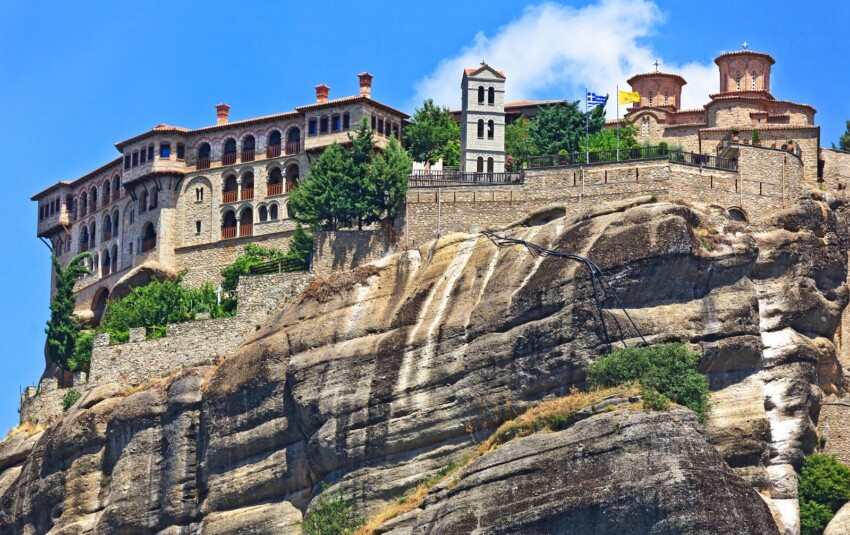
On top of an imposing 613-metre high rock stands the Great Meteora Orthodox Christian monastery, also known as the Monastery of the Transfiguration of Jesus: it is the largest and most visited of the complex.
Founded by St Athanasius of Meteora in the 14th century, it became very rich following a generous donation by the Serbian emperor Symeon Uros, who decided to give up his privileged position to become a monk.
Don’t miss the katholikon frescoes depicting the persecution of Christians by the Romans: they are exceptionally dramatic works.
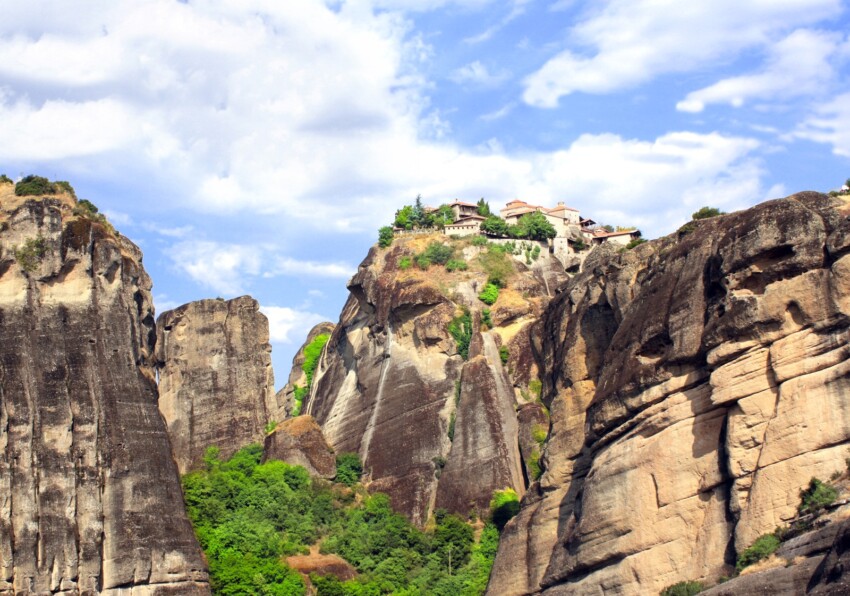
The Varlaam Monastery, dating back to 1500, is the second largest and is located about 700 metres from the main monastery.
Tourists come here to see one of the ropes used until the 1930s to lower provisions and monks, but perhaps more interesting are the late Byzantine frescoes by the artist Frangos Kastellanos, the small museum or the grandiose wall painting in which Alexander the Great is depicted as a humble skeleton.
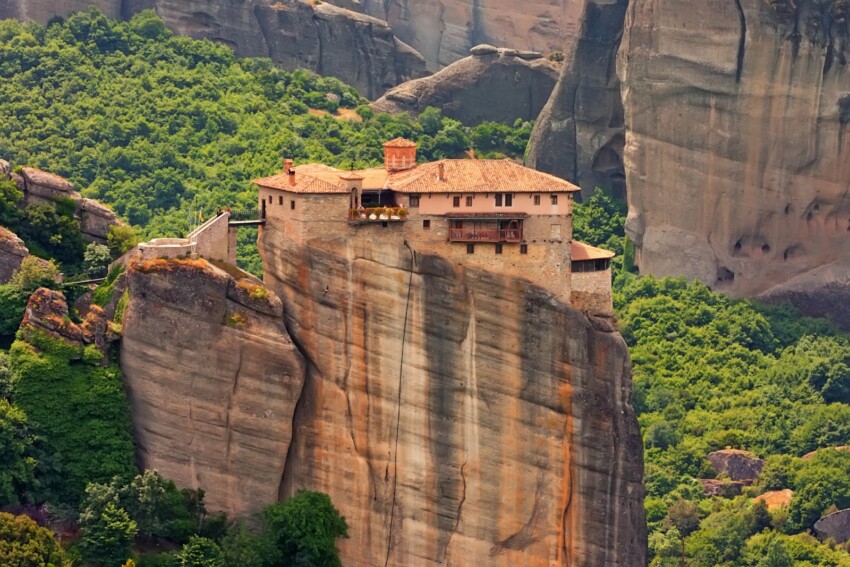
Although it is one of the most easily accessible, reached by crossing a small wooden bridge, the monastery of Roussanou seems to be one of the least touristy.
One wonders why, so beautiful is this monastery as well as its main church, with its splendid stained glass windows and two valuable fresco cycles, one dedicated to the resurrection and one to the transfiguration.
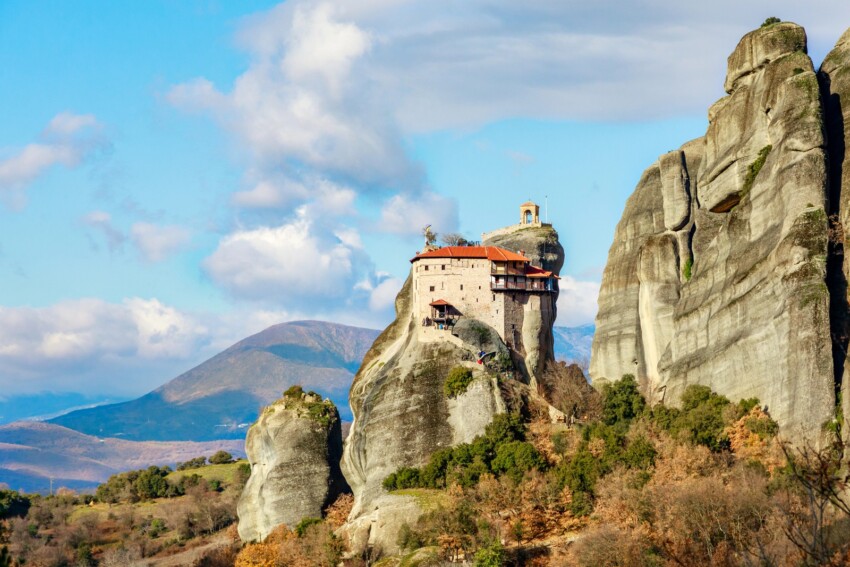
The Monastery of St Nicholas is another one often overlooked by tourists, perhaps because of its proximity to the village of Kastraki: the steps leading up to the monastery are only two kilometres from the town centre.
This proximity to the secular world does not diminish its mystical atmosphere or its exceptional photographic appeal. Inside this monastery you can also admire valuable works of art, such as the frescoes by the Cretan Theophanes Strelizas.
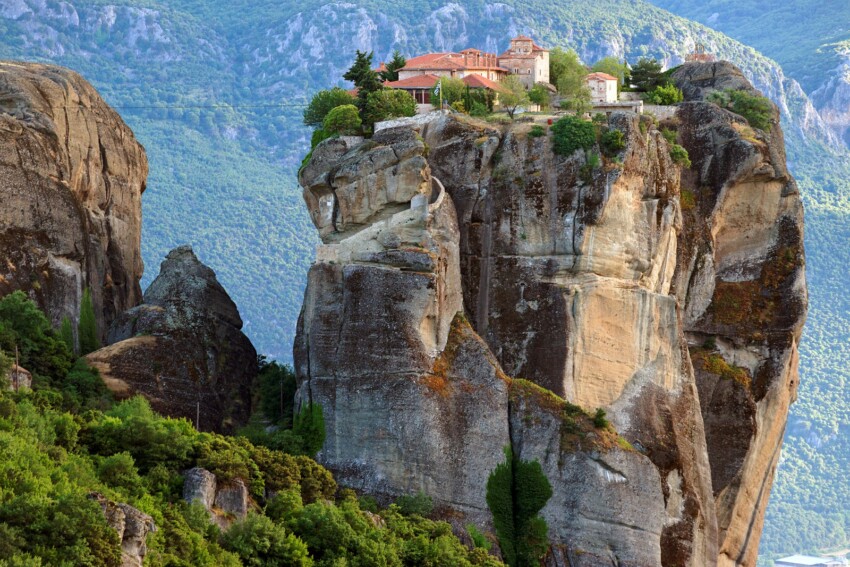
The Holy Trinity Monastery is the most difficult to reach, but if you are willing to descend a vertical rock and then climb 150 steps you will be rewarded with an impressive building and breathtaking views.
Its remote and scenic location served as the backdrop for James Bond’s 1981 film; the 17th-century church, with its ever-present frescoes, is also very beautiful.
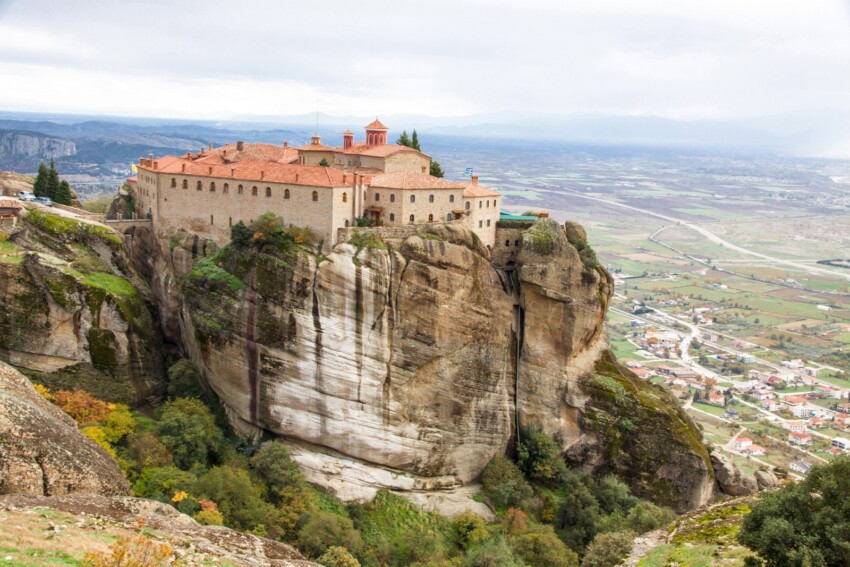
Built in 1798 and dedicated to St. Caralampo, the imposing monastery of St. Stephen is often considered the most beautiful of the Meteors.
It is only 1.5 km from Agia Triada but is much easier to reach: no steep steps to climb or descend; the monastery is connected to the main road by a small bridge.
In the following map you can see the location of the main places of interest mentioned in this article.
If you have some time left after visiting the monasteries, check out these attractions as well:
The most common way to visit the Meteors is certainly with an excursion from the main locations in Greece. Unless you have a hire car and would like to head to Kalambaka on your own, if you are based in Athens or Thessaloniki, buy a ticket for a guided tour + transfer from your starting point.
Alternatively, if you have your own means of getting to the Meteors on your own, choose a guided tour in Kalambaka to see these beautiful monasteries at their best.
The Meteor monasteries are open all year round. Being a popular tourist attraction in summer, they are very crowded; the best time to visit the Meteors is in autumn, when the sacredness of the place is not disfigured by the mass of tourists and the colours of nature add a touch of mysticism and romance.
Winter is also very atmospheric, provided you don’t mind the cold!
The opening hours of the monasteries are rather restrictive: plan your visit carefully or you risk not being able to see them all. Remember that in autumn and winter, the closing time of the monasteries is brought forward.
If you want to spend the night in Meteora look for your accommodation at hotels in Kalambaka or at Kastriki, two towns that now live off tourism: you can find a good choice of hotels of various categories, hostels, some flats and B&Bs.
Although they are small towns, they can be very crowded at peak tourist times. If you want some peace and quiet, look for something away from the main roads.
The Meteors are located in Thessaly, an eastern region of mainland Greece. The base town from which to explore the Meteors is Kalambaka, which can be reached by bus or train from the cities of Thessaloniki and Volos; you can also take a direct train from Athens, but the journey is longer.
A rental car is a good solution: thanks to the opening of the A2 motorway from Igoumenitsa to northern Greece, the car journey is, although long, rather smooth. From Thessaloniki calculate about 250 km by car.
Once in Kalambaka you can visit the Meteors independently by taking a bus to the Great Meteor and from there walking to the other monasteries; another possibility is to join a guided half-day or full-day tour, either on foot or by private transport.
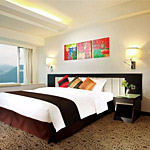
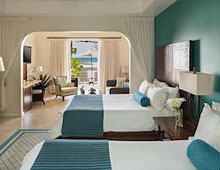 Hotel
Hotel 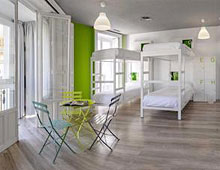 Budget accommodations
 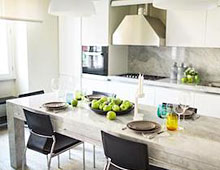 Apartments
  Family Hotel
  Luxury Hotel
  Resorts