Amalia Hotel Nafplio
Nafplio - Argous Street
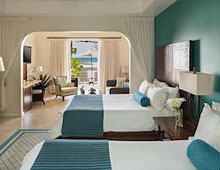
On the outskirts of historic Nafplio, this neoclassical building offers luxurious rooms with balconies overlooking Palamidi, the sea or hotel’s lush gardens.
Book now
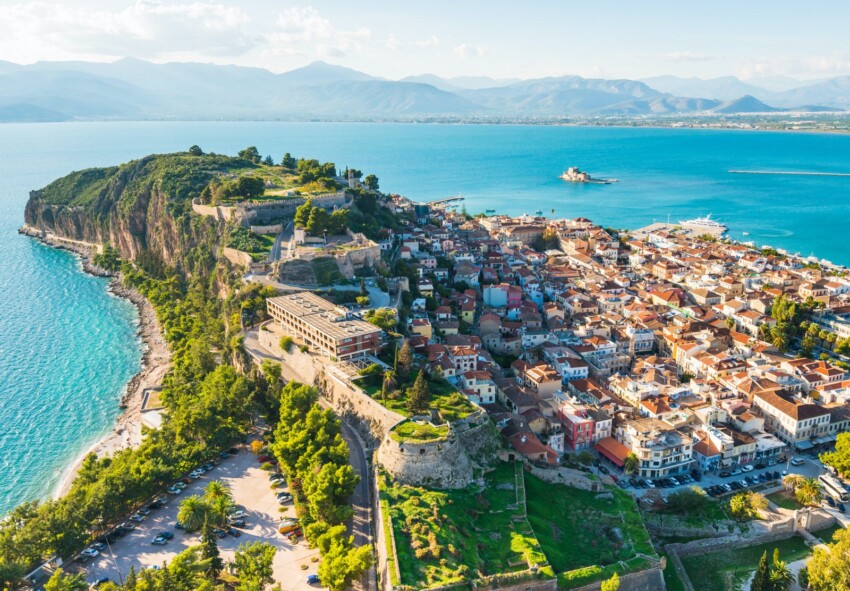
Sometimes you don’t want a beach-only holiday. Sometimes there are those who want to live the beach life as a family and those who prefer to wander around the cities. And then there are those who have already seen everything or almost everything of Greece and those who want to avoid the classic destinations of international tourists. If you fall into one of these categories, Nafplio is the ideal destination for your next holiday in Greece.
The capital city of Argolis, the region of myth par excellence, is easily reached from Athens, so much so that it is often relegated to a day trip from the capital. Why not instead consider it for a stay of a few days, or perhaps even a week?
For a start, Nafplio is an excellent base for exploring the Peloponnese. Without having to get out the car or take a bus, there is a wealth of things to do and see.
There are no less than three fortresses, a pedestrian street full of shops and cafés, and an unexpected variety of museums. There are also a handful of beautiful beaches on your doorstep, perfect for a refreshing dip after visiting museums and monuments, and an atmospheric walk between the sea and vertiginous cliffs.
Lively and elegant, Nafplio combines Venetian echoes, oriental suggestions and typically Greek traits. In its pretty old town you will come across fishermen’s houses, neoclassical palaces, panoramic views, boutiques and green areas. There is everything you need to get your fill of excitement.
The city’s history is long and studded with records, happy and otherwise. It was the first Greek city to free itself from second Ottoman rule. It was the first capital of modern Greece, and remained so until it relinquished the sceptre to Athens in 1834. It was also the scene of the assassination of the first Greek president and the seat of the first parliament.
For Greeks, it is an important and well-known city; for international tourists, it is a new destination to discover.
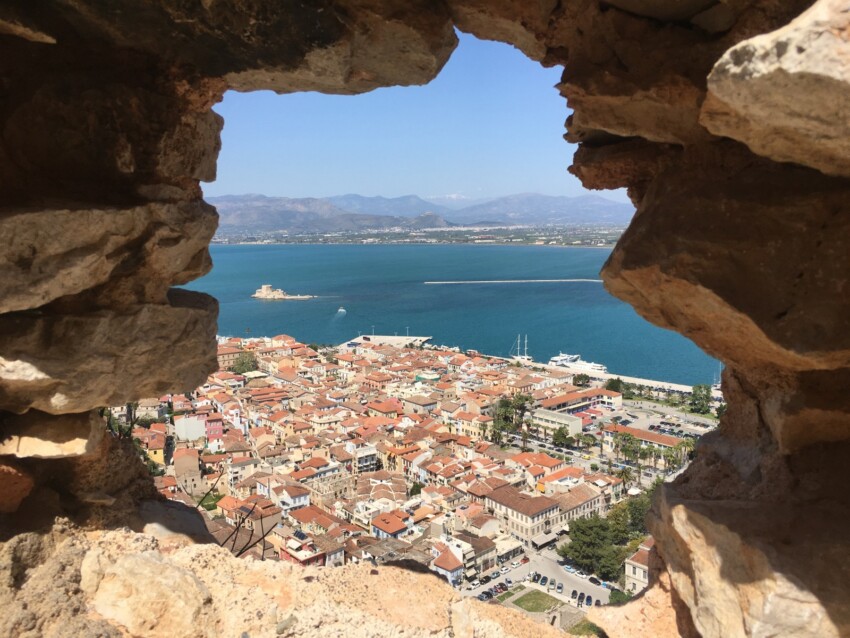
Nafplio concentrates in an easy-to-walk around historical centre a variety of sights that can easily fill a day or more. If you stay longer, you can visit interesting attractions in the surrounding area.
The old town of Nafplio is very pretty and invites for relaxing urban walks. Its cobbled streets are lined with the usual cafés with outdoor tables, souvenir shops and craft shops that you can find in every tourist resort, but also elegant boutiques and art ateliers. The atmosphere is at times Venetian, at times vaguely bohemian, a little Parisian, at times unquestionably Greek.
Waste some time wandering aimlessly around the narrow streets and steep stairways of the Old Town in search of quaint corners and picturesque views. In particular, it is worth exploring Psaromachalas, the first area that was inhabited when the city had to extend outside the defensive walls.
As the characteristic small houses remind us, Psaromachalas was for a long time a fishermen’s quarter; even today it is still a purely residential area, although some of the typical fishermen’s houses have been converted into romantic B&Bs.
Many of the streets of the Old Town are pedestrianised, and even those open to traffic are always very quiet, with few cars: walking around is a real pleasure.
Located in the heart of the Old Town, Syntagma Square is the main square of Nafplio and the nerve centre of social life. A meeting place par excellence, it is frequented by people of all ages at all hours of the day and late into the evening.
The square is overlooked by elegant neoclassical buildings, most of which are museums and administrative buildings; exceptions are the Trianon and the Vouleftiko, with their oriental-style architecture.
The square is the ideal starting point for a walking tour of the centre of Nafplio. This is where Vas Constantinos Street, better known as Megalos Dromos or Great Road, starts.
This is a long pedestrian street that runs through the city centre. It is the classic commercial artery where you can shop, stop for a coffee, meet friends and watch people go by.
The centre of Nafplio is dominated by the Palamidi Fort, an imposing defensive edifice situated 216 metres above sea level, whose walls embrace the slopes of Acronauplia Hill. Mighty in size and menacing in its scrutiny of the city from above, this massive construction maintains an austere elegance.
It has eight bastions, all named after heroes from Greek mythology including Achilles, Leonidas and Epaminondas. Even the name by which the fortress is known refers to mythology: Palamedes is in fact a Greek hero who fought in the Trojan War.
The Venetian Palamidi Fortress was erected at the turn of the 17th and 18th centuries by the Venetians to strengthen the city’s defence system, but it soon fell into Ottoman hands and remained in their possession until Greece gained independence in the first half of the 19th century.
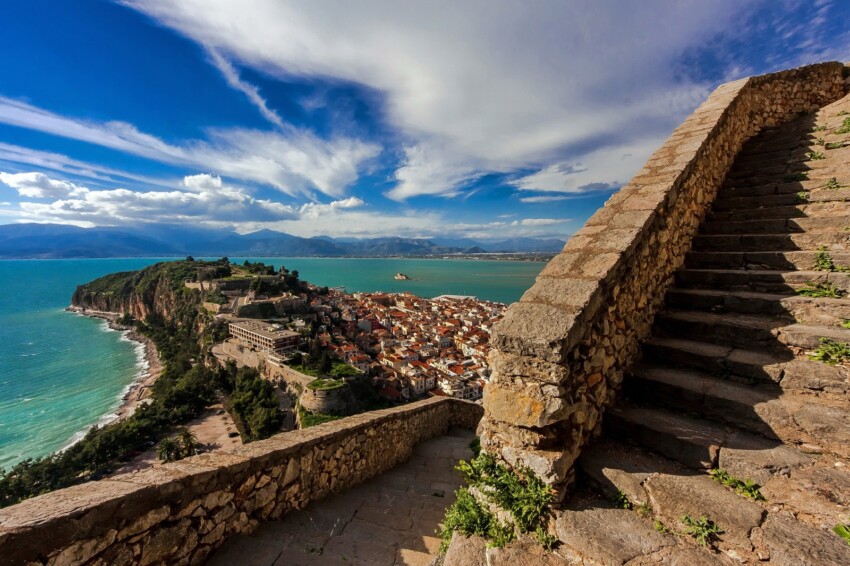
Climbing to the top of the fortress is the best way to admire Nafplio from a multitude of different viewpoints. However, it is not for everyone because to reach the fortress on foot one has to climb an impressive number of steep steps.
Some guidebooks say 847 steps, others 999, still others more than a thousand: it doesn’t matter who is right, it is still a lot; moreover, the climb is exposed to the sun and on summer days it can be a very tiring undertaking.
If you don’t think you can make it, you can forego the photos along the way and comfortably reach the Palamidi fortress by car, bus or taxi. The view of the city and the sea from the top is exciting enough not to regret the walk not taken.
Another iconic image of Nafplio is the Bourzi Castle, located on an uninhabited islet emerging from the sea just opposite the city centre. It is on three levels connected by stairs.
Visible from almost every point of Nafplio, it is both austere and romantic; at night, fully illuminated, it is a very impressive sight. Seen from above, it has a shape vaguely reminiscent of a ship: this peculiar form was designed to adapt the construction to the shape of the island.
The name Bourtzi in Turkish means ‘tower’ and reflects the original defensive function of this construction. It was built in the second half of the 15th century as part of the town fortifications ordered by the Venetians to defend Nafplio from pirate attacks; the design is by the Italian architect Antonio Gambello.
Over the centuries, the castle was used as a prison, barracks and hotel. It is currently open to visitors and hosts a major music festival every summer.
Entirely occupied by the castle, the islet of Bourzi is easily reached by frequent boats departing from the port of Nafplio.
Less well known than the Palamini Fortress and Bourtzi Castle, Acronafplia is the third defensive construction still standing in the centre of Nafplio and the oldest. It is often confused with the Palamidi Fortress because its name is the same as that of the hill on which the more famous construction stands.
However, it is not difficult to distinguish them: of the two, Acronafplia is closest to the sea and can be reached on foot without much effort. Because of its position to the west, it is an excellent spot from which to watch the sunset and if you are stopping in Nafplia for a short time, it is a good alternative to the Venetian fortress.
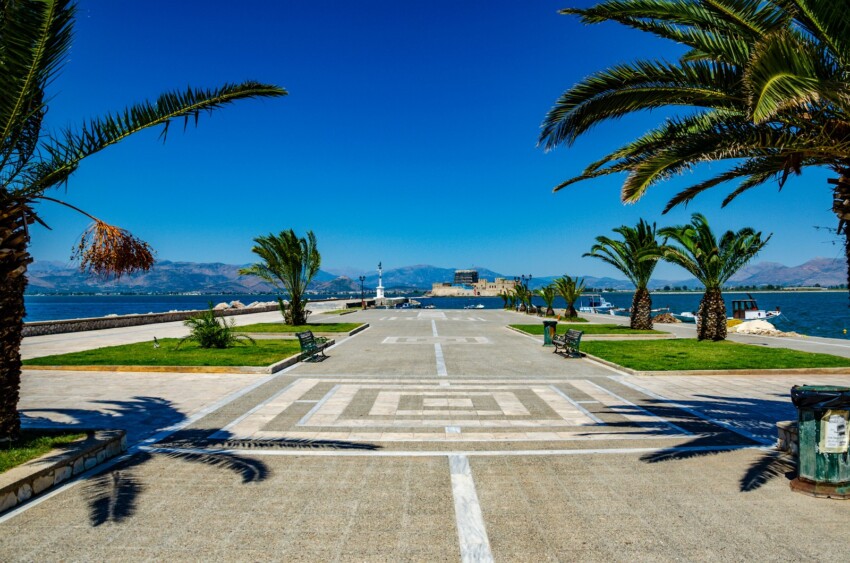
Nafplio boasts a very characteristic promenade. It starts in the centre and runs along the promontory that forms the western end of the town until it ends at a rocky beach.
During this easy walk you can admire the Gulf of Nafplio, the dense vegetation growing on the sides of the promontory and the Palamidi fortress seen from below. Along the way you will come across the pretty little church of St Mary of the Cave (Panagia Spilias).
A testimony to the mix of peoples and cultures that have succeeded one another in Nafplio is the old mosque known as Trianon, one of the few buildings preserved from the early period of Ottoman rule.
In the 17th century, the Venetians converted it into a church dedicated to St. Anthony of Padua. It was then used again as a mosque during the second Ottoman occupation. In the 19th century it became a school and later a cinema from which it took the name by which it is still known. Today it is home to a small theatre.
It overlooks the central Syntagma Square and is easily recognised by its rectangular ground plan surmounted by an octagonal dome and its simple façade with three doors surmounted by arches.
The most important church in Nafplio is Agios Spyridonas, located in the city centre. It was built in the 18th century and houses a collection of icons and traditional paintings.
However, its fame is linked to a tragic historical event, namely the assassination of the first Greek president Ioannis Kapodistrias on 27 September 1831. His organs are buried under the altar.
On the south-western side of Syntagma Square is another building that resembles a mosque. This is the Vouleftiko, an 18th century building famous for becoming the seat of the first Greek parliament; it was also the seat of the court where two important leaders of the Greek revolution, Theodoros Kolokotronis and Dimitris Plapoutas, were tried.
In fact, it was originally a mosque. According to a local legend, it was erected at the behest of a rich Turk who wanted to redeem himself from a crime he had committed.
A very original museum in Nafplio worth visiting is the Museum of Komboloi, entirely dedicated to a typically Greek tradition.
Komboloi are the pearl necklaces that Greeks, especially older men, hold in their hands as stress-reliefs. You will see one quite often during your holiday.
Originally created as accessories for the wealthy classes, they later came to connote categories on the fringes of society, despised by the rich. Today, they are widespread among people from all walks of life, but remain mostly a male accessory.
At the Komboloi Museum in Nafplio you can learn more about this identifying element of Greek society and admire some elaborate specimens. The most beautiful ones, made of valuable metals and semi-precious stones, are true works of art.
In addition to the Komboloi Museum, there are many other museums in Nafplio recommended for travellers with specific interests. Among these are worth mentioning:
A must-see attraction for anyone staying in Nafplio is the Ancient Theatre of Epidaurus, considered one of the best-preserved ancient theatres in Greece. The theatre of Epidaurus is easily reached from Nafplio by bus.
Originally part of a sanctuary dedicated to the god of medicine Asclepius, it is a place steeped in charm and mysticism. It is famous for its exceptional acoustics, which make it possible to perfectly hear a sound coming from the stage, even of the slightest intensity, without the need for amplification.
Much closer, but less impressive, is the archaeological site of Tiryns: it is located only 6 km from the city centre and represents the site of the first inhabited settlement of Nafplio in antiquity.
Staying on the subject of archaeological sites, it is worth visiting Mycenae, one of the most famous and important Greek polis, cradle of a millennial civilisation that took its name from it. The city’s landmark attraction is the majestic and enigmatic Lion’s Gate.
With a car at your disposal, you can also visit Sparta and Mistrá in one day; if you don’t want to rent a car, you can condense several visits into one day by joining an organised excursion. Day tours from Nafplio generally include Epidaurus, Mycenae and the wine cellars of Nemea; in some cases an oil tasting is also included.
The fact that Nafplio is not a typical seaside holiday destination does not mean that there are no beautiful beaches in the area. The most beautiful beaches of Nafplio are located on the opposite side of the harbour and the Acronafplia fortress and are all washed by a very clean blue sea.
The town beach is called Arvanitias10, a strip of pebbles in a small bay. It is easily reached and has bars and facilities so it is often crowded, but it is a good option for a quick dip after a day of cultural sightseeing. It is also very lively in the evening hours.
Taking the dirt road from the car park above Arvanitias, one can easily walk to the beach of Neraki11, an even smaller but much less crowded cove.
Continuing further, you reach Paralia Karathonas12, a golden sandy beach bordered by shady tamarisk trees. The walk takes about 45 minutes, but if you don’t want to struggle you can also reach Karathona by car or bus. The beach is equipped with numerous facilities including umbrella and sunbed rental, bars, restaurants and a camper van area.
Another popular sandy beach around Nafplio is Psili Ammos, also called Tolo13. It too is connected to the city centre by a local bus.
In the following map you can see the location of the main places of interest mentioned in this article.
Nafplio is not a seaside resort devoted to tourism but a dynamic city with more than 30,000 inhabitants and a variety of economic activities. This is reflected in the hotel offer, which is somewhat different from that of the most popular Greek tourist destinations.
The typical studios that are the best option for islanders here are a rarity, and so are sea-view rooms.
On the other hand, however, Nafplio is on average cheaper than the most famous Greek resorts. This means that one can find delightful guesthouses and pensions at attractive prices and one can even treat oneself to a charming 4- or 5-star hotel without spending a fortune.
The best area to stay in Nafplio is definitely the Old Town: it is the most charming district and the one with the widest choice of holiday accommodation, plus you will have all the main tourist attractions at your fingertips.
We offer a selection of hotels at Nafplio to suit all categories of travellers. The most booked by tourists are the sea-facing hotels, often right on the beach. If you want to play it safe, choose one of the following: they are among the most booked hotels in Nafplio, sorted by number of reviews.
If you prefer space, privacy and the ability to prepare your own meals to a hotel holiday, book a holiday home at Nafplio. We recommend a few below, but in this case we advise you to book early because houses and apartments for rent at Nafplio are in high demand.
Nafplio is well connected to other parts of Greece.
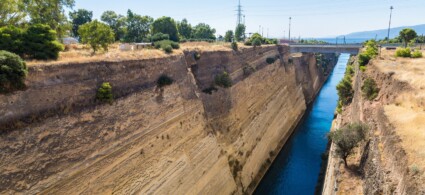
Getting to Nafplio by car from Athens is very easy because there is a convenient motorway, the A8, which leads from the capital to the Strait of Corinth. From here, take the A7 motorway and exit at Nemea, then follow the signs for Nafplio. Calculate at least one and a half hours to reach your destination and bear in mind that this time can increase considerably in case of traffic.
It is also possible to reach Nafplio from Patras. From the port of arrival take the A8, this time in the direction of Athens, to Corinth and from there continue as above.
The car is the recommended way to get there because it is convenient and fast, and there is also ample free parking at a short distance from the port of Nafplio.
If you travel by public transport, you can count on a dozen daily buses that make the Athens-Nauplia connection without changes. The journey time by bus is however much longer than by car: calculate at least 4 hours.
You can reach Nafplio by bus from many other places in mainland Greece, including the ports of Patras and Igoumenitsa. However, it is not possible to get to Nafplio by train: there is a railway station, but it is no longer in service.
The closest airport to Nafplio is Athens, which is served by low-cost flights from many cities.
What's the weather at Nafplio? Below are the temperatures and the weather forecast at Nafplio for the next few days.
Nafplio is located along the north-eastern coast of the Peloponnese and is part of Argolis, of which it is the capital. It overlooks a wide gulf named after the city and is washed by the Aegean Sea.
It is about 150 km from Athens, 180 from Patras, 55 from Corinth.
 Hotel
Hotel 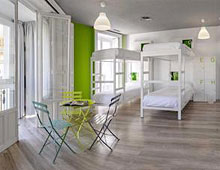 Budget accommodations
 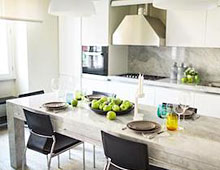 Apartments
  Family Hotel
 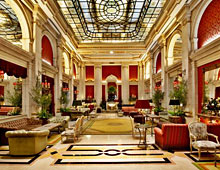 Luxury Hotel
 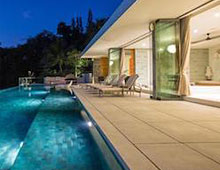 Resorts