Bestseller
Ancient Olympia: Archaeological Site and Museum Entry Ticket
From 26,00 €
Buy the ticket
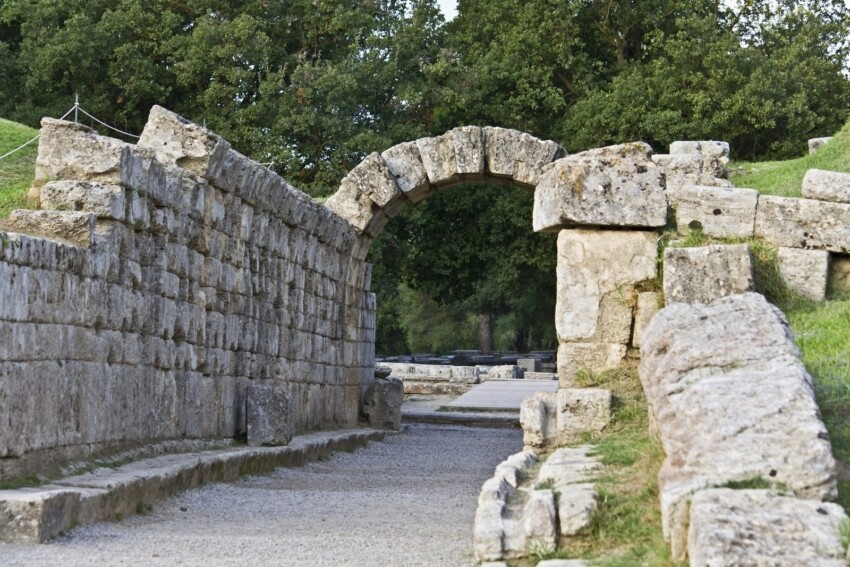
In Olympia, myth lives on. Like the athletes of thousands of years ago, you too can experience the thrill of walking through a vaulted passageway and coming out into a stadium with a mythical air: close your eyes and you will be transported back in time, when the stands of this stadium were packed with people who flocked from all over Greece to acclaim the heroes of sport.
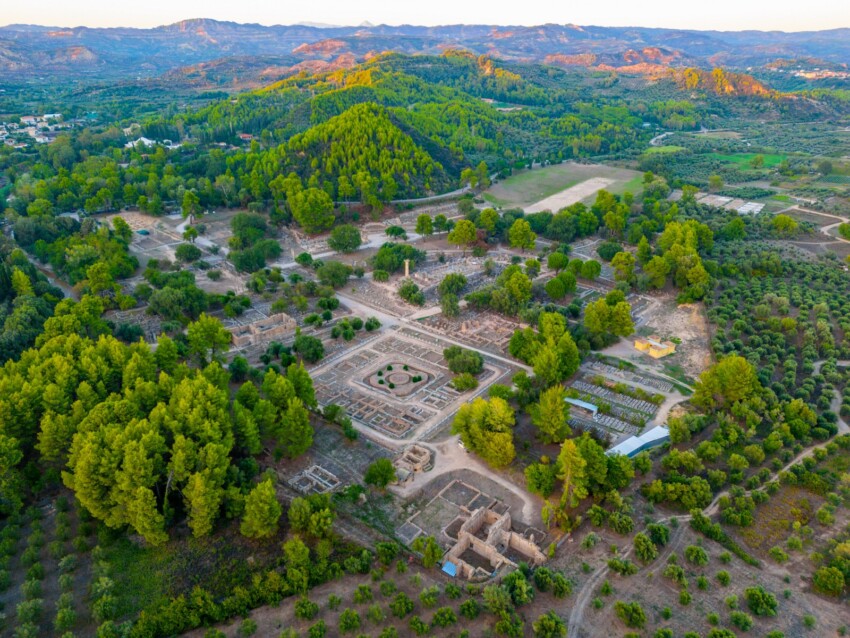
Home to one of the most important sanctuaries of the ancient world, Olympia is the place where the Olympic Games of antiquity were held. A living tradition, as even today the Olympic flame departs from here every four years.
Walking through the ancient ruins of this legendary city is an indescribable thrill: for history or sports enthusiasts, but also for romantic people looking for a unique place.
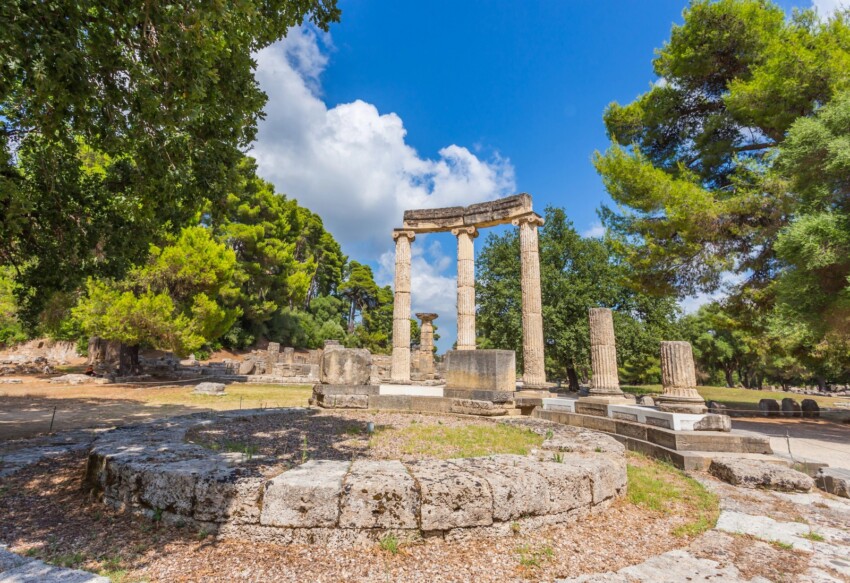
The Panhellenic sanctuary of Olympia is one of the most important religious and political sites of the ancient world.
Its origins date back as far as the end of the Neolithic period (4th millennium BC), but its importance was established when it became the main centre of the cult of Zeus, the supreme god of Greek mythology.
From 775 BC to 383 AD, every four years, sports competitions were held in Olympia, which we know as the Olympic Games. In the Greek world, these games had a sacred significance, as they were celebrated in homage to the gods. In the name of divine peace during the games, all wars between the Greek cities, perpetually fighting each other for the defence of their autonomy and prestige, were suspended.
Even today, the Olympic Games are synonymous with a spirit of solidarity and a sense of common belonging.
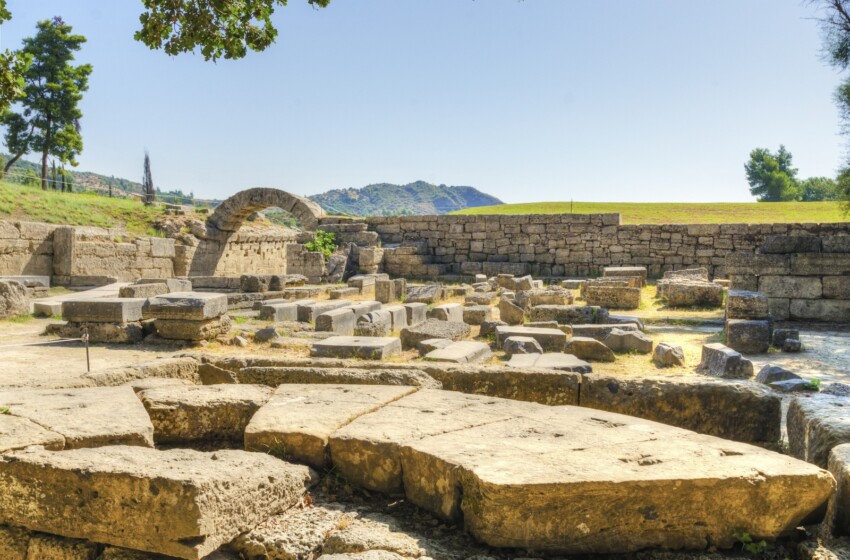
The main attraction of Olympia is obviously the ruins of the ancient city.
Within the archaeological area of Olympia, the most interesting attractions are:
The Archaeological Museum of Olympia is one of the most important in the whole of Greece. A must for fans of ancient history, it will also fascinate the merely curious. The museum will introduce you to the long history of the sanctuary of Olympia through artefacts found during excavations in the sacred area (from the prehistoric to the early Christian era). It includes three important collections: one of sculptures, one of bronzes and one of terracottas.
The Museum of the History of the Ancient Olympic Games houses more than 400 exhibits from the prehistoric era to the 5th century BC, mostly from Olympia but also from other important centres of antiquity. The museum traces the history of the ancient games and other Pan-Hellenic festivities.
The Museum of Modern Games is less interesting than the Museum of Ancient Games, but since it is free, why not take a look at it? Some medals are on display.
With a single ticket – which you can buy online at questa pagina – you can visit the archaeological site of Olympia (which includes the Temple of Zeus, the Temple of Hera, the Stadium), the Archaeological Museum, the Museum of the History of the Excavations, the Museum of the Ancient Games and the Museum of the Modern Games.
All these places can be visited independently but are best appreciated by participating in a guided tour with a guide who will tell you the history of these millenary sites.
An alternative way to visit Olympia and its sights is to take part in a guided tour, some even include a transfer from Athens.
The archaeological site of Olympia is one of the most visited tourist attractions in mainland Greece, so you won’t have any difficulty finding accommodation around it.
In the modern part of the city of Olympia, you will find a wide choice of hotels and b&b’s in all price ranges, with a predominance of mid to low-end establishments. Hotel prices in Olympia are generally quite cheap.
The archaeological site of Olympia is open all year round, with the exception of a few public holidays including Easter, Christmas, Boxing Day and 1 January.
There is no best time to go to Olympia: it is undeniable that the ancient ruins are much more impressive on a sunny day, but the site is almost completely exposed and the heat can sometimes be excessive.
In cooler seasons the number of visitors is lower and you can therefore visit the archaeological park more peacefully. Also, from November to March, the entrance fee is half price.
Olympia is easily reached by hire car, taxi or bus from the towns of Pyrgos or Katakolon, which are 15 km and 40 km away respectively. There is a small airport in Pyrgos, but it is not served by international flights. From Athens one can reach Olympia by direct bus, but the journey is a bit long (5 ½ hours).
For those who want to get to Olympia there are several possibilities. The easiest, and probably the cheapest, is to fly to Athens and from there travel by bus or hire car. In the summer months there are also some flights to Patras airport, 67 km from Olympia.
Another possibility to visit Olympia is to join a tourist cruise in the Mediterranean: many cruises, in fact, include in their itineraries a stop in Katakolon to allow tourists to see the ruins of the ancient Olympic city.
The city of Olympia is located in Elida, a region in the Peloponnese peninsula (now separated from the rest of mainland Greece by the Corinth Canal). The modern centre is called Archea Olympia and is located less than two kilometres from the archaeological site.
The city lies on a verdant plain, crossed by two rivers that join to the south (Cladeus and Alphaeus). It is about 100 km from Patras and more than 300 km from Athens.

 Hotel
Hotel  Budget accommodations
  Apartments
  Family Hotel
  Luxury Hotel
  Resorts