Mediterranee
Patra - Agiou Nikolaou 18
Book now
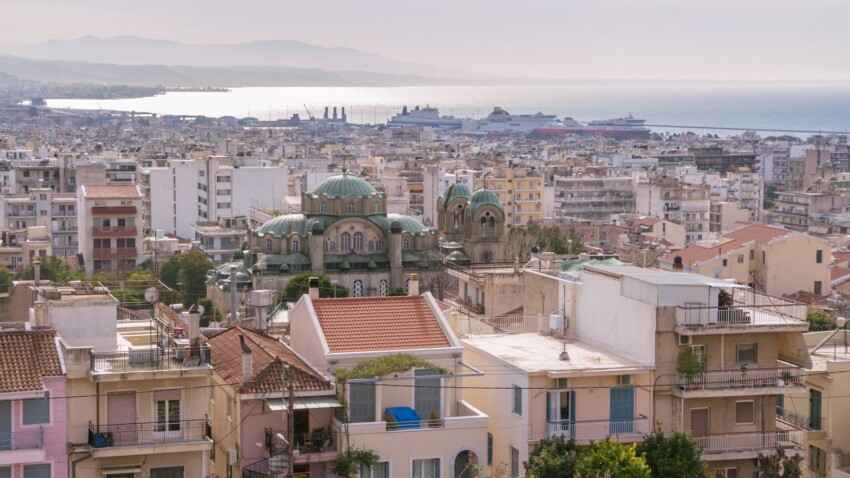
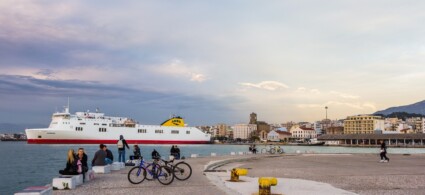
As the third largest city in Greece and the second most important port (after Piraeus in Athens), Patras is for many travellers just a junction, a point of passage: they get off the ferry and leave immediately with their car for other places, or stop just long enough to wait for another ferry or bus.
Stay at least a day and you will discover a city with more than 3,000 years of history, a rich calendar of events (the most famous carnival in Greece is held here) and a young and lively atmosphere. Between wonders of the past and contemporary engineering masterpieces, you won’t regret stopping by.
Some areas of Patras are charmless, with crumbling streets and rows of anonymous apartment blocks, but you need only walk along the pedestrianised streets of the centre or in the upper town (Ano Poli) to discover a completely different city.
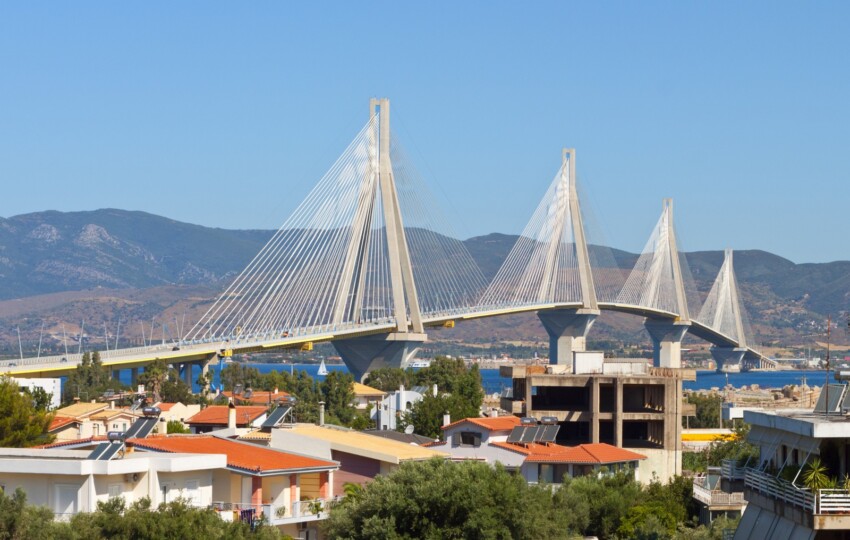
The architectural marvel of Patras is the Rion Antirion bridge over the Gulf of Corinth, built to facilitate the passage of the narrow stretch of sea that divides Peloponnese from mainland Greece.
Inaugurated in 2004 with the passing of the Olympic flame at the Athens Games, it is still the longest ‘suspension’ bridge in the world. It stands 64 metres above sea level and its supporting pylons are 164 metres high: a truly impressive sight, dominating the cityscape.
Among the attractions of the past, however, one of the most fascinating is the Kastro, the fortress originally built by the Romans and repeatedly modified and rebuilt over time by the Turks, Byzantines and Venetians. It is reached by a walk in the shade of a pine forest and once you have climbed all 190 steps you will be rewarded with a beautiful view of the islands of Zakynthos and Kefalonia.
Other interesting sights include the Church of Agios Andreas (one of the largest in the entire Balkan area), the old conservatory, the Roman theatre, the Archaeological Museum and an old hospital built in the late 19th century and now used as an event space.
A fascinating train ride
A very special attraction around Patras is the railway that connects the towns of Diakofto and Kalavryta, crossing the picturesque gorge created by the Vouraikos River. You start at sea level and arrive at a mountain village, with a wonderful landscape flowing before your eyes. Little known, the Diakofto-Kalavryta is one of the most beautiful railways in Europe.
Patras may not be known as a tourist resort, but the amount of hotels and inns that have sprung up in and around the city is impressive, so you will have no difficulty finding comfortable accommodation at a good price.
Many hotels and b&b’s in Patras are in the mid to low price range, but there are also some 4-star hotels for those who want to treat themselves to a little more luxury.
Patras is strategically important in terms of transport and connections in Greece, so getting here is very easy as well as travelling from here to other places.
There is also an airport in Patras, but it is only open seasonally and is served by a few charter and low-cost flights.
Athens is about 200 km away and can be reached quickly by car by taking the A8 motorway (European road E65 and E94) or by direct bus departing about every half hour. The two cities are also connected by train. The journey time is about three hours.
Patras can be reached by bus from some important locations in mainland Greece, including Delphi and Argos. Some islands can also be reached by bus (bus ticket includes boat passage) such as Zakynthos and Crete. By train, in addition to Athens, you can reach Kalamata.

 Hotel
Hotel  Budget accommodations
  Apartments
  Family Hotel
  Luxury Hotel
  Resorts