The Peloponnese region is a piece of Greece, not only geographically but also historically and culturally.
Among its rugged mountains and green valleys stand the cities of ancient myth and some of Europe’s most important archaeological sites, declared UNESCO World Heritage Sites: Olympia, birthplace of the Olympic Games; Mycenae, cradle of the homonymous civilisation; Argos, kingdom of Agamemnon; Sparta, arch-rival of Athens; Arcadia, an area of bucolic fame and beauty.
The Middle Ages have also left evident traces in the Peloponnese, with characteristic fortified villages, sometimes in vertiginous positions overlooking the sea, while seaside resorts have recently sprung up along the coast around enchanting beaches that have nothing to envy from the more famous Greek islands.
For a different kind of Greece where you can still find the best of Greek tourism – culture, clear sea, good food, nature walks – stay on the mainland this year and explore the Peloponnese.
Where the Peloponnese is located
The Peloponnese occupies the southern part of mainland Greece and became an administrative region in 1987, uniting the so-called peripheral units of Arcadia, Argolis, Corinthia, Messinia and Laconia.
Of great historical and geographical importance, with a predominantly mountainous territory, the Peloponnese is washed by the Ionian Sea to the west and the Aegean Sea to the east.
Island or peninsula?
The literal translation of the name ‘Peloponnese’ would be ‘island of Pesopo’. Until 1893, this sounded a little strange because the Peloponnese was to all intents and purposes a peninsula.
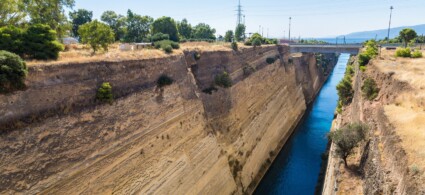
In that year, however, the Corinth Canal was built, cutting through the thin isthmus that bound the Peloponnese to the rest of mainland Greece, making it to all intents and purposes an island.
Many cruise ships pass through the Corinth Canal, partly to save over 200 km of navigation, partly because this grandiose piece of engineering, set in beautiful natural scenery, has become a popular tourist attraction.
Things to do in the Peloponnese
Olympia
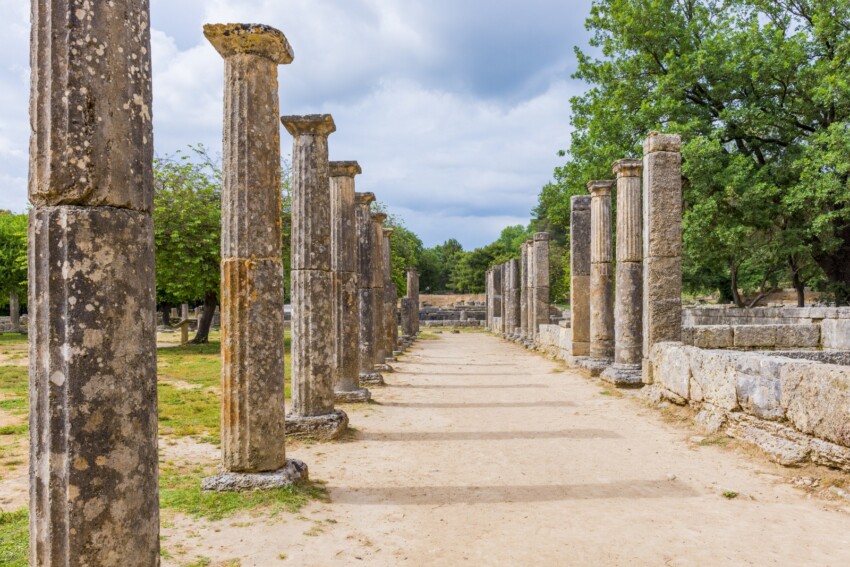
A compulsory stop for tourists visiting the Peloponnese is Olympia, the ancient sanctuary city famous throughout the world for being the place where the first Olympic Games in history were held, dedicated to Zeus, and where still today, after more than 4000 years, the Olympic torch is lit to kick off modern sporting competitions.
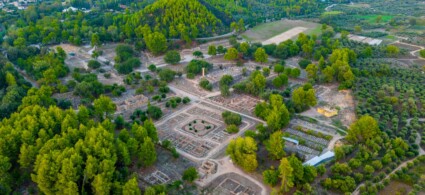
Ancient Olympia is undoubtedly the most famous tourist resort in the Peloponnese and one of the most important archaeological sites in Greece. It is located only 500 metres from the modern city, nestled in the green valley of the Alphaeus river.
Little is left of the grandiose ancient city, with its temples, stadiums, commemorative monuments and athletes’ lodgings, but the power of the myth is such that walking among the ancient ruins you will not find it difficult to imagine the roar of the spectators cheering the athletes on, the winner’s shout of triumph, his glory and satisfaction.
The modern Olympia is not as charming, but it is still a pretty town where it is pleasant to spend a few hours wandering around its narrow streets lined with cafés and souvenir shops.
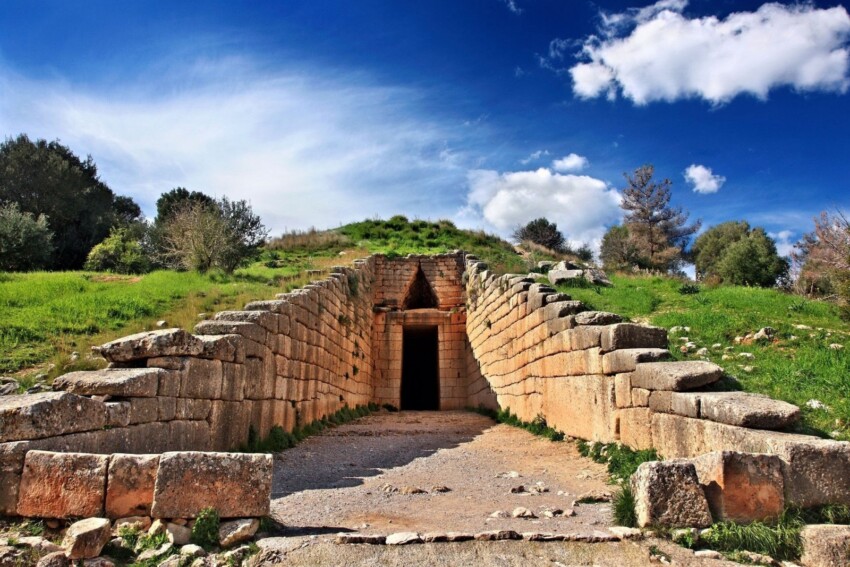
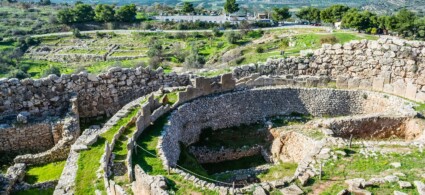
Mycenae, the mythical city that gave its name to an entire civilisation, lies in a picturesque uninhabited area in the mountains, 9 km from the city of Argos. Here reigned Agamemnon, one of the most powerful kings of ancient Greece and here, according to Homeric reconstruction, the famous Trojan War was planned.
Already the entrance to the city is something extraordinary: one enters the rock of Mycenae through the monumental Lion’s Gate, dating back to 1300 BC. The gate opens along an impressive system of fortifications up to 8 metres thick; then the extraordinary ruins of the citadel, the Treasury of Atreus and the tomb of Agamemnon await you.
At the foot of the fortified citadel is the archaeological museum where you must enter to admire the famous funeral mask of Agamemnon, one of the most famous finds of antiquity.
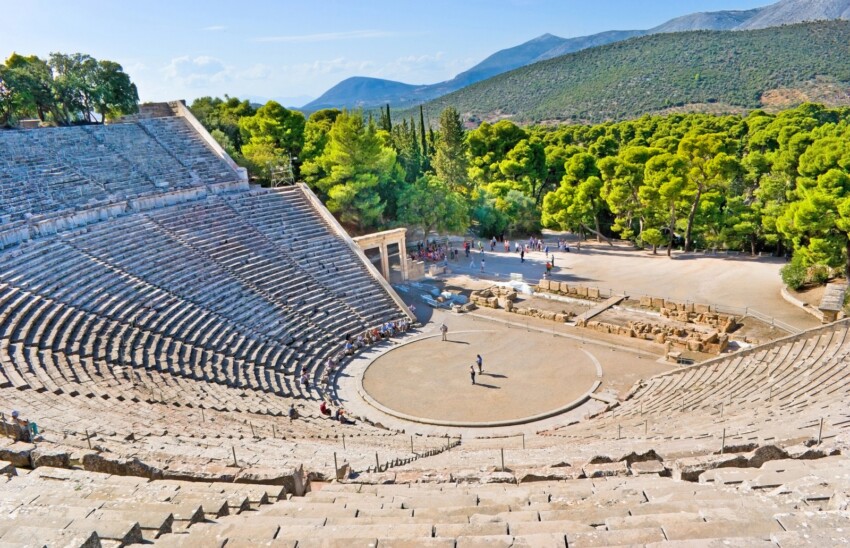
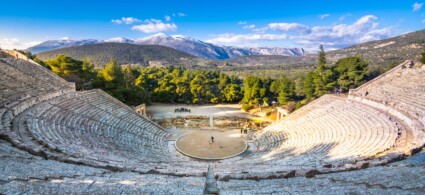
A few kilometres from Mycenae lies the city of Epidaurus, which owes its tourist fame to the splendid theatre dating back to the 4th century BC. It is one of the best-preserved ancient theatres in Europe and is still used today for performances and events.
The theatre is known for its impeccable acoustics, a detail that the guides do not fail to point out to tourists by inviting them to throw a coin into the proscenium, the front part of the stage, and demonstrating that even spectators sitting in the highest tiers can hear the sound.
Argos
Another mythical site is Argos: founded thousands of years ago, it is probably the oldest city in Greece.
The ancient ruins are now camouflaged in the modern city, but Argos is worth a visit for its interesting archaeological museum, the medieval fortress overlooking Larissa Hill and, of course, the archaeological remains.
Mystra
Mystra is something of a white fly among the Peloponnese’s most important historical sites because here you won’t find ancient temples and Hellenistic statues, but beautiful Byzantine churches, libraries and palaces, enclosed in a picturesque medieval town perched on a spur of Mount Taigetes, 7 km from the more famous (but less fascinating) Sparta.
Nafplio
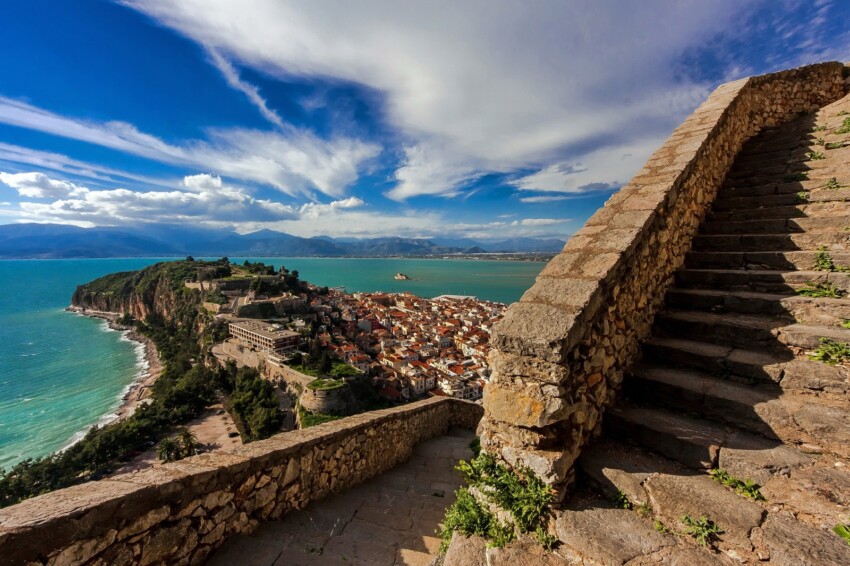
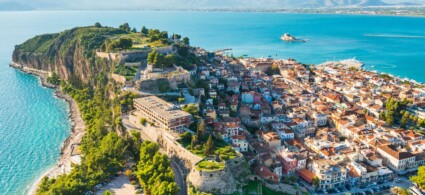
Dominated by the imposing fortress of Palamidi, elegant Nafplio occupies an extraordinary position in the Gulf of Argolis. An important port in Greece since the Bronze Age, it was the country’s first capital after independence in 1833.
Its stately old town, with its typical narrow streets, abounds with Venetian palaces, neoclassical mansions, boutiques and cafés; there are numerous hotels and guesthouses, a clear sign of Nafplio’s tourist popularity.
Monemvasia
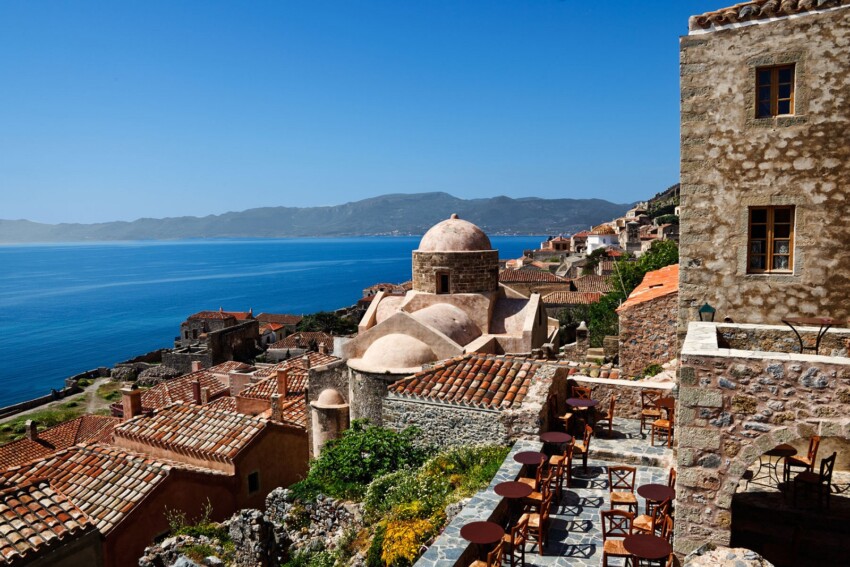
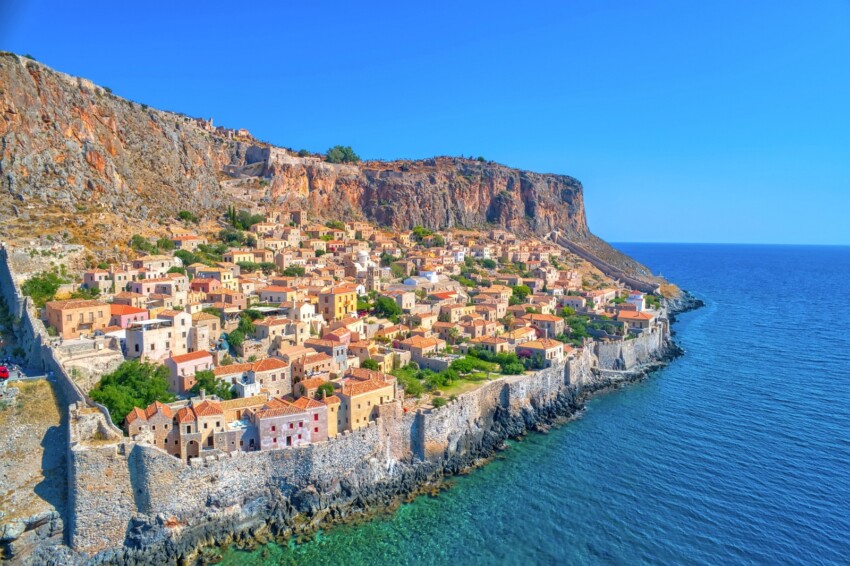
One of the marvels of the Peloponnese is Monemvasia, an enchanting medieval village perched on a rocky tower overhanging the sea whose shape resembles an iceberg without ice, connected to the mainland by a causeway.
In the Kastro, the fortified citadel where today only 12 people live, you enter on foot, as you should in order to fully enjoy the charm of this maze of narrow streets and stone houses, with extraordinary panoramic views of the sea.
You can see the ruins of the fortress built by the Venetians in the 16th century and the Byzantine church of Agia Sofia, which seems almost as one with the rock outcrop on which it stands.
Kalamáta
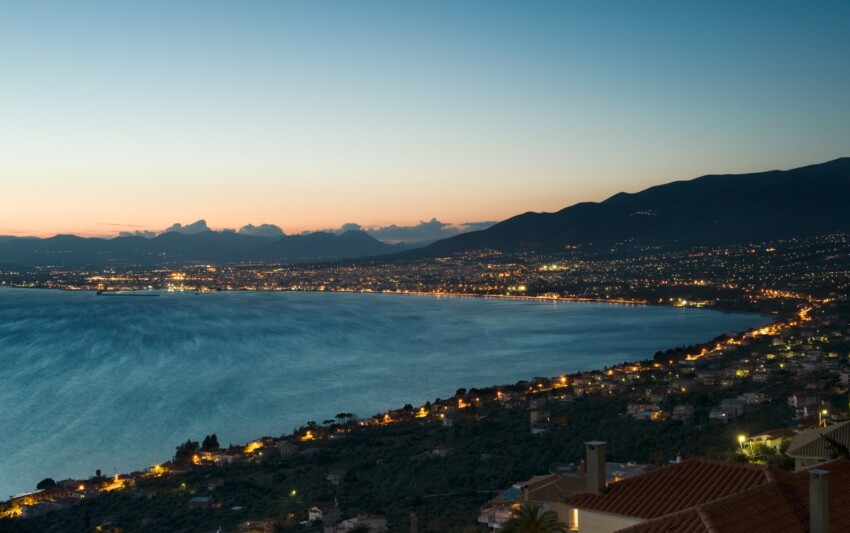
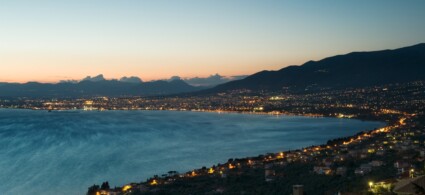
The capital of Messinia, the south-western region of the Peloponnese, Kalamatais not yet on the itineraries of mass tourism, but it is a lovely place to discover.
Nestled in a truly impressive natural setting, between a wide gulf and the Taígetos Mountains behind it, Kalamata has a quaint old town with a lovely promenade, a couple of interesting museums, a medieval fortress and beautiful beaches in the surrounding area.
Arcadia
The name Arcadia conjures up images of a bucolic, green and unspoilt landscape: according to mythology, this region was the territory of Pan, a satyr-like deity linked to nature and forests.
Reality is not so far removed from the myth: nestled between mountains, Arcadia is a region of meadows and forests, bubbling gorges and sporadic medieval villages.
Mani Peninsula
Another destination recommended for those who prefer a nature holiday instead of cultural and historical itineraries is the Mani Peninsula, which boasts some of the most varied and breathtaking landscapes in the Peloponnese.
Your holiday will be divided between picturesque forest trails in the mountains, unspoilt beaches bathed by crystal-clear waters, villages surrounded by olive trees and the arid landscape in the south of the peninsula with its abandoned stone towers.
Best beaches in the Peloponnese
The Peloponnese is not only history and culture but also the ideal destination for a dream beach holiday. If the hinterland is mountainous, the coast is a succession of beaches, coves and inlets, many of which are still completely unspoilt.
Here you will find some of the most beautiful beaches in Greece, but without the crowds of famous resorts like Santorini or Mykonos. Before the secret is out, come sunbathe and swim at the best beaches in the Peloponnese!
Voidokilia Beach
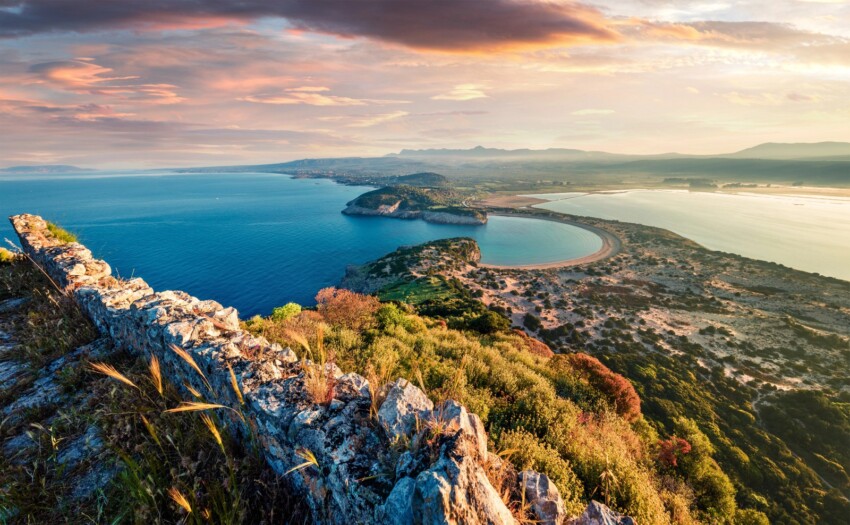
Considered the most beautiful beach in the Peloponnese and one of the most beautiful in the world according to The Times, the wild Voidokilia is a narrow strip of fine, crescent-shaped sand in a bay sheltered from the open sea.
The waters are crystal clear, the nearest urban settlement (Pylos) is far away and there are no kiosks or tavernas: in short, a paradise!
It is not an unknown paradise, however, and at times it can be crowded, but it is so large that you will be able to find a quiet corner for yourself.
Simos Beach
The Peloponnese also has its islands and among them the most famous is the enchanting island of Elafonissos, which is less than 500 metres from the mainland and can be reached in a few minutes by ferry.
This small island of 20 square kilometres is a natural paradise with white beaches and turquoise sea, generally uncrowded, that will make you think you have landed in the Caribbean.
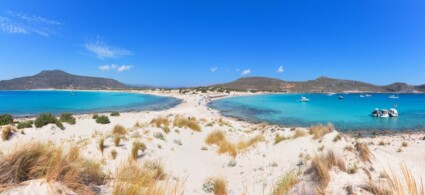
If you only have time for one of the beaches on Elafonissos, the obvious choice is Simos Beach, considered one of the most beautiful beaches not only in the Peloponnese but in the whole of Greece.
Actually consisting of two beaches divided by a narrow sand strip, Simos Grande and Simos Piccola, it is the longest beach on the entire island. With its soft sand dunes and incredible turquoise waters, Simos Beach is breathtakingly beautiful.
Other beaches not to be missed
Costa Navarino: the most exclusive eco-chic destination in the Peloponnese is an incredibly beautiful beach in the southern region of Messinia. Semi-circular in shape, it has very soft sand bathed by a sea of extraordinary colours.
Zaga: a 2 km long golden sandy beach, it can be reached on foot from the town of Corone with a nice twenty-minute walk. The beach is occasionally visited by turtles that come here to lay their eggs.
Arvanitia: a small rocky and pebbly beach 5 minutes from the centre of Nafplio, washed by an emerald green sea that invites one to take a refreshing dip: be careful, however, as it soon becomes deep. Deck chairs and umbrellas can be hired.
Karathona: Also in the vicinity of Nafplio is another lovely beach with facilities, which is very popular with the locals. Due to its shallow waters, this sandy beach is also suitable for families with small children. It can be reached by car or by a pine-shaded walk from the parking area of Arvanitia beach. Along the pedestrian route between Karathona and Arvanitia you can find other small, less frequented beaches.
Pori: an equipped beach near Monemvasia.
Where to stay in the Peloponnese
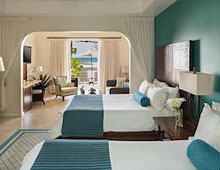
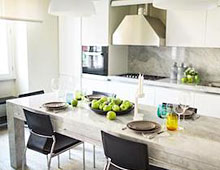
In the most popular tourist resorts of the Peloponnese, the hotel industry has been developed for years, so you will have no problem finding hotels in different price ranges; in the seaside towns, flats and holiday homes are also popular. The cities with the best choice of hotels and flats are Nafplio, Kalamata and Monemvasia.
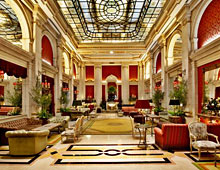
If you are looking for something special and do not have budget problems, the Bay of Navarino is the place for you. Now a favourite destination for lovers of luxury eco-tourism, boutique hotels and eco-lodges built in a way that does not alter the beautiful surrounding landscape abound here.
On the other hand, if you’re travelling on a tighter budget, you should know that there are no hostels and few campsites in the Peloponnese, but consider that – excluding Navarre – hotel prices are generally lower than in other Greek tourist destinations, so you won’t have any difficulty finding cheap accommodation.
We offer best rates If you find it cheaper we refund the price difference.
Free cancellation Most properties allow cancellation without penalty.
We're available 24 hours a day For any problem call Booking.com.
How to get to the Peloponnese
The Peloponnese can be reached in various ways, depending on the city of departure and the destination. You can fly to Athens, taking advantage of one of the many low-cost flights, and rent a car to quickly reach the Peloponnese and explore it in total freedom.
The main cities of the Peloponnese are connected to the capital by direct buses, but if you travel by public transport, you will be somewhat limited in your movements.
 Hotel
Hotel 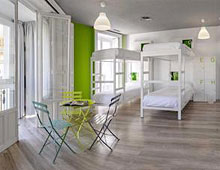 Budget accommodations
  Apartments
  Family Hotel
  Luxury Hotel
  Resorts