Belvedere
Pythagoreio - Aisopou 6
Belvedere is set in Pythagoreio, 1.
Book now
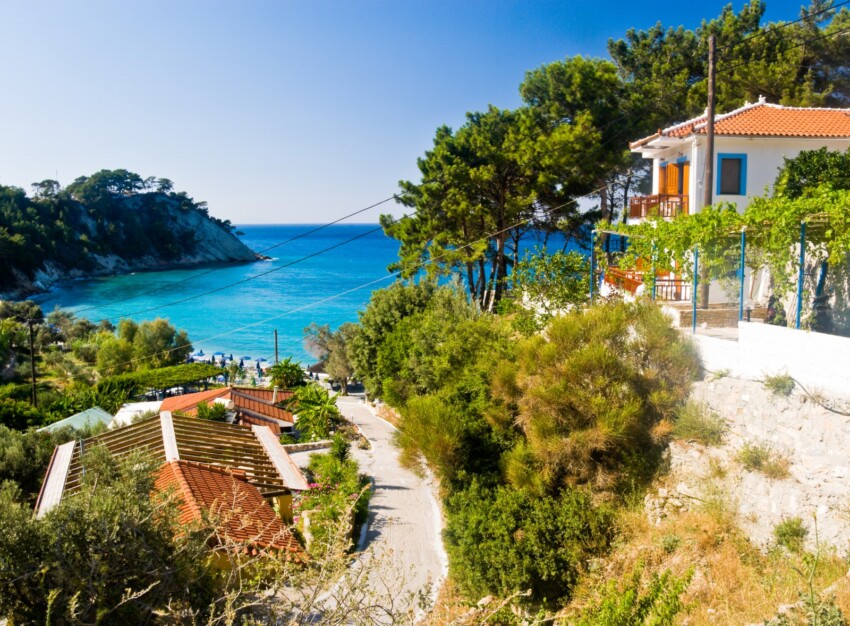
The island of Samos, Σάμoς in Greek, is located in the northern part of the Aegean Sea, north of the Dodecanese archipelago, close to the coast of Asia Minor. The Mykali Strait, only one kilometre and 200 metres wide, separates the island from Turkey.
The landscape that denotes Samos, known the world over for being the birthplace of artists and scientists such as Pythagoras, who invented his famous theorem here, is typically forested. The high mountains of Samos, Kerkis, an extinct 1440-metre volcano, and Karvounis, 1160 metres high, are covered with oak and eucalyptus trees and are a destination for many hikers who enjoy walking in unspoilt nature.
The island also holds important archaeological sites: in the past, the three most important monuments of the Hellenic world were built on Samos. In 1992, the pier, the underground aqueduct and the sanctuary of Hera were declared UNESCO World Heritage Sites.
Today, Samos is a favourite destination for tourists thanks to the presence of pebble and fine sandy beaches and deserted coves, all waiting to be discovered, that penetrate into the nearby macchia. Finally, and not to be underestimated, thanks to the mild climate, the island produces the famous Muscat of Samos, extracted from the Vathi grape, excellent as an aperitif or to accompany desserts.
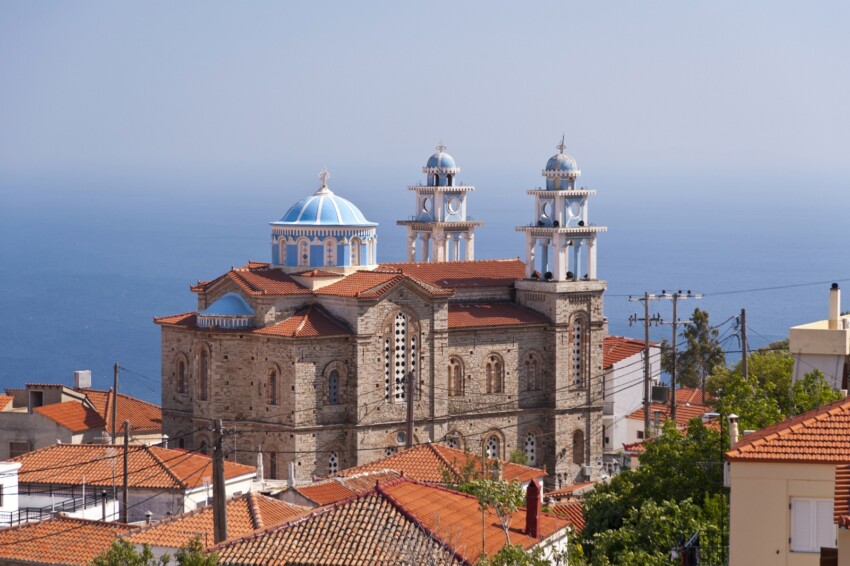
The island offers an extraordinary heritage ranging from UNESCO archaeological sites to traditional mountain villages. Each location tells thousands of years of history, from the ancient Mycenaean civilisation to Byzantine and Ottoman rule.
Vathi, the island’s capital with 9,000 inhabitants, is built around a protected natural bay on the north-east coast. The 19th century neoclassical centre preserves elegant Venetian palaces and Byzantine churches along the waterfront. The Vathy Archaeological Museum houses the Kouros of Samos, a 5.5-metre-high archaic statue that testifies to the island’s artistic excellence in antiquity.
The Temple of Hera, one of the largest in Greek antiquity and a UNESCO site, is the archaeological centrepiece of the island along with the Tunnel of Eupalinos, an engineering masterpiece from the 6th century B.C. that crosses Mount Kastro for 1,036 metres.
The village of Pythagoreio, a World Heritage Site, retains the charm of the old port with its traditional houses and the remains of ancient Samos. Inland, mountain villages such as Manolates and Vourliotes offer traditional architecture and views of the Turkish coast, while the beaches of Psili Ammos and Tsamadou alternate golden sand and crystal-clear pebbles.
For nature lovers, hikes to Mount Kerkis (1,433 metres) offer spectacular views, while the local vineyards produce the famous Muscat wine.
Vourliotes and Ampelos offer breathtaking views of the Turkish coastline and are home to historic wine cellars where Muscat wine can be tasted in centuries-old barrels. Hiking trails connect the villages through chestnut groves and natural springs.
For a comprehensive look at all the archaeological sites, museums and attractions on the island, check out our detailed guide on Things to do on Samos.
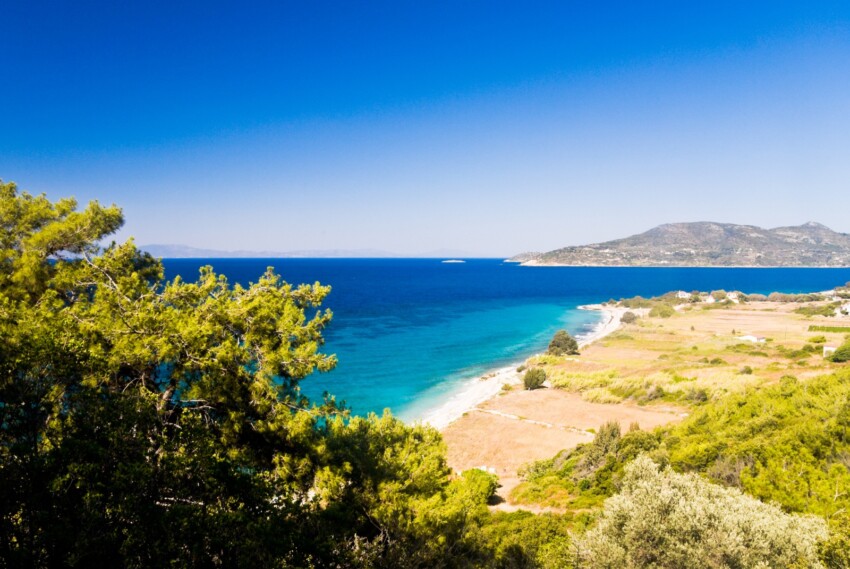
Samos boasts 159 kilometres of coastline with beaches ranging from golden sandy bays to wild coves between vertical cliffs. The north coast is protected from summer winds, while the south coast offers ideal conditions for windsurfing and kitesurfing.
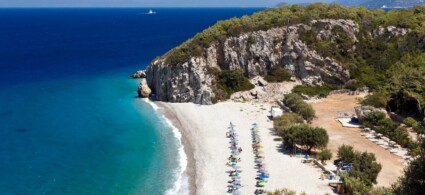
Popular beaches include Tsamadou on the north coast, with fine white sand and crystal-clear waters, partially naturist and ideal for families. Potami, accessible only on foot, has an unspoilt natural environment with inland waterfalls forming natural pools.
Psili Ammos on the south-east coast deserves its name with its fine golden sand stretching for over a kilometre, protected from the Meltemi wind. Remote beaches such as Megalo Seitani, accessible only by sea, offer wilderness for those seeking absolute tranquillity.
For a complete guide with details on the services, accessibility and characteristics of each beach, see our in-depth look at the beaches of Samos.
If you are looking for the wild nightlife that has made the islands of Mykonos and Rhodes famous, Samos is not the place! This beautiful island is more romantic and quiet but that doesn’t mean that the fun doesn’t exist – on the contrary!
Vathi and Karlovasi have numerous clubs that are popular with islanders, tourists and university students alike.
The promenade in Vathi offers clubs with music and a nice view of the sea, cafés, restaurants and very nice pubs. Also in Kokari, Pythagorion and Karlovasi many cafés turn into lounge bars in the evenings and stay open until late. Spend a different evening by entering a bouzoukia, a club with live Greek music, not to be missed.
The discos of Pythagorion are open until late and liven up the nights with a mix of popular music and international and modern music.
The Muscat of Samos boasts 2,500 years of documented wine-making tradition.Muscat Blanc grapes grow on volcanic terraces up to 800 metres above sea level, giving the wine unique aromas of orange blossom and honey.
The Samos Wine Cooperative, founded in 1934, produces 2.5 million bottles annually, which are exported to 25 countries. Guided tast ings take place in the historical Malagari cellar with tastings of different varieties.
Premium varieties:
The cuisine of Samos blends Greek traditions and Asia Minor influences. Thyme honey from the volcanic mountains and olive oil from the valleys lend distinctive flavours to traditional dishes.
Dishes not to be missed:
The harbour tavernas of Vathi serve fresh fish of the day, while the traditional ouzerias of Pythagorion offer local mezze with archaeological views. The mountain restaurants of Manolates offer home cooking on panoramic terraces.
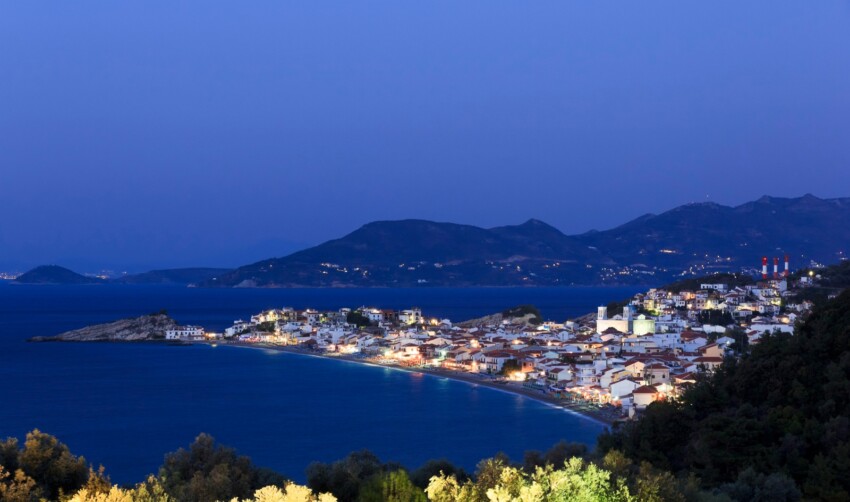
If you are wondering which is the best area to sleep in Samos, know that you have many options.
The capital Vathi, in the north-east of the island, is the liveliest and most touristy area: small shops, ouzerie, tavernas will fill your days while the Archaeological Museum will introduce you to the island’s ancient and glorious history.
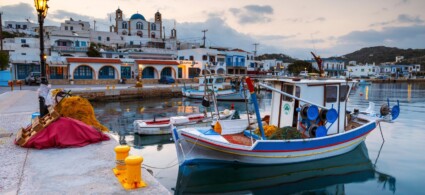
The town of Pythagorion is located not far from Samos Airport, along the southern coast, inside a horseshoe-shaped bay, and is a favourite destination for tourists. The harbour is very beautiful and is surrounded by taverns, cafes and luxury boats, while among the alleys of the village you can find an authentic and wonderful atmosphere. The most important archaeological site on the island, Ireo, is located near Pythagorion.
If you are looking for tranquillity and authentic Greece, the village of Manolates is for you. Considered one of the most picturesque on the Greek islands, the village is located along the northern coast of Samos, between Karlovasi and Kokari, one kilometre from the Valley of the Nightingales and is famous for its wine production, beautiful views and handicraft shops.
Also charming are the villages of Paraskevi, Stavrinides and Votsalakia, ideal for lovers of quiet holidays.
Along the northern coast, a great village to stay in is Kokari, a pretty fishing village with a unique atmosphere and excellent beaches nearby. Karlovassi is a wonderful alternative for those who choose the north-western coast of the island as it is the second largest town on Samos, full of life and ideal for those who enjoy hiking, walking and cycling.
We offer a selection of hotels at Samos to suit all categories of travellers. The most booked by tourists are the sea-facing hotels, often right on the beach. If you want to play it safe, choose one of the following: they are among the most booked hotels in Samos, sorted by number of reviews.
If you prefer space, privacy and the ability to prepare your own meals to a hotel holiday, book a holiday home at Samos. We recommend a few below, but in this case we advise you to book early because houses and apartments for rent at Samos are in high demand.
The fastest way to get to Samos is obviously by plane, but you can consider landing on a neighbouring island or Athens and then taking a ferry to Samos. Car hire is the optimal solution for exploring the island. The main road network is in good condition, while side roads to remote beaches require attention.
Flights land at Samos International Airport, which is located in the south-eastern part of the island, 2 kilometres from Pythagorion, 16 from Samos Town (Vathi). Find out which airlines operate direct and stopover flights in the flights to Samos section.
The two main ports on the island are Samos Town (Vathi) in the north-east, and Karlovasi in the north-west. A third port is at Pythagorion, along the south-east coast, where ferries and hydrofoils arrive from the Dodecanese islands.
Ferries from Athens (Piraeus) take 10-12 hours with overnight departures. Hellenic Seaways and Dodekanisos Seaways also operate regular connections to the islands of the North Aegean and the Dodecanese.
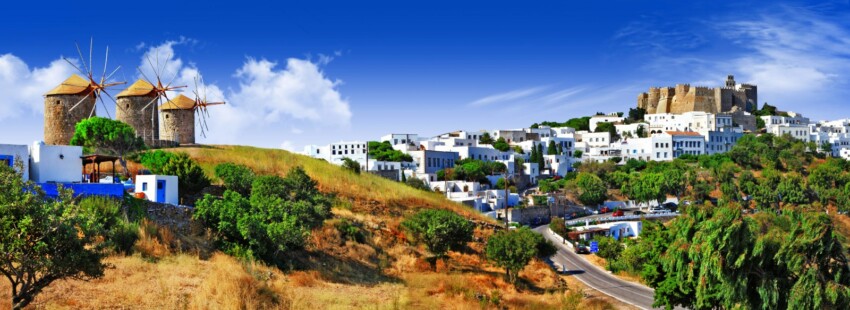
If you are on holiday in Samos, dedicate a day to discovering the beautiful Aegean Sea on one of the many boat excursions that take you around the island.
Only one kilometre and 200 metres separate Greece from Turkey, so why not savour the charm of Asia Minor for a day, with its vivid colours, bazaars and the taste of Ottoman cuisine?
And why miss the opportunity to visit the magnificent Ephesus, one of the most famous sites of the ancient world?
From the beginning of April until the end of October, ferries connect Samos and Kusadasi daily, a shopper’s paradise 30 kilometres from the 10th-century B.C. Ionian city that later came under Roman rule, but remember that you will need your passport!
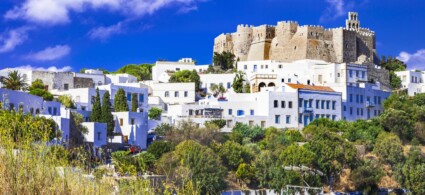
Another wonderful destination for your boat trips is the sacred island of Patmos, just south of Samos, between Leros and Ikaria, where St John wrote the Apocalypse. Patmos is ideal for nature lovers who will adore the magic of its volcanic terrain, its coastline of small, quiet bays and sheer cliffs.
Visit the medieval Monastery of St John the Theologian, which, like a crown, rises above the village of Chora, and the Cave of the Apocalypse where St John was exiled from 95 to 100 AD and where he wrote the Book of Revelations.
Also not to be missed is a visit to Agathonissi, the northernmost island of the Dodecanese archipelago, the beautiful archipelago of Fourni, 12 small islands with exotic and breathtaking bays that will take you back in time and show you traditional Greece, and the island of Ikaria, only two hours from the port of Karlovasi, west of Samos, rich in thermal springs.
You can also set sail from the port of Pythagorion for a beautiful boat trip to Samiopoula, the small island along the southern coast of Samos.
Accessible only by boat from the port of Karlovasi, the beach of Megalo Seitani on the north-western coast of Samos is one of the best on the island. You will spend a whole day on this beautiful beach is sand and small pebbles, with no facilities.
What's the weather at Samos? Below are the temperatures and the weather forecast at Samos for the next few days.


 Hotel
Hotel  Budget accommodations
  Apartments
  Family Hotel
 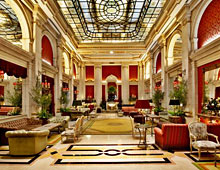 Luxury Hotel
 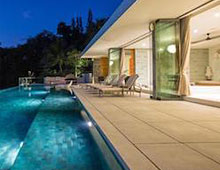 Resorts