Samos Bay Hotel by Gagou Beach
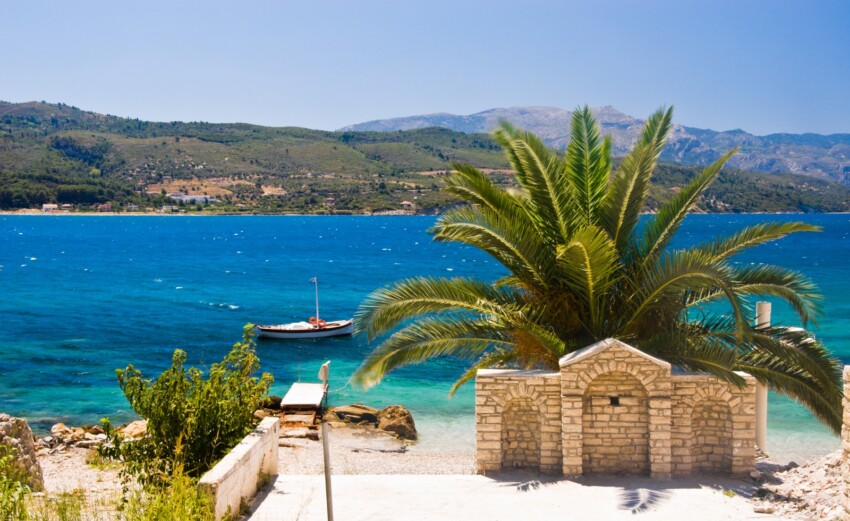
The island of Samos represents one of the most authentic treasures of the North Aegean, where millennial history and natural beauty are intertwined in an extraordinary cultural heritage. Famous for being the birthplace of Pythagoras, the famous mathematician and philosopher, and other illustrious personalities such as the writer Aesop and the philosopher Epicurus, this Greek island preserves unique vestiges of ancient civilisation.
Situated only 2 kilometres from the Turkish coast, Samos boasts three archaeological sites of world importance that have been part of the UNESCO World Heritage since 1992: the Heraion with its majestic Temple of Hera, the ancient Pythagoreion with its fortified walls, and the legendary Aqueduct of Eupalino, considered one of the greatest achievements of ancient engineering.
The island offers an incredibly diverse landscape: from the forested mountains of the Kerkis (1,433 metres) covered with oak and chestnut trees, to picturesque traditional villages such as Manolates and Vourliotes, to the crystal-clear coastline that embraces hidden bays and spectacular beaches. The lush Mediterranean vegetation makes Samos one of the greenest Greek islands, while the winemaking tradition of the famous sweet Muscat adds a special charm.
Every corner of the island tells a different story: from the Byzantine monasteries nestled in the mountains to the ancient ruins that bear witness to three thousand years of history, from the traditional markets of Vathy to the taverns of the fishing villages where you can enjoy authentic local cuisine.
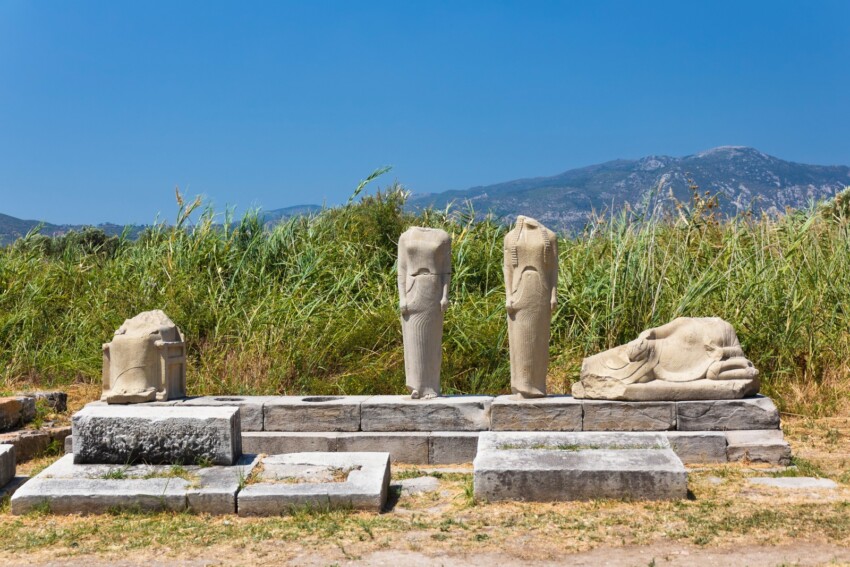
TheHeraion of Samos is undoubtedly the most important and fascinating archaeological site on the island, declared a UNESCO World Heritage Site in 1992. Located on the southern coast, about 8 kilometres from Pythagorion, this sanctuary dedicated to the goddess Hera houses the remains of the most magnificent Ionian temple of Greek antiquity.
According to mythology, it was on this very island that Hera, wife of Zeus and queen of Olympus, was born, and it was here that the divine wedding that consecrated the importance of the sanctuary took place. The temple, in its final dimensions ordered by the tyrant Polykrates (6th century BC), measured 108 x 55 metres with 115 gigantic columns, four times larger than the Parthenon. Herodotus described it as ‘the largest and most imposing temple in all Greece’.
Today, a single column about 15 metres high remains standing, a silent witness to past grandeur, while the remains of the foundations allow one to imagine the original grandeur. The site also includes the remains of the monumental altar and the Via Sacra that connected the sanctuary to the ancient city. The visit is enhanced by the exhibits in the nearby museum, including the famous Kouros of Samos and the Gheneleos Group, masterpieces of archaic sculpture.
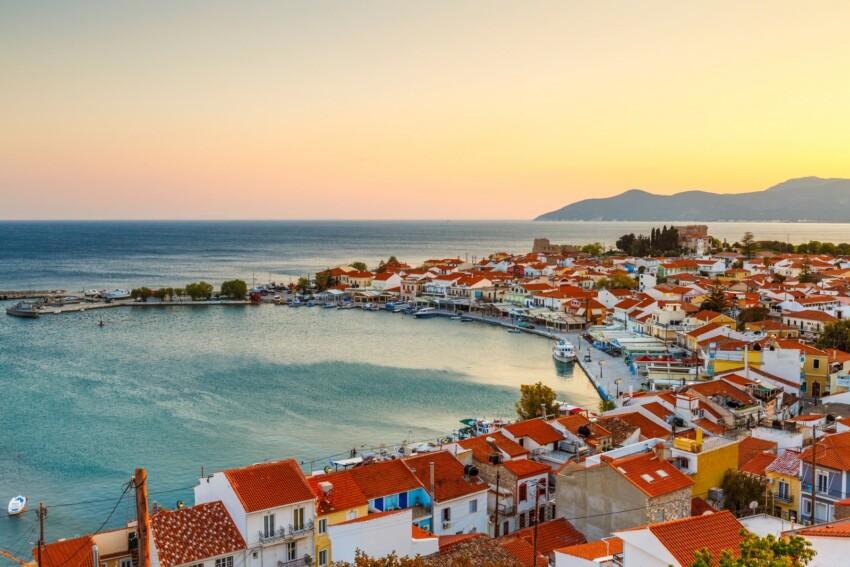
Ancient Pythagorion, today’s town named after the famous mathematician born here in the 6th century BC, is the historical and cultural heart of Samos. Built on the ruins of the ancient city of Samos, the capital of the island during the time of the tyrant Polycrates, this fascinating coastal resort is a UNESCO World Heritage Site for its extraordinary historical evidence.
The harbour of Pythagorion is considered the first artificial harbour in the Mediterranean, a pioneering piece of engineering that testifies to advanced ancient technology. The cyclopean walls that still surround the city date back to the 6th century B.C. and offer an impressive sight, while the 19th century Logothetis Tower dominates the urban landscape, recalling the struggles for Greek independence.
The old town is built around the picturesque harbour with its colourful fishing boats and traditional cafés. The statue of Pythagorion greets visitors in front of the pier, while cobbled streets lead to Byzantine churches, traditional houses and the renowned Archaeological Museum, which houses important finds from ancient Samos. Excursions to the islet of Samiopoula and the coast of Turkey also depart from Pythagorion.
The Aqueduct of Eupalino represents one of the most extraordinary masterpieces of ancient engineering, so much so that it is considered by many to be ‘the eighth wonder of the ancient world’. Built in the 6th century B.C. at the behest of the tyrant Polycrates, this 1,036-metre-long underground tunnel crosses Mount Kastro to ensure the city’s water supply.
The genius of the architect Eupalinus of Megara lies in the revolutionary technique used: the tunnel was excavated simultaneously from both ends using geometric principles that would be codified centuries later in Euclid’s Elements. The two teams of workers met at the centre of the mountain with incredible precision, demonstrating the extraordinary mathematical knowledge of the time.
Herodotus described this work as ‘amphístomon’ (with two openings), emphasising the exceptional nature of the achievement. The tunnel remained in operation for over a thousand years until the 7th century A.D., supplying about 400 cubic metres of water to the city on a daily basis. Today it is possible to walk through part of the original tunnel, a unique experience that allows one to literally walk through the history of ancient engineering. The visit takes about 45 minutes and includes the upper service tunnel and parts of the original aqueduct.
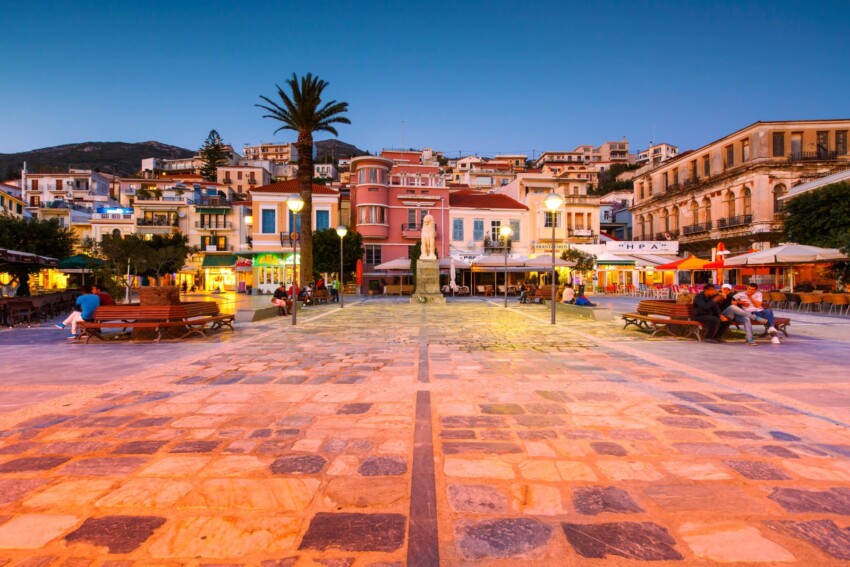
Vathy, also known as Samos Town, is the bustling capital of the island built amphitheatrically around a beautiful natural bay on the north-eastern coast. This important commercial port is the main arrival point for those reaching the island by sea and is the administrative and cultural centre of Samos.
The harbour of Vathy is a spectacle in itself, with its traditional fishing boats and ferries connecting the island to Piraeus and other Greek destinations. The waterfront is lined with elegant neoclassical buildings, historic cafes and restaurants serving local specialities. The harbour area is particularly lively during the evening hours, when the cafés fill with tourists and locals.
The historic quarter of Ano Vathy (Upper Vathy) retains the atmosphere of traditional Samos with its cobbled streets, 19th century houses with characteristic wooden balconies and small Byzantine churches. It is home to the excellent Archaeological Museum, which houses important finds from the Heraion and other sites on the island, including the famous Kouros of Samos. The church of Agios Spyridon, the island’s patron saint, is worth a visit for its precious frescoes and spiritual atmosphere.
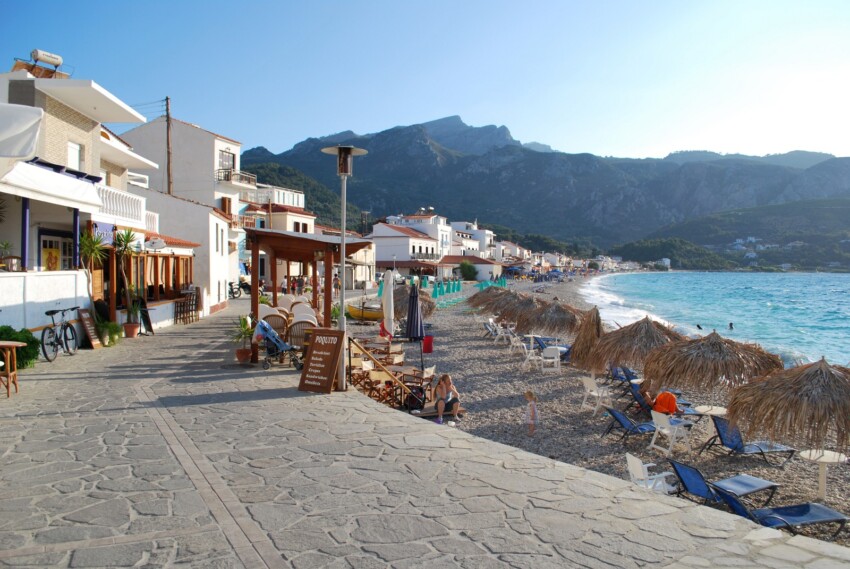
The picturesque village of Kokkari represents the essence of Samos’ Cycladic charm, with its characteristic white houses with blue shutters perched on a small peninsula on the northern coast. Just 10 kilometres from Vathy, this former fishing village has managed to transform itself into a lively tourist resort without losing its authenticity.
The harbour of Kokkari is a gem that still retains colourful fishing boats moored alongside traditional cafes and taverns serving fresh fish. The narrow streets of the centre wind their way through craft shops, local art galleries and restaurants offering specialities prepared with ingredients from the garden, while hidden alleyways hold romantic glimpses and flower-filled squares.
Kokkari is also famous as a windsurfing centre thanks to the constant thermal winds that make it a paradise for sailing enthusiasts. The Samos Windsurfing Centre offers courses for all levels and equipment hire, taking advantage of the ideal conditions created by the shape of the bay. The village is surrounded by the island’s most beautiful beaches such as Tsamadou and Lemonakia, which are easily accessible on foot or by bicycle along scenic paths through olive groves and vineyards.
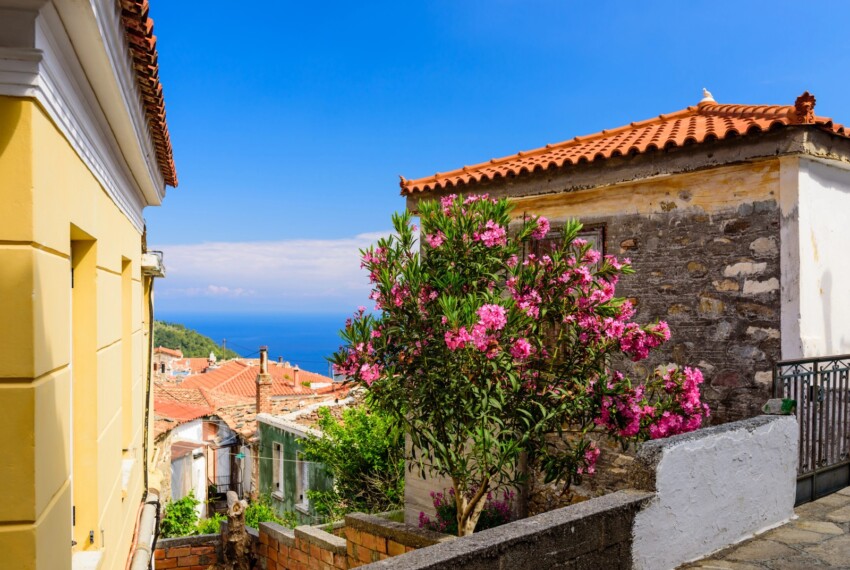
The village of Manolates is the perfect example of traditional Greek mountain architecture, perched on the slopes of Mount Ambelos at an altitude of 300 metres. With its hundred inhabitants, this timeless village preserves the atmosphere of the most authentic rural Greece, far from the mass tourism circuits.
Stone houses with traditional architecture line the cobbled streets that climb the slope, surrounded by flower-filled balconies overflowing with geraniums and bougainvillea. The panoramic view from the village encompasses the entire North Aegean as far as the coast of Turkey, creating particularly impressive scenery during sunsets when the sea is tinged with gold and pink.
Manolates is the ideal starting point for nature excursions among the chestnut, oak and pine forests that cover the slopes of Mount Ambelos. The village is famous for its traditional taverns serving specialities prepared with local products, from Ambelos honey to wine produced in the surrounding vineyards. During the summer, Manolates also hosts cultural events and concerts that attract visitors from all over the island, turning the village into a small artistic centre surrounded by nature.
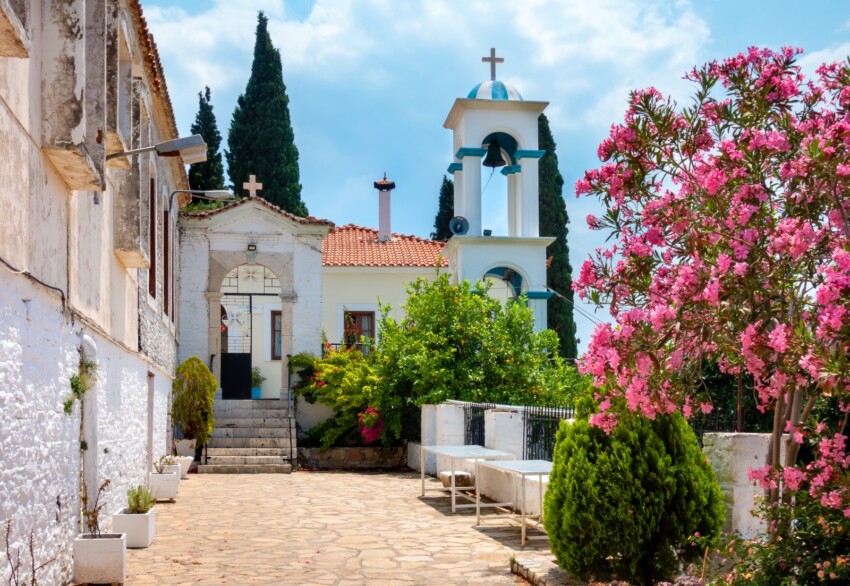
The Monastery of Panagia Spiliani is one of the most evocative and spiritually significant religious sites on Samos, perched on a hill overlooking Pythagorion and the surrounding sea. This 18th century monastery is built around a natural cave that tradition says was blessed by the Virgin Mary.
The most extraordinary element of the monastery is the rock church excavated inside the cave, where water, considered miraculous by the faithful, drips continuously. The interior of the cave houses a precious iconostasis and Byzantine frescoes, while small stone basins collect the water seeping from the rock above. The atmosphere of recollection and silence makes this place particularly evocative for meditation and prayer.
The panorama from the monastery is breathtaking: the view sweeps from the bay of Pythagorion to the inland mountains, embracing the airport and the island’s two lakes in a sweep that reveals the unique geography of Samos. The monastery’s outer courtyard is adorned with centuries-old cypress trees and flower gardens, while the main church features interesting Byzantine architectural elements. The monastery is particularly popular during Orthodox religious festivals, when impressive processions involving the entire local community take place.
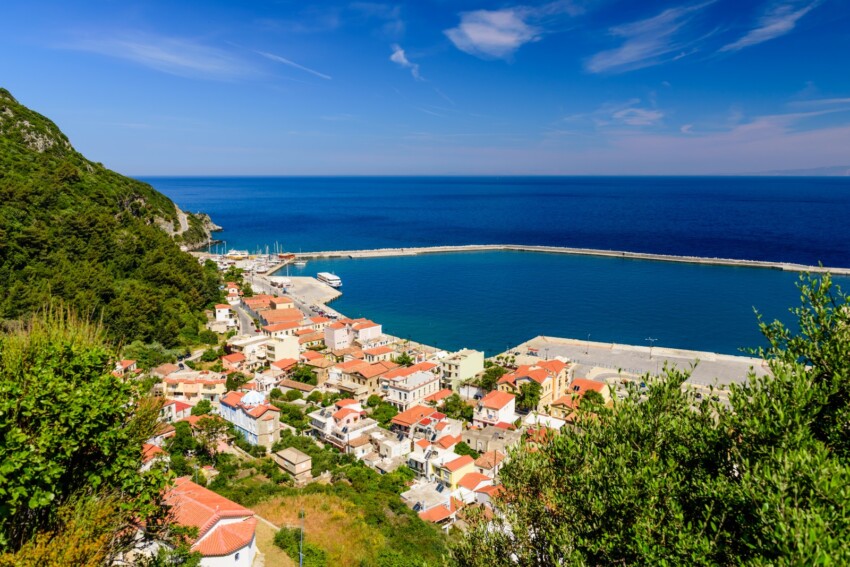
Karlovasi is the second main port of Samos and an important industrial and cultural centre on the north-western coast. This town of around 5,000 inhabitants retains a special charm thanks to its 19th- and 20th-century architectural heritage, which bears witness to the industrial past linked to leather tanning and the production of the famous Muscat wine.
The historical centre is built around the commercial port with elegant neoclassical buildings, old tanneries converted into cultural centres and the charming district of Paleo Karlovasi (Old Karlovasi) where time seems to stand still. Cobbled streets lead to Byzantine churches, traditional houses and small squares shaded by centuries-old plane trees.
Karlovasi is also home to the Aegean University with its Faculty of Mathematics, which has revitalised the town by attracting students from all over Greece. The waterfront offers tavernas specialising in fresh fish and traditional mezze, while excursions to the Potami waterfalls and the wild beaches of Seitani depart from the town. The port of Karlovasi is also the starting point for interesting boat excursions along the west coast, where some of the island’s most beautiful and unspoilt coves are hidden.
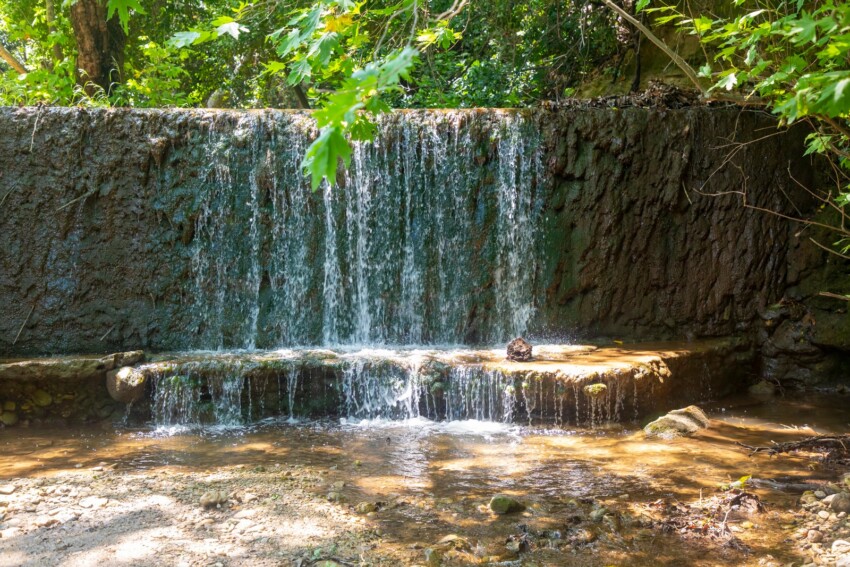
The Potami Waterfalls are one of the most spectacular natural wonders of Samos, nestled in a lush forested valley a few kilometres from the north-western coastline. This oasis of peace offers a perfect refuge from the summer heat and a unique experience of contact with the island’s wilderness.
The path to the waterfalls starts at Potami beach and winds for about 2 kilometres through an enchanted forest of plane trees, oak trees and giant ferns. The path follows the course of the Potami River, crossing small wooden bridges and passing natural pools of crystal-clear water where it is possible to bathe. The walk takes about 45 minutes and is suitable for the whole family, although it may be necessary to ford the river in some places during the summer.
The main waterfalls plunge from a height of about 15 metres into a natural pool of cool, clear water, perfect for a refreshing swim. The surrounding environment is a botanical paradise with an exceptional biodiversity that includes species endemic to the eastern Aegean. Along the way, one also encounters a small 16th century Byzantine chapel dedicated to St John, which adds a touch of spirituality to the nature experience. During the spring and autumn rainy season, the waterfalls reach their most spectacular.
The village of Vourliotes is an authentic jewel of traditional Samian architecture, perched on the northern slopes of Mount Ambelos at an altitude of 400 metres. This village of around 150 inhabitants retains the charm of the most genuine rural Greece, with its local stone houses and red-tiled roofs blending perfectly into the mountain landscape.
The cobbled streets of Vourliotes climb between terraced gardens planted with vines and olive trees, offering breathtaking panoramic views of the northern side of the island and the sea stretching to the Turkish horizon. The village is famous for its traditional taverns serving local specialities prepared with home-made ingredients, from goat cheese to fruit preserves, from Ambelos honey to wines produced in the surrounding vineyards.
Vourliotes is the starting point for numerous hiking trails that penetrate the chestnut and oak forests of Mount Ambelos, offering itineraries of varying difficulty for all nature lovers. The village is also home to the 18th century church of Agia Triada (Holy Trinity), which contains valuable frescoes and a wooden iconostasis of great artistic value.
The village of Ireon is named after the ancient Heraion and is the gateway to the most important archaeological site on Samos. This quiet coastal village has developed in recent decades around the ruins of the Temple of Hera, transforming itself from a simple fishing port into a charming tourist resort that has managed to maintain a human scale.
Ireon’s seafront promenade offers tavernas specialising in fresh fish and restaurants serving traditional Samian cuisine, while the pebble and sandy beaches are perfect for relaxing days by the sea. The village’s strategic location, just 8 kilometres from Pythagorion, makes it an ideal base for exploring the southern part of the island.
The village also houses a small local museum that exhibits minor finds from Heraion and offers interesting insights into the history of the sanctuary. The narrow streets of Ireon lead directly to the archaeological site through centuries-old olive groves and vineyards, while excursions into the interior of the island to discover ancient monasteries and abandoned villages also depart from the village.
The islet of Samiopoula is a true natural paradise only 800 metres from the southern coast of Samos, which can only be reached by sea on picturesque boat excursions. This uninhabited island of just 2 square kilometres offers an absolute wilderness experience in one of the most pristine marine environments in the North Aegean.
The main beach of Samiopoula, called Psalida, stretches for about 300 metres with fine white sand and crystal-clear turquoise waters reminiscent of the Caribbean. The total absence of tourist facilities guarantees an authentic contact with nature, while the rich marine fauna makes the islet a paradise for snorkelling and diving with the possibility of spotting dolphins, sea turtles and a wide variety of colourful fish.
Day trips mainly depart from Pythagorion and often include visits to the coast of Turkey or other hidden beaches of Samos. The boat trip takes about 20 minutes and offers spectacular views of the south coast of the main island. Samiopoula is covered in wild Mediterranean vegetation with scrub, broom and herbs perfuming the air, while the surrounding waters are protected as a marine area of special natural interest. It is essential to bring water, food and sunscreen, as there are no services of any kind on the islet.
In the following map you can see the location of the main places of interest mentioned in this article.
 Hotel
Hotel  Budget accommodations
  Apartments
  Family Hotel
  Luxury Hotel
  Resorts