From Athens: Hydra, Poros, and Aegina Day Cruise with Lunch
4.323 reviews
Buy now
From 131,00€ per person
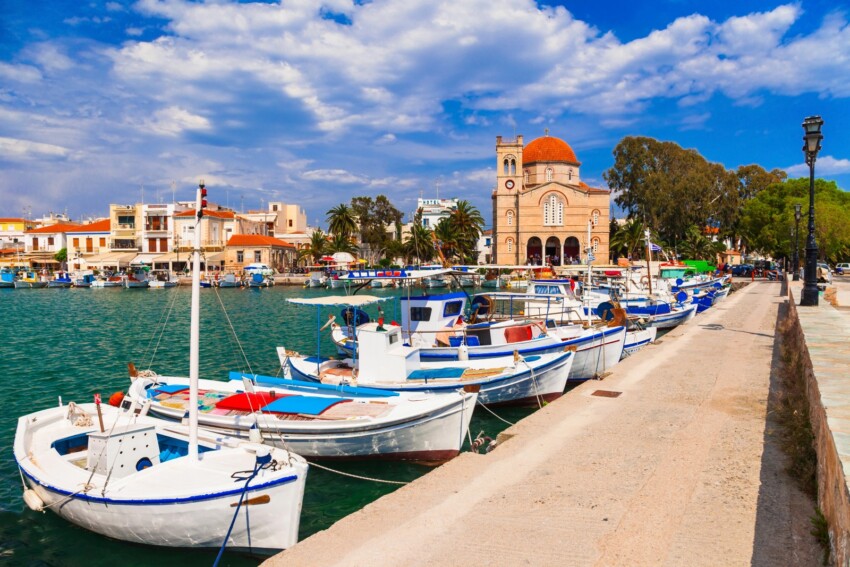
Aegina, the pearl of the Saronic Gulf, is a Greek island that perfectly combines millennial history, breathtaking landscapes and local authenticity, just 27 km from Athens. Known in antiquity as a powerful rival to Athens, today Aegina offers visitors an authentic experience of Greece, far from the mass tourism that characterises other, more famous islands.
With its rugged coastline stretching some 87 km, Aegina boasts white pebble beaches alternating with hidden coves, while the hinterland is dominated by hills covered with pine trees and centuries-old olive trees. The island is famous for the majestic Temple of Aphaia, part of a sacred triangle with the Acropolis of Athens and the Temple of Poseidon at Cape Sunio, as well as for its pistachio plantations, considered among the best in the world.
Its proximity to the Greek capital makes Aegina an ideal destination for a day trip, but its discreet charm deserves a longer stay to fully appreciate its beauty and authentic character. In this guide, we will take you on a tour of the island’s hidden treasures, from its archaeological riches to its culinary traditions, providing you with all the practical information you need to organise your visit.
Due to its proximity to Athens, Aegina is a popular destination for day trips from the Greek capital. Only one hour by ferry or 40 minutes by hydrofoil from the port of Piraeus, the island offers the perfect opportunity to escape the urban hustle and bustle and immerse yourself in the more relaxed and authentic atmosphere of the Greek islands.
Every day, especially during the summer season, hundreds of visitors disembark in the morning and depart in the late afternoon, allowing enough time to visit the Temple of Aphaia, stroll through the historic centre, sample local pistachio specialities and take a dip in the crystal-clear waters. Although one day may be enough for a sampling of the main attractions, those who choose to stay overnight can discover a more intimate and tranquil face of the island, far from the pace of mass hiking.
Aegina encompasses an astonishing cultural and scenic heritage considering its small size, and offers a fascinating mix of thousand-year-old archaeological sites, picturesque villages, natural landscapes and living traditions. From the majestic Temple of Aphaia, a masterpiece of Doric architecture, to the characteristic pistachio plantations that have made the island famous, via charming fishing villages and crystal-clear beaches: every corner of Aegina tells a story and is worth exploring. Here are the main attractions you cannot miss during your visit to this authentic island in the Saronic Gulf.
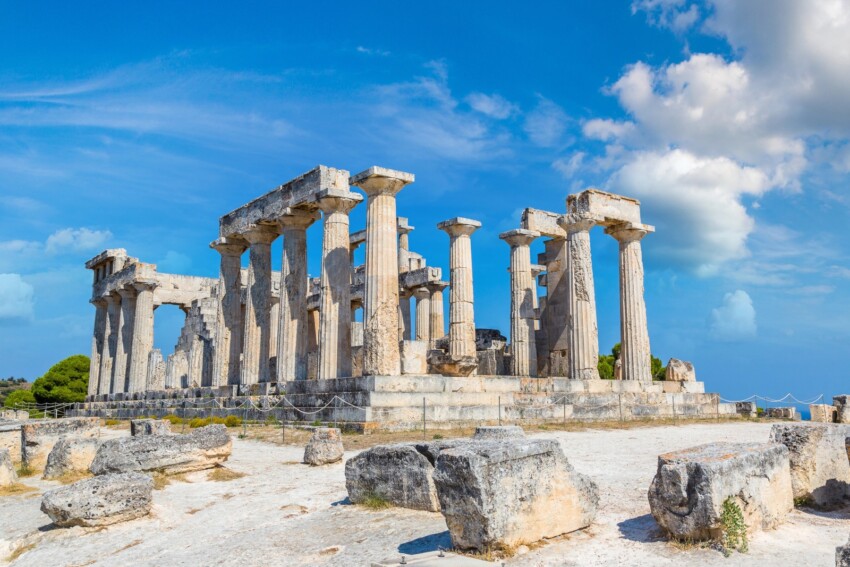
The Temple of Aphaia is one of Greece’s most important archaeological treasures and certainly the island’s main attraction. Built around 500 B.C., this magnificent example of Doric architecture stands majestically on a hill 160 metres above sea level, offering a breathtaking panoramic view of the Aegean Sea.
Its importance goes beyond architectural beauty: in fact, the temple forms a perfectly isosceles sacred triangle with the Parthenon in Athens and the Temple of Poseidon at Cape Sunius. This geometric arrangement is not random and testifies to the advanced mathematical and astronomical knowledge of the ancient Greeks.
Particularly impressive are the Doric columns still standing, which retain much of their original majesty. At sunset, the limestone takes on golden hues, creating an unforgettable spectacle for visitors. The best place to photograph the temple is from the eastern terrace, from where you can capture both the columns and the backdrop of the sea.
A little-known curiosity: during archaeological excavations, traces of bright colours were found, proving that originally the temple was not white as we see it today, but decorated with red and blue pigments.
The Temple of Aphaia is open daily from 8 a. m. to 8 p.m. during the summer season (April-October) and from 8:30 a.m. to 3:30 p.m. during the winter season (November-March). Last admission is 30 minutes before closing time.
The temple is closed on certain national holidays such as 1 January, 25 March, Orthodox Easter, 1 May and 25-26 December. You are advised to check the official website of the Greek Ministry of Culture for any changes in opening hours.
A complete tour of the temple and surrounding area takes about 1-2 hours. The best days to avoid crowds are Tuesdays and Thursdays, while weekends tend to be more crowded. The ideal time is early in the morning (8:00-10:00) or late afternoon (after 16:00), when the light is perfect for photographs and the temperatures are milder.
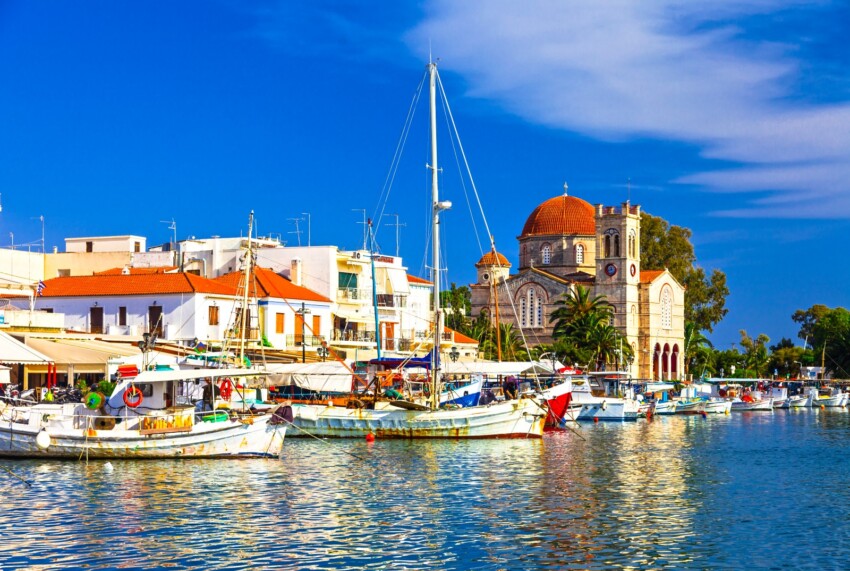
Aegina Town, the island’s capital, is a charming urban centre that combines the atmosphere of a traditional Greek port with elegant neoclassical buildings. The waterfront is the beating heart of the town, lined with taverns, cafés and shops that come alive especially in the evening hours.
Strolling through the narrow streets of the old town, you can admire the pastel-coloured neoclassical houses, evidence of the period when Aegina was the first capital of modern Greece (1828-1829). Particularly noteworthy are the Kapodistrias building, which housed the first Greek government, and the National Library, the first cultural institute of independent Greece.
Don’t miss the morning fish market, where local fishermen sell their fresh catch of the night. This is also a great place to get an authentic glimpse into the daily life of the island’s inhabitants.
The best vantage point is on Kolona Hill, where you can enjoy a 360-degree view of the city and the harbour. Take pictures of the city at sunset, when the lights of the taverns start to turn on and reflect on the waters of the harbour.
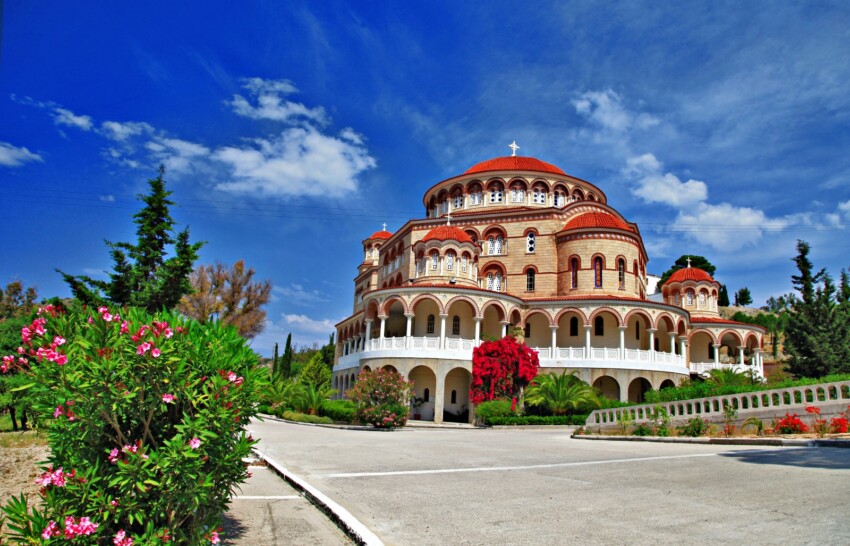
The Monastery of Agios Nektarios is one of the most important pilgrimage sites in Orthodox Greece. Built in the early 20th century, the monastery is dedicated to Saint Nectarios, one of the most venerated saints of the modern Orthodox Church, canonised in 1961.
The imposing Byzantine church at the centre of the complex impresses with its golden domes and detailed interior frescoes narrating the life of the saint. St Nectarios’ tomb, located in a small chapel adjacent to the main church, is a pilgrimage destination for believers from all over Greece, many of whom visit the site in search of healing.
The monastery is surrounded by lush gardens tended by the nuns who reside there, creating an atmosphere of peace and tranquillity that invites meditation. The water from the sacred spring within the complex is considered miraculous by the faithful.
To photograph the monastery at its best, go to the western side at sunset, when the light illuminates the golden domes creating a particularly striking effect. An interesting detail is that many of the saint’s personal belongings are kept in a small museum within the complex.
The Monastery of Agios Nektarios is open daily from dawn to dusk. However, the main church observes a break during lunchtime, generally from 1 p.m. to 4 p.m., when access may be restricted.
For a complete tour of the monastery, including the main church, the saint’s tomb and the gardens, allow about 1-1.5 hours. Weekdays are generally less crowded, while Sundays and Orthodox religious holidays attract many pilgrims.
Entrance to the Agios Nektarios Monastery is free, as it is a place of worship. However, appropriate clothing is required (shoulders covered and trousers/skirts below the knee). You can make a small donation for the upkeep of the monastery or buy candles to light in the church.
The archaeological site of Kolona is named after the only surviving column of the Temple of Apollo, which stands as a silent sentinel over the thousand-year history of the island. Situated a short distance from the main harbour, this archaeological complex offers an extraordinary insight into the history of Aegina, with finds ranging from the Bronze Age to Roman times.
Excavations have revealed as many as ten overlapping cities, built one on top of the other over the millennia, allowing archaeologists to trace the evolution of human settlements on the island. Of particular interest are the remains of prehistoric fortifications and the residential quarter from the Hellenistic period.
Adjacent to the site is the Archaeological Museum of Aegina, which houses a rich collection of artefacts found during excavations, including ceramics, jewellery and the famous Sphinx of Aegina, an enigmatic statue dating back to the 6th century BC.
The best place to photograph the site is from the hillock to the north, from where you can include both the column of Apollo and the bay of Aegina in the background in the same shot. A curiosity: during the Venetian occupation, the area was used as a quarry for the extraction of building materials, resulting in the loss of many ancient artefacts.
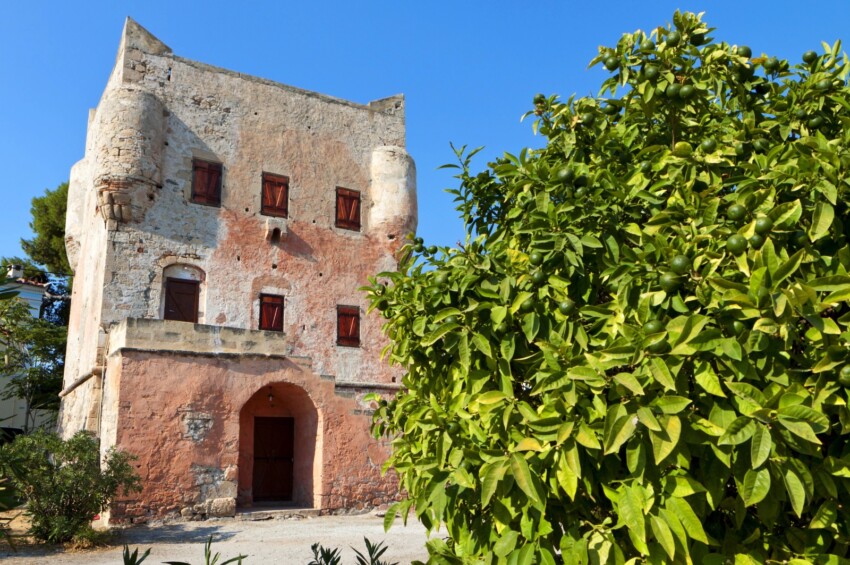
The Markellos Tower is one of the most characteristic and photographed buildings in Aegina, with its distinctive salmon-pink façade making it instantly recognisable. Built in the 17th century during Ottoman rule, the tower was originally used as an observation and defence point.
It was named after Spyridon Markellos, a hero of the Greek War of Independence who acquired it in the 19th century. During the brief period when Aegina was the capital of Greece, the tower housed several government departments, including the Ministry of the Navy.
The building features characteristic Venetian-Ottoman architecture, with thick walls, arched windows and a panoramic terrace. Although the interior is not always open to the public, it is worth admiring its exterior and imagining the many historical events it witnessed.
The best time to photograph the tower is in the early morning hours, when the soft light enhances the pink colour of the façade and the surrounding streets are still quiet. A curious detail: according to a local legend, the tower’s pink colour is due to the addition of bull’s blood to the plaster mixture, a practice that was believed to make the walls stronger.
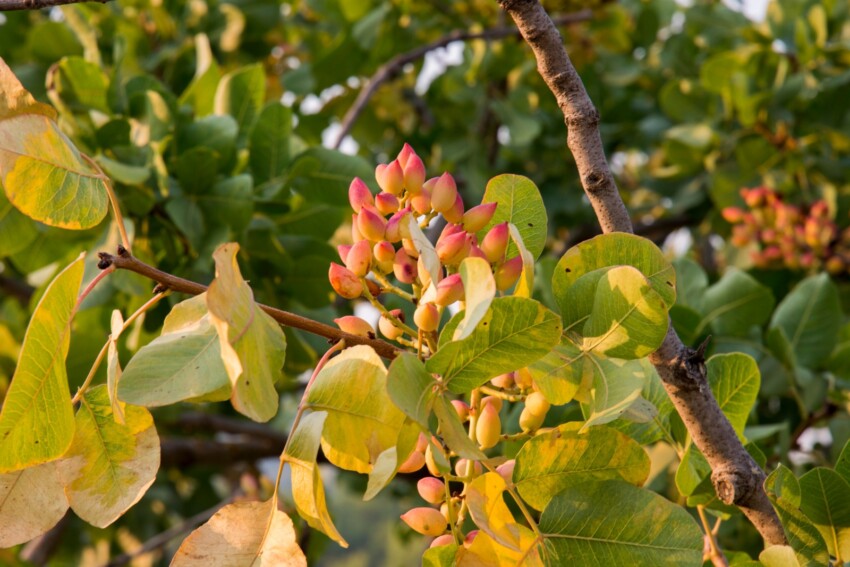
Aegina is renowned throughout Greece for its pistachios (fistiki in Greek), considered among the best in the world due to the island’s unique microclimate and volcanic soil. Pistachio plantations extend over much of the hinterland, characterising the landscape with their low, rounded trees.
The variety grown in Aegina is known as Aegina Pistacia vera, protected by the European Union’s PDO (Protected Designation of Origin) label. These pistachios are smaller than the American or Iranian ones, but boast a more intense and aromatic flavour.
The best time to visit the plantations is between August and September, when the harvest takes place. Some farmers offer guided tours of their plantations, during which you can observe the traditional methods of cultivation and harvesting. Don’t miss the Pistachio Festival, held every year in September, with tastings, traditional music and cooking demonstrations.
An excellent vantage point for photographing the plantations is from the road from Aegina town to Perdika, especially at sunset when the golden light filters through the trees. An interesting curiosity: pistachio trees take at least 7-8 years before producing their first fruits and can live for over a century.
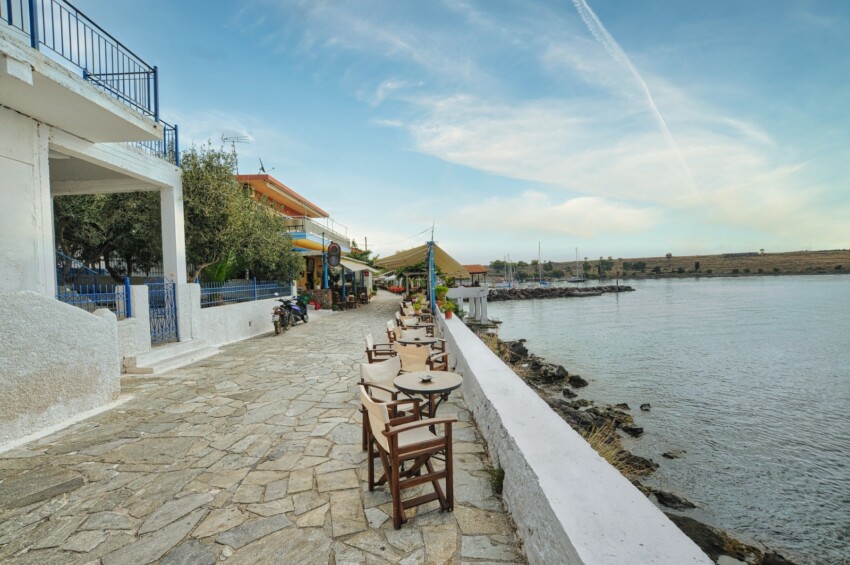
The picturesque fishing village of Perdika represents the essence of Greek seafaring tradition. Situated on the south-western coast of the island, this charming settlement has retained its authentic character, with small white houses with red tiled roofs overlooking a small harbour where colourful fishing boats dangle.
Perdika’s seafront promenade is lined with taverns specialising in fresh fish, where you can enjoy typical dishes overlooking the sea and the neighbouring island of Moni. The atmosphere is especially magical at sunset, when the fishermen return with the day’s catch and the lights of the taverns begin to reflect on the water.
Behind the harbour, narrow pedestrian streets invite exploration, with small shops selling local handicrafts and traditional houses adorned with bougainvillea. The small church of Agios Sostis, with its typical Cycladic architecture, offers a panoramic view of the bay.
The best photo point is from the main pier, from where you can capture in one shot the colourful boats of the fishermen with the backdrop of the village climbing the hill. A curious detail: despite its small size, Perdika is famous for the preparation of octapodi xidato, octopus marinated in vinegar according to an old local recipe.
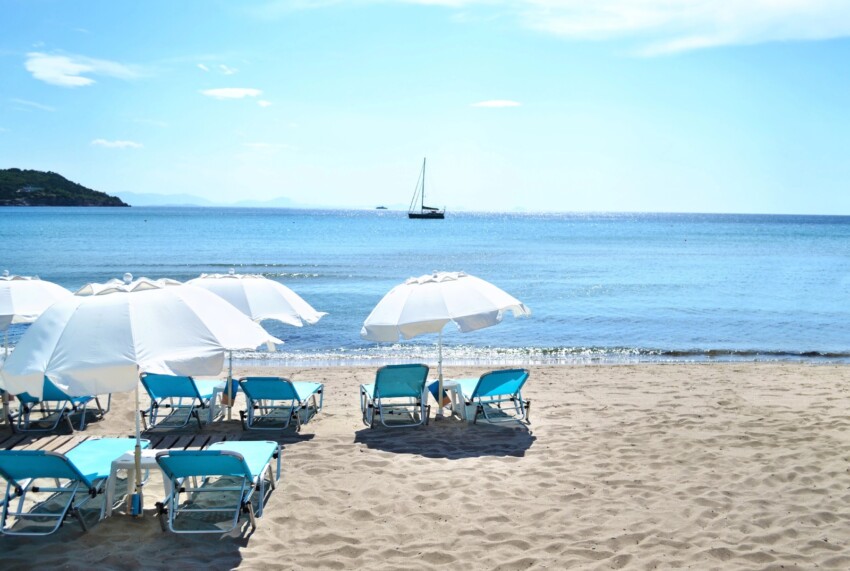
The island of Aegina boasts numerous beaches that cater for every type of visitor, from families seeking calm waters to water sports enthusiasts.
Agia Marina is the most developed and touristic beach on the island, with its long stretch of golden sand and crystal-clear waters. Offering everything from sunbeds to water sports, it is particularly suitable for families with children thanks to its gently sloping seabed. The view of the nearby islet of Moni is particularly impressive at sunset.
For a quieter experience, Marathonas offers two small bays with turquoise waters and sand mixed with pebbles. The atmosphere is more relaxed and the beach taverns serve fresh fish and local specialities. Trees reaching almost to the shore provide natural areas of shade.
Perdika Beach is a small pebble beach near the village of the same name, ideal for those seeking tranquillity and crystal-clear waters. Less crowded than the others, it offers a more authentic experience and the chance to explore interesting rock formations and small sea caves nearby.
Souvala, on the northern coast, is known for its mineral-rich waters with therapeutic properties, which attract visitors in search of skin benefits. The beach is well organised and the village offers numerous restaurants and cafes.
The best spot for photos is definitely the panoramic view of the beaches of Agia Marina and Marathonas from the coastal road, especially in the morning hours when the sea takes on deep blue hues. An interesting curiosity: some of the more remote beaches can only be reached by sea, and local fishermen often offer taxi boat services to take visitors to these hidden paradises.
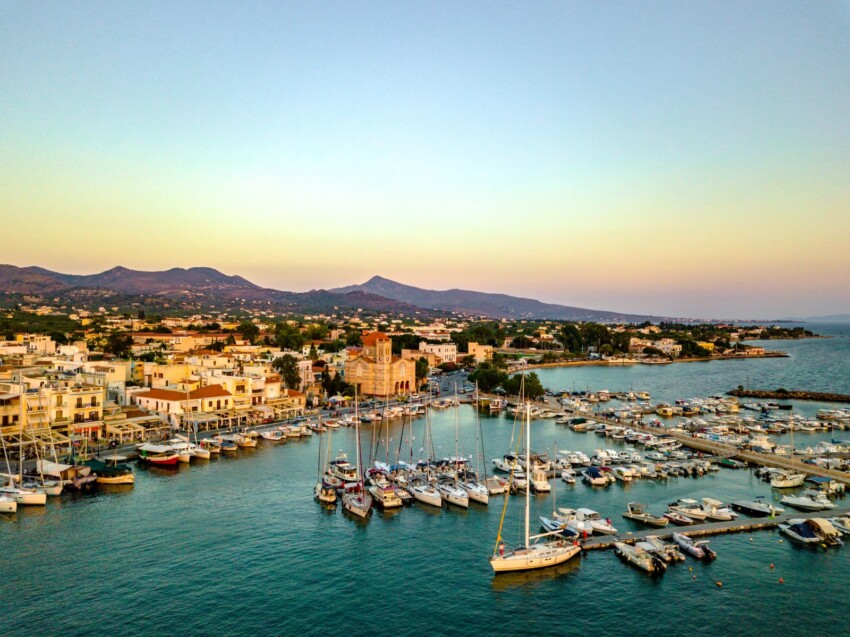
The island of Aegina offers various accommodation solutions for all needs and budgets. The town of Aegina is the most convenient choice for those travelling without a car, with numerous boutique hotels and traditional guesthouses concentrated in the old town and along the waterfront. Here you will find establishments that combine a central location with affordable prices.
For those looking for quieter accommodation closer to the sea, the Agia Marina area offers beach resorts and family flats, ideal for those wishing to wake up with sea views. The picturesque village of Perdika is perfect for those seeking an authentic atmosphere, with small family-run guesthouses and traditional houses for rent.
The areas of Souvala and Vagia offer more secluded and relaxing accommodation, ideal for those seeking privacy. During the high season (July-August) it is essential to book well in advance, while in the shoulder months (May-June and September) you can find great deals with prices reduced by up to 30%.
We offer a selection of hotels at Aegina to suit all categories of travellers. The most booked by tourists are the sea-facing hotels, often right on the beach. If you want to play it safe, choose one of the following: they are among the most booked hotels in Aegina, sorted by number of reviews.
If you prefer space, privacy and the ability to prepare your own meals to a hotel holiday, book a holiday home at Aegina. We recommend a few below, but in this case we advise you to book early because houses and apartments for rent at Aegina are in high demand.
The most common way to reach Aegina is by ferry from the port of Piraeus in Athens. Conventional ferries take about 1 hour 15 minutes for the crossing, while hydrofoils (flying dolphins) reduce the time to just 40 minutes.
Ferries to Aegina depart frequently throughout the day, with trips starting at 7am and ending at around 8.30pm. During the high season (June-September), departures can also be every 30-40 minutes. Ticket prices range from €14 to €18 for conventional ferries and €22 to €28 for hydrofoils.
It is advisable to book in advance during the summer months and at weekends, especially if you are travelling with a vehicle. Tickets can be purchased online on the websites of shipping companies such as Hellenic Seaways or Blue Star Ferries, or directly at the port.
For those looking for a more exclusive option, private boats or yachts can be hired from Piraeus or other coastal locations around Athens. This service is available from numerous agencies in the tourist areas of Athens and Piraeus, with prices varying considerably depending on the type of boat and the duration of the charter.
Once you arrive in Aegina, you have several options for getting around:
Public buses: From the main port of Aegina there are regular bus services to the main locations on the island. The main lines serve Agia Marina, Perdika, Souvala and the Monastery of Agios Nektarios. Tickets cost about 2€ each way and can be purchased directly from the driver.
Taxis: Taxis are available at the ferry arrivals and at various points in Aegina town. A ride from the harbour to the Temple of Aphaia costs about 15-20€, while a ride to Perdika costs about 12-15€.
Vehicle rental: There are several car, scooter and quad bike rental services on the island. Prices for renting a scooter start at about 20€ per day, while a small car starts at 40€ per day. An international driving licence is required for rental.
Bicycles: Aegina is a relatively flat island, ideal for exploring by bicycle. Several shops offer bicycles for hire at about 10-15€ per day.
Water taxis: To reach some isolated beaches or neighbouring islands, small boats offering water taxi services are available. Prices vary depending on the distance, but are generally around 5-10€ per person for short trips.
The Aegina Pistachio Festival (Fistiki Fest) is one of the most anticipated and colourful events on the island. It takes place every year in mid-September, when the pistachios have just been harvested. During the four-day festival, the town of Aegina is transformed into a lively open-air market where local producers display not only fresh pistachios, but also a surprising variety of products derived from them: sweets, liqueurs, pestos, cosmetics and even jewellery inspired by the shape of the pistachio.
The festival is not just a gastronomic event, but a true cultural celebration with concerts of traditional Greek music, folklore dance performances, culinary workshops and children’s activities. Particularly interesting are the demonstrations of traditional pistachio harvesting held in plantations just outside the city.
A unique experience is the dinner under the stars organised on the last night of the festival, where local chefs prepare a tasting menu entirely based on pistachios, from main dishes to desserts.
The festival of Saint Nectarios (Agios Nektarios) is celebrated on 9 November, an event of great religious importance that attracts thousands of pilgrims from all over Greece. The celebrations begin on the evening of 8 November with a night vigil and culminate the following day with a solemn procession in which the icon of the saint is carried through the streets around the monastery.
During this period, the monastery offers special guided tours that include areas not normally accessible to the public, such as the saint’s personal cell and the library. The atmosphere of devotion during these days offers an authentic insight into Greek Orthodox spirituality.
One of the lesser-known but fascinating experiences of Aegina is a visit to the ancient stone quarries in the area of Agios Thomas. Used since ancient times to extract the limestone with which many of the island’s buildings, including the Temple of Aphaia, were constructed, these quarries now offer a surreal, almost lunar landscape.
Guided tours are available from May to October, generally on Wednesday and Saturday mornings. The tour includes a descent into some well-preserved underground tunnels and an explanation of the mining techniques used in antiquity. A particularly impressive experience is the sunset tour, which ends with light refreshments of local products served inside a torch-lit quarry.
During the months of October and November, coinciding with the olive harvest, some of the island’s traditional oil mills open their doors to visitors. These facilities, some of which date back to the 19th century, offer a fascinating demonstration of traditional olive oil production methods.
The visit includes an explanation of the entire process, from harvesting to pressing and bottling, followed by a tasting of different types of oil accompanied by local bread, tomatoes and olives. Some oil mills also offer hands-on workshops where visitors can actively participate in the production process.
Boat excursions to the smaller islands of the Saronic Gulf depart daily from the island of Aegina during the summer season. Particularly popular is the tour that includes the islands of Moni, Agistri and Metopi, three small natural paradises with crystal-clear waters ideal for snorkelling.
The uninhabited island of Moni, in particular, offers a unique experience with its population of peacocks and wild deer that approach visitors in search of food. Boats typically depart from the port of Aegina or Perdika at 10am and return in the late afternoon, including stops for swimming and a fish lunch prepared on board.
For a more exclusive experience, some agencies offer sunset tours with dinner or night excursions to observe the marine bioluminescence phenomenon during the summer months.
The history of Aegina is rich and fascinating, intertwined with the major events that shaped Greek and Mediterranean civilisation. The first settlements on the island date back to 3000 B.C., during the Bronze Age, as shown by archaeological findings in the Kolona area.
During the Archaic period (650-480 BC), Aegina experienced its Golden Age, becoming a maritime and commercial power in the Aegean Sea. The island was among the first in Greece to mint its own coins, the famous ‘Aegina turtles‘, which became a widely accepted currency throughout the eastern Mediterranean. This period of prosperity enabled the construction of important public buildings and temples, including the magnificent Temple of Aphaia.
Rivalry with Athens characterised much of the island’s ancient history. During the Persian Wars (490-479 BC), Aegina fought valiantly in the naval battle of Salamis, contributing significantly to the Greek victory. However, in 458 BC, Athens conquered the island, ending its independence and forcing many of its inhabitants into exile.
In the following centuries, Aegina followed the fortunes of Greece, passing under Roman, Byzantine, Venetian and finally Ottoman rule. During the Ottoman occupation, which lasted from the 15th to the 19th century, the island maintained a certain autonomy and developed an important merchant community.
A moment of renewed splendour occurred in 1828, when Aegina was chosen as the first capital of independent Greece by Governor Ioannis Kapodistrias. Although this status lasted only until 1829, when the capital was transferred to Nafplio, this brief period left an important architectural and cultural legacy, with the construction of neoclassical government buildings that still characterise the old town today.
During the 20th century, Aegina gradually transformed itself from a mainly agricultural and fishing island to a tourist destination, while maintaining strong ties with its traditions. Pistachio cultivation, introduced in the 19th century, has become a fundamental part of the island’s economy and cultural identity.
An interesting anecdote relates to the famous writer Nikos Kazantzakis, author of ‘Zorba the Greek’, who lived for a time in Aegina and wrote some of his most famous works there, describing the island as a place of ‘pure light and creative silence’.
What's the weather at Aegina? Below are the temperatures and the weather forecast at Aegina for the next few days.
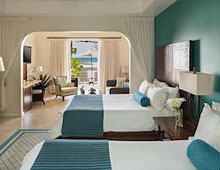 Hotel
Hotel 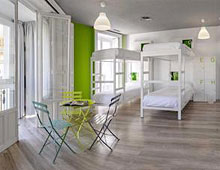 Budget accommodations
 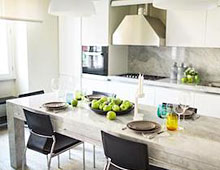 Apartments
  Family Hotel
 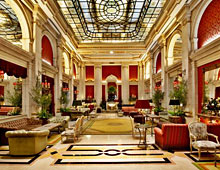 Luxury Hotel
  Resorts