ELIZA Skiathos
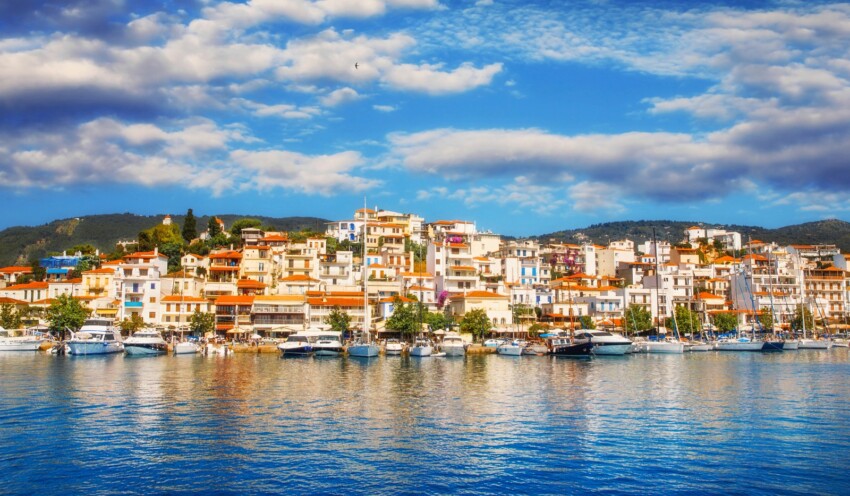
The small island of Skiathos is the most visited of the Northern Sporades, probably because word has spread that some of the most beautiful beaches in the Aegean are to be found here.
You’ll have more than 60 to choose from and with that you could already fill up quite a few Skiathos holidays, but it would be a shame not to spend some time at the island’s cultural and historical attractions and maybe even indulge in a few hours shopping in the bustling capital.
Explore Skiathos far and wide to discover the most beautiful beaches but also monasteries, museums, fortresses and natural beauty: our list of things to see and do in Skiathos is only the beginning!
Skiathos Town, the island’s capital, is also the only real town if you exclude the seaside resorts that have sprung up with the development of tourism. Built in 1830 within a quiet bay and above two hills in the south-eastern part of the island, Skiathos Town is one of the most touristic centres in Greece.
Skiathos itself has changed profoundly with the arrival of mass tourism, increasing the number of trendy cafés and boutiques by leaps and bounds, but without losing its 19th century charm.
Its main street, the pedestrian avenue Papadiamantis dedicated to the writer who best described the soul of the city in his novels, is a succession of shops selling clothes, souvenirs, leather goods.
Don’t miss a visit to the church of Agios Nikolaos, patron saint of sailors, in the eastern part of the town.
A number of typical Greek taverns can be found along the old Polytechnic Street that crosses the main street.
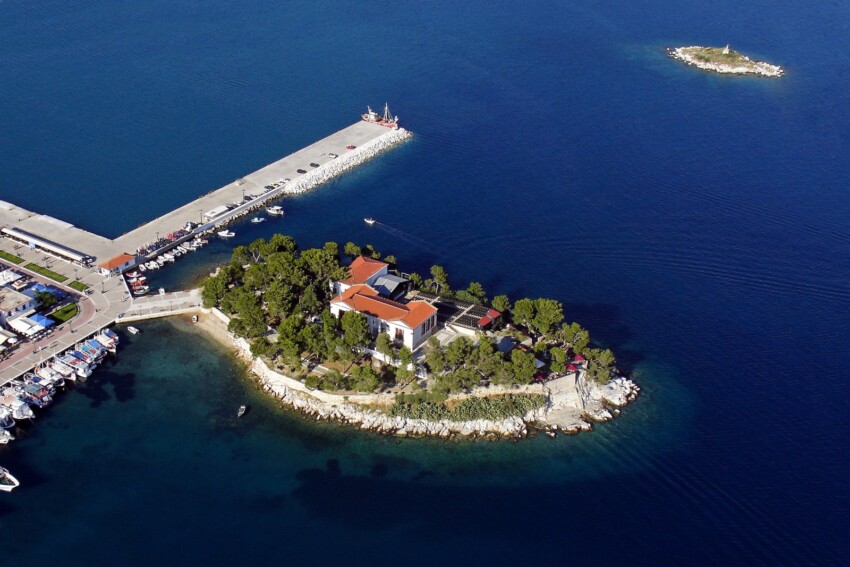
Bourtzi is a small peninsula that divides Skiathos Town into two distinct areas. It was originally a fortress, built by the Venetian Ghizi brothers who ruled the island in the 13th century: surrounded by imposing walls, it had two defensive towers located to the right and left of the entrance gate. The fortress was destroyed in the 17th century following the occupation of the island by Francesco Morozini.
Today, Bourtzi is a peaceful green haven with pine-lined paths and breathtaking views of the sea. The remains of ancient walls and cannons are still visible, evidence of the island’s historical past. The old school within the peninsula has been converted into a cultural centre that often hosts art exhibitions, concerts, plays and other cultural events, especially during the summer season.
The peninsula is easily accessible via a small bridge connecting it to the mainland, and is a perfect place for a relaxing walk away from the hustle and bustle of the city. With its magnificent viewpoints, it is also a great place to watch the sunset while sipping a drink in one of the cafés there.
Alexandros Papadiamantis (1851-1911), one of the most important Greek writers of the 19th century, was born and lived his entire life on Skiathos. A fervent religious man of humble disposition, Papadiamantis led a frugal, almost ascetic life; his works reflect his spiritual dimension and deep theological reflections.
His house, built between 1850 and 1860 by his father, is today a museum open to the public that tells the story of the writer’s life and works. The first floor has been preserved exactly as it was when the writer lived there, with the original furnishings and objects of the time. You can see the writer’s modest bed, his writing desk, inkwell and other personal effects that testify to the austere and almost ascetic life he led, in line with his deep religiosity.
The second floor houses a permanent exhibition with a collection of original manuscripts, first editions of his books and other documents illustrating his influence on Greek literature. The visit is free of charge and is a unique opportunity to immerse oneself in the local culture and learn more about the identity of Skiathos through one of its most illustrious sons.
It is an unmissable museum for lovers of literature but also for all those who are curious to see an authentic traditional Greek house from the second half of the 19th century and to imagine what it might have been like to live on Skiathos at that time.
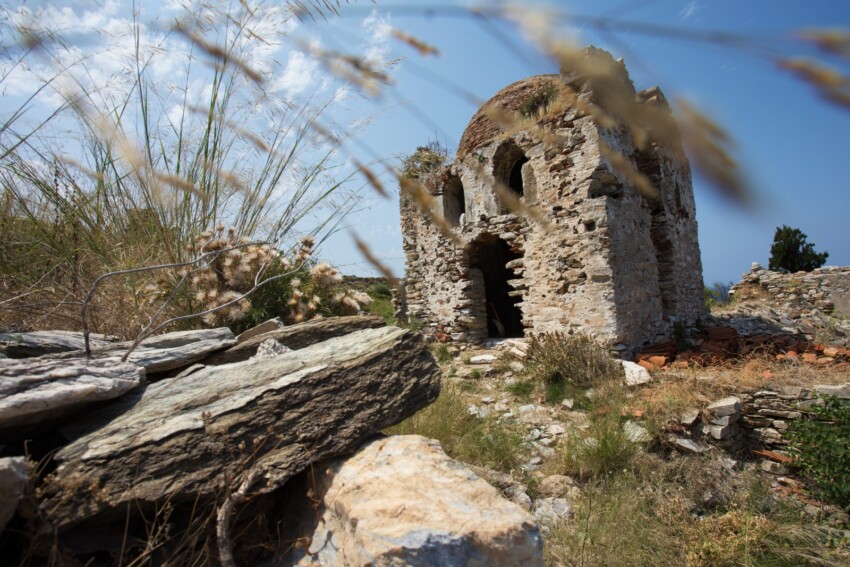
On the northern tip of the island stands Kastro, a fortified village overlooking the sea dating back to the 14th century. It can only be reached on foot via a steep path that takes a good two hours; if you think you can’t make it, you can join a jeep safari or admire the village from below on a boat trip around the island.
Once one of the most important villages on the island, with more than 300 inhabited houses and twenty churches, Kastro today is just a pile of ruins including the ancient walls, the drawbridge, the Turkish bath, a couple of houses and a lonely church.
The remote location gives these ruins a truly evocative charm; add to this the breathtaking views of the sea and it will not be difficult to understand why Kastro has become one of Skiathos’ most popular tourist attractions.
A short distance from the ruins of Kastro is Lalaria, a magnificent resort that can only be reached by sea thanks to the numerous caiques that dock there. The beach is made of pebbles and is characterised by a perforated boulder. Unfortunately, there are no taverns.
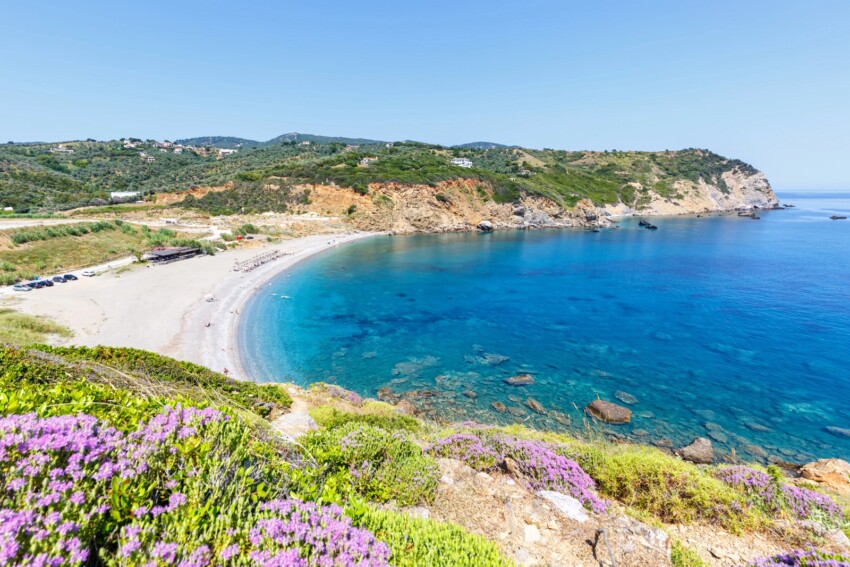
Going to the beach on Skiathos is more than just a recreational activity; it is a real way of life that characterises holidays on the island. With more than 60 beaches spread along the 44 km of coastline, the island offers an incredible variety of lidos for all tastes and needs. We have selected our favourites on our Best Beaches of Skiathos page. A typical day starts with a relaxed breakfast in one of the many seaside cafes, followed by the arrival at the beach, preferably early in the morning to grab the best seats.
Lunch is usually taken in one of the beach taverns, where you can enjoy Greek specialities such as Greek salad, tzatziki, souvlaki and fresh fish, all washed down with a glass of local wine or a cool Mythos beer. The afternoon is dedicated to refreshing baths, water sports such as water skiing, windsurfing or snorkelling, or simply relaxing with a good book in the shade of a parasol. Don’t forget to bring sunscreen and a hat, as the Greek sun can be very intense, especially in July and August.
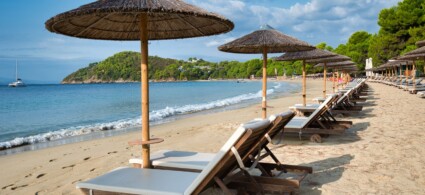
Troulos is a picturesque resort on the south coast of Skiathos, about 9 km from Skiathos Town, and is one of the most popular tourist areas on the island. The name derives from the small dome-shaped island (‘troulos’ in Greek) that rises about 350 metres from the coast, creating a characteristic panorama. Troulos beach is one of the most beautiful on the island, with its fine golden sand and gently sloping sea, making it particularly suitable for families with children. The area is well equipped with sun beds, parasols and several beach restaurants where you can enjoy traditional Greek cuisine.
The village itself is surrounded by green Mediterranean vegetation, offering a pleasant contrast to the blue sea, and has several hotels, flats and tavernas. Despite being a popular tourist destination, Troulos maintains a quiet and relaxed atmosphere, with a decent nightlife that makes it perfect for those seeking a balance between relaxation and fun.
For the adventurous, a variety of water activities are available and nearby there are paths leading to more isolated beaches that can only be reached on foot or by boat. The bus stop for Troulos is number 18, making this area easily accessible even for those who do not have their own transport during their holiday.
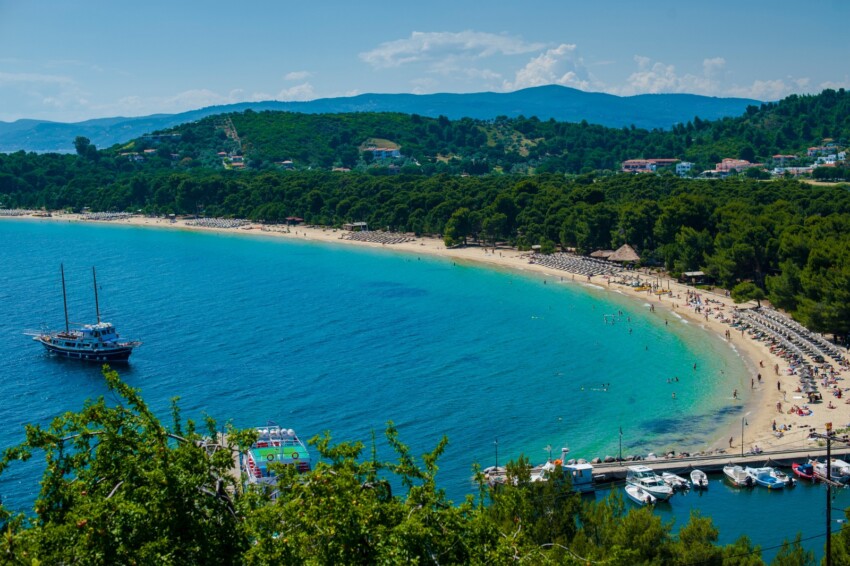
Koukounaries is universally recognised as the queen of Skiathos beaches and one of the most beautiful in Greece. Located at the south-western tip of the island, this extraordinary stretch of golden sand over a kilometre long is framed by a majestic, protected pine forest that stretches all the way to the shore. What makes Koukounaries truly unique is the ecosystem that characterises it: behind the beach is a natural lagoon called Strofilia, connected to the sea by a small channel, which is home to numerous species of migratory birds.
The sea water is an incredible emerald green colour, clear and with a gradually sloping seabed, ideal for families with children. In spite of its fame and consequent popularity, the beach has managed to retain a natural appearance that is unlike tropical shores. It is well served by an efficient public bus system (bus stop No 23) and offers various services such as sunbed and umbrella rental, beach taverns and water sports centres.
The sunsets at Koukounaries are particularly spectacular, with the sun dipping into the sea creating plays of light on the surrounding pine forest. For those who want an even quieter experience, it is possible to move to the nearby, less crowded beach of Agia Eleni, reached by a short walk through the pine forest.
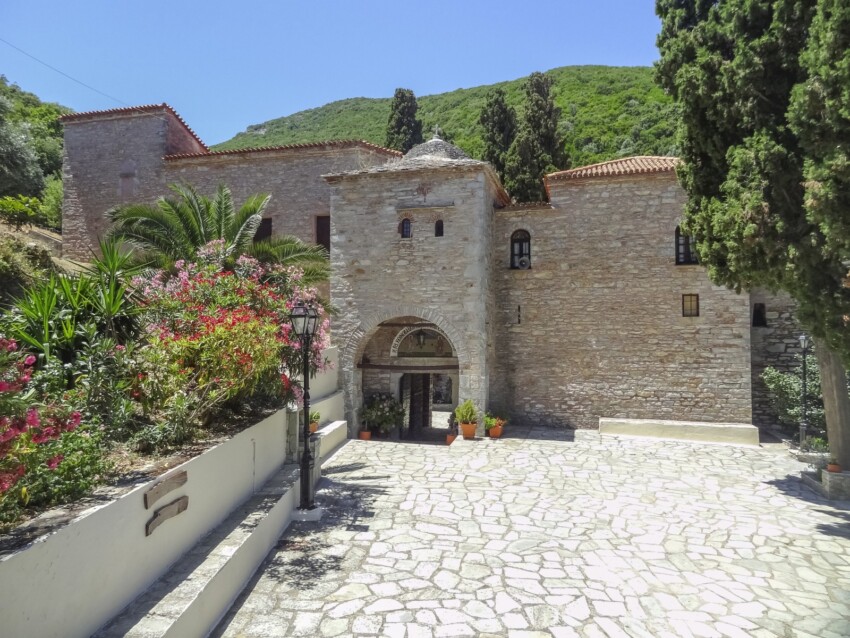
In Skiathos, too, you can find the traditional little white churches that we instantly associate with the image of a Greek island.
The most famous religious building on the island is Monastery Evangelistra7, about 30 minutes from the capital, perched on the slopes of the mountain and surrounded by lush vegetation.
The monastery is famous for giving refuge to a group of Greek patriots who fought during the War of Independence in the 19th century and it was here that the blue and white flag that would later become official was made.
The folklore museum and the museum of sacred art are housed inside the monastery. The latter exhibits a collection of ecclesiastical robes, rare books and manuscripts, gold and silver crosses and Byzantine icons.
Another important religious building is Monastery Panagia Iconistria8, about 2 km from the beach of Aselinos. For the island’s inhabitants, it has a deep religious significance because the monk Dionysius, an emblematic figure of the Greek Orthodox Church, lived here, and because an icon of the Virgin Mary was found here in 1650 that is considered ‘miraculous’.
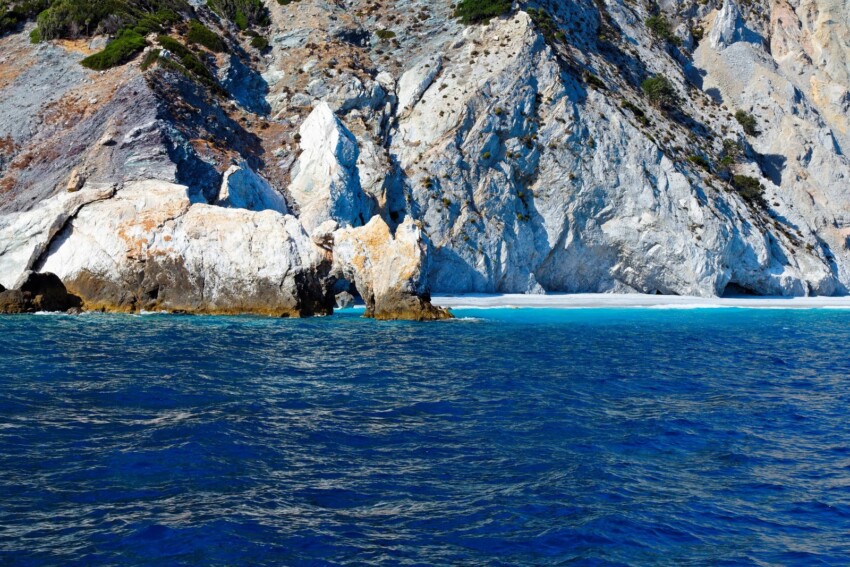
One of the most spectacular natural attractions of Skiathos are the sea caves located near Lalaria beach in the northern part of the island. These natural formations, accessible only by sea, offer breathtakingly beautiful scenery.
The two main caves are known as Skotini (Black Cave) and Galazia (Blue Cave). The former owes its name to the dark and mysterious atmosphere created by its narrow, low entrance, where only one small boat can pass at a time. Despite its somewhat eerie appearance, this characteristic makes it particularly fascinating for adventurous explorers.
The Blue Cave, as its name suggests, is famous for the striking blue colour of the water inside. This optical effect is created by sunlight penetrating through the crystal-clear water, creating shades of intense blue that seem almost unreal. The cave is larger than Skotini and allows for better exploration.
To visit these natural wonders, it is necessary to join a boat excursion. Several companies offer day tours that depart from the port of Skiathos Town and circumnavigate the island, stopping at the caves and other coastal attractions such as Lalaria beach. During these excursions, you will often have the opportunity to swim in the crystal-clear waters in or near the caves, a truly unique experience.
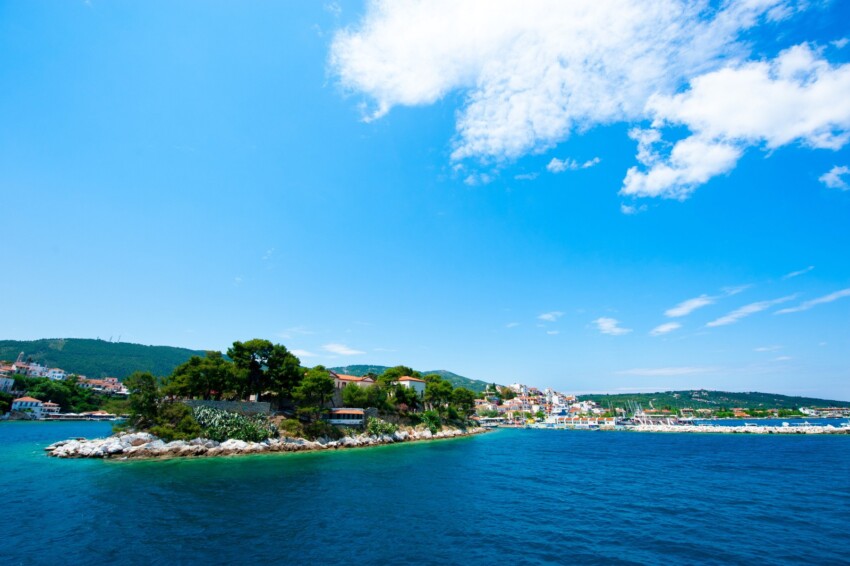
One of the most fascinating experiences during a stay on Skiathos is a boat trip to explore both the inaccessible places on the island itself and the beautiful neighbouring islands of the Sporades archipelago.
Numerous daily excursions depart from the port of Skiathos, allowing you to discover hidden coves, sea caves and beaches that can only be reached by sea. Among the most popular destinations on cruises around the island is the beautiful beach of Lalaria, with its characteristic rock arch and white pebbles that contrast with the incredible blue of the sea. During these excursions you can also admire the ruins of Kastro from a unique perspective and stop for a swim in the crystal-clear waters of otherwise unreachable coves.
For those wishing to explore the neighbouring islands, tours are available that will take you to Skopelos and Alonissos, the other two main islands of the Sporades. Skopelos, famous for being the set of the film ‘Mamma Mia!’, offers breathtaking views with its white houses climbing the hills, while Alonissos will captivate you with its unspoilt nature and the National Marine Park, the largest marine protected area in Europe.
For lovers of more independent sailing, it is also possible to rent small boats that do not require a licence and organise your own excursion along the coast of Skiathos, discovering isolated bays and solitary beaches. An experience not to be missed to experience the island from a completely different and unforgettable perspective.
In the following map you can see the location of the main places of interest mentioned in this article.
 Hotel
Hotel  Budget accommodations
  Apartments
  Family Hotel
  Luxury Hotel
  Resorts